Jeremy Fernando in conversation with Adam Groves

Click to enlarge

Jeremy Fernando … in conversation with Adam Staley Groves

It’s hard to say whether a book has been understood or misunderstood. Because, after all, perhaps the person who wrote the book is the one who misunderstood it … (Michel Foucault)

To write is to scribble, to mark — An attempt to trace. But also, to cry, to tear, to open, wound — often erasing all traces. Which might well mean that one never quite knows if one has written, let alone what one has

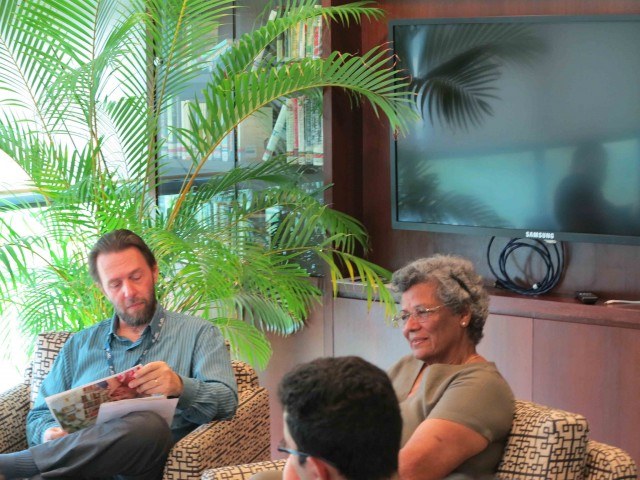
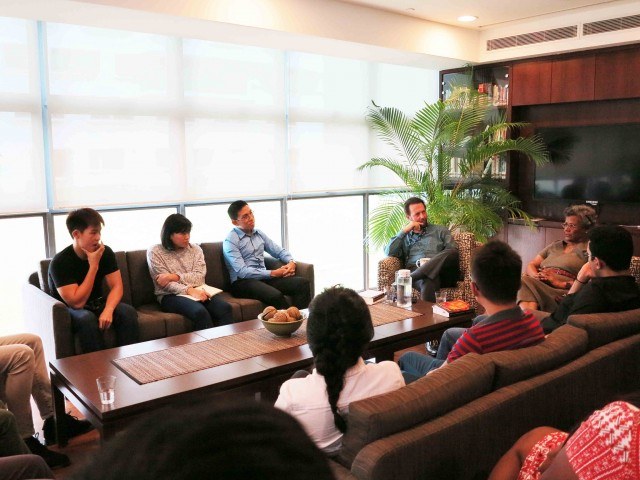
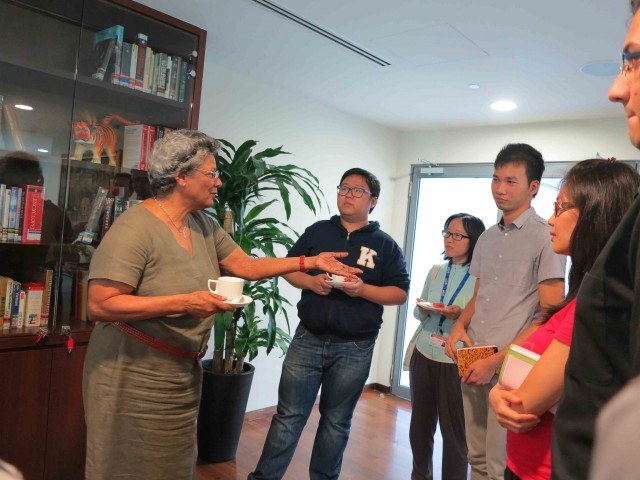
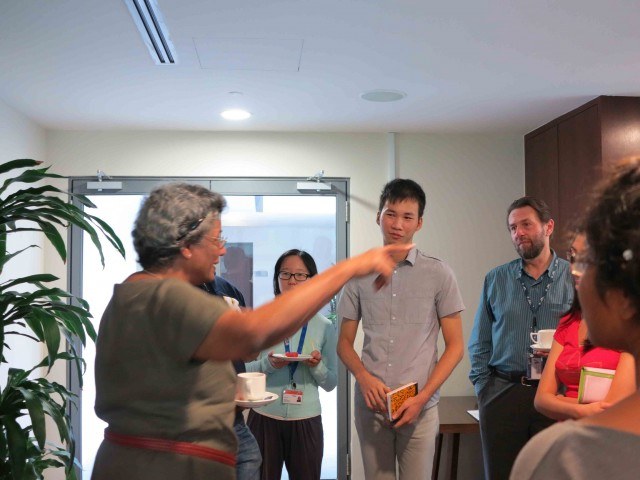
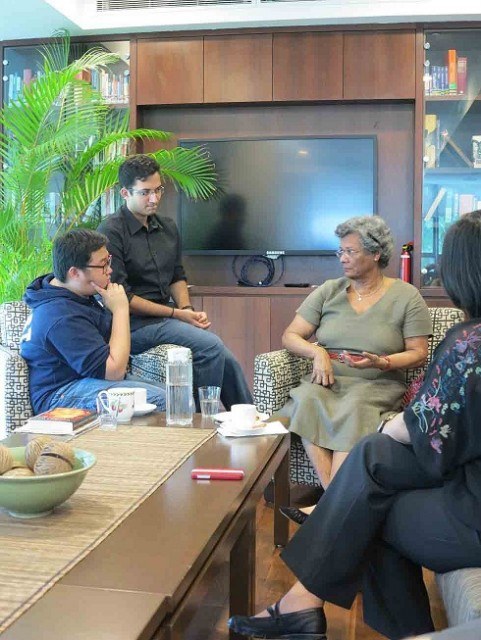
Come join us on Thursday, 17th October, from 1-2pm when Adam Staley Groves attempts to read the writing of Jeremy Fernando.

Amongst other things, they will be speaking of, talking with each other about, poetry, reading, writing On Happiness … and love …

Tommy Koh named the Great Negotiator of 2014

Source NUS News Hub


Prof Koh has been named the recipient of the 2014 Great Negotiator Award

Professor Tommy Koh, Ambassador-At-Large at Singapore’s Ministry of Foreign Affairs and Rector of Tembusu College at NUS, has been named the recipient of the 2014 Great Negotiator Award by the Program on Negotiation – an inter-university consortium of Harvard University, Massachusetts Institute of Technology and Tufts University – and the Future Diplomacy Project at Harvard Kennedy School.


Prof Koh is recognised for his outstanding contributions to the fields of negotiation and dispute resolution, especially his leading roles in challenging settings, including the Law of the Sea, the “Rio” Earth Summit, the ASEAN Charter and the Singapore-US Free Trade Agreement.


Prof Koh said: “I thank Harvard University for this great honour. I accept this award on behalf of all my colleagues who have been members of the various teams I have led, in both bilateral and multilateral negotiations.”


The Great Negotiator Award honours individuals whose lifetime achievements in the field of negotiation and dispute resolution have made a significant and lasting impact. Previous Award recipients include former US Secretary of State James A Baker, III; Martti Ahtisaari, Nobel Peace Prize Recipient and former President of Finland; Sadako Ogata, former United Nations High Commissioner for Refugees; and Lakhdar Brahimi, United Nations Secretary General’s Special Envoy to Afghanistan.


NUS President Professor Tan Chorh Chuan said: “Professor Tommy Koh is an outstanding lawyer, professor and diplomat who played a pivotal role in shaping Singapore’s foreign policy. The Great Negotiator Award is indeed a strong and timely recognition of Prof Koh’s distinguished career as well as his contributions towards international affairs and diplomacy.”


Prof Tan added that NUS’ faculty, staff and students have also benefitted from Prof Koh’s deep insights and vast experience through his involvement in the University’s activities.


Prof Koh, who is Chairman of the Centre for International Law of NUS, Special Adviser of the Institute of Policy within the Lee Kuan Yew School of Public Policy at NUS, and Chairman of the National Heritage Board, will be honoured at a series of public events at Harvard University on 10 April 2014.

Film Screening

21 Sept 4 pm

The Day My God Died

Documentary, Nepal and India

Directed by Andrew Levine

Duration: 60 min

The Day My God Died is a feature-length documentary that presents the stories of young girls whose lives have been shattered by the child sex trade. They describe the day they were abducted from their village and sold into sexual servitude as “The Day My God Died”. Filmed in Nepal and India this documentary provides actual footage from inside the brothels of Bombay, a world seldom seen by outsiders known as “The Cages,” captured with spy camera technology. The documentary also features Anuradha Koirala, 62, CNN Hero of the year, for her fight against the trafficking of Nepali women and children since 1993, who remind us that, “these are our daughters.”

28 Sept 4 pm
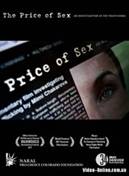
The Price of Sex NC16

Documentary, Eastern European

Produced by Mimi Chakarova

Duration: 73 min

The Price of Sex is a feature-length documentary about young Eastern European women who’ve been drawn into a world of sex trafficking and abuse. Intimate, harrowing and revealing, it is a story told by the young women who were supposed to be silenced by shame, fear and violence. Photojournalist Mimi Chakarova, who grew up in Bulgaria, takes us on a personal investigative journey, exposing the shadowy world of sex trafficking from Eastern Europe to the Middle East and Western Europe. Filming undercover and gaining extraordinary access, Chakarova illuminates how even though some women escape to tell their stories, sex trafficking thrives. Winner of two awards in 2011.

Please join us to learn about human trafficking or modern day slavery, a global business of US$32 bln per year, after arms and drugs. Almost every country is involved either as a supply or destination country, including Singapore. It is a heinous crime against humanity involving 27 million victims. Film is a powerful medium which conveys audio and visual messages which are better retained and creates emotional and long lasting impact which helps to shape personal and social attitudes. Learn about what it is, how it affects you and what you can do to help to combat this social injustice.

For more info, please visit http://www.emancipasia.org/films/.

Contact : contact@emancipAsia.org; +65 97588859

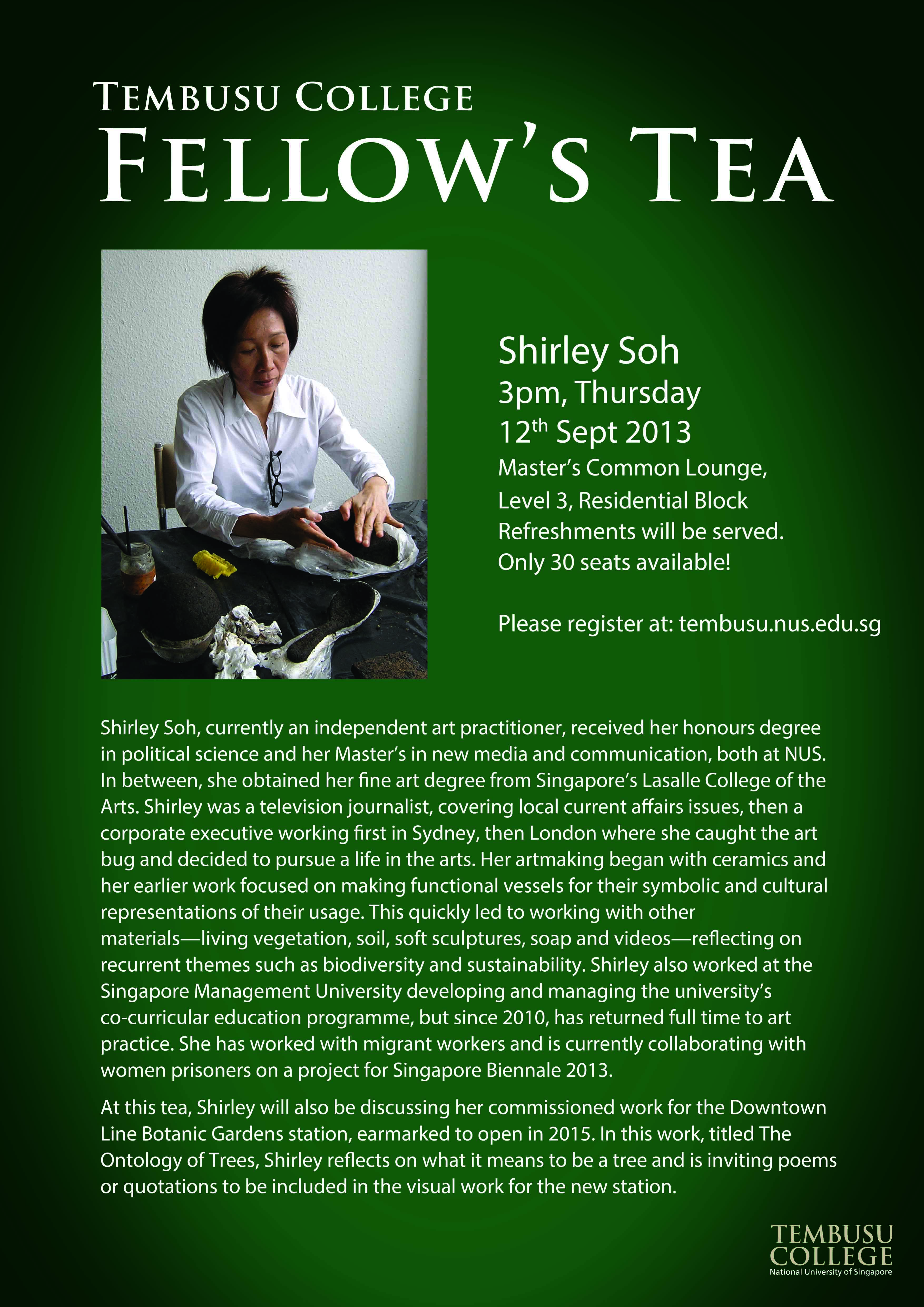
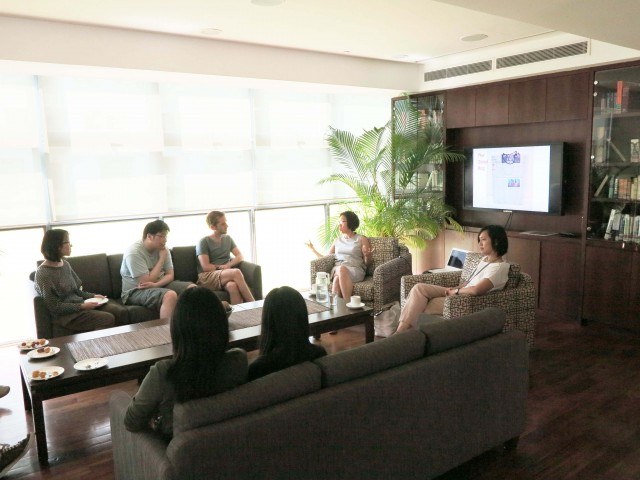
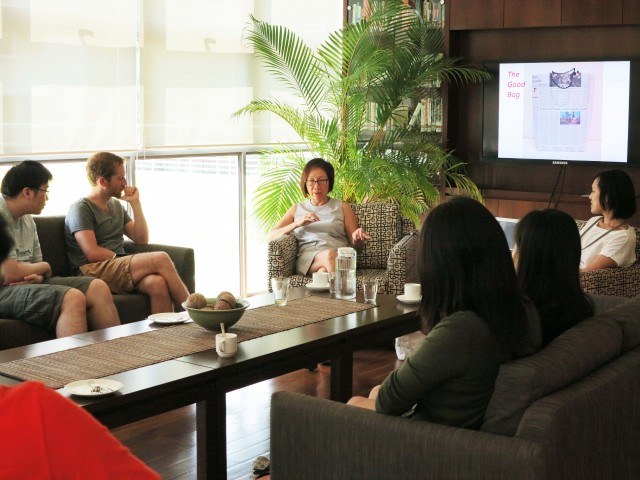
Fellow’s Tea with Ms Shirley Soh

Click to enlarge

Tembusu College Fellow’s Tea

Shirley Soh

3pm, Thursday

12th Sept 2013

Master’s Common Lounge,

Level 3, Residential Block

Refreshments will be served.

Only 30 seats available!

Please register at dev-tembusu-nus.pantheonsite.io

Shirley Soh, currently an independent art practitioner, received her degree in political science and her Master’s in new media and communication, both at NUS.

In between, she obtained her fine art degree from Singapore’s Laselle College of the Arts. Shirley was a television journalist, covering local current affairs issues, then a corporate executive working first in Sydney, then London where she caught the art bug and decided to pursue a life in the arts. Her artmaking began with ceramics and her earlier work focused on making functional vessels for their symbolic and cultural representations of their usage. This quickly led to working with others material – living vegetation, soil, soft sculptures, soap and videos – reflecting on recurrent themes such as biodiversity and sustainability. Shirley also worked at the Singapore Management University developing and managing the university’s co-curricular education programme, but since 2010, has returned full time to art practice. She has worked with migrant workers and is currently collaborating with women prisoners on a project for Singapore Biennale 2013.

At this tea, Shirley will also be discussing her commissioned work for the Downtown Line Botanic Gardens station, earmarked to open in 2015. In this work, titled the Ontology of Trees, Shirley reflects on what it means to be a tree and is inviting poems or quotations to be included in the visual work for the new station.

Hosted by Dr. Margaret Tan

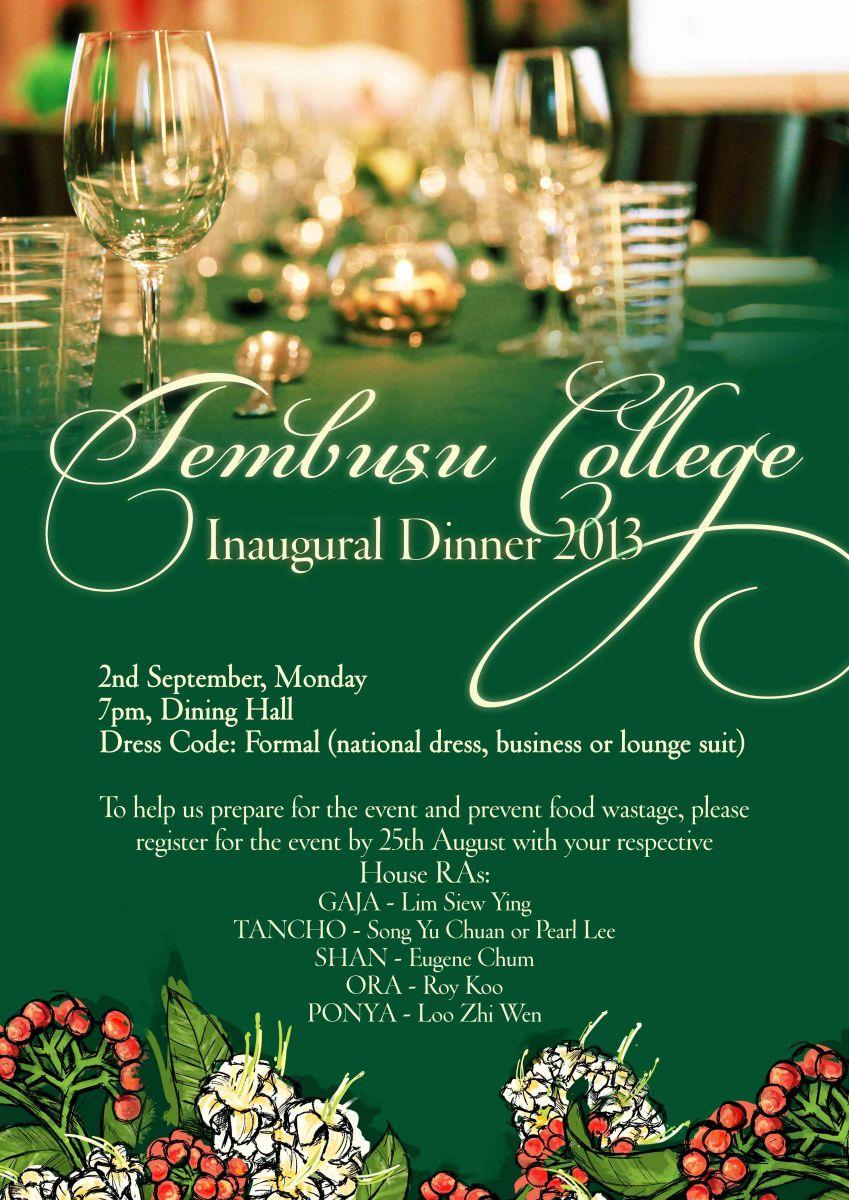
Tembusu Inaugural Dinner 2013

Click to enlarge

Tembusu College

Inaugural Dinner 2013

2nd September, Monday

7pm, Dining Hall

Dress Code: Formal (national dress, business or lounge suit)

To help us prepare for the event prevent food wastage, please register for the event by 25th August with your respective House RA’s:

GAJA – Lim Siew Ying

TANCHO – Song Yu Chuan or Pearl Lee

SHAN – Eugene Chum

ORA – Roy Koo

PONYA – Loo Zhi Wen

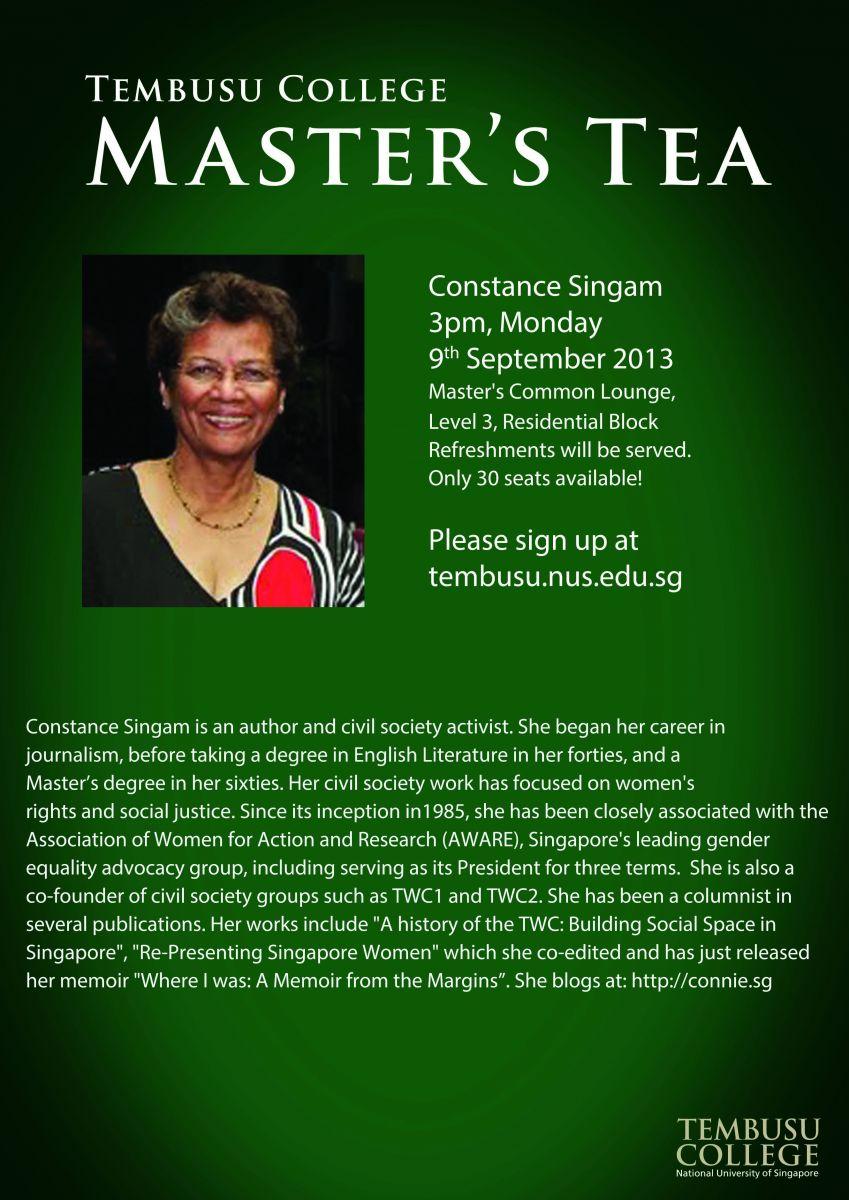
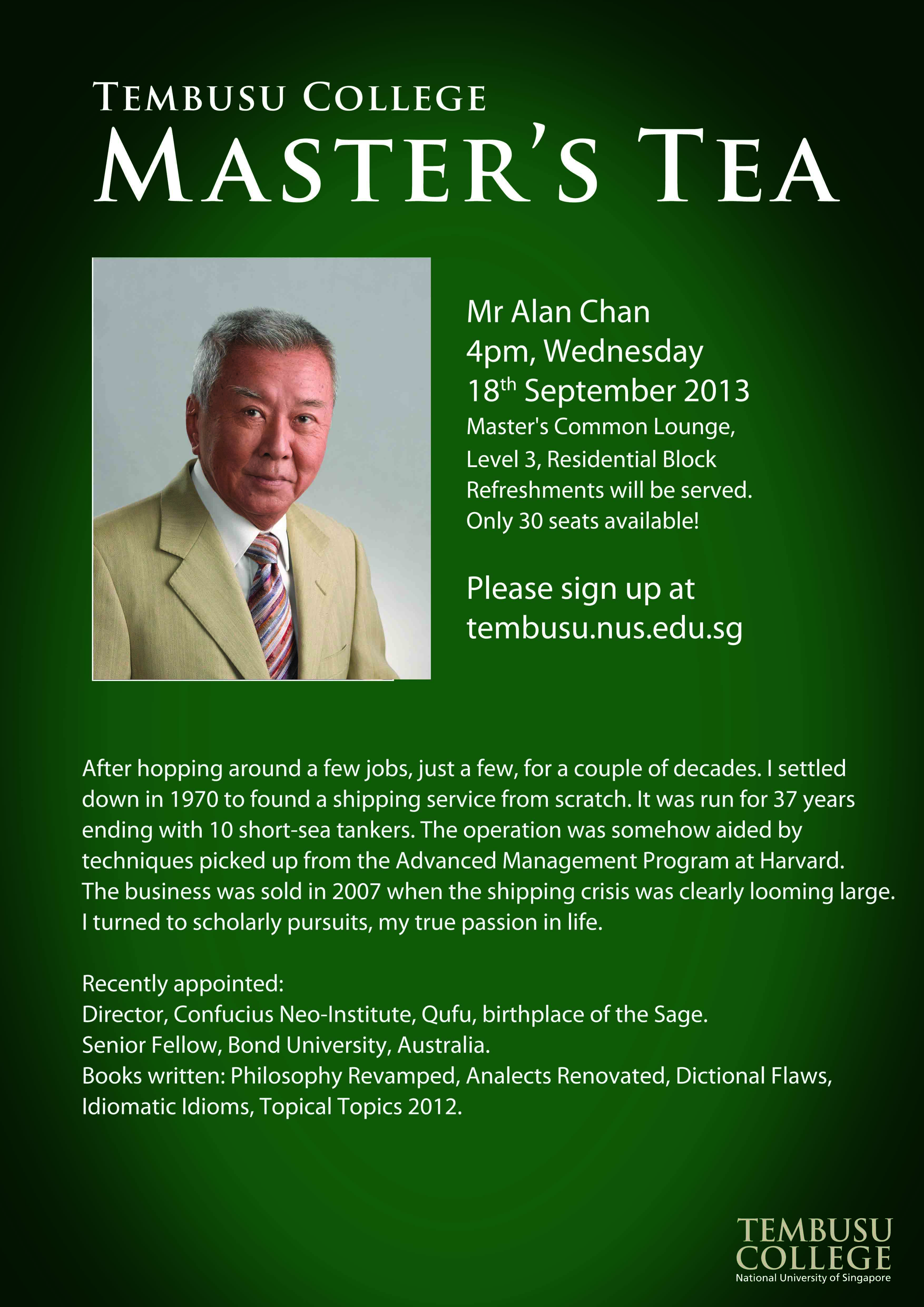
Master’s Tea with Mr. Alan Chan

Click to enlarge

Tembusu College Master’s Tea

Mr Alan Chan

3pm, Thursday

18th September 2013

Master’s Common Lounge,

Level 3, Residential Block

Refreshments will be served.

Only 30 seats available!

Please sign up at dev-tembusu-nus.pantheonsite.io

After hopping around a few jobs, just a few, for a couple of decades. I settled down in 1970 to found a shipping service from scratch. It was run for 37 years ending with 10 short-sea tankers. The operation was somehow aided by techniques picked up from the Advanced Management Program at Harvard. The business was sold in2007 when the shipping crisis was clearly looming large. I turned to scholarly pursuits, my true passion in life.

Recently appointed.

Director, Confucius Neo-Institute, Qufu, birthplace of the Sage. Senior Fellow, Bond University, Australia.

Books written: Philosophy Revamped, Analects Renovated, Dictional Flaws Idiomatic Idioms, Tropical Topics 2012.

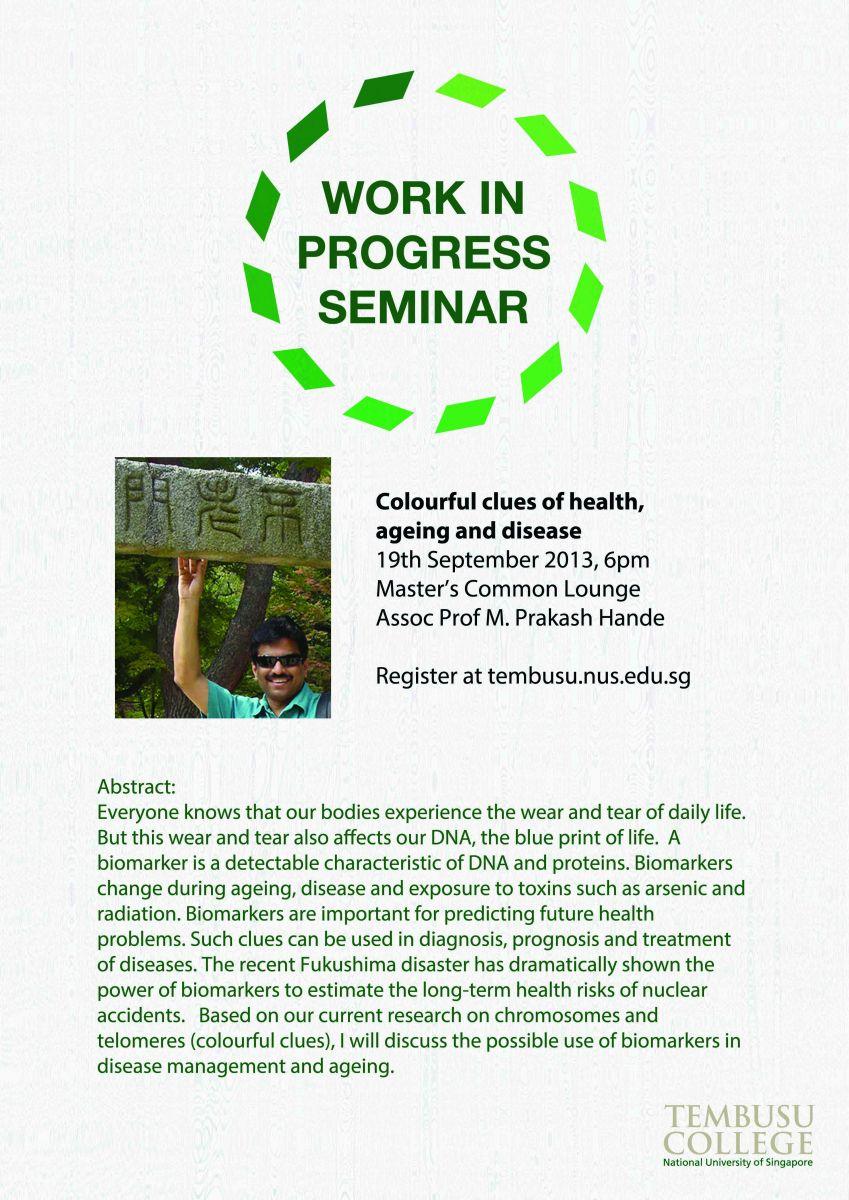
WIP with Prof. M. Prakash Hande

Click to enlarge

Work In Progress Seminar

Colourful clues of health, ageing and disease

19th September 2013, 6pm

Master’s Common Lounge

Assoc Prof M.Prakash Hande

Register at dev-tembusu-nus.pantheonsite.io

Abstract: Everyone knows that our bodies experience the wear and tear of daily life. But this wear and tear also affects our DNA, the blue print of life. A biomarker is a detectable characteristic of DNA and proteins. Biomarkers change during ageing, disease and exposure to toxins such as arsenic and radiation. Biomarkers are important for predicting future health problems. Such clues can be used in diagnosis, prognosis and treatment of diseases. The recent Fukushima disaster has dramatically shown the power of biomarkers to estimate the long-term health risks of nuclear accidents. Based on our current research on chromosomes and telomeres (colourful clues), I will discuss the possible use of biomarkers in disease management and ageing.

REACH Event with Dr. Vivian Balakrishnan

Source NUS Newshub

Students from the Tembusu College at NUS were privileged to hear from Singapore’s Minister for the Environment and Water Resources Dr Vivian Balakrishan on the topic of redefining education in the 21st century on 14 August 2013. 


“The purpose of education is to maximise human potential so as to lead a meaningful life,” the former NUS medical student told the more than 50 attendees. 


Sharing about his personal education journey, Dr Balakrishnan elaborated on his experiences related to competition, relationships and choices to be made. By competition, he meant the need to vie for places at secondary school, junior college and later at university and medical school.  


As an NUS student, Dr Balakrishnan, who was awarded the President’s Scholarship, chose to seek out opportunities for extra-curricular activities such as participating in the NUS Students’ Union (NUSSU) and joining the debating team to build relationships. He was elected NUSSU President from 1981 to 1983 and Chairman from 1984 to 1985.  


Dr Balakrishnan found, however, that his experience is vastly different from those of current students. Today’s students face greater challenges due to increasing competition, technology and its impact and urbanisation. 


Against this backdrop, education has to be redefined. Given the local and international scale of the competition, students will have to work harder and smarter. Owing to advances in technology, white-collar work will be increasingly commoditised, affecting future jobs. With increasing urbanisation, there will be implications for Singapore’s relevance to the world and the types of jobs in cities. 


Responding to the question on the opportunities and threats to Singapore’s current education model, Dr Balakrishnan said that there is now a wider spectrum of avenues made available to students. At NUS, he cited the options of studying at University Town, the Yale-NUS College and the Duke-NUS Graduate Medical School Singapore. 


However, Dr Balakrishnan noted that the concept of the university is no longer about getting certification and presuming thereby that “life is set” with the attainment of a degree. Instead, re-learning, re-certification and re-tooling are necessary. 


During the lively exchange of ideas that ensued, Dr Balakrishnan fielded many questions posed by the student audience. The topics raised included the character of Singapore’s economic evolution and the pragmatic approach to education in Singapore, morality in education, the weight of curriculum at the primary and secondary school levels.

Exploring The Last Frontier

Exploring The Last Frontier

By Tommy Koh

                   Seventy percent of the Earth’s surface is covered by sea and ocean.  However, we seem to know less about ocean space than we do about outer space.  On the 26th of March 2012, the award-winning American movie director, James Cameron, descended alone, in a submersible called “Deepsea Challenger”, to the bottom of Mariana Trench.  It is 11 kilometres or 6.8 miles below the surface and is the deepest part of the ocean floor.  Cameron took pictures and collected samples from the ocean floor.  He commented that the ocean was “the last frontier for science and exploration on this planet.”

Mineral Deposits on Ocean Floor

                   I agree with Cameron that the ocean space is our last frontier.  One of mysteries of the deep seabed and ocean floor is the discovery that it contains deposits of polymetallic nodules, polymetallic sulphides, and cobalt-rich ferromanganese crusts.  The polymetallic nodules contain precious metals such as manganese, cobalt, nickel, copper and rare earth elements.

                   As the supply of these precious metals from land begin to diminish, as the demand for them continue to increase and as metal prices remain high, interest in recovering the nodules and exploiting the sulphides and crusts has increased.

Technological Challenge

                   There are, however, many challenges.  The polymetallic nodules, which are black in colour and resemble potatoes and golf balls, lie on top of the floor of the seabed in very deep waters.  The depth ranges from 4,000 metres to 5,000 metres.  The industry has not yet perfected the technology to harvest them in a way that is commercially viable and environmentally benign.  The good thing is that as the nodules lie on the seabed, they only need to be recovered, and there is no need for digging or dredging like conventional land mines. The three methods being considered are to use nets, claws and suction to bring them up to the mother ship.

Prospects of Deep Sea Mining

                   Whether deep sea mining will become feasible will depend partly on the technology and partly on whether the costs of recovering the metals from ocean space can compete with the costs of recovering them from land mines.  The industry is, however, optimistic about the future.  It believes that the technological problem will be solved especially by leveraging on established offshore drilling technology in the oil and gas industry, which has ventured into very deep waters.  It believes that, given our insatiable demand for these precious metals, it is a matter of time before deep sea mining becomes a reality.

Who Owns the Minerals

                   This leads us to the legal question, to whom do these resources belong.  The answer is that it depends on where the resources are located.  The Government of Papua New Guinea has granted a concession to a private company to recover the polymetallic nodules located within its Territorial Sea.  The government of the Cook Islands has announced that it has rich deposits of polymetallic nodules within its Exclusive Economic Zone and Continental Shelf and intends to tender out the exploration licences.  These resources belong to the Cook Islands.  If the resources are located within a coastal country’s Territorial Sea, Contiguous Zone, Exclusive Economic Zone or Continental Shelf, they belong to the coastal country.

The Common Heritage of Mankind

                   What about the resources which lie on the bottom of the seabed and ocean floor beyond the national jurisdiction of coastal states?  The answer is that they belong to all of us.  The 1982 UN Convention on the Law of the Sea calls them, “the common heritage of mankind”.  The convention has established an institution to act on behalf of mankind and to regulate seabed mining.  It is called the International Seabed Authority (ISA) and it is located in Kingston, Jamaica.  Any state or company which wishes to mine the seabed has to apply to the ISA for a contract to do so.  In the case of an application by a company, it must be sponsored by a state which is a party to the convention. Without this contract, it would be difficult to raise the financing for a seabed mining project.  To date, ISA has signed 13 contracts of exploration for polymetallic nodules, 4 contracts of exploration for polymetallic sulphides and will sign 2 contracts of exploration for cobalt-rich ferromanganese crusts.

Keppel and OMS

                   One of Singapore’s companies with a sterling reputation and track record in the offshore and marine sector is Keppel.  It has incorporated a subsidiary company, called Ocean Mineral Singapore Private Ltd (OMS), to venture into deep sea mining. The Singapore Government agreed to sponsor the application of OMS because it has the resources and relevant technology and expertise. OMS is 78.1% owned by Keppel, while UK Seabed Resources Ltd (UKSRL) and Lion City Capital Partners Pte Ltd are minority shareholders, holding the remaining shares of OMS.  OMS is effectively controlled by Keppel.

Application to ISA

                   In July, I led a Singapore delegation to the 19th annual session of the ISA.  The delegation consisted of the representatives of the Ministries of Foreign Affairs and Trade and Industry, the Attorney-General’s Chambers, and Keppel.  We submitted an application to the Legal and Technical Commission for a contract of exploration for a mine site which is located in the deep seabed, east of Hawaii and west of Mexico.  It is between the Clarion Fracture Zone, in the north and the Clipperton Fracture Zone, in the south.  The Clarion-Clipperton Zone contains one of the richest known deposits of polymetallic nodules.

Reserved Areas

                   The mine site which OMS has applied for, was originally half of a larger mine site which UKSRL had applied for.  Under the Convention, UKSRL was obliged to give up half the mine site to ISA as a “reserved area” for the benefit of developing countries. As a developing country, Singapore is therefore entitled to apply for a “reserved area”.

Happy News in 2014?

                   The Legal and Technical Commission unfortunately ran out of time at its meeting in July.  As a result, the applications of Russia, UK, India and Singapore were deferred to its next meeting in February 2014.  If the applications are approved, the commission’s recommendations will be considered by the council of ISA, at its next meeting in July 2014.  I am optimistic that the application of OMS will be successful.  The contract of exploration will give to the company 15 years to conduct its research and prospecting.  At the same time, the ISA is starting work to develop an exploitation code for deep sea mining. If everything turns out well, Singapore, through OMS, will join four other Asian countries, China, India, Japan and South Korea in exploring the deep seabed and ocean floor.  A new era is about to begin.

. . . . .


[1]The author was President of the UN conference on the Law of the Sea.  He presided over the final session of the conference in Montego Bay, Jamaica, in December 1982, where the convention was signed.