Tembusu Reading Pods AY2016/17 Semester 1

Sign Up for the Reading Pods Now!

Interested in reading a book with a faculty member or student of the college? Select one from the five titles and register yourself at the reception counter of Tembusu admin office. Each book cost only S$10, so hurry and sign up now! Registration deadline: 19th August, Friday.

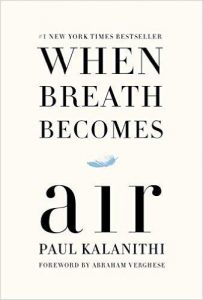
1. Paul Kalanithi’s When Breath Becomes Air led by AP Lina Lim

2. Italo Calvino’s The Castle of Crossed Destinies led by Mr Shawn Lim You Hao

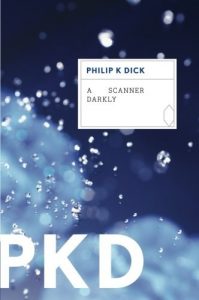
3. Philip K Dick’s A Scanner Darkly led by Dr Adam Staley Groves

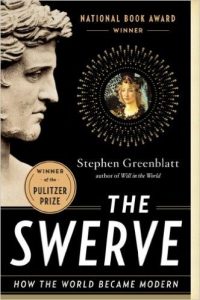
4. Stephen Greenblatt’s The Swerve: How the World Became Modern led by Dr John van Wyhe

5. Eliezer Yudkowsky’s Harry Potter and the Methods of Rationality (e-book) led by Mr Kabir Khandpur
*click on image to download ebook

Professor Tommy Koh: Dinner at the White House

Next Tuesday, Prime Minister Lee Hsien Loong will be hosted to a state dinner by US President Barack Obama. The writer recalls the last time a Singapore PM attended such a dinner in 1985.The most important address in Washington, DC is 1600 Pennsylvania Avenue. It is where the White House is located. It is both the official residence and office of the president of the United States. Every president since John Adams, the third president, has lived in the White House. In 1814, the White House was burned to the ground by British troops and it had to be rebuilt. This occurred during the now-forgotten war between England and the United States which began in 1812.

A White House state dinner is a grand occasion, combining pomp, elegance and symbolism. US President and Mrs Barack Obama will host a state dinner in honour of Prime Minister and Mrs Lee Hsien Loong on Tuesday, Aug 2. PM Lee is on an official visit to the US from July 31 to Aug 5. The last time a Singapore prime minister was hosted to a White House state dinner occurred in 1985 when President and Mrs Ronald Reagan hosted a state dinner in honour of Prime Minister and Mrs Lee Kuan Yew.

During his eight years as president, Mr Reagan hosted 35 state dinners. In contrast, President Obama has hosted only 12 state dinners to date. The reason is that he prefers to entertain at lunch and have dinner with his two teenage daughters. The state dinner on Aug 2 is, therefore, very significant. It reflects the high regard which the President of the US has for the Prime Minister of this small country.

LEE KUAN YEW’S 1985 VISIT
I was the Ambassador of Singapore in Washington, DC in 1985. I would like to share some reflections about Mr Lee Kuan Yew’s visit that year, about the elegant dinner at the White House and about his address to a joint meeting of the US Congress. I would also like to compare and contrast the political situations in the US in 1985 and 2016.

Mr Reagan and Mr Lee Kuan Yew were mutual admirers. This surprised many people because they seemed so different. Mr Lee was cerebral, Mr Reagan was intuitive. Mr Lee was a workaholic, Mr Reagan was not. People forget, however, that they were similar in some important ways: they were strong leaders with vision and conviction and they trusted each other.

In 1985, I advised Mr Lee to fly from Singapore to London and from London to Boston before going to Washington. I wanted Mr Lee to overcome his jet lag by spending the weekend at Harvard University. I arranged for several professors to brief him on aspects of America that he was interested in. It also gave him an opportunity to reconnect with several professors he had befriended during his sabbatical at Harvard in 1968.

Mr Lee and his delegation flew from Boston to Washington on Monday, Oct 7, 1985, in a US aircraft, landing at the Andrews Air Force Base. That evening, Mr Lee’s good friend, Dr George Shultz, the US Secretary of State, hosted him and his delegation to an early dinner on a boat. We cruised along the Potomac River and had a beautiful view of the city and its monuments.

THE BIG DAY
Tuesday, Oct 8, was the big day. The ceremonial welcome for Mr Lee took place on the lawn of the White House with President Reagan and Prime Minister Lee standing on a dais. It was a beautiful autumn day with a clear blue sky and very comfortable temperature and humidity. There were some celebrities at the function, including actor Sylvester Stallone. I had to explain to Mr Lee who he was.

Following the ceremony, the two delegations held a meeting. I remember that on that occasion, President Reagan’s mind was focused on only one issue, the crisis in the Philippines over protests against President Ferdinand Marcos. He listened very carefully to Mr Lee’s advice. 

Mr Lee’s message to the US Congress is even more important today than in 1985. The US is suffering from another bout of protectionist fever. Globalisation, free trade and trade agreements have become dirty words in America. It is very worrying that the two candidates for the US presidency, Mrs Hillary Clinton and Mr Donald Trump, have declared their opposition to the Trans-Pacific Partnership. 

Secretary of State Shultz hosted a splendid lunch for PM Lee and his delegation at the US State Department. In the afternoon, Mr Lee called on the Vice-President, Mr George H.W. Bush. Mr Bush would succeed Mr Reagan as the 41st President of the United States. 

ENTERTAINING IN STYLE
President and Mrs Nancy Reagan liked to entertain and they did it with style and elegance. Mrs Reagan would take personal charge of the dinner, supervising the menu, choice of wine, flower arrangement and entertainment. She had asked whether Mr and Mrs Lee had a favourite singer. Mrs Lee requested Frank Sinatra. He was unfortunately not available and Mrs Reagan chose Peggy Lee to sing for us.

The evening began with cocktails for the Reagans and the Lees at a room on the second floor. At the appointed hour, they came down a spiral staircase and formed a receiving line. All the guests invited to the dinner would be greeted by President and Mrs Reagan and Mr and Mrs Lee before being escorted to their seats in the dining room.

The dinner was attended by a microcosm of the American elite: leaders of government, Congress, judiciary, business and culture. Because President and Mrs Reagan began their careers as actors, there were many guests from the world of entertainment. I remember Mr Lee asking me who were the actor, Michael J. Fox, the singer, Natalie Cole, and the model and actress, Raquel Welch. President Reagan proposed a toast to Mr and Mrs Lee. Mr Lee reciprocated with a toast to President and Mrs Reagan. The toasts were warm, personal and witty.

After the dinner, we adjourned to an adjoining room where we were serenaded by Peggy Lee. The concert ended at 11pm.

Before the dancing began, Mr and Mrs Lee and the whole delegation departed for their hotel, leaving Mr Kishore Mahbubani (at that time Singapore’s Permanent Representative to the United Nations in New York) and me and our wives to defend the honour of Singapore on the dance floor. The party ended at midnight.

Next morning at breakfast, Mr Lee asked me whether it was important for an ambassador to know how to dance. I said it was very important. He was not convinced and asked why. I said that on the previous evening it gave me an opportunity to embrace some of the most powerful women of Washington.

ADDRESS TO CONGRESS
Oct 9, 1985 was a proud day for Singapore. On that day Prime Minister Lee was invited to address a joint meeting of the US Congress.

In 1985 as today, America was suffering from a protectionist fever. Today, China is viewed as the enemy. In 1985, Japan was the enemy. There were over 300 Bills in the US Congress dedicated to protecting the US market.

Showing great courage, Mr Lee argued that free trade contributes to world peace and protectionism will lead to conflict and war. He said: “Protectionism and retaliation will shrink trade and so reduce jobs. Is America willing to write off the peaceful and constructive developments of the last 40 years that she had made possible?”

Mr Lee concluded with the following appeal: “It is inherent in America’s position as the preeminent economic, political and military power to have to settle and uphold the rules for orderly change and progress… In the interests of peace and security America must uphold the rules of international conduct which rewards peaceful cooperative behaviour and punishes transgressions of the peace. A replay of the depression of the 1930s, which led to World War II, will be ruinous for all. All the major powers of the West share the responsibility of not repeating this mistake. But America’s is the primary responsibility, for she is the anchor economy of the free- market economies of the world.”

THE U.S. TODAY
Mr Lee’s message to the US Congress is even more important today than in 1985. The US is suffering from another bout of protectionist fever. 
Globalisation, free trade and trade agreements have become dirty words in America. It is very worrying that the two candidates for the US presidency, Mrs Hillary Clinton and Mr Donald Trump, have declared their opposition to the Trans-Pacific Partnership.

It is unprecedented for the Republican Party, which has historically championed free trade and globalisation, to choose a presidential candidate who is opposed to both. The future prospects of the world, not just in trade and commerce but also for peace and stability, will be greatly affected by the outcome of the US election in November. 

Professor Tommy Koh: The Great Powers and the Rule of Law – A Reply to Graham Allison

Professor Graham Allison is a brilliant scholar.  He is currently the Director of the Belfer Centre for Science and International Affairs at the Kennedy School of Harvard University.  He had served previously as the Dean of the Kennedy School.  On 10 July 2016, this newspaper published an article by him entitled, “Heresy to say great powers don’t bow to international courts?”

He concluded that:

“It is hard to disagree with the realists’ claims that the Law of the Sea tribunals, the International Court of Justice and the International Criminal Court are only for small powers.  Great powers do not recognise the jurisdiction of these courts – except in particular cases where they believe it is in their interest to do so.”

Prof Allison also quoted with approval, Thucydides’ summary of the Melian mantra – “The strong do as they will;  the weak suffer as they must…”

We Do Not Live In Thucydides’ World

Thucydides lived in Athens in the 5th century BC or about 2,500 years ago.  He wrote masterfully about the Peloponnesian War (431 – 404 BC) between Athens and Sparta.  His conclusion that:  “it was the rise of the Athens and the fear that this inspires in Sparta that made war inevitable” is often referred to as the Thucydides Trap. 

The first point I want to make in response to Professor Allison is to point out that we do not live in Thucydides’ world.  We live in the 21st century.  The world in which we live is fundamentally different from the world of the ancient Greeks.   

Peace of Westphalia

My second point is to refer to an event which has brought about revolutionary changes in the world.  I refer to the Peace of Westphalia which took place in 1648.  The peace treaties concluded in Westphalia brought an end to 30 years of war in the Holy Roman Empire and 80 years of war between Spain and the Dutch Republic.

The historical significance of the Peace of Westphalia is that it created a new political order in central Europe based upon the concept of the co-existence of sovereign states.  A norm was also created against interference in the domestic affairs of another state.  We can say that the concept of the sovereign state, which is central to international law and the world order, owes its origin to the Peace of Westphalia.

Founding of the UN and the UN Charter

Third, I wish to refer to the founding of the UN in 1945 and the revolutionary character of the UN Charter.  The UN Charter has created a new and a better world.  For example, it recognised the right of people to self-determination and independence from their colonial masters.  It created an organisation in which all states, big and small, are entitled to one vote. The Charter’s objectives include the development of international law, the protection of human rights, the prevention of war and the promotion of economic and social progress.  It prescribed that disputes should be settled peacefully and force can only be used in accordance with the Charter.

The UN is certainly an imperfect organisation. However, it has helped to create a safer and better world.  It is a world governed by laws, rules and principles.  It is a world in which states, big and small, are held accountable for their actions towards other countries as well as towards their own citizens.  Unlike the world of Thucydides, great powers cannot do as they wish and small countries must suffer in silence.  It is, of course, true that great powers have often resorted to the use of force to achieve their political objectives.  However, even great powers do not want to live in a chaotic and lawless world. They prefer to live in an orderly world.  At the same time, they claim to have the right to act against the law of nations when their vital interests are at stake.  Life is, therefore, a constant struggle between the rule of law and the rule of might.  It is the ambition of small countries to strengthen the rule of law and weaken the rule of might.  It is the aspiration of small countries to curb the unilateral use of force by the great powers.

Singapore’s Record

Fourth, as a small country, Singapore has worked with other like-minded countries to strengthen the rule of law.  At the UN, Singapore has a consistent record of defending the principles of the UN Charter and standing up against countries which have violated them.

Thus, Singapore opposed Indonesia’s invasion of Timor Leste in 1975, Vietnam’s invasion of Cambodia in 1978, the Soviet Union’s invasion of Afghanistan in 1979, the US invasion of Grenada in 1983 and Iraq’s invasion of Kuwait in 1990.

Contrary to the Realists’ belief that power and force will always prevail over law and justice, I would point out that in all the five cases, the aggressor failed to achieve its objective and eventually withdrew.

WTO’s Success Story

Fifth, the World Trade Organization (WTO) is a very important international organization.  It was founded in 1948 as the General Agreement on Tariffs and Trade (GATT).  Under GATT, dispute settlement was voluntary and not mandatory.  In 1995, GATT was reincarnated as the World Trade Organization.  Unlike GATT, under the WTO, dispute settlement is mandatory and not voluntary.

The good news from WTO is that in 90 percent of the cases, including those involving the great powers, including China, the losing parties have complied with its decisions.  Why do the great powers choose to comply?  Because it is in their enlightened self-interests to do so.  I personally chaired a dispute panel, in 2000, to consider a complaint brought by Australia and New Zealand against the United States alleging that the latter had violated its obligations under the WTO’s Safeguards Agreement.  The panel unanimously found in favour of Australia and New Zealand.  The U.S. appealed to the Appellate Body but was unsuccessful.  In the end, the US complied with our decision.

Sixth, I will now briefly review the records of France, UK, Russia and the US on their compliance or non-compliance with the rule of law.  Let me begin with France.

France

In 1953, France and the United Kingdom brought their dispute over Minquiers and Erehos to the International Court of Justice (ICJ).  France lost the case and complied with the court’s decision. 

In 1973, Australia and New Zealand brought a case to the ICJ against France to stop its nuclear tests in the South Pacific.  The court issued an injunction for France to stop the tests.  France carried out 2 more tests before stopping.  In 1974, the court decided that it was unnecessary for it to issue its final judgment as France had agreed to stop further testing in the South Pacific.

In 2000, Seychelles brought a case against France to the International Tribunal for the Law of the Sea (ITLOS).  The dispute involved the quantum of a bond which France had imposed for the release of a Seychelles-registered ship, Monte Confurco.  France had imposed a bond of 56,400 Francs.  ITLOS reduced the amount to 18,000 Francs.  France complied with the tribunal’s decision.

United Kingdom

In 2001, Ireland unilaterally initiated arbitral proceedings against the United Kingdom regarding a MOX plant.  The UK argued that the tribunal had no jurisdiction.  The tribunal ruled that it had jurisdiction and the UK did not withdraw from the arbitration.  The tribunal ordered the two countries to cooperate, to monitor the risks of the plant to the Irish Sea and to prevent pollution of the marine environment.  The two parties agreed to cooperate and Ireland withdrew the case.

In 2015, Mauritius instituted arbitral proceedings against the UK regarding the Chagos Marine Protected Area which the British had proclaimed in the Indian Ocean.  Professor Allison has misunderstood the award of the arbitral tribunal.  The issue in dispute was not the legality of the Marine Protected Area but the failure of the UK to consult with Mauritius.  The tribunal required the two parties to enter into negotiations on the protection of the marine environment in the Chagos Archipelago.

Russia

In 2007, Japan brought a case against Russia to ITLOS for the release of a ship, Hoshinmaru, which had been detained by Russia.  Japan complained that the bond imposed by Russia, of 22 million roubles was excessive.  ITLOS ruled that the bond should be reduced to 10 million roubles.  Japan paid the amount and Russia released the ship.

In 2013, the Netherlands unilaterally initiated proceedings against Russia concerning the arrest of a ship, Artic Sunrise, and the detention of its crew.  The Netherlands requested ITLOS to order Russia to release the ship and the crew.  Russia rejected the jurisdiction of ITLOS and refused to participate in the proceedings.  The tribunal proceeded in the absence of Russia.  The tribunal ordered Russia to release the ship and its crew upon the posting by the Netherlands of a bond of 3.6 million euros.  Three months after the ruling, the crew was released and the ship was released after another three months. Russia insisted that it was acting in accordance with its domestic law and not the ruling of ITLOS.

USA

At the end of the Second World War, the United States had a vision.  It wanted to replace a world of chaos and conflict with a new rules-based world order.  The US led the way in the development of international law to limit the use of force, to protect human rights, to promote free trade and an open world economy.  The world in which we live, the institutions of governance, the laws and rules are largely inspired by that American vision. 

In recent decades, however, several US administrations seemed to have turned its back against its own creation.  Invoking the mantra of American exceptionalism, the United States has refused to ratify treaties it has signed, withdrawn from some others and violated some by which it is bound. Unlike his predecessors, however, President Obama has tried to bring the United States back to its historic position of upholding international law.

Professor Allison was right in referring to the Nicaragua Case as an example of how the US had ignored the decisions of international courts and tribunals.  He did not, however, mention that President George H W Bush changed his administration policy towards Nicaragua.  He instituted an aid package of US$500 million for Nicaragua.  Recently, the US paid Iran US$278 million to settle a claim before the Iran-US Claims Tribunal.  In 1996, the US paid US$61.8 million to Iran to compensate for the victims of the downing of Iran Air 655 by the USS Vincennes in 1998.

Conclusion

I shall conclude.  We live in an imperfect world.  All countries, big or small, wish to live in a peaceful and stable world.  We all aspire to live in a world governed by law rather than by force.  Do the great powers abide by the rule of law?  The record is a mixed one.  However, it would not be wrong to say that most of the time, they do comply with international law and the rule of law.  They do so not because of idealism but because it serves their interests.  As great powers they help to shape our institutions and formulate our rules.  Their interests are better served by a world of order rather than a world of anarchy.  It is therefore incorrect for Professor Allison to say that the international legal institutions for dispute settlement are only for small powers.

                                                                                                                       . . . . . .

Catelijne Coopmans and Graham Button conferred Distinguished Paper Award 2016 by the American Sociological Association

Click to enlarge

We congratulate Catelijne Coopmans and Graham Button on being accorded the Distinguished Paper Award 2016 from the American Sociological Association, Ethnomethodology and Conversation Analysis section, for their paper: Coopmans, Catelijne & Button, Graham (2014) “Eyeballing Expertise”, Social Studies of Science, 44(5): 758-785.

Catelijne and Graham began the work on this paper in 2012, during Graham’s semester-long stay at Tembusu College as a Visiting Senior Fellow.  
The Award Committee’s citation reads:
This paper offers an ethnomethodological study of the job of classifying eyes, in view of detecting ‘diabetic retinopathy’, at the Singapore Advanced Imaging Laboratory for Ocular Research. The study does not only develop a highly perceptive analysis of diagnostic work at this medical facility, but it does also offer an exemplary demonstration of ‘ethnomethodological respecification’ in and for the field of science and technology studies (STS). It does so by offering an empirical reappraisal of H. Collins’ recent ‘theory of expertise’. Instead of classifying different kinds of possible expertise urbi et orbi (as Collins, in collaboration with R. Evans, does), the paper homes in on how a distinctive set of procedural skills (or ‘technical expertise’) is actually drawn upon in situ. This empirical reappraisal of Collins’ theory – to our knowledge, the first of its kind – is of analytic import for the social study of ‘tacit knowledge’ in EM, STS and beyond. It notably demonstrates the heuristic interest of the shift from a broad theory of ‘ubiquitous expertises’ (sic) and their classification (‘what is expertise?’, ‘who can possess it?’, ‘how should it be classified?’, etc.) to a subtle description of enacted expertise as an ethnomethodological phenomenon, including classification as a constitutive part of a distinctively technical, yet plainly observable practice (‘expert eye grading, in action and interaction’). Thereby, the paper dissolves some of the ‘puzzles’ of Collins’ (and Evans’) ‘normative theory of expertise’, puzzles that appear as technical artifacts of their ‘philosophically oriented social science’ (Collins, Evans 2007:7). In marrying descriptive analysis and conceptual critique, Coopmans’ and Button’s respecification offers an insightful articulation of different strands of ethnomethodological inquiry, which may thus also have paradigmatic implications for related fields, including not only STS but also systems and interface design, if not the social sciences at large.

Professor Tommy Koh: Solving Asia’s water woes by 2030

The United Nations was founded in 1945. Last year, on the occasion of its 70th anniversary, the leaders of the world met at its headquarters in New York. On Sept 25, 2015, the UN General Assembly unanimously adopted a visionary agenda to transform the world. The agenda is called “The 2030 Agenda for Sustainable Development”. It contains 17 sustainable development goals and 169 targets, which are to be achieved by the year 2030.

In goal No. 6, the aspiration is to achieve universal and equitable access to safe and affordable drinking water by 2030. Can Asia achieve this goal?

In this essay, I will begin with an overview of Asia’s water challenges, discuss the most important things that Asia should do in order to achieve the goal and conclude with some thoughts on Singapore’s experiences.

ASIA’S WATER CHALLENGES

The first of Asia’s water challenges is caused by the growing gap between urbanisation and the provision of water and sanitation services to the urban population.

It is estimated that by 2050, 60 per cent of Asians will live in cities. At present, about 69 million Asians do not have access to safe drinking water. To reduce this number to zero by 2030 is a formidable task in view of the exponential increase in Asia’s urban population and the inadequate urban infrastructure in many Asian countries and cities.

Another serious problem in Asia is that about 80 per cent of waste water is being discharged into rivers and the sea with little or no treatment. In Vietnam, only 4 per cent of waste water is treated. In India, it is 9 per cent, in the Philippines, 10 per cent, and 14 per cent in Indonesia. The consequence is that the untreated waste water will contaminate the water ecosystem. The UN’s target is to reduce by half the percentage of untreated water by 2030.

The second challenge is that Asia is depleting its groundwater at an unsustainable rate. According to the Asian Development Bank, seven of the 15 biggest extractors of groundwater in the world are in Asia. India, China and Pakistan account for 86 per cent of the total groundwater extraction in Asia. If the current trend continues, groundwater will eventually become depleted. This will have disastrous consequences for food production as well as for human consumption.

The third challenge is Asia’s vulnerability to floods. In 2014 and 2015, Indonesia, Malaysia, Southern Thailand and Sri Lanka were afflicted by serious floods caused by the north-east monsoon. Millions of people were displaced. Another negative consequence of the floods was that they contaminated the potable water. The contaminated water, in turn, caused water-borne diseases. More than 340,600 children under five die annually from diarrhoeal diseases due to poor sanitation, poor hygiene or unsafe drinking water.

Another challenge is the impact of global warming and climate change. Changes in temperature, evaporation and precipitation will have an impact on the region’s water resources, such as on river flows. Climate change has also increased the frequency of both floods and drought. Additionally, many of Asia’s cities and countries are low-lying and will be adversely affected by the expected rise of sea levels. Climate change will, therefore, pose a new challenge to Asia’s water problem.

WHAT MUST ASIA DO?

The most important thing is, surprisingly, not about money or technology. It is about governance. The reason is this. What is lacking in Asia is not money or technology, it is political will and good governance. If the leaders of Asia were to decide that by 2030 no one in their respective countries will lack access to clean and affordable drinking water, and if they would appoint competent and honest people to take charge, the problem will be solved. The present situation is that no such political will exists in many countries and their water utilities or authorities are often both incompetent and corrupt. The bottom line is this: If Phnom Penh in Cambodia can solve its water problem, there is no reason why other Asian cities and countries can’t do the same.

The second necessity is for Asian governments, both at the national and local levels, to appoint a minister or a senior official to be in charge of water. In Singapore, we have a minister in charge of the environment and water. If this is not feasible, then the second-best option is to have a well-coordinated, multi-agency approach to water. Asian leaders ought to put the provision of safe and affordable drinking water to all their citizens as a top national priority. They should then develop an appropriate strategy and execute it consistently and effectively. One lesson that the rest of Asia can learn from the experiences of Japan, South Korea and Singapore is that a good water policy can be an engine of economic growth and national prosperity.

The third requirement is to mould the public attitude towards water by, among other things, getting the price of water right. Although the UN has recognised as a human right a person’s access to clean water, it does not mean that water should be provided for free. Water is a precious resource and, if it is provided for free, the consumers will have an indifferent and wasteful attitude towards it. It is, therefore, essential to charge the consumers for the price of water. The price of water should not be subsidised by the taxpayers. Instead, financial assistance can be given to needy families and individuals to help them pay for their water.

The fourth action is to promote efficiency in the use of water. This applies to domestic consumption, industrial consumption and agricultural consumption. The largest consumer of freshwater in the world is agriculture. The current system of irrigation is centuries old and inefficient. The drip irrigation is much more efficient. We need a revolutionary breakthrough in the use of water in agriculture. In many cities, a lot of water is lost through leakage or theft. To reduce the leakage, old infrastructure should be replaced.

Theft of water can be eliminated by strict law enforcement. Industries can increase their water efficiency by recycling their waste water. Seawater can be used for process cooling where it is available. In cities and places such as Singapore and California, the recycling of water may be a viable option. There are many ways in which water can be used more efficiently.

The fifth requirement is to embrace integrated water resources management (IWRM). What does this mean? It means breaking out of our silos and taking a holistic, system-wide approach to water. In the case of Singapore, it means protecting our water ecosystem, using waste water as a resource, and maximising the use of unconventional resources, such as recycled water, desalinated water and groundwater. By implementing IWRM, Singapore has closed the water loop.

The sixth and final requirement is finance, technology and innovation. Financing for water-related projects is available from the World Bank, the Asian Development Bank and the new Asian Infrastructure Investment Bank. Private capital is also available because water is a viable industry. There are many new technologies and innovations which will enable Asian countries and cities to reduce the cost of water, to reduce the cost of waste-water treatment and the costs of desalination and the recycling of water.

SHARING SINGAPORE’S EXPERIENCE

Singapore is a small, highly urbanised and water-scarce city. It has a population of over five million and a large manufacturing economy. Water security is, therefore, a strategic imperative for Singapore.

Faced with this dire situation, Singapore has been successful in improving the supply of water, both in quantity and efficiency, on the one hand, and, moderating the demand for water, on the other.

The water leakage in Singapore is 5 per cent. The demand for water has been gradually reduced. In Singapore in 2003, the per capita consumption was 165 litres. This fell to 151 litres by 2015. Our target is to reduce it further to 140 litres by 2030. Our long-term ambition is to emulate cities such as Hamburg in Germany, where the annual per capita consumption of water is as low as 110 litres.

On the supply side, the introduction of Newater in 2003 was a game changer. At present, Singapore’s Newater plants can meet 30 per cent of the nation’s needs. This will go up to 55 per cent by 2060. Complemented by desalinated water and rainfall, Singapore’s water future looks reasonable secure.

CONCLUSION

I support the UN’s goal that by 2030 every person will have access to safe and affordable drinking water. At present, about 269 million Asians do not have such access. To reduce this number to zero in 14 years is a formidable task. I believe, however, that with political will, good governance and sound water policy, the goal can be achieved.

Professor Tommy Koh: Why I think the EU will survive?

On June 23, the British electorate, once again, confounded the pundits and bookmakers by voting, 51.9 per cent against 48.1 per cent, to leave the European Union (EU).

The British had joined the EU in 1973. In a referendum in 1975, the British electorate had voted overwhelmingly to remain in the EU. In the aftermath of Brexit – or British exit from the EU – a new wave of euroscepticism has seized Europe.

The leader of the French National Party, Ms Marine Le Pen, has demanded a referendum in France on its EU membership. Right-wing politicians in the Netherlands, Hungary, Italy, Denmark and Austria have expressed similar sentiments.

Euroscepticism has some important supporters in Singapore. In May 2012, the former Chancellor of Germany Helmut Schmidt met Singapore’s founding Prime Minister Lee Kuan Yew.

The occasion was an interview with German newspaper Die Zeit. When the Die Zeit journalist asked Mr Lee whether he regarded the EU as an inspiration for other regions of the world, Mr Lee replied: “I don’t see the European Union as an inspiration for the world. I see it as an enterprise that was misconceived by too fast an enlargement and likely to fail.”

Both Mr Lee and Mr Schmidt have since passed on. Their exchange was republished on The Straits Times’ website this week.

Echoing Mr Lee’s sentiments, my colleague, Mr Bilahari Kausikan, a former permanent secretary of the Foreign Affairs Ministry, has recently said in his IPS-Nathan Lectures that: “Any political project undertaken in defiance of human nature is bound to eventually fail. In this respect, the EU stands as a prime example of the futility and danger of letting mental frameworks, however appealing or noble, outrun reality.”

MY CONTRARIAN VIEW

Although I have great respect for Mr Lee and Mr Kausikan, I would respectfully disagree with them. I believe that the EU will survive because it is a political and economic success. I also believe that the EU will grow stronger without the UK.

I hope, however, that the leaders of the EU will consider Brexit as a wake-up call to undertake bold reform and to bring it closer to the people of the Union.

Many critics of the EU have forgotten or do not know history. The nations of Europe had been at war with one another for centuries. After two devastating world wars, the leaders of post-World War II Europe decided to put an end to half a century of conflict and to plant the seeds of peace.

Six European countries, namely, France, Germany, Italy, the Netherlands, Belgium and Luxembourg, took the lead in 1952 to form the European Coal and Steel Community. In 1958, they signed the Treaty of Rome. As mutual trust and confidence grew, they advanced incrementally to a customs union, a single market and, finally, the EU.

The greatest achievement of the EU in the past 60 years is that it has kept the peace in Europe. During this long period, no two members of the EU have gone to war with each other. People forget that the most important objective of the European integration project is to institutionalise peace and to prevent war. This is why the Nobel Peace Prize was conferred on the EU in 2012.

European economic integration is also a success story. After World War II, much of Europe lay in ruins. The American- led Marshall Plan helped Europe to recover economically. However, most of the credit for the European post-war recovery must be given to Europeans themselves. The hard work, sacrifice and determination of the post-war generation of Europeans produced miraculous results. Another reason for their success was the political will to cooperate and the willingness to pool their sovereignties.

Today, in spite of the slow recovery from the global financial crisis of 2008, Europe is an oasis of prosperity. The people of Europe enjoy a very high standard of living.

The EU is the world’s largest economy and largest investor. It accounts for 28 per cent of the world’s gross domestic product (GDP) and 21 per cent of world trade. According to the World Economic Forum’s Global Competitiveness Index, some of the world’s most competitive economies are EU members.

Even without the UK, the EU would still be the largest economy in the world. The EU ex UK would still account for 24.7 per cent of world GDP, and 14.2 per cent of world trade.

A WAKE-UP CALL

The leaders of the EU should however regard Brexit as a wake-up call. They should be concerned that public opinion throughout Europe has turned against the EU and against the European Commission in Brussels.

What should be done? First, I think the European Commission and the European Parliament should retreat from their tendency to over-regulate and to impose unnecessary and unreasonable restrictions on the private sector and on the consumers. For example, why should they interfere in European consumers’ choices of chocolates and cheeses?

Second, the EU has failed to produce jobs for their young people. In some of the EU countries, youth unemployment is in double digits. Brussels should improve the business environment, liberalise labour markets, encourage investment and skill development and incentivise growth and job creation. The objective should be to make EU economies boom again.

Third, the leaders of the EU should ensure that the fruits of globalisation and integration are enjoyed by ordinary Europeans and not just by the talented, highly- educated urban elite. This divide was clearly seen in the fact that the electorate in London voted to remain whereas the rest of England voted to leave.

A STRONGER EU WITHOUT UK

I believe that an EU without the UK can be stronger.

 Why do I hold this view?

I think that the British are not, at heart, Europeans. It is a fact that the two major political parties, Conservative and Labour, are internally divided about their place in Europe. This has always been the case. I recall that when Winston Churchill spoke about the United States of Europe, he excluded the UK from his proposal. It is better for the EU not to have a member which is ambivalent and conflicted and which wants to be half in, half out.

Let the UK seek a new future outside the EU. Let the EU of 27 renew its faith in itself, reinvigorate its economy, narrow the gap between winners and losers and reduce the bureaucracy of Brussels.

• The author was the founding executive director of the Asia-Europe Foundation.

Professor Tommy Koh & Professor S Jayakumar: Sovereignty, Jurisdiction and International Law

In 2014, Singapore enacted the Transboundary Haze Pollution Act (“the Act”) which came into force on 25 September 2014. Essentially, the Act makes it an offence for any entity to engage in conduct, or to condone conduct, causing or contributing to haze pollution in Singapore. Apart from criminal liability, the Act also creates statutory duties and civil liabilities.

The Act is unusual, but not unprecedented, in targeting conduct which occurs outside Singapore and which causes or contributes to haze pollution in Singapore. Minister Vivian Balakrishnan explained in Parliament in Aug 2014 that the Act “is not intended to replace the laws and enforcement actions of other countries, but it is to complement the efforts of other countries to hold companies to account”. He added that “we, in Singapore, cannot simply wait and wishfully hope that the problem will be resolved on its own. The Singapore Government would want to send a strong signal that we will not tolerate the actions of errant companies that harm our environment and put at risk the health of our citizens.”

The Issue

There were mixed reactions to this law in Indonesia. Some parties expressed support for Singapore’s law.  Others, including some Indonesian Ministers, criticised the law on the ground that it was a violation of Indonesia’s sovereignty. A typical comment was “as it happened in Indonesia, it is part of Indonesia’s jurisdiction. If Singapore could easily try Indonesian citizens, it could be a violation of Indonesia’s sovereignty”. The Singapore Government responded that the law was consistent with international law.  It was drafted with the advice of international law experts and did not violate the sovereignty of any country.

Extra-Territoriality and International Law

The issue is whether it is permissible for a country to enact legislation which would have extra-territorial reach. The answer to this question turns on a proper understanding of the established principles of international law.

The International Law and Practice

We state at the outset that the general principle in international law is that States exercise jurisdiction on a territorial basis, namely, over persons, property and acts within its territory. However, there are exceptions to this principle.

Universal Jurisdiction

One exception is a group of crimes which attract universal jurisdiction.  Examples are piracy, genocide, torture, slavery, crimes against humanity and serious war crimes.  For example, under this exception, it is permissible for an Indonesian or Singapore court to try persons accused of committing piracy, such as Somali pirates, even if the acts of piracy occurred outside their respective maritime jurisdictions.

Objective Territoriality Principle

Another exception consists of crimes committed outside a state’s territory but which have harmful effects on the state concerned. There are many examples including bribery and corruption, terrorism, cybercrimes and cyber attacks and pollution.  Such an exercise of extra-territorial jurisdiction can be justified under several principles of international law, notably the “objective territoriality principle”. 

To argue that States cannot exercise such jurisdiction would mean that States are powerless to deal with a variety of situations where individuals, groups and corporations can, with impunity, carry out acts outside their territories and which have harmful effects and consequences on them.

International Law Commission

Indeed the United Nations International Law Commission 2006 Report (“ILC”) stated that “today, the exercise of extra-territorial jurisdiction by a State with respect to persons, property or acts outside its territory has become an increasingly common phenomenon …” The ILC explained that this phenomenon is due largely to increased movements of persons beyond national borders, growing number of MNCs, globalising of the world economy, increased trans-national criminal activities, increased illegal migration, increased use of internet for legal or illegal purposes.

Interdependent World

To that we will add the growing interdependence between nations and the undeniable fact we live in a fragile environmental ecosystem where harmful polluting activities in one country can cause serious harm not only to its own people but to the people of other countries.

The nature of transboundary offences necessarily means that multiple states do have a legitimate interest in bringing the offenders to justice. It cannot therefore be said that any of these states would be acting in contravention of the offending state’s sovereignty by enforcing its own laws.  Such a violation of sovereignty would arise in some cases, such as for example, if a State were to send its fire fighters into the territory of another State, without its consent, to put out the fire.

Clearly, Singapore’s legislation does not seek to do this.  The law is enforced only when the party accused of causing the harmful act enters Singapore and comes within Singapore’s jurisdiction.

Indonesia’s Extra-Territorial Laws

We should add that Indonesia itself has enacted laws which have extra-territorial reach such as its laws on corruption and on electronic transactions.

Conclusion

In a previous contribution to the Straits Times (“The haze, international law and global cooperation”, Oct 6, 2015) we discussed the principle of international law that a state has the sovereign right to exploit its natural resources, including its forests.  However, that sovereign right is limited by a second principle, namely that a state has the responsibility to ensure that activities within its jurisdiction or control do not cause damage to the environment of other states. We explained that there is a clear rule in international law that acts committed in one territory which causes environmental harm to the territory of another state constitute a legal wrong.  It is therefore consistent with international law for Singapore to hold accountable individuals and companies which have caused the fires in Indonesia or elsewhere for that matter, and which have, in turn, caused the haze pollution in Singapore.

Singapore and Indonesia are close friends and partners.  We are two of the founding members of ASEAN.  Under Article 2, paragraph 2 of the ASEAN Charter, ASEAN and its member states are committed to adhering to the rule of law and upholding international law.

Indonesia insists that the haze issue be resolved under the ASEAN Agreement on Transboundary Haze Pollution. We agree that we should use the ASEAN Agreement as well as other bilateral, regional and international agreements, to solve this problem.  However, such agreements cannot curtail Singapore’s right to take actions which are in compliance with international law.

Singapore’s Transboundary Haze Pollution Act is consistent with International Law.  It does not violate Indonesia’s sovereignty.  On the contrary Indonesia should welcome Singapore’s law which complements Indonesia’s efforts to hold accountable those errant companies and individuals which have acted in blatant disregard of the serious harm they have caused to the people of  Indonesia as well as those of its neighbours.

*** Professor Jayakumar is Chairman of the International Advisory Panel and Professor Koh is Chairman of the Governing Board of the NUS Centre for International Law.