Today, the second of October, is Mahatma Gandhi’s 144th birthday. I shall honour him by remembering his legacy and reflecting on its relevance to India and to the world. I will focus on what I consider to be his three most important legacies.
The Legacy of Satyagraha
First, satyagraha or non-violent opposition to injustice. India had been ruled by the British for nearly 200 years. Given its size and natural resources, India was considered to be the crown jewel of the British empire. The British tried to indoctrinate the Indians into believing that the white man was superior to the Indian and the British rule of India was part of the natural order of things in the world. Gandhi was one of the Indian nationalists who rejected the status quo. Using satyagraha as his weapon, Gandhi led the Indian struggle for independence.
The British empire was, at one time, the greatest empire in the world. The British used to boast that the sun never sets on the British empire. The British ruled their empire with intelligence, cunning and ruthlessness. When faced with opposition, the British did not hesitate to use force to suppress the opposition. The British had, however, never met an adversary like Gandhi. Some British leaders, such as Churchill, grossly under-estimated him and dismissed him as that “half naked fakir”. Churchill was a warrior and did not understand the power of an idea whose time had come. He would have preferred an enemy like Subash Chandra Bose so that he could meet force with force.
The Salt March
Gandhi’s genius was his ability to pick a cause which would resonate with the people of India and the world, such as the Salt March. His 390 kilometre walk from the Satyagraha Ashram to Dandi, on the Gujarati coast, to collect salt from the sea, attracted the attention and sympathy of the world. His greatest achievement was, however, his ability to persuade his followers to abstain from violence when faced with imprisonment, physical abuse and even death. Gandhi’s commitment to Satyagraha was tested many times but he never wavered, not even when confronted by the massacre of peaceful demonstrators at Jallianwala Bagh, in Amritsar, by General Dyer. Gandhi used to say that the policy of an eye for an eye would make us all blind.
The Legacy of Religious Harmony
Second, Gandhi believed deeply in inter-faith dialogue and harmony. He believed that Hindus and Muslims are brothers and that they should live in harmony and fraternity. He opposed the partition of India. In order to avert partition, he offered the prime ministership of independent India to Mohamed Ali Jinnah. Jinnah, however, rejected the offer and insisted on the creation of Pakistan. Following the partition, when India was consumed by mass violence between Hindus and Muslims, Gandhi went on a fast to the death, until the violence stopped. The violence did stop. A few days later, Gandhi was assassinated by a Hindu extremist. We could say that he gave his life for his belief in peace and mutual respect among the followers of different faiths. This legacy is constantly under challenge, in India, as well as in other multi-religious countries of the world. Religious harmony is one of Gandhi’s most precious gifts to the world.
The Legacy of Non-Discrimination
Third, Gandhi campaigned for women and for the Untouchables. A new biographer of Gandhi, Ramachandra Guha, has written that Gandhi’s coreideas were formed during his twenty years sojourn in South Africa, especially during the ten years when he lived in Johannesburg. According to Guha, Gandhi’s views on women, were influenced by his housemates, Henry Polak and his wife, Millie Graham and by Gandhi’s secretary, Sonja Schlesin, who was a feminist. Gandhi’s mission to empower women in India has not made sufficient progress. For example, over 40 per cent of Indian women are illiterate. Women in both in urban and rural India are not treated with sufficient respect or equity. The sad truth is that in many countries, in different parts of the world, women are still treated as second class citizens. Let us honour Gandhi by making women first class citizens throughout the world.
The Untouchables
Gandhi also campaigned against the Hindu prejudice against Untouchability. He said: “I believe that if Untouchability is genuinely rooted out, not only will Hinduism be cleansed of a terrible stain, but the repercussions of such an action will be felt worldwide. My struggle against Untouchability is a struggle against all that is impure in humanity”. Gandhi admitted the Untouchables, whom he called “Harijan” or “Children of God” to his ashrams. In spite of his wife’s initial opposition, he insisted that all members of his ashrams, irrespective of caste or rank, should take turns cleaning the toilets.
In the past 60 years, India has made substantial progress in reducing the discrimination against the Untouchables and other Indians of the lower castes. This mission is, however, incomplete. I recently read a report which shocked me. The report is about a 14 year-old girl who was sold by her parents to a brothel in Mumbai. She had been brainwashed into believing that, being born into the Badi caste, she was fated to work as a prostitute. She did not know that the rules were made by man and not by God. We must unite with the spirit of Gandhi in opposing all forms of discrimination, based on race, colour, religion, caste, gender and sexual orientation.
Conclusion
One hundred and forty four years after his death, Gandhi is revered in India and throughout the world. Without resorting to violence, Gandhi succeeded in mobilising the people of India in a moral crusade to end the British rule of India. In the United States, satyagraha was used by a young preacher, Martin Luther King, to mobilise the support of the American people, both black and white, to end segregation. Without Martin Luther King, there would be no Barack Obama. Closer to home, in Myanmar, we have Aung San Su Kyii. Her satyagraha to end military rule and to open a new chapter of democracy in Myanmar has been vindicated after decades of persecution and house arrest. We should, on this auspicious day, reflect on Gandhi's legacies to India and the world and do what we can to fulfil his dream of a more peaceful, just and tolerant world.
Source NUS News Hub

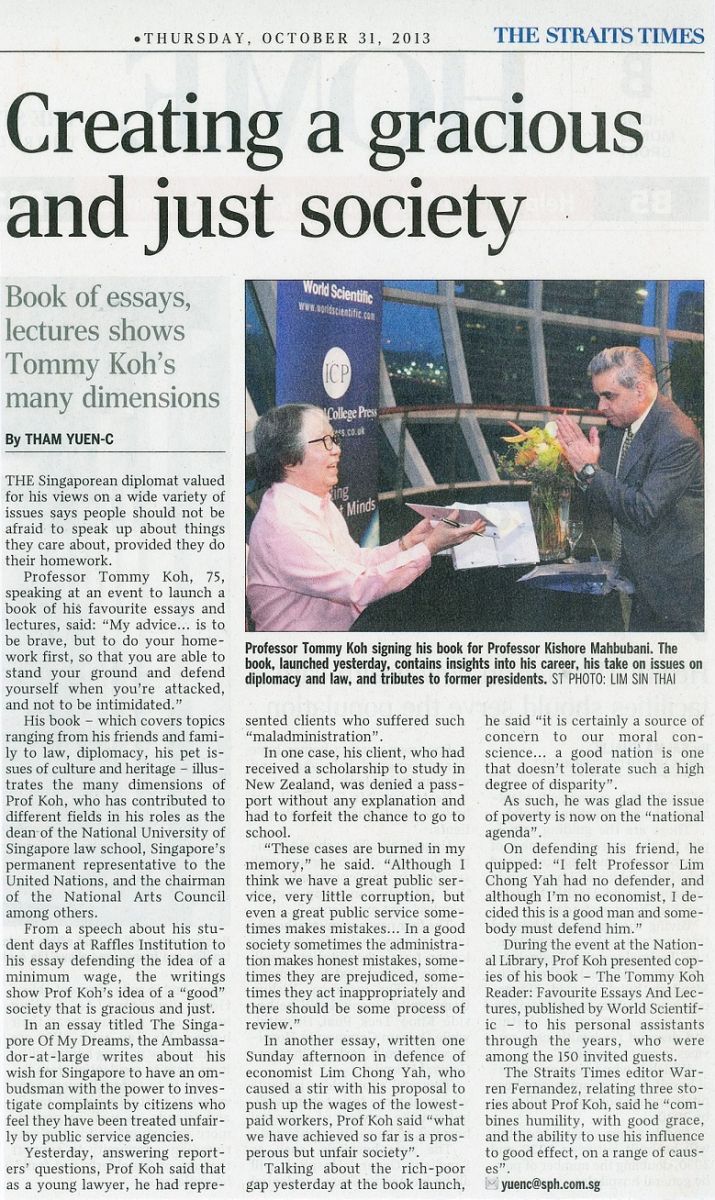
Prof Koh has been named the recipient of the 2014 Great Negotiator Award
Professor Tommy Koh, Ambassador-At-Large at Singapore’s Ministry of Foreign Affairs and Rector of Tembusu College at NUS, has been named the recipient of the 2014 Great Negotiator Award by the Program on Negotiation – an inter-university consortium of Harvard University, Massachusetts Institute of Technology and Tufts University – and the Future Diplomacy Project at Harvard Kennedy School.
Prof Koh is recognised for his outstanding contributions to the fields of negotiation and dispute resolution, especially his leading roles in challenging settings, including the Law of the Sea, the “Rio” Earth Summit, the ASEAN Charter and the Singapore-US Free Trade Agreement.
Prof Koh said: “I thank Harvard University for this great honour. I accept this award on behalf of all my colleagues who have been members of the various teams I have led, in both bilateral and multilateral negotiations.”
The Great Negotiator Award honours individuals whose lifetime achievements in the field of negotiation and dispute resolution have made a significant and lasting impact. Previous Award recipients include former US Secretary of State James A Baker, III; Martti Ahtisaari, Nobel Peace Prize Recipient and former President of Finland; Sadako Ogata, former United Nations High Commissioner for Refugees; and Lakhdar Brahimi, United Nations Secretary General’s Special Envoy to Afghanistan.
NUS President Professor Tan Chorh Chuan said: “Professor Tommy Koh is an outstanding lawyer, professor and diplomat who played a pivotal role in shaping Singapore’s foreign policy. The Great Negotiator Award is indeed a strong and timely recognition of Prof Koh’s distinguished career as well as his contributions towards international affairs and diplomacy.”
Prof Tan added that NUS’ faculty, staff and students have also benefitted from Prof Koh’s deep insights and vast experience through his involvement in the University’s activities.
Prof Koh, who is Chairman of the Centre for International Law of NUS, Special Adviser of the Institute of Policy within the Lee Kuan Yew School of Public Policy at NUS, and Chairman of the National Heritage Board, will be honoured at a series of public events at Harvard University on 10 April 2014.
21 Sept 4 pm
The Day My God Died
Documentary, Nepal and India
Directed by Andrew Levine
Duration: 60 min
The Day My God Died is a feature-length documentary that presents the stories of young girls whose lives have been shattered by the child sex trade. They describe the day they were abducted from their village and sold into sexual servitude as “The Day My God Died”. Filmed in Nepal and India this documentary provides actual footage from inside the brothels of Bombay, a world seldom seen by outsiders known as “The Cages,” captured with spy camera technology. The documentary also features Anuradha Koirala, 62, CNN Hero of the year, for her fight against the trafficking of Nepali women and children since 1993, who remind us that, “these are our daughters.”
28 Sept 4 pm
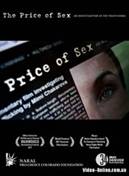
The Price of Sex NC16
Documentary, Eastern European
Produced by Mimi Chakarova
Duration: 73 min
The Price of Sex is a feature-length documentary about young Eastern European women who’ve been drawn into a world of sex trafficking and abuse. Intimate, harrowing and revealing, it is a story told by the young women who were supposed to be silenced by shame, fear and violence. Photojournalist Mimi Chakarova, who grew up in Bulgaria, takes us on a personal investigative journey, exposing the shadowy world of sex trafficking from Eastern Europe to the Middle East and Western Europe. Filming undercover and gaining extraordinary access, Chakarova illuminates how even though some women escape to tell their stories, sex trafficking thrives. Winner of two awards in 2011.
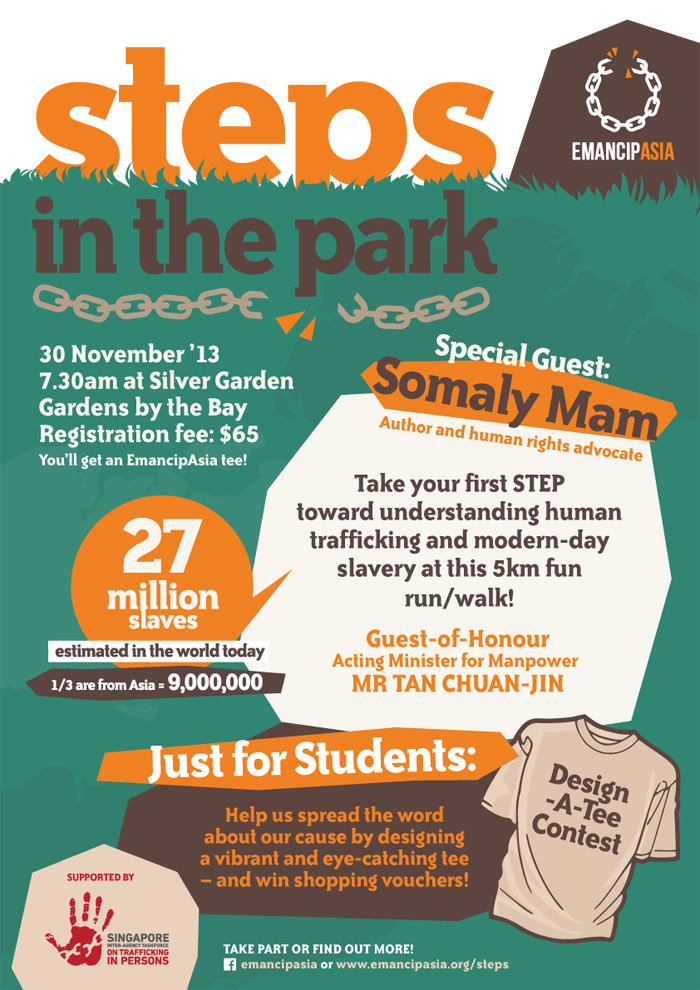
Please join us to learn about human trafficking or modern day slavery, a global business of US$32 bln per year, after arms and drugs. Almost every country is involved either as a supply or destination country, including Singapore. It is a heinous crime against humanity involving 27 million victims. Film is a powerful medium which conveys audio and visual messages which are better retained and creates emotional and long lasting impact which helps to shape personal and social attitudes. Learn about what it is, how it affects you and what you can do to help to combat this social injustice.
For more info, please visit http://www.emancipasia.org/films/.
Contact : contact@emancipAsia.org; +65 97588859
Source NUS Newshub
Students from the Tembusu College at NUS were privileged to hear from Singapore’s Minister for the Environment and Water Resources Dr Vivian Balakrishan on the topic of redefining education in the 21st century on 14 August 2013.
“The purpose of education is to maximise human potential so as to lead a meaningful life,” the former NUS medical student told the more than 50 attendees.
Sharing about his personal education journey, Dr Balakrishnan elaborated on his experiences related to competition, relationships and choices to be made. By competition, he meant the need to vie for places at secondary school, junior college and later at university and medical school.
As an NUS student, Dr Balakrishnan, who was awarded the President’s Scholarship, chose to seek out opportunities for extra-curricular activities such as participating in the NUS Students’ Union (NUSSU) and joining the debating team to build relationships. He was elected NUSSU President from 1981 to 1983 and Chairman from 1984 to 1985.
Dr Balakrishnan found, however, that his experience is vastly different from those of current students. Today’s students face greater challenges due to increasing competition, technology and its impact and urbanisation.
Against this backdrop, education has to be redefined. Given the local and international scale of the competition, students will have to work harder and smarter. Owing to advances in technology, white-collar work will be increasingly commoditised, affecting future jobs. With increasing urbanisation, there will be implications for Singapore’s relevance to the world and the types of jobs in cities.
Responding to the question on the opportunities and threats to Singapore’s current education model, Dr Balakrishnan said that there is now a wider spectrum of avenues made available to students. At NUS, he cited the options of studying at University Town, the Yale-NUS College and the Duke-NUS Graduate Medical School Singapore.
However, Dr Balakrishnan noted that the concept of the university is no longer about getting certification and presuming thereby that “life is set” with the attainment of a degree. Instead, re-learning, re-certification and re-tooling are necessary.
During the lively exchange of ideas that ensued, Dr Balakrishnan fielded many questions posed by the student audience. The topics raised included the character of Singapore’s economic evolution and the pragmatic approach to education in Singapore, morality in education, the weight of curriculum at the primary and secondary school levels.
This year is the centenary of the death of Victorian naturalist and co-discoverer of evolution by natural selection, Alfred Russel Wallace. So we have heard a lot about him recently, including the BBC Two series Bill Bailey's Jungle Hero, an episode of BBC Radio 4's In Our Time, two episodes of The Infinite Monkey Cage and scores of articles, talks and exhibitions.
Wallace deserves more attention but much of what you will have heard about him in the last few months is factually incorrect – and amounts to a misguided campaign to reinstate the reputation of a genius who (according to his fans) has been wronged by history and robbed of his rightful fame.
Since the 1970s, the story of Wallace has become something like this:
While Charles Darwin sat on his revolutionary theory for 20 years, terrified of his conservative contemporaries, Wallace boldly set out to solve the great problem of the origin of species. Not afraid to announce unorthodox views, Wallace published a radically innovative theory of evolution (minus only natural selection) in an 1855 paper.
Then, while on the island of Gilolo and prompted by thoughts about the local races, Wallace hit on the idea of the struggle for existence and natural selection. He immediately wrote up his theory and posted it to Darwin on the next mail steamer.
Darwin, however, withheld the paper for perhaps two weeks before he let it become known. During this time, according to some, Darwin stole some ideas to use in his own otherwise identical theory.
Rather than having Wallace's paper published immediately on its own, which was normal practice at the time, Darwin's friends cooked up a scheme to rob the working-class Wallace of his priority and instead put their friend Darwin first. Papers by both men were read at a scientific meeting in 1858, but Darwin is remembered as the discoverer of the theory because his contribution was placed first.
The new shelf of sympathetically written books about Wallace tells a pretty consistent story. He is now "forgotten" because he has been unfairly swept under the carpet of history. Why? Because the wealthy and privileged Darwin basks in all the glory of revolutionising our understanding of life on Earth. (Not to mention the back of the £10 note, although Jane Austen is about to boot him off that pedestal).
Darwin's life and works have been meticulously studied by many scholars for over a century. But while some very able scholars have studied Wallace, he by contrast has remained mostly the preserve of amateurs and enthusiasts.
There has not been enough progress with our understanding of Wallace because some of the important research projects that have unveiled a treasure trove of new findings about Darwin had never been done for Wallace: his complete works had not been assembled on one scholarly website, his Malay archipelago expedition correspondence had not been collected and edited and his notebooks and journals had not been edited and their contents made intelligible.
All of these have recently been done, the latter two not yet published. These new sources have shown us that every substantive claim in the popular narrative about Wallace turns out to be incorrect.
• Wallace was not working class but the son of a gentleman and attended a public school.
• He thought of natural selection on the island of Ternate, not Gilolo. Hence the races there did not inspire his theory.
• He did not send his essay to Darwin on the next steamer, but replied on the following monthly steamer. So Darwin received Wallace's essay exactly when he said he did.
• Darwin and his friends were not obliged to publish Wallace's paper, as he had not requested this, but it was acceptable practice at the time for Wallace's essay to be published without seeking his explicit permission first.
• Darwin did not borrow any idea on evolutionary divergence from Wallace – who in fact had no such theory of his own. And in any case, at the time scientific priority was not settled only by publication, but also by sharing one's views with colleagues privately.
• Darwin did not keep his belief in evolution secret and he did not postpone publishing because of any fears. But ironically Wallace was afraid to reveal his evolutionary beliefs and carefully concealed them in his published papers. His famous 1855 paper never mentions evolution.
Wallace's notebooks reveal the gradual development of most of his evolutionary ideas. Far from the story that he set out to discover a mechanism for evolution, Wallace showed no interest in the causes of adaptations. On the contrary, he privately ridiculed traditional ideas of adaptation as evidence of divine design.
All this makes his essay proposing natural selection all the more mysterious. For Darwin we have a detailed paper trail revealing the development of his conception of natural selection. For Wallace we only have his published essay. What inspired Wallace's famous eureka moment in the midst of a malarial fever?
There is only one contemporary clue. In a letter written about two weeks later, Wallace mentioned that over the past four years he had found differently coloured tiger beetles on different islands which exactly matched the colour of the sand or mud where they lived. "Such facts as these puzzled me for a long time, but I have lately worked out a theory which accounts for them naturally."
Wallace already believed that new varieties of animals appeared randomly and frequently, the offspring of their parent species. If lots of varieties of various shades are constantly appearing, how does one come to perfectly match the colour of the environment? He remembered the idea of the struggle for existence. The varieties best suited to survive would be those that happened to be the right colour.
If the environment slowly changed colour, the parent species might go extinct. One of its daughter varieties could then be well adapted and replace it as the species. It could never revert back to the colour of its parent as that was now inferior. Thus through a struggle for existence, randomly generated variants would be sifted to form new species. It was a brilliant breakthrough.
But the real story of Wallace's contribution is far from the myth of the wronged working class hero. The differences between the Wallace of his modern admirers and the historical Wallace are in fact like the differences between the Jesus of pious Christians and the historical Jesus.
Darwin gained nothing from having his paper printed ahead of Wallace's. Darwin's fame and reputation, and Wallace's comparative obscurity, stem from the impact of Darwin's Origin of Species. As Wallace himself wrote: "this vast, this totally unprecedented change in public opinion has been the result of the work of one man, and was brought about in the short space of twenty years!"
Dr John van Wyhe is a historian of science at the National University of Singapore and director of Darwin Online and Wallace Online. His bookDispelling the Darkness: Voyage in the Malay Archipelago and the Discovery of Evolution by Wallace and Darwin is published this month
2013 ISCN Conference
Theme: The Future is Now
Tuesday, 18 June 2013
Keynote Speech by Prof Tommy Koh
Salutation
President Tan Chorh Chuan, Deputy President Joe Mullinix, Dr Bernd Kasemir, Ladies and Gentlemen,
Meaning of the Theme
The theme of this conference is: the future is now. What does it mean? I think it means that the future of the earth depends on what we do or omit to do now. The health of the earth faces three principal challenges: (a) global warming and climate change; (b) the loss of biological diversity and ecosystems; and (c) the warming and acidification of the oceans and the unsustainable exploitation of its living resources.
The Seven Horsemen
I would summarise the challenges to the health of the earth in the following seven points:
(i) The emission of greenhouse gases has continued to increase and we are no longer sure whether the goal to cap the rise of global temperature to 2ºC is achievable.
(ii) It is not certain whether the agreement in Durban to negotiate a post-2020 legally binding agreement, applicable to all countries, will succeed. The Kyoto Protocol expired at the end of 2012.
(iii) The world’s rain forests, including those in Indonesia and East Malaysia are rapidly disappearing, due to deforestation, illegal logging and unsustainable forestry management.
(iv) The world is losing its biological diversity at a rate which is 1,000 times faster than the natural rate of extinction.
(v) In the past 50 years, we have lost 20 per cent of the land suitable for agriculture, 90 per cent of our large commercial fisheries and 33 per cent of our forests, leading to the loss of entire ecosystems.
(vi) The oceans, which absorb 30 per cent of the carbon dioxide from the atmosphere and provide the largest source of protein for human beings, are threatened by pollution, acidification, rising temperature and over-exploitation.
(vii) Urbanisation has transformed the world but many of our towns and cities are becoming less liveable and less sustainable.
ISCN’s Mission
What is the ISCN’s mission? I think the ISCN’s mission is to: (a) promote sustainable campus operations; (b) to integrate sustainability into the university’s research and teaching; and (c) to create an institutional culture of sustainability within campuses. I would like to exhort you to envision ISCN campuses as mini eco-cities. I would encourage you to promote sustainability as the lifestyle of your students and teachers. I expect ISCN professors and researchers to contribute to the solution of our most urgent challenges. In short, ISCN should be a beacon to the world.
NUS: Achievements and Aspirations
Since we are meeting at NUS and since I am a faculty member of NUS, I would like to salute NUS for its many achievements. We have both a bachelor’s degree in environmental studies, a master’s degree in environmental management and the NUS Environmental Research Institute. We have the Tropical Marine Science Institute and the Raffles Museum of Biodiversity Research. We have an Institute of Water Policy, the Singapore-Delft Water Alliance and the NUS-G.E. Water Technology Centre. We have an Institute of Energy Studies and an Institute of Solar Energy Research. We have a Centre for Sustainable Asian Cities and the Asia Pacific Centre for Environmental Law. We have environmentally-friendly new buildings, eco-friendly canteens, active recycling efforts and a policy of planting only native trees on campus. We are building a museum of natural history which will enable us to educate the public on the importance of conserving nature.
At the same time, I would like to urge NUS to raise the bar. Let me give you some suggestions.
NUS Campus – A Green Mark Platinum District
First, NUS has 19 Green Mark projects: 8 platinum, 5 gold plus, 4 gold and two certificates. In addition, University Town, where we are meeting, was given a Green Mark status. I would encourage NUS to consider making the entire NUS campus a Green Mark Platinum District, where it can put in place an overall strategy to green its facilities as well as the environment. These can include a macro plan for shared plants and services to optimise campus energy efficiency; the use of sustainable building materials such as cross-laminated timber, in the construction of its new low and medium rise buildings; the provision of green transportation and greater pedestrianisation throughout the campus; plans for more naturally ventilated and open students spaces for communal activities; and more parks on campus.
A Green Strategic Unit at NUS
Second, NUS should consider setting up a green strategic unit to drive greater collaboration among various parties, for energy-efficiency optimisation and to drive state-of-the art initiatives to support research and innovation. These facilities can also be used for test-beds, to complement research and technology applications.
Upgrade Old Buildings
Third, NUS should consider ramping up and accelerating its programme to upgrade and optimise the energy efficiency of its old buildings.
Euro V Buses
Fourth, NUS runs a bus shuttle service. Of its current fleet of 37 buses, 24 are of Euro V standard and 13 are of Euro II standard. I hope NUS will phase out the use of the Euro II buses. NUS should learn from the best practices of other ISCN members.
Encourage Cycling on Campus
Fifth, Singapore should emulate Denmark and the Netherlands in encouraging the use of the bicycle. NUS should consider leading the way by encouraging the use of the bicycle on campus. We need dedicated bicycle paths, bicycle racks in all buildings, and shower facilities. We should explore the feasibility of a bicycle rental scheme for student residences. Let us envision a future when the bicycle, and not the car, is the king of the road on our campus.
CONCLUSION
I shall conclude. I am very pleased that both NUS and NTU are members of ISCN. I believe that it is within our power to make our campuses mini eco-cities. We should apply innovations developed by our researchers, on various aspects of sustainability. For example, the first zero energy building in Singapore, should have been built by NUS or NTU. We can and should be a role model for our larger society to emulate. We should also try to make sustainability a way of life for our teachers and students. University administrators should work closely with their students and persuade them to champion sustainability. One milestone in this journey would be to have more hybrid vehicles than S.U.Vs and other gas-guzzlers on our campuses. In conclusion, I hope all of you will join me in endorsing the Taillores Declaration and its ten action points.
Thank you very much.
. . . . .