Ban Ki-moon is the eighth Secretary-General of the United Nations. He was elected in 2006 and re-elected to serve a second five-year term in 2011. He will step down at the end of this year.
He is the second Asian to occupy this important post. The first was U Thant of Myanmar, who served as the third Secretary-General, from 1961 to 1971.
The job of the Secretary-General is a thankless one. If he is too independent-minded and too proactive, the Permanent Members of the Security Council would be unhappy. On the other hand, if he is too timid and passive, the wider UN membership and the international community would be unhappy. The challenge for any Secretary-General is to balance the realities of Big Power politics with leadership, conviction and quiet diplomacy.
From Mr Charisma to Confucian Gentleman
Ban Ki-moon succeeded Kofi Annan, who was very popular and often treated like a rock star by the media. Kofi Annan is good looking, speaks well and exudes charisma. He understands the importance of the media and cultivated it effectively. As a result, he has enjoyed good press.
In contrast, Ban Ki-moon is a Confucian gentleman. He is humble, disciplined, hard-working and self-effacing. He does not go out of his way to cultivate the media. He believes that history will judge him on the basis of his performance and not on his popularity or his image in the press.
The Western media is largely unfamiliar with Asian civilizations. It does not understand the values and traditions of a Confucian gentleman. The Western media does not like Ban Ki-moon and has written negatively about him from the moment he took office. For example, in March 2007, three months after he became Secretary-General, the US magazine, Newsweek, had him on its cover with the caption: “Why This Man Will Fail!” That was very unfair but the Western media’s negative narrative about him has persisted to this day. It has, unfortunately, influenced the perception of many Western intellectuals towards Ban.
Korean Workaholic
The Koreans are a very hard working people. Ban Ki-moon is a workaholic. He is on duty 24/7 and his phone is never switched off. He will accept telephone calls from the world’s leaders at anytime of the day or night. He prepares himself conscientiously for every meeting that he chairs or attends. On some days, he makes as many as ten speeches.
Ban Ki-moon has tried very hard to be helpful to the member states, especially when they are faced with adversity. Thus, when a member state is hit by a natural disaster, its call for help will always be answered by Ban. He went to Pakistan when it was struck by devastating floods, to Myanmar after cyclone Nargis, to Haiti after the earthquake, to Chile, Sichuan, etc. He wanted to express the UN’s solidarity with the victims of the natural disaster, to mobilise the assistance of the UN system and to call for the help of the world’s leaders.
Ban Ki-moon is a good friend of ASEAN. He has expressed his friendship and respect for ASEAN by coming personally to meet our leaders at our annual summits. He has also been a good friend of the small states and their grouping called The Forum of Small States (FOSS). No previous Secretary-General has given as much time and attention to the small states. FOSS honoured him on the occasion of its 25th anniversary as a “Friend of FOSS”.
The image of Ban in the media is that of a timid man. He is cautious, prudent and circumspect. He is, however, not lacking in conviction or courage. He believes passionately in the principles of the UN Charter. When he feels strongly that a political leader has committed egregious violations of the human rights of his people, Ban has not hesitated to speak out. He has, on several occasions, publicly called upon President Bashar al-Assad of Syria, “to stop killing your own people”. He has also not hesitated to criticise member states for their failure to comply with the decisions of the UN and their obligations under the UN Charter.
Peace-Maker
Ban is a diplomat by profession and nature. He believes that diplomacy can be used to narrow the gap between parties to a dispute. He believes that when diplomacy is used in a timely manner, it can prevent war. Ban has used the office of the Secretary-General to convene meetings of leaders who are locked in disputes and to prevent the disputes from escalating into conflicts.
Ban is good at quiet diplomacy. He does not take credit for his successes. In January 2008, there was a crisis in Gaza, following the Israeli invasion. The leaders of the world tried unsuccessfully to persuade the two parties to agree to a ceasefire. To break the impasse, Ban came up with the idea of a sequential instead of a simultaneous ceasefire. He persuaded Prime Minister Olmert of Israel to declare a unilateral ceasefire. This was followed by a ceasefire by Hamas. This has brought peace to Gaza.
What has Ban Ki-moon achieved during his 10 years as the Secretary-General of the United Nations? When asked by Tom Plate, the author of the book, Conversations with Ban Ki-moon, Ban said that he wanted to be remembered for his work on global warming, gender equity and the reform of the management of the UN.
Ban Ki-moon is convinced that global warming poses a dire threat to the future of humanity. This issue has been on the top of his agenda. He has used his moral authority and the moral power of the UN to urge the international community to take collective action. He has spoken on this issue to all the leaders of the world. He has convened meetings, big and small, to forge consensus. He played a significant role in Paris, working closely with France and other key stakeholders, to bring about consensus. This is one of his achievements.
Women leaders at the UN
South Korea is a great success story. However, gender equity is not one of its achievements. It is therefore unusual for a Korean Secretary-General to bring about a revolution at the UN on women.
When Ban took office, he found very few women in senior positions in the UN Secretariat. He increased the number of women with the rank of Under-Secretary-General by 60 percent and the number of women with the rank of Assistant Secretary-General by 40 per cent. He recruited Michelle Bachelet, the current President of Chile, and the former Prime Minister of New Zealand, Helen Clark, to fill two senior positions. He appointed Valerie Amos as the Under-Secretary-General for Humanitarian Affairs and Emergency Relief Coordinator. He appointed a Singaporean, Dr Noeleen Heyzer, as the first woman to head the UN Economic and Social Commission for the Asia Pacific.
When asked whether he would like to see a woman succeed him as the ninth Secretary-General, Ban said it was high time a woman did so.
Reforming the management of the UN Secretariat and the UN system is a formidable task. It is hard to bring about change because of the vested interests of important member states and constituencies. They will oppose any change which threatens their interests. There are many admirable and idealistic men and women who work for the UN. However, there are also some others who are there because of their political connections. Two distinguished Singaporeans, who had served in the Secretariat, were victimised even though they had done no wrong. The system is riddled with politics and does not reflect the best international standard of good governance.
Ban has had some small victories. He created the UN Ethics Office. He managed to merge four separate organizations to form UN Women: UN Entity for Gender Equality and the Empowerment of Women. I regret to say that Ban’s legacy on this issue is not as impressive as on the other two issues.
As an Asian, I am proud of the records of U Thant and Ban Ki-moon, as the third and eighth Secretaries-General of the United Nations respectively. Ban Ki-moon can look back on his tenure with pride and satisfaction.
Salutations
1. Mrs Nathan and members of the Nathan family, Mr President, Prime Minister, the Speaker of Parliament, the Chief Justice, Fellow Singaporeans, Distinguished Guests, Ladies and Gentlemen.
MFA and Foreign Service
2. I have the honour to speak on behalf of the Ministry of Foreign Affairs and the Singapore Foreign Service. Mr Nathan had played a key role in the founding of both institutions. He joined the Ministry in December 1965 and helped our first Foreign Minister, Mr Rajaratnam, to set up the Ministry. He left in 1971 to assume another assignment. He returned in 1978 as its First Permanent Secretary. The Prime Minister had given him a mandate: transform the Ministry into a first class one in two years or it will be closed down and made into a department of the Prime Minister’s Office. It seemed like a mission impossible. I had known Mr Nathan and worked closely with him since 1968. I regard him as my mentor and my comrade. In my eulogy I will focus on the three enduring contributions which Mr Nathan had made.
From No Class to First Class
3. First, Mr. Nathan succeeded in transforming the foreign Ministry, in two short years, from no class to a first class one. As we all know, Mr Lee Kuan Yew had very high standards. He made no allowances for the fact that our Ministry was new and we were all learning on the job. He expected the quality of our output to match the high standard of the centuries-old British Foreign Office. Undaunted by the challenge, Mr Nathan recruited bright young officers to join him. He demanded discipline, hard work, and competence. Most of all, he demanded loyalty and dedication to duty. His method of leadership was “tough love”. However, behind that tough façade, there was a warm and kind heart. A few months ago, he hosted a lunch for about a dozen of the bright young officers, now grown old, who had helped him to fulfil his impossible mission. He wanted to thank them and to explain why he was such a demanding boss. It was a poignant occasion because we knew that it would be the last reunion with “The Boss”. Because of the strong foundation he had laid, the Singapore Ministry of Foreign Affairs and the Singapore Foreign Service are considered among the best in the world.
Courage In The Face of Adversity
4. Second, he taught us to be courageous and to defend Singapore’s interests without fear or hesitation. Mr Nathan was a courageous man as can be seen from his heroic role in the Laju case. He was our Ambassador in Washington at a difficult time. The Michael Fay case erupted during his watch. My American friends have told me that they admired the calm and rational way in which he defended Singapore’s position in the face of vicious attacks. He held high the flag of Singapore. Because of his example and precept, although Singapore is a small country, it is a country which cannot be bullied by bigger countries, not even the major powers. One of the principles of Singapore’s foreign policy is that it will stand up for its national interests against any foe, big or small.
Singapore’s Super Ambassador
5. Third, Mr. Nathan represented Singapore with great distinction as our High Commissioner to Malaysia and as our Ambassador to the United States. However, his most important diplomatic role was as the sixth President of Singapore. During his 12 year tenure, he visited more countries than all his predecessors put together. Through these state visits, he strengthened our links with other countries, expanded our political and economic space and opened the door to new economic opportunities for our business and industry. He had a flair for dealing with foreign leaders and foreign countries. Perhaps because of his training in social work, he was able to establish a good rapport with his interlocutors and to put them at ease. He had the memory of an elephant and could remember people he had befriended in his previous assignments, no matter how long ago. He was able to convert his global network of friends into friends of Singapore.
Conclusion
6. I shall conclude. Mr. Nathan will always be remembered as one of the founders of our Foreign Ministry and Foreign Service. Our success today is due to the strong foundation that he, Mr S Rajaratnam, Mr Lee Kuan Yew and other pioneers had laid. He taught us to be courageous and to be fearless in defending the national interests of Singapore. He was our super Ambassador to the world.
. . . . . . . .
SIGN UP FOR UROPS!
Interested in learning more about research? Would you like to gain experience working with a College Fellow? If so , please think about reading a Tembusu College Undergraduate Research Opportunity (UROP) this coming semester. In order to read this 4-MC module you should have read at least one Senior Seminar and at least one Ideas and Exposition module or a faculty-based writing course (writing module). Applications from students who have read one Junior Seminar and one writing module will also be considered.
Please contact Dr Connor at rctccg@nus.edu.sg by Saturday 6th August at 10.00 a.m. if you are have any questions about the UROP module and/or are interested in pursuing one of the projects below.
1. Artificial Intelligence, Singapore, and the “Asian Century”
The 21st century has been dubbed the “Asian Century” whereas the 19th and 20th centuries belonged respectively, to the British and the United States. Singapore’s hub status in Southeast Asia poses a unique position to investigate techno-cultural changes, specifically those techno-cultural dimensions related to the advent of “broad” AI or “Artificial Intelligence.” Students are invited to submit proposals for research on the topic of broad AI as it is pertinent to Singapore, the region, and beyond. This project is supervised by Dr Adam Groves.
2. Audiencing Social Media: Gendered Perceptions Of Bloggers In Singapore
What do young Singaporean women think of female bloggers in Singapore? How ‘normal’ are they perceived to be? This project will explore these questions through contributing towards an academic paper in progress. Specifically, the work will involve writing a proposal, contributing to a literature review and analyzing interview data from young Singaporean women about bloggers in Singapore. This project is supervised by Dr Connor Graham and will involve working with an Australian anthropologist of the Internet.
3. Reading ‘Dead’ Places
What do abandoned theme parks in Japan mean? How they are displayed online and how does this display relate to the ‘real’ places? This project involves theorizing about and developing a minor history of abandoned theme parks in Japan through focusing on how one site is displayed through photographs online. The work will involve writing a proposal, sourcing and analyzing photographs and developing an understanding of the historyof theme parks. This project is supervised by Dr Connor Graham and will involve working with an interaction designer from SUTD.
4. ‘The User’ in Studies of ICTs, 1990-2010
What does the term “user” really mean? How is it used and what assumptions does it make about people? This project will focus on examining studies of Information and Communication Technologies (ICTs) as discourse in order to develop answers to these questions. Specifically the work will involve assembling a body of literature and helping with its analysis to trace trajectories and changes in the meaning of the term “user”. The work will contribute to a co-authored paper with an American anthropologist. This project is supervised by Dr Connor Graham.
Sign Up for the Reading Pods Now!
Interested in reading a book with a faculty member or student of the college? Select one from the five titles and register yourself at the reception counter of Tembusu admin office. Each book cost only S$10, so hurry and sign up now! Registration deadline: 19th August, Friday.
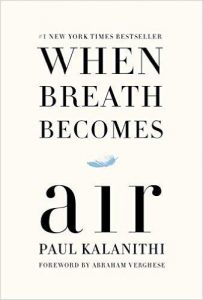
1. Paul Kalanithi’s When Breath Becomes Air led by AP Lina Lim
2. Italo Calvino’s The Castle of Crossed Destinies led by Mr Shawn Lim You Hao

3. Philip K Dick’s A Scanner Darkly led by Dr Adam Staley Groves

4. Stephen Greenblatt’s The Swerve: How the World Became Modern led by Dr John van Wyhe
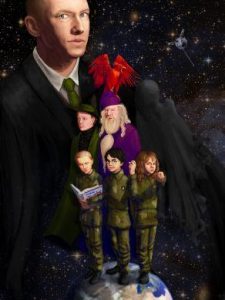
5. Eliezer Yudkowsky’s Harry Potter and the Methods of Rationality (e-book) led by Mr Kabir Khandpur
*click on image to download ebook