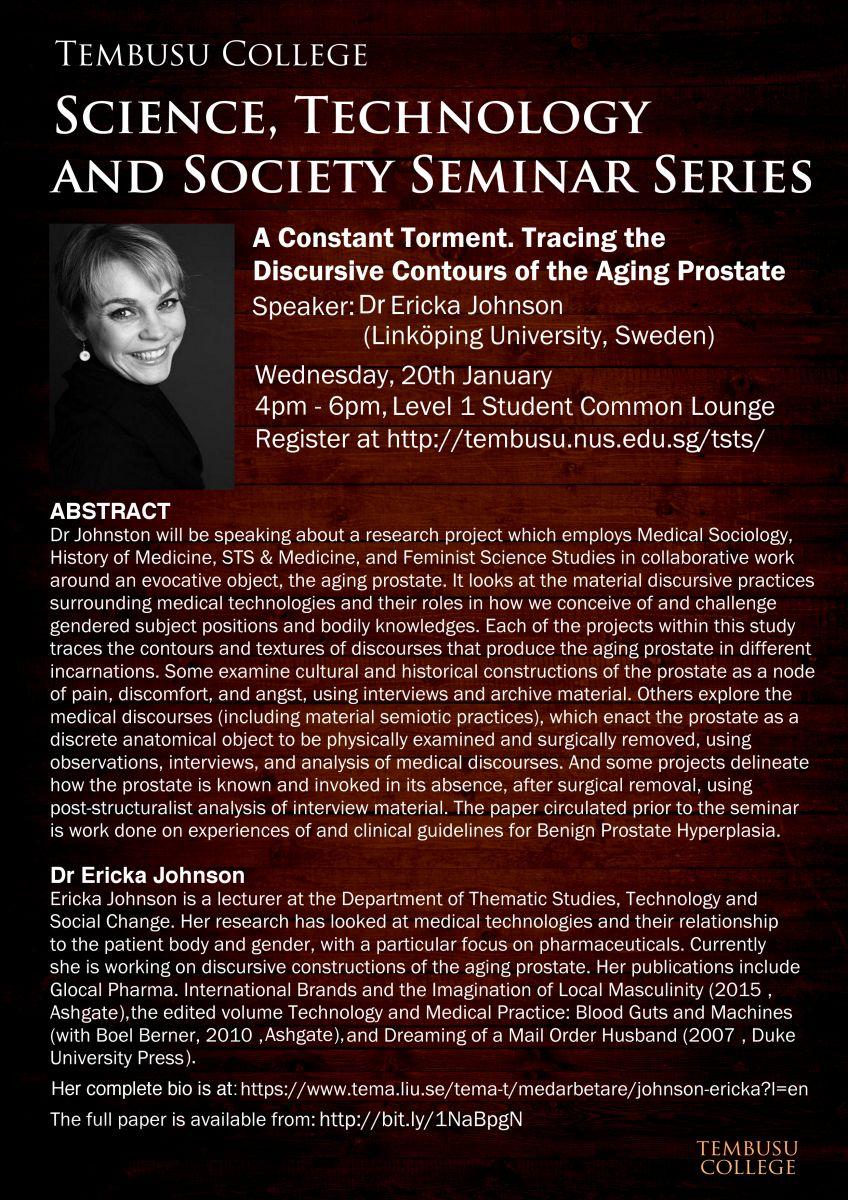
Tembusu STS Seminar: Dr Ericka Johnson

Click to enlarge

Tembusu College

Science, Technology and Society Seminar Series

A Constant Torment. Tracing the Discursive Contours of the Aging Prostate

Speaker: Dr Ericka Johnson

(Linkoping University, Sweden)

Wednesday, 20th January

4pm-6pm, Level 1 Student Common Lounge

Register at https://tembusu.nus.edu.sg/tsts/


ABSTRACT

Dr Johnston will be speaking about a research project which employs Medical Sociology, History of Medicine, STS & Medicine, and Feminist Science Studies in collaborative work around an evocative object, the aging prostate. It looks at the material discursive practices surrounding medical technologies and their roles in how we conceive of and challenge gendered subject positions and bodily knowledge. Each of the projects within this study traces the contours and textures of discourses that produce the aging prostate in different incarnations. Some examine cultural and historical constructions of the prostate as a node of pain, discomfort, and angst, using interviews and archive material. Others explore the medical discourses (including material semiotic practices), which enact the prostate as a discrete anatomical object to be physically examined and surgically removed, using how the prostate is known and invoked in its absence, after surgical removal, using post-structuralist analysis of interview material. The paper circulated prior to the seminar is work done on experiences of and clinical guidelines for Benign Prostate Hyperplasia.

Dr Ericka Johnson

Ericka Johnson is a lecturer at the Department of Thematic Studies, Technology and Social Change. Her research has looked at medical technologies and their relationship to the patient body and gender, with a particular focus on pharmaceuticals. Currently she is working on discursive constructions of the aging prostate. Her publications include Glocal Pharma. International Brands and the Imagination of Masculinity (2015, Ashgate), th edited volume Technology and Medical Practice: BloodGuts and Machines (with Boel Berner, 2010, Ashgate), and Dreaming of a Mail Order Husband (2007, Duke University Press).

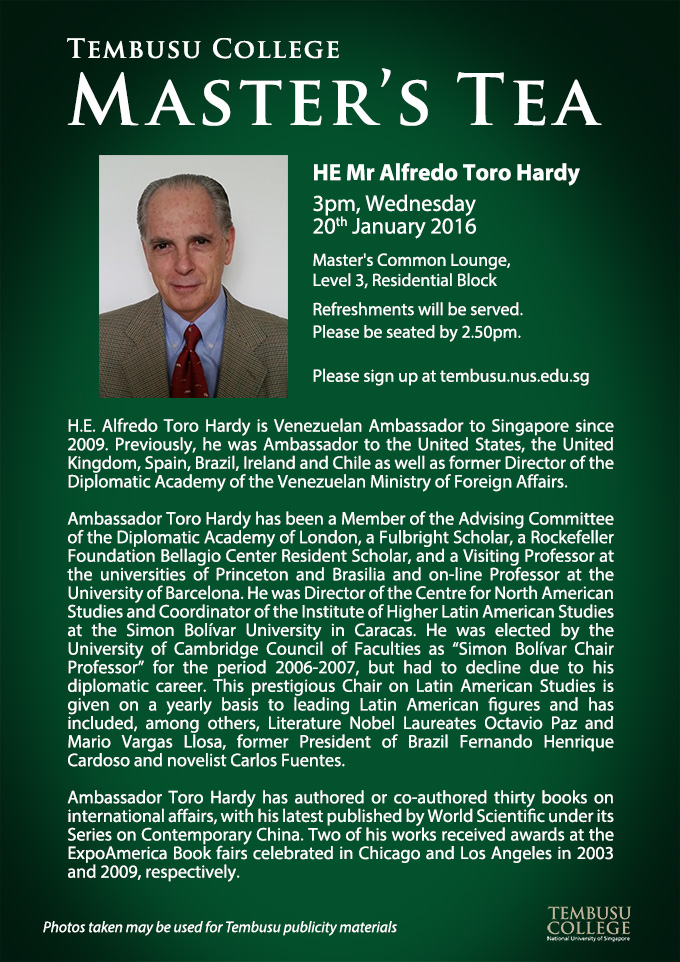
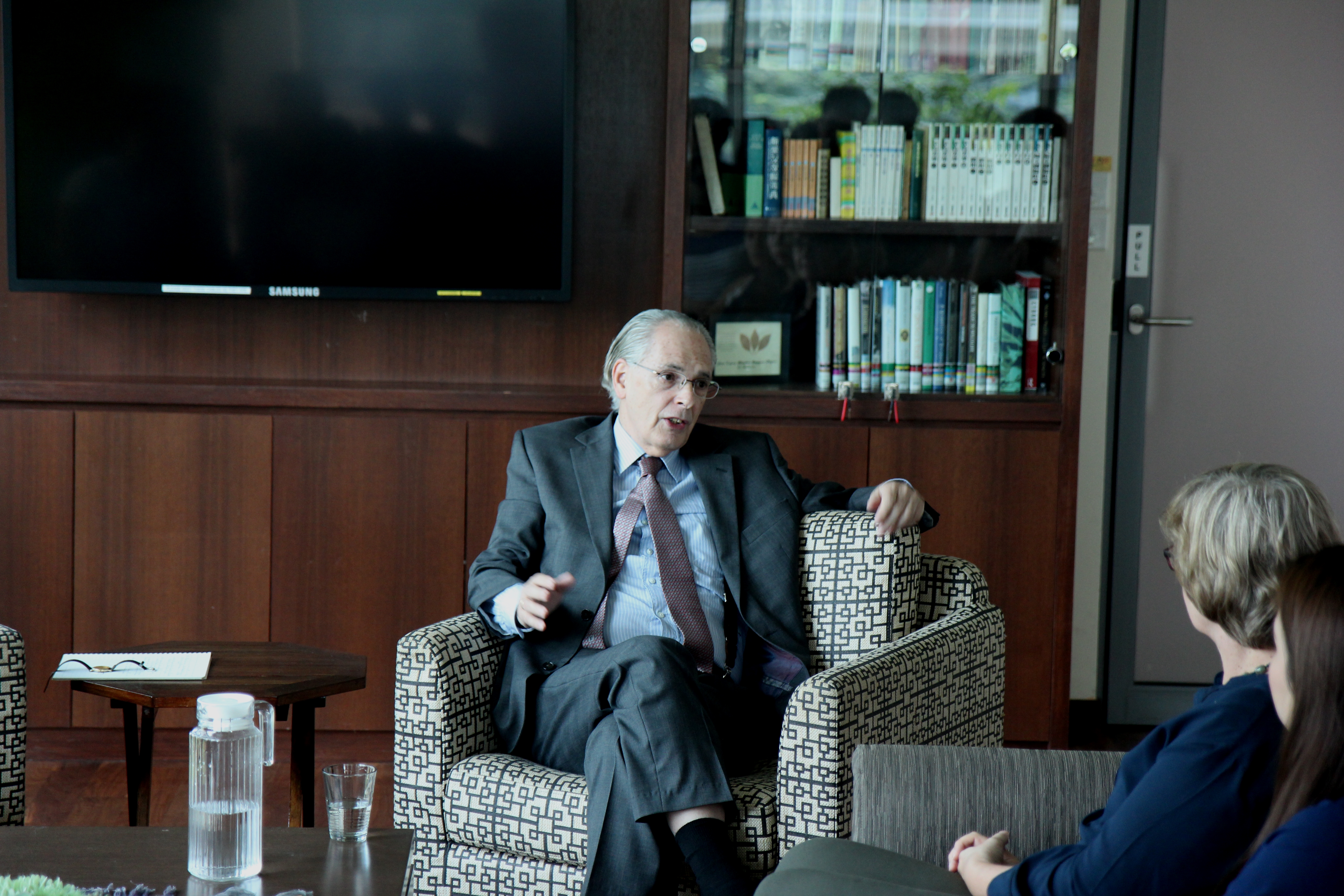
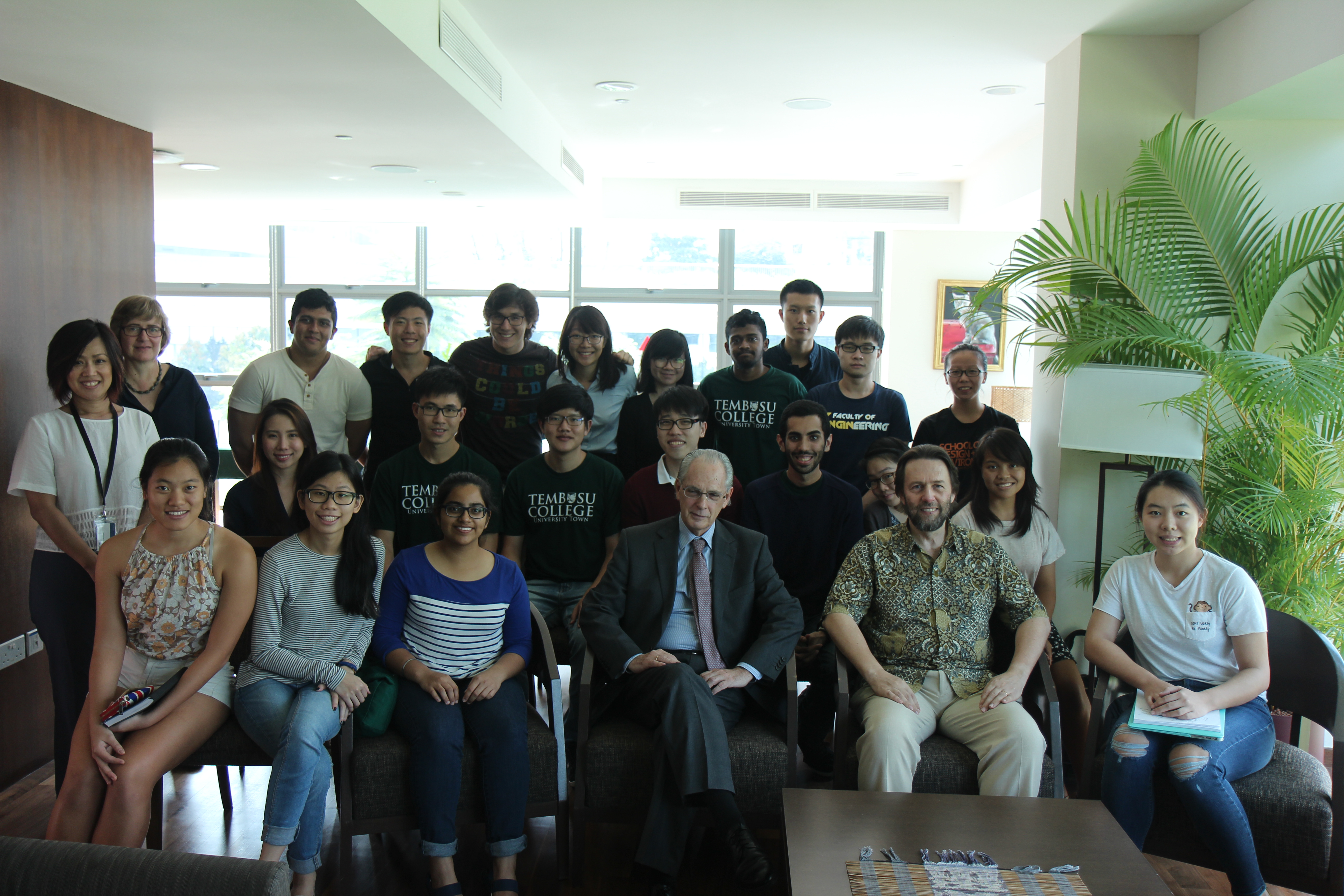
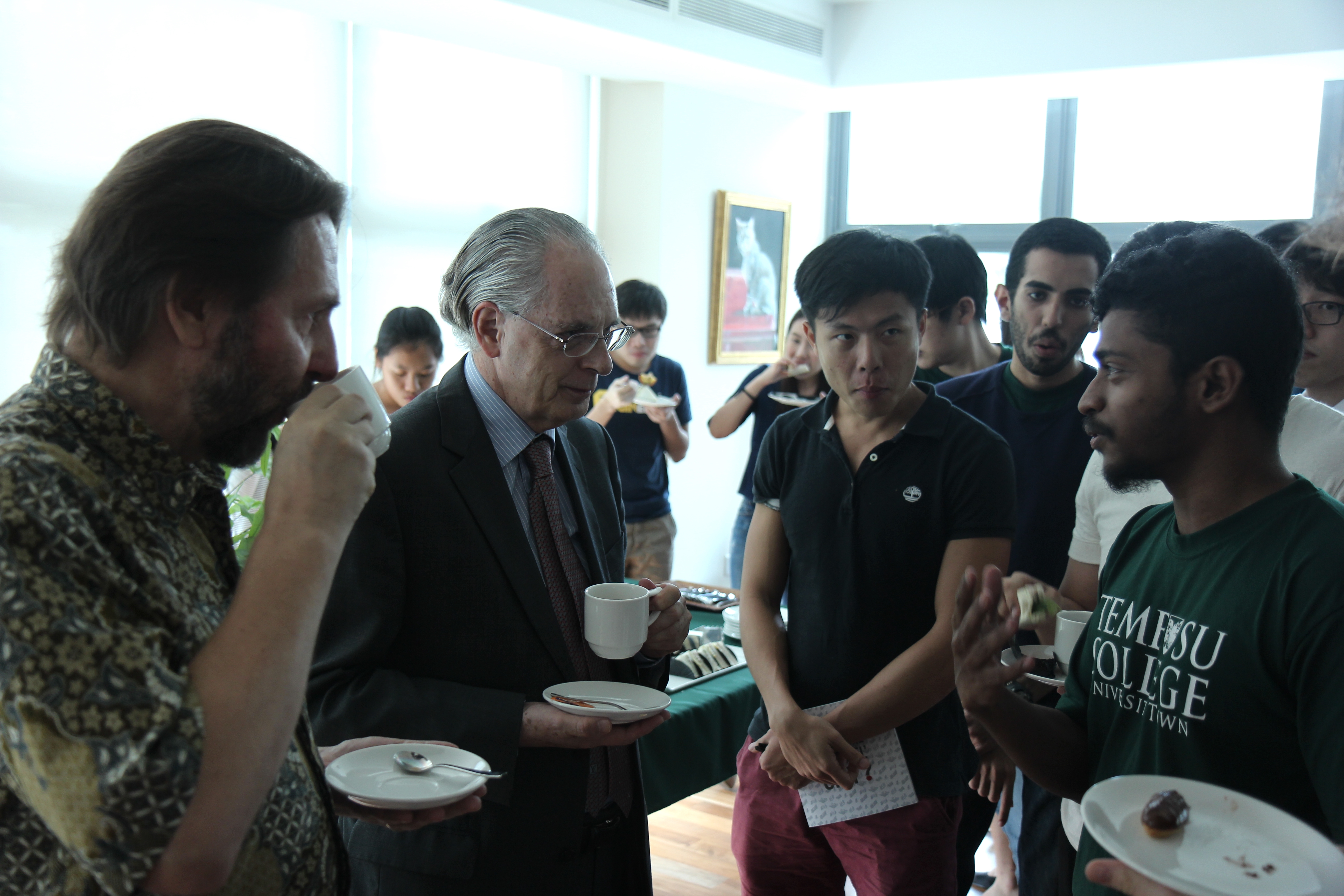
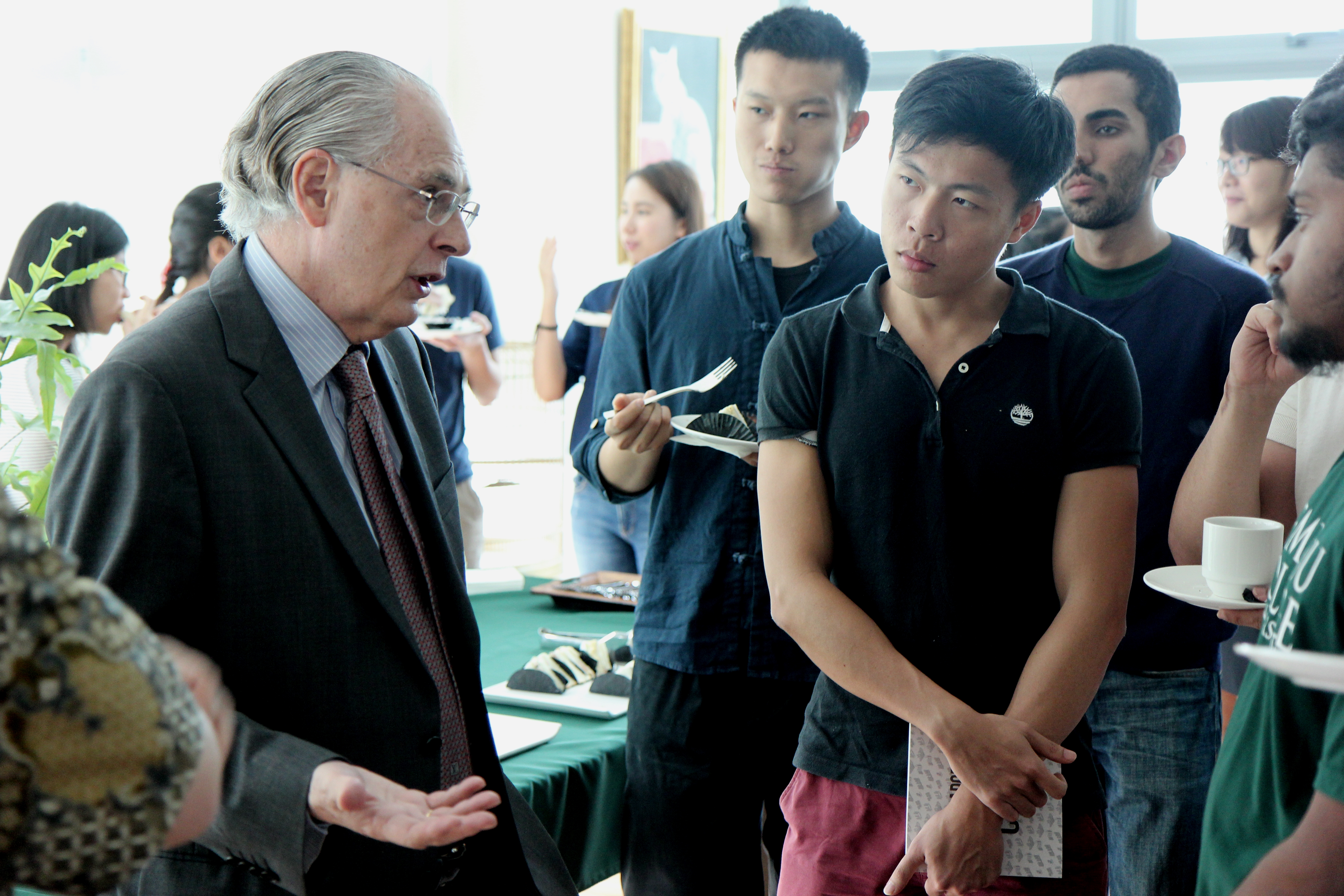
Master’s Tea with His Excellency Mr Alfredo Toro Hardy

Click to enlarge

Tembusu College Master’s Tea

His Excellency Alfredo Toro Hardy

3pm, Wednesday

20th January 2016

Master’s Common Lounge,

Level 3, Residential Block

Refreshments will be served.

Please be seated by 2.50pm.

Please sign up at dev-tembusu-nus.pantheonsite.io

His Excellency Alfredo Toro Hardy is Venezuelan Ambassador to Singapore since 2009. Previously, he was Ambassador to the United States, the United Kingdom, Spain, Brazil, Ireland and Chile as well as former Director of the Diplomatic Academy of the Venezuelan Ministry of Foreign Affairs.

Ambassador Toro Hardy has been a Member of the Advising Committee of the Diplomatic Academy of London, a Fulbright Scholar, a Rockefeller Foundation Bellagio Center Resident Scholar, and a Visiting Professor at the universities of Princeton and Brasilia and on-line Professor at the University of Barcelona. He was Director of the Centre for North American Studies and Coordinator of the Institute of Higher Latin American Studies at the Simon Bolívar University in Caracas. He was elected by the University of Cambridge Council of Faculties as “Simon Bolívar Chair Professor” for the period 2006-2007, but had to decline due to his diplomatic career. This prestigious Chair on Latin American Studies is given on a yearly basis to leading Latin American figures and has included, among others, Literature Nobel Laureates Octavio Paz and Mario Vargas Llosa, former President of Brazil Fernando Henrique Cardoso and novelist Carlos Fuentes.

Ambassador Toro Hardy has authored or co-authored thirty books on international affairs, with his latest published by World Scientific under its Series on Contemporary China. Two of his works received awards at the ExpoAmerica Book fairs celebrated in Chicago and Los Angeles in 2003 and 2009, respectively.

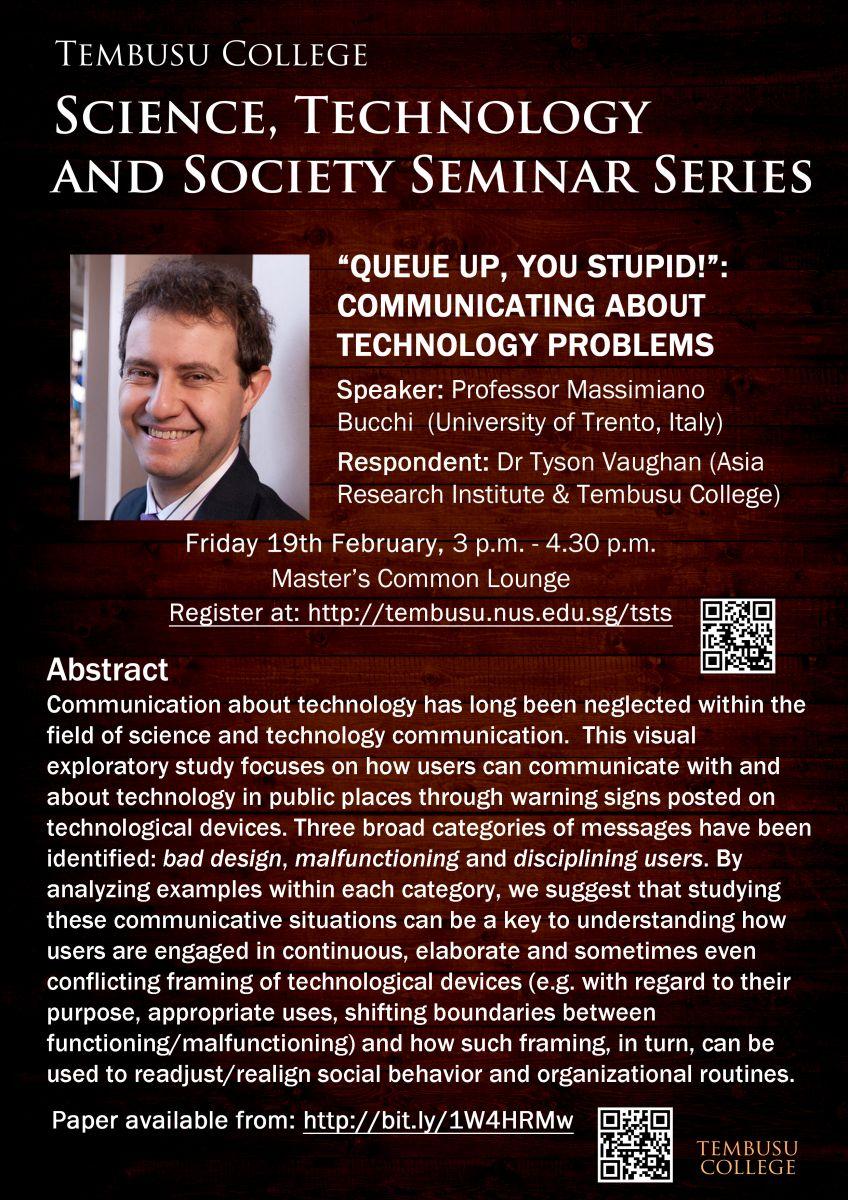
Tembusu STS Seminar: Professor Massimiano Bucchi

Click to enlarge

Tembusu College

Science, Technology and Society Seminar Series

“Queue Up, You Stupid!”: Communicating About Technology Problems

Speaker: Professor Massimiano Bucchi (University of Trento, Italy)

Respondent: Dr Tyson Vaughan (Asia Research Institute and Tembusu College)

Friday 19th February 3-4.30pm

Master’s Common Lounge

Abstract

Communication about technology has long been neglected within the filed of science and technology communication. This visual exploratory study focuses on how users can communicate with and about technology in public places through warning signs posted on technological devices. Three broad categories of messages have been identified: bad design, malfunctioning and disciplining users. By analysing examples within each category, we suggest that studying these communicative situations can be a key to understanding how users are engaged in continuous, elaborate and sometimes even conflicting framing of technological devices (e.g. with regard to their purpose, appropriate uses, shifting boundaries between functioning/ malfunctioning) and how such framing, in turn, can be used to readjust/ realign social behaviour and organisational routines.

Please click on the image above to register. The paper being discussed is available from: http://bit.ly/1W4HRMw

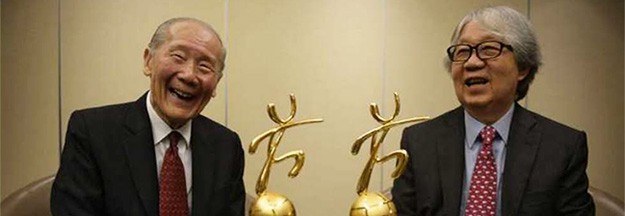
Professor Tommy Koh’s welcome remarks at the CIL-JCLOS International Conference

Salutations

Your Excellencies, Professor Tore Henriksen, Director of the Jebsen Centre for International Law, University of Tromso, Norway; Professor Robert Beckman, Director of the CIL; Mr Kamal Vaswani, Director-General for Europe, MFA, Fellow Participants, Distinguished Guests, Ladies and Gentlemen.

Warm Welcome

2. On behalf of the CIL of NUS, one of the two co-organizers of this Conference, I wish to extend a warm welcome to all the participants. I would like to thank all of you for accepting our invitation to join the Conference. Some of you have travelled a long distance to be here and we appreciate it very much.

Thank Norway

3. I would like also to thank our Norwegian colleagues for their collaboration. Last year, Bob Beckman attended the annual meeting convened by the Center for Ocean Law and Policy of the University of Virginia Law School, in Norway. It was at that meeting that Bob met Tore Henriksen and the idea for this Conference emerged from their discussions. In addition to this Conference, a book on the Governance of Arctic Shipping, co-edited by Bob Beckman, Tore Henriksen, Eric Molenaar and Ashley Roach, will be published by Edward Elgar Publishing. I would also like to thank my good friend, the Norwegian Ambassador to Singapore, Tormod Endresen, for hosting the Conference participants to a dinner reception last evening at his residence.

Focus of Conference

4. The focus of this Conference is on the Governance of Arctic Shipping. The sub-theme is the need to balance the rights and interests of the Arctic States and the User States. I will try to stay focused and limit myself to making only three points.

Arctic Ocean and UNCLOS

5. My first point is that the Arctic Ocean is part of our global commons. The 1982 UN Convention on the Law of the Sea governs the Arctic Ocean as it does all the other oceans and seas of the world. In a speech I made on 10 December 1982, exactly 33 years ago today, I described the Convention as a “constitution for the oceans”. Claims by the Arctic littoral states must be consistent with the Convention’s regimes of the Internal Waters, Territorial Sea, Contiguous Zone, Exclusive Economic Zone and Continental Shelf. The rights of coastal states and user states are prescribed by the Convention. In other words, the international law applicable to the Arctic Ocean is the UN Convention on the Law of the Sea. All the Arctic States, including the United States, accept this proposition.

Article 234 of Convention

6. The Convention has, however, taken into account the special ecological characteristics of the Arctic. Although Article 234 of the Convention does not mention the Arctic, it was negotiated by Canada, the US and the former Soviet Union, to apply to the Arctic. The Article empowers the coastal states to adopt and enforce non-discriminatory laws and regulations for the prevention, reduction and control of marine pollution from vessels in ice-covered areas within the limits of the exclusive economic zone.

IMO

7. My second point is that on all matters relating to international shipping, the Convention refers to the IMO as the competent authority. The increased presence of vessels in the Arctic has raised concerns about whether current international rules and standards are sufficient for guiding vessels in this hostile and remote environment. Responding to these concerns, the IMO has included a number of special regulations for ships operating in ice-covered waters into several Conventions and adopted non-binding guidelines to improve the safety of navigation in polar regions. By May 2015, both the safety and environmental requirements of the so-called Polar Code, and the associated SOLAS and MARPOL amendments have been adopted. These amendments will come into force on 1 January 2017.

Arctic Council

8. My third point is to refer to the important work of the Arctic Council. The Council is an inter-governmental forum, established by the 8 Arctic States, in 1996. The purpose of the Council is to foster cooperation and coordination among the Arctic States, “with the involvement of the Arctic indigenous communities and other Arctic inhabitants” as well as contributions from invited experts and observers. Singapore has been accepted as one of the twelve observers.

9. The Arctic Council has developed an agreement among the 8 member states on cooperation in aeronautical and maritime search and rescue in the Arctic region. The agreement was concluded in 2011 and came into force in 2013.

10. In 2009, the Arctic Council adopted the non-binding Offshore Oil and Gas Guidelines. In 2011, a binding agreement was signed to facilitate cooperation on Marine Oil Pollution Preparedness and Response in the Arctic.

Conclusion

11. I shall conclude. I must be one of the few Singaporeans who have been to the Arctic and who has spent a night with an Inuit community. It was a depressing experience because I saw with my own eyes how the arrival of western civilization has destroyed the traditional way of life of this indigenous community. I therefore worry that global warming will exacerbate the problem by changing the ecosystem and threatening the biodiversity and wildlife, such as, the polar bears. It is true that we can’t stop climate change and we can’t stop “progress”. But, let us not forget that the indigenous people of the Arctic has a right to be treated fairly and with respect.

. . . . . .

Professor Tommy Koh: India’s Trysts With Destiny

At midnight, on 15 August 1947, India gained its independence after two centuries of British rule. This had been preceded by three centuries of Mughal rule. The people of India had waited for more than 500 years to be the masters of their own destiny.

Speaking at that midnight hour, India’s founding Prime Minister, Jawaharlal Nehru, declared that India had a “tryst with destiny”. Nehru united the country with his vision, charisma and eloquence. He elevated the status and role of India in the community of nations. He left India with a positive legacy of democracy, rule of law and secularism.

Under Nehru, India did not however achieve great economic progress. This was due to the fact that Nehru had pursued an economic policy which was based on socialism and state planning. The economy was inward-looking, the role of the public sector was emphasised over the private sector and decisions were made by bureaucrats instead of the market. The result was that India grew very slowly, at a rate which came to be known as the “Hindu rate of growth”.

Second Tryst With Destiny

In 1991, India was faced with an economic crisis. Inflation was 13 percent and rising. The current account deficit was running at US$10 billion and the foreign exchange reserves were only enough to fund two weeks of imports. The external debt was 250 percent of exports.

In the face of that crisis, the Congress Party appointed a veteran politician, CV Narasimha Rao, to lead a minority government. He appointed a former Governor of the Reserve Bank of India, Dr Manmohan Singh, as his Finance Minister.

In the next two years, Dr Manmohan Singh dismantled some of the worst features of the Nehruvian economic model. Narasimha Rao and Manmohan Singh saved India from the brink of economic collapse. More importantly, they started India’s second tryst with destiny.

Their legacy of economic reform and opening the Indian economy to the world was accepted and built upon by the subsequent administrations of Prime Minister Vajpayee and Prime Minister Manmohan Singh. However, in the second term of Prime Minister Manmohan Singh, the government’s focus was distracted by a series of corruption scandals and the drive for reform lost momentum. The country cried out for a new leader and a new tryst with destiny.

Third Tryst With Destiny?

The world had come to expect that elections in India would not produce a winner with a majority in the Lok Sabha. Instead, we had become used to the idea that India would be ruled by coalition governments. The results of the elections in 2014 were therefore beyond expectations. Under its charismatic leader, Narendra Modi, the BJP secured a majority of the seats in the Lok Sabha. It could therefore rule India without having to depend on the support of unreliable coalition partners.

Will Prime Minister Narendra Modi be able to rekindle the hopes of 1990s and launch India along a trajectory of sustained high growth for the next decade? Will Prime Minister Modi be able to complete the agenda of economic reform begun by Prime Minister Narasimha Rao? Will he succeed in transforming India into a country which is easy to do business in? Will he succeed in translating the slogan, “Make in India”, into building a competitive manufacturing sector in the Indian economy? Will he succeed in turning his slogan, “100 Smart Cities”, into an urban policy of liveable cities and sustainable urbanisation?

Confidence In Modi

Our confidence in Prime Minister Narendra Modi is based upon three factors. First, it is based on his track record as the Chief Minister of Gujarat. During the thirteen years when he ruled Gujarat as Chief Minister, he was highly successful while remaining non-corrupt. His slogan was “less government more governance”. He reduced taxes and regulations. He invested in roads, irrigation, education and healthcare. He promoted the growth of the manufacturing sector in addition to agriculture. His success in Gujarat can be seen in the reduction of poverty in that state. In 2004-2005, 31.8 percent Gujarat’s population lived below the poverty line. By 2011-2012, the percentage had fallen to 16.6.

Good Governance

Second, our confidence in Prime Minister Modi is based upon his record of integrity and good governance. Corruption is one of India’s challenges. Prime Minister Modi’s personal record of integrity and his demand for good governance are exemplary. Good governance will improve India’s business environment and the confidence of investors. Good governance will improve economic efficiency. Good governance will improve the lives of the people of India.

Ambition For India

Third, we like the Prime Minister’s focus, discipline and ambition for India. In order to galvanise the people of India to believe in themselves, we need an inspiring leader like Prime Minister Modi. We also need an Indian leader who prioritises development over everything else. During the election campaign, he said that India needed development more than deity. He also said that India needed toilets more than temples. This was remarkable coming from a person who has often been described as a Hindu fundamentalist.

Conclusion

Singapore has confidence in Prime Minister Narendra Modi. This confidence is reflected in the fact that, after Mauritius, we are the largest foreign investor in India. We are helping India in skills development and city planning. Our private sector has invested in India’s logistics, energy, industrial estates, water, seaports, airports, manufacturing and services, etc. Our bilateral relations are comprehensive and multi-facetted. Our leaders enjoy a high comfort level based upon mutual trust and confidence. We are confident that during his forthcoming visit, Prime Minister Narendra Modi and his Singapore counterpart, Prime Minister Lee Hsien Loong, will agree to raise our relationship to an even higher level. Singaporeans of all races extend a warm welcome to Prime Minister Narendra Modi.

. . . . . . . .

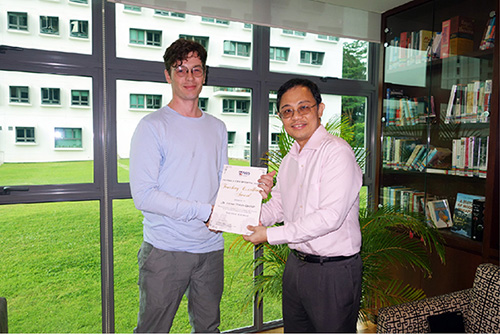
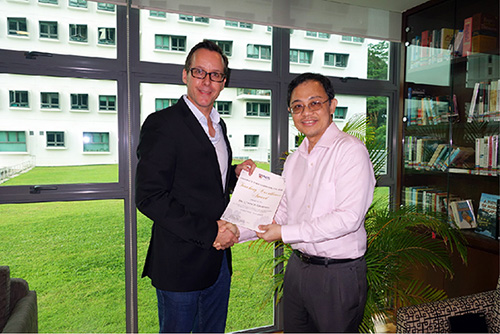
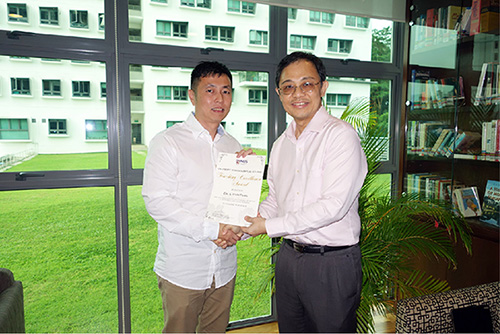
Tembusu College congratulates Adam, Connor, and Kelvin, on their awards for teaching excellence

On Tuesday, 17 November, Drs Adam Groves, Connor Graham, and Kelvin Pang were presented with the Residential Colleges Teaching Excellence Award.

These awards recognise excellence in teaching among faculty at Tembusu and the College of Alice & Peter Tan for the academic year 2014/15. Nominations for these awards are judged annually by the Residential Colleges Teaching Excellence Committee.

This year, the ceremony was presided by Professor Bernard Tan, Vice Provost (Undergraduate Education), and hosted by Tembusu College.

Professor Tommy Koh: China On My Mind

I join Singaporeans of all races in warmly welcoming President Xi Jinping and Madam Peng Liyuan to Singapore. Their State Visit reciprocates the successful visit by President and Mrs Tony Tan to China in July this year. The exchange of visits by the two Presidents is part of our celebration of 25 years of diplomatic relations between China and Singapore.

Honouring Deng Xiaoping

I last met President Xi Jinping in November 2010 in Singapore. He was then Vice-President of China. The National Heritage Board, of which I was the then Chairman, had put up a marker to and a bust of Deng Xiaoping, in front of the Asian Civilizations Museum. We invited our founding Prime Minister, Mr Lee Kuan Yew, a friend and admirer of Mr Deng and Mr Xi, to unveil the marker and the bust at a simple ceremony. We were overjoyed that both Mr Lee and Mr Xi had accepted our invitations. I will always treasure the memory of that happy occasion.

Contact with China

China’s seat at the United Nations had been occupied by the Republic of China from 1945 to 1971. In 1971, the People’s Republic of China (PRC) defeated the Republic of China in a vote at the UN General Assembly. Following that vote, the PRC took over China’s seat at the UN. The first PRC’s Ambassador to the UN was an outstanding diplomat called Huang Hua.

In 1974, I was appointed, for the second time, as Singapore’s Permanent Representative to the UN. I was instructed to begin a dialogue with Ambassador Huang Hua on our bilateral relations. On the 7th of October 1974, I organised a dinner, hosted by our Foreign Minister, Mr S Rajaratnam, in honour of the leader of the Chinese delegation to the UN General Assembly, Mr Qiao Guanhua, the Vice-Minister for Foreign Affairs. The dinner was very successful and Minister Qiao invited Mr Rajaratnam to lead a goodwill delegation to China.

Visits by Raja and Lee

With the help of Amb Huang Hua, I was able to organize the visit of Mr S Rajaratnam to China, from the 13th to the 22nd of March 1975. The high point of the visit was a call on the Chinese Premier, Zhou Enlai.

In the following year, Ambassador Huang Hua and I organised the first visit by our founding Prime Minister, Lee Kuan Yew, to China. The visit took place from the 10th to the 24th of May 1976. The highlight of the visit was a call by Mr Lee on an ailing Chairman Mao.

Lee Kuan Yew and China

Between 1976 and 2015, Mr Lee Kuan Yew had visited China over 30 times. He spent time in cultivating five generations of China’s leaders. He helped Deng Xiaoping’s revolutionary policy of economic reform and opening the Chinese economy to the world, by encouraging Singapore’s public and private sectors to invest in China. He personally took charge of the Suzhou Industrial Park project. He was willing to act as an interlocutor between China and the United States and between Mainland and Taiwan. As a result, China regarded Mr Lee Kuan Yew as an old friend and held him in high esteem. My message to China is that, although Mr Lee Kuan Yew is no longer with us, his friendship and goodwill for China are shared by his successors, Mr Goh Chok Tong and Mr Lee Hsien Loong.

1990 Negotiations with China

Although our relations with China grew steadily after 1976, we did not want to establish formal diplomatic relations until after Indonesia had normalised its relations with China. In August 1990, I was appointed the leader of the Singapore delegation to negotiate an agreement with China for the establishment of diplomatic relations between us.

After three rounds of negotiations, the two sides agreed on the text of a Memorandum of Understanding (MOU) to establish formal diplomatic relations on the evening of 18th September, in the premises of a State Guest House called Diaoyutai. The MOU was signed by Minister Qian Qichen and Minister Wong Kan Seng, at the UN, on 3rdOctober 1990. The Chinese Chief Negotiator, Minister Xu Dunxin and I had a happy reunion at dinner in Beijing last month.

25 Years of Friendship and Progress

The past 25 years have been a remarkable period for China, for Singapore and for our bilateral relations. No one could have foreseen 25 years ago, that China would become Singapore’s largest trading partner or that Singapore would become China’s largest foreign investor. No one could have foreseen that the two Governments would have implemented two iconic projects in Suzhou and Tianjin and are about to embark on a third project in Western China. No one could have foreseen that the two countries would have concluded a free trade agreement, which would soon be upgraded to a higher level of ambition. The current relationship between China and Singapore is warm, comprehensive and substantive and rests on a firm foundation of mutual trust. I am confident that President Xi Jinping and his Singapore counterparts will agree to raise our relationship to an even higher peak.

ASEAN-China Relations

In 2005, I was appointed to represent Singapore in the ASEAN-China Eminent Persons Group. The group was co-chaired by Musa Hitam (Malaysia) and Qian Qichen (China). I believe in the importance of ASEAN-China relationship, both economically and politically. I am happy that Singapore is the Country Coordinator for ASEAN-China Dialogue Relations for the next three years. China can have confidence that Singapore will do its utmost to unite the ASEAN side and will keep the relationship on a positive trajectory. However, in order to achieve this objective, China will have to play its part, in growing our positive agenda and in managing our differences, with wisdom and self-restraint.

. . . . . .

Professor Tommy Koh’s speech at the annual lecture of the Singapore Medical Association

Salutations

Dr Wong Tien Hua, Professor Cheah Jin Seng, members of the medical profession, distinguished guests, ladies and gentlemen.

No Free Lunch

When Dr Wong requested me to deliver the SMA Lecture this year, I declined on the ground that I am not qualified to speak to members of the medical profession. Tien Hua’s mother, Professor Aline Wong, invited me to have lunch with her and her son. And as they say in America, there is no such thing as a free lunch and I was persuaded to change my mind whilst eating my chicken rice. I offered three possible topics for the lecture and both mother and son chose this one.

Similarities Between Doctors and Diplomats

I shall begin with my first point, which is that doctors and diplomats share some common traits and values. You can’t be a good doctor or a good diplomat if you do not like people. To succeed in our professions we must have empathy for people. We must have an open mind and be willing to treat people of different races, colours, religions, cultures with respect and as fellow human beings. To be a good doctor, you have to establish a rapport with your patient and gain his trust and confidence. The doctor-patient relationship becomes dysfunctional when the patient dislikes his doctor or has no confidence in him. I have no empirical evidence to support my hypothesis that a patient’s positive attitude towards his doctor contributes a significant percentage to the success of the healing process. My hypothesis is that a patient’s trust in his doctor is a key to recovery.

In a similar way, a good diplomat is able to establish a rapport with his interlocutor. He should try to raise the level of their relationship to one of friendship, based upon mutual trust and confidence. I have undertaken many negotiations, on behalf of Singapore and the United Nations. In all cases, I had tried to establish a warm relationship with my counterpart or interlocutors. This was particularly challenging when I was chairing the UN Conference on the Law of the Sea (1981-1982) and the Earth Summit (1990-1992) because they involved so many participating countries. However, I could not have pushed through some very tough decisions if I had not gained the trust of the conference participants.

Breakthrough In Moscow

Diplomats, unlike doctors, are a pretty cynical group of people. They have become cynical because they have seen so much evil and unprincipled policies and actions by states. Also, unlike doctors, diplomats are professional nomads and have to relocate themselves and their families, every few years, to a different country. In view of these facts, it would be reasonable to conclude that diplomats do not make good friends. This is, however, not the case.

Ambassador Tom Pickering

I want to tell you a story which I have never told in public before. In 1993, the then UN Secretary-General, Dr Boutros Boutros-Ghalli, had appointed me as his Special Envoy to undertake a peace mission to Russia, Estonia, Latvia and Lithuania. Towards the end of my mission, I called on an old friend, in Moscow, Ambassador Tom Pickering of the United States. I briefed him on my discussions in Moscow, Vilnius, Riga and Tallinn. He told me that, in Moscow, power was concentrated in the Kremlin and it was essential for me to have access to someone on the personal staff of President Boris Yeltsin. I told Amb Pickering that I had made a request to do so through the UN and the Singapore Embassy but was not successful. He told me that he would help me and he did. As a result, I was able to meet with a senior member of the President’s staff inside the Kremlin. I briefed him on my meetings in the four capitals and the compromises which I intended to propose in my report to the UN. I requested him to convey my respect to President Yeltsin and pleaded for his support.

Regional Medical Centre

I want to go on to my second point, which is Singapore’s role as the medical centre of the region. No one could dispute the fact that Singapore is the most advanced medical centre in Southeast, and perhaps, in the whole of Asia. A few years ago, a good friend from Iran, who lives in Hiroshima, needed surgery for her medical condition. Her Japanese doctor in Hiroshima recommended that she should go either to the US or Singapore for her treatment. She chose to come here.

Many of our region’s leaders come to Singapore for their annual medical check-up. When they fall ill, many of them have chosen to come here for treatment rather than go to the West. The high standing of our doctors and hospitals and the excellent care and services which they provide to patients in the region, bring credit to Singapore. It adds to our brand equity and soft power. It is good for our diplomacy with the region. We must never allow our love for money to undermine our reputation for integrity and trustworthiness.

Singapore and WHO

Third, I want to talk about Singapore’s relationship with the World Health Organisation (WHO). The WHO is the UN’s specialised agency for global health. In the year 2000, WHO ranked Singapore 6th out of 191 countries on overall health system performance. The WHO has designated 10 of our institutions as WHO Collaborating Centres, one of the highest in the Asia-Pacific region. These are research institutes, belonging to universities or academies, designated by WHO, to carry out activities in support of its programme.

SARS

In 2003, Singapore and several other countries in the region were hit by SARS. Singapore worked closely with WHO and the Centre for Disease Control (CDC) of the United States, to overcome the crisis. The two big lessons we learnt from that crisis were the importance of transparency and international cooperation. In 2006, Singapore was elected to the Executive Board of WHO for a three-year term. My dear friend and colleague, Dr Balaji Sadasivan, was elected chairman of the board for 2007-2008. His untimely passing from colon cancer was a great loss to Singapore.

Other Singaporeans, such as Dr Vernon Lee and Mr David Ho have also made significant contributions to the work of WHO. Dr Lee is currently the Head of the SAF Biodefence Centre. From 2007 to 2008, Dr Lee was a medical epidemiologist, working on Avian Influenza response and pandemic preparedness, in WHO’s office in Indonesia. From 2010 to 2012, he worked with the WHO, in Geneva, leading its work on global health collaborations and pandemic preparedness. I will talk about Mr David Ho’s work because he is not a doctor.

Humanitarian Medical Missions

Fourth, I want to refer to the fact that many Singaporean doctors, dentists, nurses, therapists and other allied professionals regularly go abroad on humanitarian medical missions. I was privileged to have been invited to deliver the keynote speech at the inaugural international conference on Humanitarian Medical Missions, held on 30 October 2014, at the Singapore General Hospital.

SIF and SAF

In my speech, I praised the work of four of our institutions, namely, the Singapore International Foundation, the Singapore Armed Forces, the Singapore Red Cross Society and Mercy Relief. To-date, SIF has undertaken 76 healthcare projects in 14 countries. The Singapore Armed Forces has a tradition of sending medical teams to help in emergency situations. The Singapore Red Cross Society and Mercy Relief have also despatched volunteer medical teams to help in humanitarian emergencies.

I am proud to say that our public hospitals support volunteerism as part of their corporate social responsibility. Members of the staff are encouraged to volunteer their time, in both local and international projects. A staff member is allowed to take 14 days of volunteer leave if it is to participate in an approved project. In 2011, KKH won the award for the Public Sector Volunteer of the Year, given by the National Volunteer and Philanthropy Centre.

In that same speech, I also praised four of my doctor friends who are champion volunteers. They are Professor S T Lee of SGH, Professor Anantharaman Venkataraman (Prof Anantha) of SGH, Associate Professor Annette Jacobsen of KKH and Dr Tan Chi Chiu, a private practitioner.

Professor S T Lee

Professor S T Lee is a highly skilled plastic surgeon and educator. In the past 22 years, he has led or participated in 22 volunteer missions to ASEAN countries and to China. In recognition of his contributions, he received the SIF Award from President S R Nathan in 2006.

Professor Anantha

Professor Anantha is another veteran volunteer. He was the leader of a highly successful SIF project to enhance emergency medical services in Malang, Indonesia. The project lasted 7 years and involved 96 volunteers from Singapore, who visited Malang on 17 training visits. The project benefited the Faculty of Medicine of the Saiful Anwar Hospital, the Faculty of Medicine of the Brawijaya University and the Provincial Health Department of East Java. Prof Anantha is currently leading a team from SingHealth, on a 2-year project, to set up a Disaster Medical Training System in Makassar, Sulawesi, in Indonesia.

Dr Anette Jacobsen

Dr Anette Jacobsen is a paediatric surgeon at KKH. In 2001, she went on her first volunteer mission to Cambodia and was hooked. Since then, she has been on over 20 missions to 4 ASEAN countries. She volunteers with SIF, the Temasek Foundation and the Tzu Chi Foundation of Taiwan.

Dr Tan Chi Chiu

Dr Tan Chi Chiu is an eminent gastroenterologist in private practice and a former director of SIF. He is one of our most experienced volunteers. Between 1986 and 2013, he participated in 14 humanitarian medical missions, in 12 of which, as the leader or medical director. Dr Tan believes that Singapore can do more and should benchmark itself against Japan and South Korea. He proposes the creation of a national network and resource of medical volunteers, which could then support relief missions of all organisations which need medical teams.

People-to-People Diplomacy

What is the significance of medical volunteerism to Singapore’s diplomacy, especially with the ASEAN countries? We live in a world which is full of misunderstanding and suspicion. Medical volunteers help to promote better mutual understanding between Singaporeans and the peoples of other countries. The work which our doctors, dentists, nurses, therapists and other allied professionals do, when they go on medical missions, is invaluable. Action speaks louder than words.

Friendship Between China and Singapore

Fifth, and finally, I want to talk about the contributions of three Singapore doctors to friendship between China and Singapore. The three doctors are the late Professor Arthur Lim Siew Ming, Professor Lim Yean Leng and Dr Tan Lai Yong.

Professor Arthur Lim

Professor Arthur Lim was an eminent ophthalmologist, a visionary and a man of action. He was the founding director of Singapore’s National Eye Centre. In the 1980s, he led a major campaign in China to control mass cataract blindness. He advocated the use of intraocular lens implant to restore sight. He founded the International Intraocular Implant Training Centre in Tianjin, which, in 1986, became the Tianjin Medical University Eye Centre. Professor Lim established the Xiamen Eye Centre in 1997. He also established eye centres in three other provinces, Shandong, Gansu and Ningxia.

In 1996, the Chinese Government conferred on Professor Lim the Friendship Award, which is the highest award that is awarded to a foreign national.

Professor Lim Yean Leng

Professor Lim Yean Leng is an eminent cardiologist and the former director of the National Heart Centre, in Singapore. In 1995, he was invited to visit Xiamen by his mother’s primary school classmate. At that time, Xiamen University, which was founded by a Singaporean, Tan Kah Kee, had no medical school.

As they say, one thing led to another and Professor Lim was appointed as the Dean of the Xiamen University’s new Medical College, as well as Head of the Heart Centre. The new medical school opened a year later, in 1996. Professor Lim served as the Dean for 5 years, setting up the Medical School, the Heart Centre and the Emergency Centre. He leaves behind a proud legacy. Today, the medical faculty of Xiamen University is one of the largest and most comprehensive medical schools in China. There are 1,500 undergraduates and 200 postgraduate students at the school.

Fujian-Singapore Friendship Polyclinic

Before leaving Xiamen, I want to record the fact that due to the vision and leadership of our former Consul-General in Xiamen, Ms Tee Bee Lock, we have the Fujian (Xiamen)-Singapore Friendship Polyclinic. The polyclinic was co-funded by donations from the Singapore private sector and the Xiamen Municipal Government. An eminent Singapore architect, Liu Thai Ker, designed the building on a pro bono basis. The Temasek Foundation funded the training of 110 medical personnel from Fujian, on a “train the trainers” programme. The polyclinic has successfully incorporated and implemented Singapore’s health management strategies in its operation.

Dr Tan Lai Yong

The third doctor I want to refer to is Dr Tan Lai Yong. In 1996, Dr Tan accepted a one-year assignment to join a commune in Yunan province, to train its ethnic minority community, in basic medical practice. His one year assignment became a 15 year epic. He and his family lived humbly with the local people and won their hearts. He treated the poor, the orphaned, the disabled and the leprous.

In addition to being a doctor, Dr Tan also began a tree-planting programme, started a mobile library for children and other projects to benefit the people he lived with and served.

In 2004, the Government of China also conferred on Dr Tan the Friendship Award. In 2007, the Yunan TV conferred on him the Good Citizen of Kunming Award. Dr Tan is now back in Singapore and inspiring the students of the College of Alice and Peter Tan at NUS.

Conclusion

I shall conclude. As doctors, you are probably unaware that, directly or indirectly, many of you have been helping to promote Singapore’s good relations with our ASEAN partners or with the wider world. You do so when you do a good job in treating a foreign patient. You do so when you go on a humanitarian medical mission. You do so when you work with the WHO or other kindred institutions. You do so if you, like Professor Arthur Lim, Professor Lim Yean Leng and Dr Tan Lai Yong, are able to use your knowledge, expertise and network to help the people of another country, such as China.

Thank you very much.

. . . . . . . .

Professor Tommy Koh’s at the National Arts Council ‘Singathology’ Book Launch

Salutations

Ms Kathy Lai, CEO of NAC

Mr Paul Tan, Deputy CEO, NAC

Ms Meira Chand, NAC Council Member

Mr Sim Gim Guan, NAC Council Member

Mr Philip Jeyaretnam, Chairman of the Singapore Writers Festival

Mr Khor Kok Wah, Senior Director for Literary Arts, NAC

Mr Yeow Kai Chai, Director of the Singapore Writers Festival

Mr Gwee Li Sui, Mr Tan Chee Lay, Ms Sa’ada Binte Buang, and Mr Azhagiya Pandiyan, the editors of Singathology

Recipients of the Cultural Medallion and Young Artists Award

Distinguished guests, ladies and gentlemen.

A Big Thank You

I thank the National Arts Council for giving me the honour of launching Singathology. To celebrate Singapore’s golden jubilee, NAC decided to publish, in our 4 official languages, 50 new works by the winners of the Cultural Medallion and the Young Artist Award. The writings in Chinese, Malay and Tamil have been translated into English, our link language. This is a good thing because it enables us to raise above our linguistic walls and have access to the literary achievements of the other linguistic streams. Only through translation will we evolve a national literature. I congratulate NAC and the 4 editors for this initiative and for the two lovely volumes. Some of the writers whose works are included in Singathology are here. May I request them to stand so that we can pay our hormat to them.

Journeys: Anthology of Singapore Poetry

Reading Singathology, reminded me of the fact that 20 years ago, on the occasion of Singapore’s 30thanniversary, NAC had published an anthology of Singapore poetry, also in our 4 official languages, entitled “Journeys”. That collection contained poetry written in the decade, 1984 to 1995. In my foreword, I observed that the sharp political and social awareness which moved our first generation of writers had been absorbed into a larger and richer sense of Singaporean life, which included an awareness of the Singaporean’s place within a global community. Reading Singathology has exposed me to the writings of a third generation of our writers. Their world view, aspirations and frustrations are different from those of the first and second generation writers.

Synopsis

What I would like to do this afternoon is to speak briefly in praise of books, reading and literature.

Love of Books and Joy of Reading

On the 29th of July 2015, the Straits Times published an essay written by Tan Tarn How of IPS and Loh Chin Ee of NIE, entitled “Out with tuition and in with a reading nation”. The authors made a powerful case in favour of teaching children to read.

They cited an OECD study, Reading for Change (2000), which showed that there is a correlation between reading and good grades. Reading is a foundational skill with wide ripple effects.

Second, they argued that the benefits of reading extend far beyond exams and grades. Reading brings the world to the children. It gives them the joy of reading.

Third, they argued that reading can mould our children into better Singaporeans and better global citizens. Reading has the power to transform by opening hearts and minds. Reading children are flourishing children and they will probably become flourishing adults.

Inspiration From The International Summit Of Books

The Librarian of the Library of Congress, Dr James Billington, convened the inaugural International Summit of the Books, in Washington DC, in 2012. I accompanied a delegation from our NLB to that Summit. At the request of our American friends, we hosted the Second Summit in Singapore in 2013.

At the Summit, I was very moved by the personal testimonies of several famous African-American writers and leaders. They had grown up in very poor families and in culturally deprived environments. What had saved them were the accidental discovery of books and the gift of reading. The love of reading had enabled these individuals to escape the trap of poverty and hopelessness. Reading had liberated and empowered them.

Read! Singapore

I returned from Washington to Singapore in 1990. I wrote to the then CEO of NLB, Dr V Varaprasad and told him about a reading movement in America which had started in Chicago. In Chicago, the citizens had agreed to read the same book so that they could talk about the book with their friends and in their social circles. They chose as the first book, To Kill A Mocking Bird. I urged Dr Varaprasad to start something similar. He agreed and asked me to be the patron of the annual reading season called Read! Singapore. Each year, NLB would choose the reading materials, in our 4 official languages. I am happy to report that Read! Singapore has been very successful and many book clubs and reading circles have been formed as a result. My ambition is to make Singapore a reading nation.

In Praise of Literature

Someone from NAC asked me recently whether Literature was one of the subjects I sat for at the “O” and “A” Levels. The answer is in the affirmative and I have never regretted it. In fact, I am saddened by the fact that fewer and few of our students, especially at our top schools, study literature. Singaporeans are a very pragmatic people. We believe that we should only study a subject if it has some utility or benefit.

What benefit can we gain by studying literature? President Obama was recently interviewed by Marilynne Robinson on the subject. The interview has been published in the New York Review of Books. He said:

“When I think about how I understand my role as a citizen….. the most important stuff I have learned, I think I have learned from novels. It has to do with empathy. It has to do with being comfortable with the notion that the world is complicated and full of greys, but there is still truth to be found and you have to strive for that and work for that. And the notion that it’s possible to connect with someone even though they are very different from you.”

Conclusion

I shall conclude. Many of you will know that my wife and I have two grandchildren, a grandson called Toby who is 4½ and a granddaughter called Tara, who is 10 months old. Toby treats me as his friend and play mate. He makes no allowance for my old age and makes me crawl, run, jump and dance with him. It reminds me of a lovely poem which my late friend, Goh Sin Tub, had written for his granddaughter. The poem is called “To Colleen”.

To Colleen

When you are sweet sixteen

And I whatever they shall call seventy-eight,

will you then remember when you were two

and to you I was three and your romping mate?

When you walk to church a bride radiant

and I in bed unable to walk and attend,

will you then in your radiance recall

you toddling, I walking, we playing pretend?

When you are a proud mama

and I a senile but still great grandpa,

will your little one then be the only one

understanding me in our baby “ga-ga”?

And when your eldest is sweet sixteen

and I have gone from you for good,

will you still remember me in tender prayer

your grandpa and our shared childhood?

And when your daughter has her own baby

and you play and romp with grandchildren too,

will you then remember when you were two and

I was three and we went giddy-up, choo-choo?

Thank you very much.

. . . . . . .