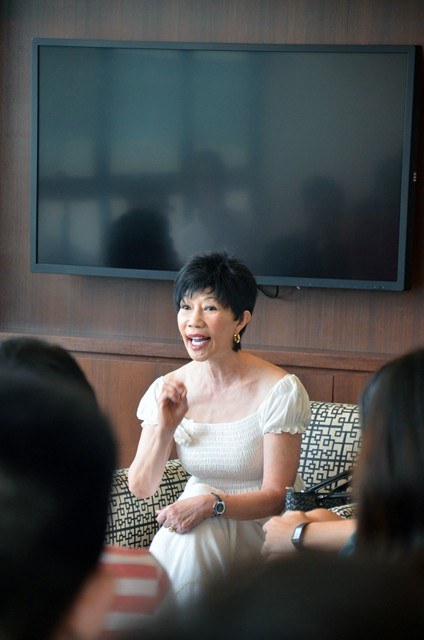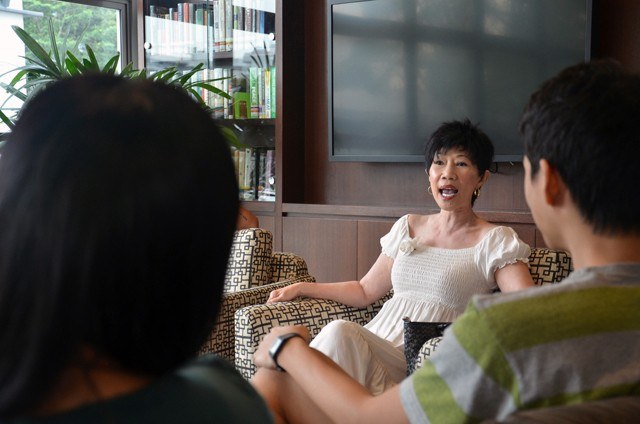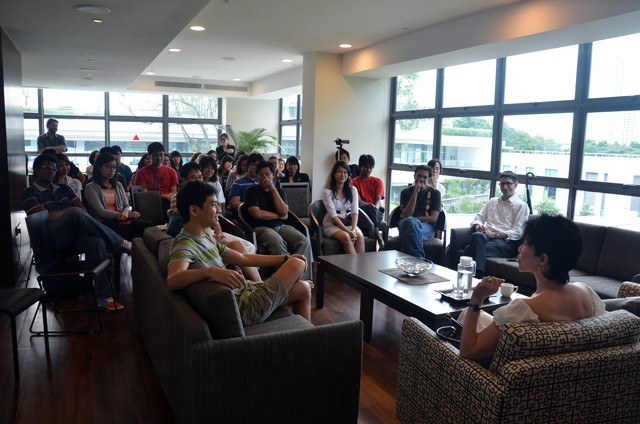
 Topic: The Battle Within
Speaker: Assoc. Prof. Lina Lim
Abstract:
In this work-in-progress seminar, I will discuss my laboratory’s research on breast cancer. It is of utmost importance to understand the ways by which normal cells in the body transform into malignant cells, and how these cancers grow, and ultimately spread or metastasize. Through this understanding, we can attempt to alter the cancer phenotype in the effort to treat and prevent this cruel act of nature. Who will win in the end?
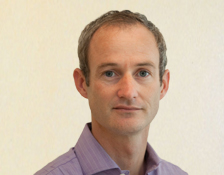 Topic: Business Knowledge for Climate Change Policy – Social and Critical Implications
Speaker: Dr. Jerome Whitington
Abstract:
Social scientists have long studied forms of scientific and governmental knowledge as a way to understand the organization and political structures of society. Increasingly, business knowledge has come to dominate actual practices relevant to these structures and the policy debates for social problems with economic implications. A striking example is climate change policy, in which policy makers must ask what the private sector is willing and able to provide, and adapt politics to the ‘realities’ of the market. My research begins by asking what the private sector has been doing to push this process forward, with particular emphasis on greenhouse gas accounting and management techniques.
The presentation will review this new field of business consulting, showing the dynamism of the way in which it apprehends climate change as a social problem. I will then discuss some possible implications for how society and environment are organized, and some possible future orientations. Since climate change policy is actually meant to re-design basic social practices, the results of this form of business knowledge will be highly relevant.