By Professor Tommy Koh: A Tribute To Four Malaysians

I am a contrarian. I observe that Malaysians and Singaporeans like to criticise each other. They seldom praise each other. I want to be the first Singaporean official to praise, not one, but four Malaysians.


They are:
Tun Mohamed Suffian, a distinguished judge and former Lord President of the Federal Court of Malaysia, who dedicated his life to the promotion and protection of the rule of law.
Ambassador Tan Sri Zainal Abidin Sulong, former secretary-general of the Foreign Ministry
Dato Albert Talalla (Bertie to his friends), who has had a long and successful career in Malaysia’s diplomatic service.
Tun Ahmad Fuzi Abdul Razak, a former diplomat who has been Yang di-Pertua Negeri (governor) of Penang since 1 May 2021.

Mohamed Suffian: A man of integrity
I came to know Tun Mohamed Suffian in 1961 when I sat for my final exams at the National University of Singapore (NUS) Law School, which was then known as the University of Malaya in Singapore. Final year students were examined by both our teachers and a panel of external examiners, who we found truly intimidating. It comprised the Solicitor-General of Singapore Victor Winslow, two High Court judges from Malaya, Mohamed Suffian and Eusoffe Abdoolcader, the Dean of the Melbourne University Law School Sir David Derham, and Professor L.C.B (Jim) Gower of London University.
Appearing before this panel for my oral examination was both a happy and terrifying experience. I will always be grateful to them for awarding me with First Class honours. After graduating, I returned to the law school and joined its faculty. I kept in touch with both Judge Mohamed Suffian and Judge Abdoolcader. I followed, with pride, the career of Judge Suffian as he was appointed as the Chief Justice and, then, as the Lord President of the Federal Court.
During my tenure as Dean of the NUS Law School from 1971 to 1974, I nominated only one person for the honorary degree of Doctor of Laws. He was Tun Mohamed Suffian. I served as the Public Orator at the University commencement in 1972, when Tun Suffian received his doctoral degree.
Why do I admire him? He was intellectually brilliant but very humble, and a man of integrity. He was a good judge and had devoted his life to serving the cause of justice. I remember he was outraged by the sacking of his successor, Tun Salleh Abbas, by then Prime Minister Dr Mahathir Mohamed. Five senior judges, including Judge Abdoolcader, were suspended during the 1988 judicial crisis.
I was very honoured when the University of Malaya invited me to deliver the inaugural Tun Suffian Public Lecture in 1989. Tun Suffian passed away in September 2000 at the age of 82.


Diplomatic warrior Zainal Abidin Sulong
Tan Sri Zainal Abidin Sulong was a career diplomat. He rose through the ranks and retired as the Secretary-General of Wisma Putra, which is equivalent to the Permanent Secretary of Singapore‘s Ministry of Foreign Affairs. He was posted to the United Nations as Malaysia’s Permanent Representative, from 1980 to 1984, which overlapped the period when I was Singapore‘s UN Permanent Representative from 1974 to 1984. The four years when Zainal and I were at the UN were critical to Asean.
On Dec 25, 1978, Vietnam invaded Cambodia, overthrew the Khmer Rouge regime and imposed a new government, backed by Vietnam. The five Asean countries decided that they had to oppose Vietnam’s action because it posed a danger to Thailand and we could not condone the behaviour of a country, which had sent its armed forces across an international boundary into the territory of another state.
The fight between Asean and Vietnam at the UN was a baptism of fire for the Southeast Asian regional grouping. The odds seemed stacked against us as Vietnam had the support of the Soviet Union, its allies and India. The five Asean Permanent Representatives from Indonesia, Malaysia, Philippines, Singapore, and Thailand met frequently to strategise our battle plans and next moves.
In the end, and much to the surprise of the world, Asean prevailed over Vietnam at the UN. I will always remember Zainal Sulong, who died in 2010 at age 77, as one of the five Asean diplomatic warriors. He was courageous, fearless, eloquent, calm under fire and a dependable ally.

Career diplomat Albert (Bertie) Talalla
Dato Albert Talalla, known as Bertie to his friends, was a career diplomat, having served as Malaysia’s Ambassador to China, Germany, and the United States. Bertie was in Washington from 1986 to 1991, while I was there from 1984 to 1990. We were colleagues and good friends.
There were six Asean Ambassadors – from Brunei, Indonesia, Malaysia, Philippines, Singapore, and Thailand – in Washington at that time. We constituted the Asean Washington Committee (AWC). We liked each other and worked well together. We believed in strength in numbers. For example, if we wanted to see a senior US official or a US Congress member, we were more likely to succeed if the request came from the six of us. We also divided the work among us. Each embassy would specialise on one topic. For example, Singapore focused on trade policy, Malaysia on palm oil. We also went on roadshows to different parts of America to tell the Asean story, its relevance to the US and to highlight our concerns. In one city, Bertie told me he was tired of talking about palm oil. He asked me to speak on palm oil at our next stop, and he would cover trade. I agreed and became quite knowledgeable about palm oil. This is an example of the camaraderie among us.

Crossing path with Tun Ahmed Fuzi
Tun Ahmed Fuzi Abdul Razak, the current Governor of Penang, has also been a career diplomat. He was Deputy Chief of the Malaysian Embassy in Washington between 1987 and 1989, where our paths crossed for the first time. I was Singapore’s Ambassador from 1984 to 1990. We became friends. He was a star even then and rose through the ranks to eventually become the Secretary-General of Wisma Putra from 2001 to 2006.
Tun Ahmad Fuzi and I were on opposite sides of a legal dispute between Malaysia and Singapore, over the Republic’s land reclamation activities in Pulau Tekong and in Tuas. On July 4, 2003, Malaysia dropped a bombshell on Singapore. It sent Singapore a diplomatic note, referring the dispute to arbitration, under the United Nations Convention on the Law of the Sea (UNCLOS). Singapore responded by pointing out that the law required both sides to attempt to resolve their differences through negotiations first before resorting to arbitration.
On Aug 13 and 14, 2003, a Malaysian delegation, led by Tun Ahmad Fuzi, met our delegation, headed by me, in Singapore. The talks went well and Malaysia promised to host a second round in Putra Jaya.
However, no second round was held. Instead, Malaysia applied to the International Tribunal for the Law of the Sea (ITLOS), based in Hamburg, for provisional measures to stop Singapore’s reclamation activities until the outcome of the arbitration.
The matter was considered by ITLOS, in September 2003. The Malaysia Agent in the case was Tun Ahmad Fuzi and I acted for Singapore. The oral hearings were held over three days. On Oct 8, 2003, ITLOS rendered its judgment, which did not grant the provisional measures which Malaysia had asked for. Instead, the tribunal instructed the two countries to establish a group of independent experts to conduct a joint study into Malaysia’s allegations. This was the proposal I had made to the tribunal in my concluding statement.
On Nov 5, 2004, the Group of Experts submitted its unanimous report to the two governments, which later agreed to accept it and to resume negotiations. After two intensive rounds of talks held in Singapore and at the Hague, in the Netherlands, the two delegations agreed on a settlement.
The Land Reclamation case was a very complex one, involving several stages. The fact that we were able to resolve all our differences amicably was due, in part, to Tun Ahmad Fuzi’s leadership. He was fair-minded and a perfect gentleman. It was a pleasure to have worked with him, even though we were on opposite sides.
Our path crossed again two years later. In 2007, we were appointed by our respective governments to the High-Level Task Force to draft the Asean Charter. I chaired the group in the second half of 2007. We were racing against time to present the Charter to the Asean Summit in November that year.
There were many difficult issues to resolve, such as, human rights and the mobility of labour. Because of our friendship and the goodwill between us, Tun Fuzi helped me to achieve consensus on several occasions.

Build on common interests and friendships
I conclude with three messages for young Singaporeans and Malaysians. First, do not demonise each other. Instead try to get to know each other better. You have much in common, be it the way you speak, the music you listen to, the books you read, the movies and sitcoms you watch, the comedians and actors you follow on either side of the Causeway, or most importantly, the food we all enjoy.

Second, our two countries have many more areas of common interest than differences. We are each other’s second-largest trading partners and major investors. COVID-19 highlighted these areas of common interest and interdependencies, like the cross-border flow of goods and services.

Third, there are good people on both sides and friendships between Singaporeans and Malaysians are in the interests of both countries.
The bonds of friendships established over time will allow for frank and friendly discussions of our differences to take place with confidence, and contribute to their amicable resolution. My own friendships with my diplomatic counterparts from Malaysia and elsewhere are testament to this.
By Professor Tommy Koh: Can Small Countries Win Medals At The Olympic Games?

The 2020 Tokyo Olympic Games which played out before an audience of mostly empty seats ended on Sunday in a ceremony that echoed the restraint of the two-week long games. We must thank the Government and people of Japan for delivering on their promise to hold a safe and secure Olympic.
Singapore sent a team of 23 athletes to compete in 12 events at the 32nd Summer Olympics in Tokyo. All the athletes did their best. They deserve our gratitude for their sacrifices and best efforts. However, the Team Singapore did not win any medal, prompting some Singaporeans to ask the question: Can small countries win medals at the Olympic games?

I have therefore decided to look at the final medal tally of the Tokyo Olympic for an answer.

First, I should explain that one does not have to be a member of the United Nations to participate in the Olympics. Thus, Puerto Rico (part of the United States), Bermuda, Hong Kong (part of China), Chinese Taipei (Taiwan) and Kosovo (not a member of the UN), were allowed to participate in the games.

By small countries I mean countries whose populations are below 10 million. This is the criterion used by the Forum of Small States, an informal grouping established by Singapore at the UN in 1992, to define who are eligible to join the grouping which has 108 members today.

A surprising discovery
I was surprised to discover that 25 small countries and territories had won a total of 113 medals in Tokyo. I decided to dig deeper and separate them into three divisions: those with a population below one million; (ii) those whose populations are between one million and five million; and (iii) those whose populations are between five million and 10 million.

If size is destiny, the countries and territories whose populations are below one million should have no chance of winning any medal. I am vindicated in my belief that size is not destiny. There are five medal winners in this division.

Bahamas, with a population of only 389,000 people, won two gold medals. Sprinter Steven Gardiner won the gold in the men’s 400 metres, while Shaunae Miller-Uibo took the gold in the women’s 400 metres. Fiji, with a population of 889,000, won the gold in rugby, defeating New Zealand in the final. Bermuda has a population of 63,000 people and still managed to win a gold medal in the women’s triathlon. Grenada, with a population of 112,000, won a bronze medal in the men’s 400 metres. San Marino, a tiny landlocked European country surrounded by Italy, has a population of only 34,000 and yet won a silver and two bronze medals.

There are 13 countries and territories in Division II.

The most successful country is New Zealand. With a population of 4.9 million, it won seven golds, six silvers and seven bronzes, a total of 20 medals.

Jamaica has a population of 2.9 million. It won four gold, one silver and four bronze medals, a total of nine medals. We will remember for a long time the astounding sight of seeing three Jamaican women, winning the gold, silver and bronze medals in the women’s 100 metres.

Slovenia has a population of two million. It took three golds in canoeing, cycling and sport climbing, a silver in judo and a bronze in cycling, a total of five medals.
Ireland (4.9 million population) won two golds in rowing and boxing and two bronzes in rowing and boxing.

Qatar (2.8 million population) went home with two gold and one bronze medals in Tokyo. Qatar’s famous high jumper Mutaz Essa Barshim graciously decided to share the gold medal with his Italian rival Fianmarco Tamberi, in one of the most emotional and heartwarming moments in Olympic history. Qatar’s weightlifter Fares Elbakh, also known as Meso Hassouna, won the second gold medal.

The other medal winners in this division were from Kosovo, Latvia, Puerto Rico, Bahrain, Lithuania, Namibia, Botswana and Kuwait.

In Division III, there were six countries and one territory: Norway, Sweden,Switzerland, Denmark, Jordan, Finland and Hong Kong.

Norway (5.3 million population), won four gold, two silver and two bronze medals, for a total of eight. Norway won gold in the triathlon, men’s 400 metres hurdles, men’s beach volleyball and men’s 1,500 metres. Norway’s Karsten Warholm smashed his own world record and set a new record for men’s 400 metres hurdles. Another Norwegian, Jakob Ingabrightsen, won gold in the hotly contested men’s 1,500 metres.

Sweden (10 million population) won three golds and six silvers, taking a total of nine medals. Sweden’s gold medal winners – Daniel Stahl in men’s discus, and Armand Duplantis in pole vault – were much admired. The third gold was won in the equestrian team jumping event.

Switzerland (8.5 million population) won three golds, four silvers and six bronzes, making a total of 13 medals. The three gold medals were won in cycling (mountain bike), shooting and tennis. The Swiss female tennis player, Belinda Bencic, won the gold medal in the women’s tennis singles. The more celebrated tennis stars, such as Naomi Osaka and Ashleight Barty, were eliminated in the early rounds.
Denmark (5.8 million population) won three golds, four silvers and four bronzes, making a total of 11 medals. The gold medals were won in sailing, cycling and badminton. China’s world Number One badminton player, Chen Long, was defeated in the final in Tokyo by Denmark’s Viktor Axelsen. After losing the match, Chen Long graciously told Axeleen that he deserved to win.

Hong Kong (7.5 million population) gained one gold, two silvers and three bronzes. It won a gold in men’s fencing, two silvers in women’s swimming, and three bronzes in women’s cycling, table tennis and kata (a karate form). Hong Kong’s Grace Lau put up a very good performance, winning a bronze medal in the women’s solo kata match.

Small countries can win medals
From the results of the Tokyo 2020 Olympic games, the answer to the question which I posed at the beginning of this essay is a resounding yes. The lesson for Singapore is that small countries can win medals in the Olympic games.

What can Singapore learn from the successful medal-winning countries? I urge the Singapore Olympic Committee and our Sports Council to set up a committee to look into this question.

I offer the following three hypotheses for discussion. First, we should have an ecosystem which systematically spots talent among our students. Second, we should offer the talented students, if interested, a programme of training, coaching and mentoring, for free. Third, our society must truly value excellence in sports and make it possible financially for talented athletes to pursue their passions.

We must also develop a culture of supporting our athletes, in good times and in bad times. 

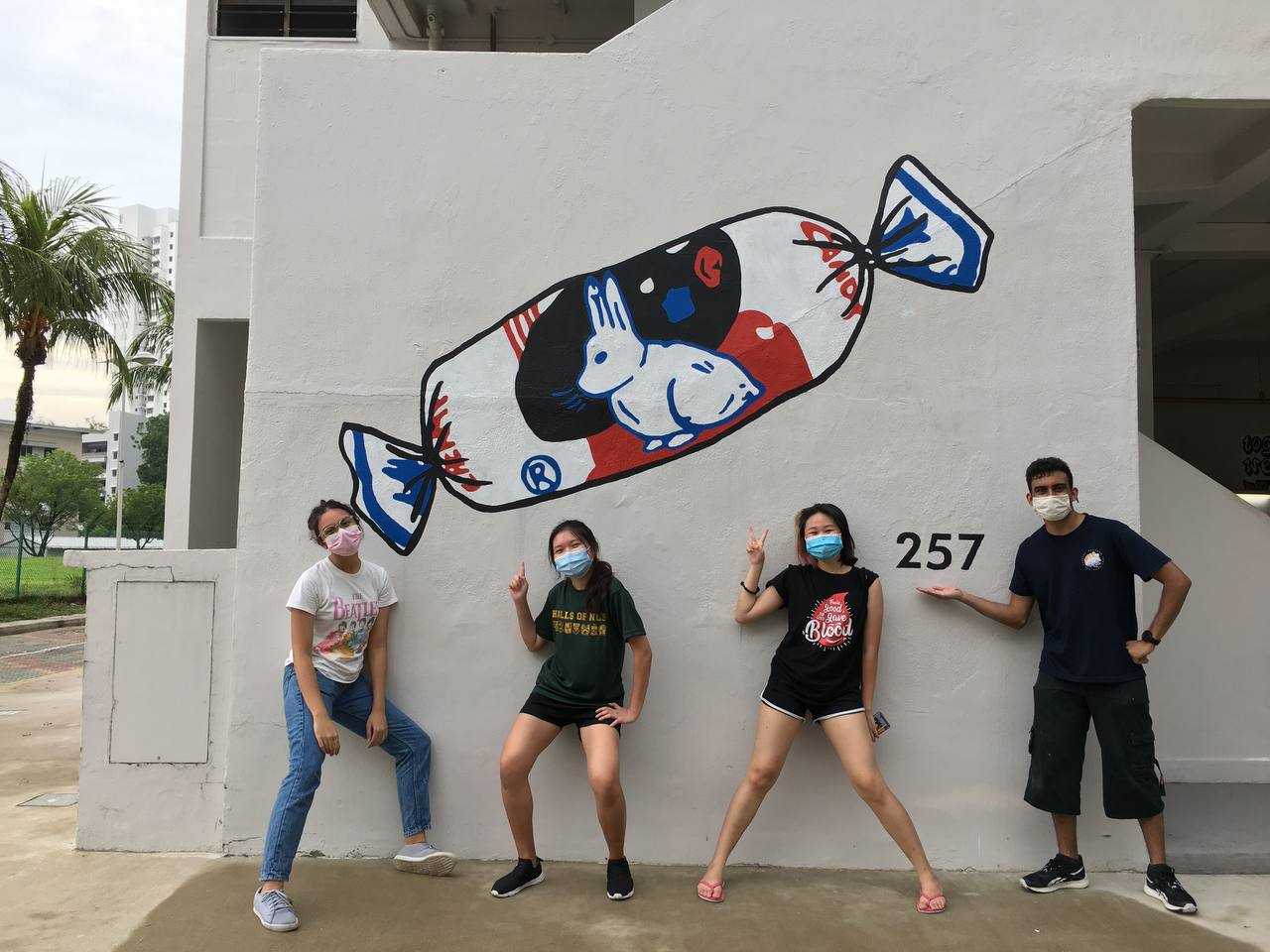
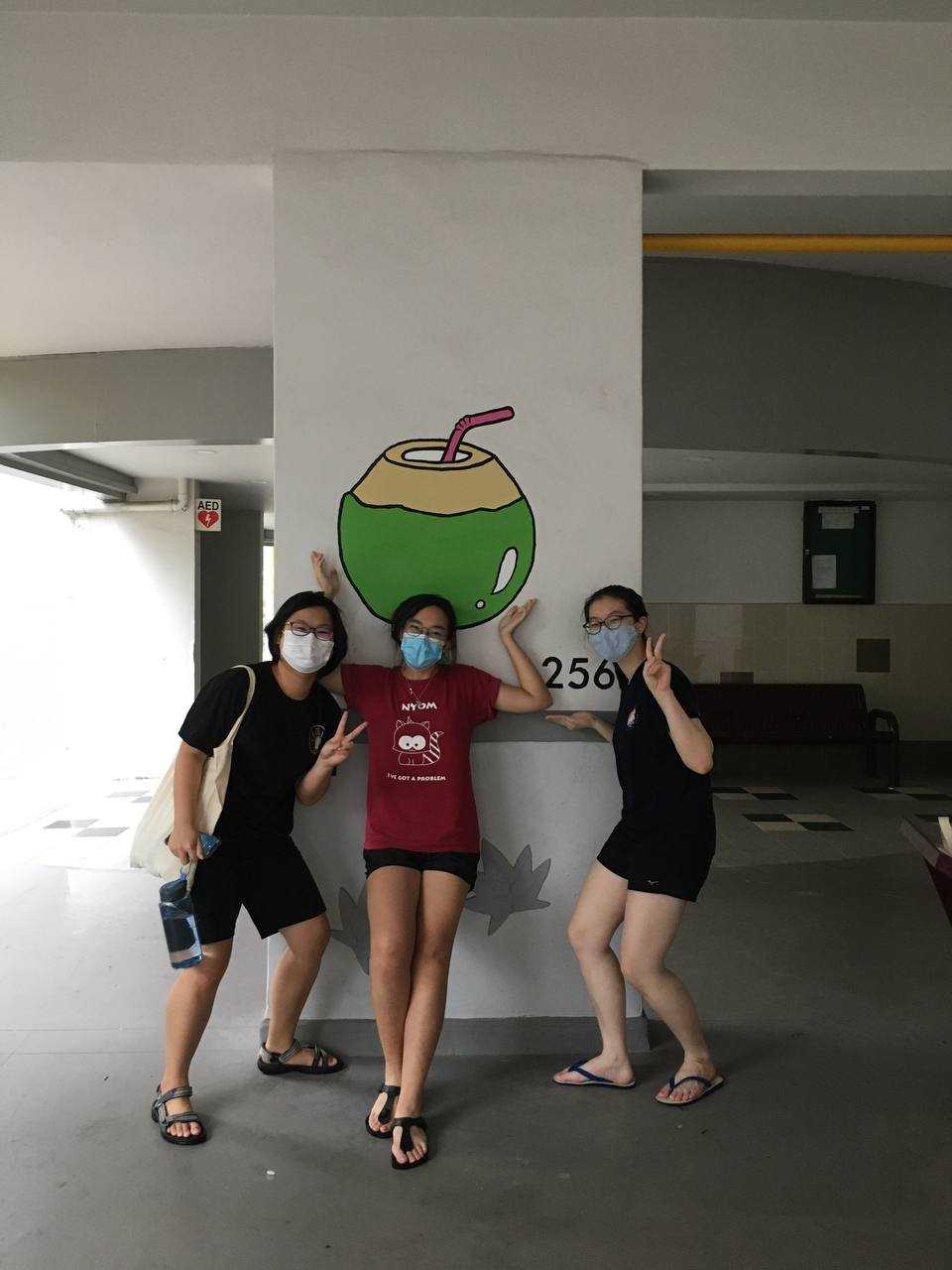
Tembusu Students Paint Wall Murals In Aid Of Dementia-Friendly Community

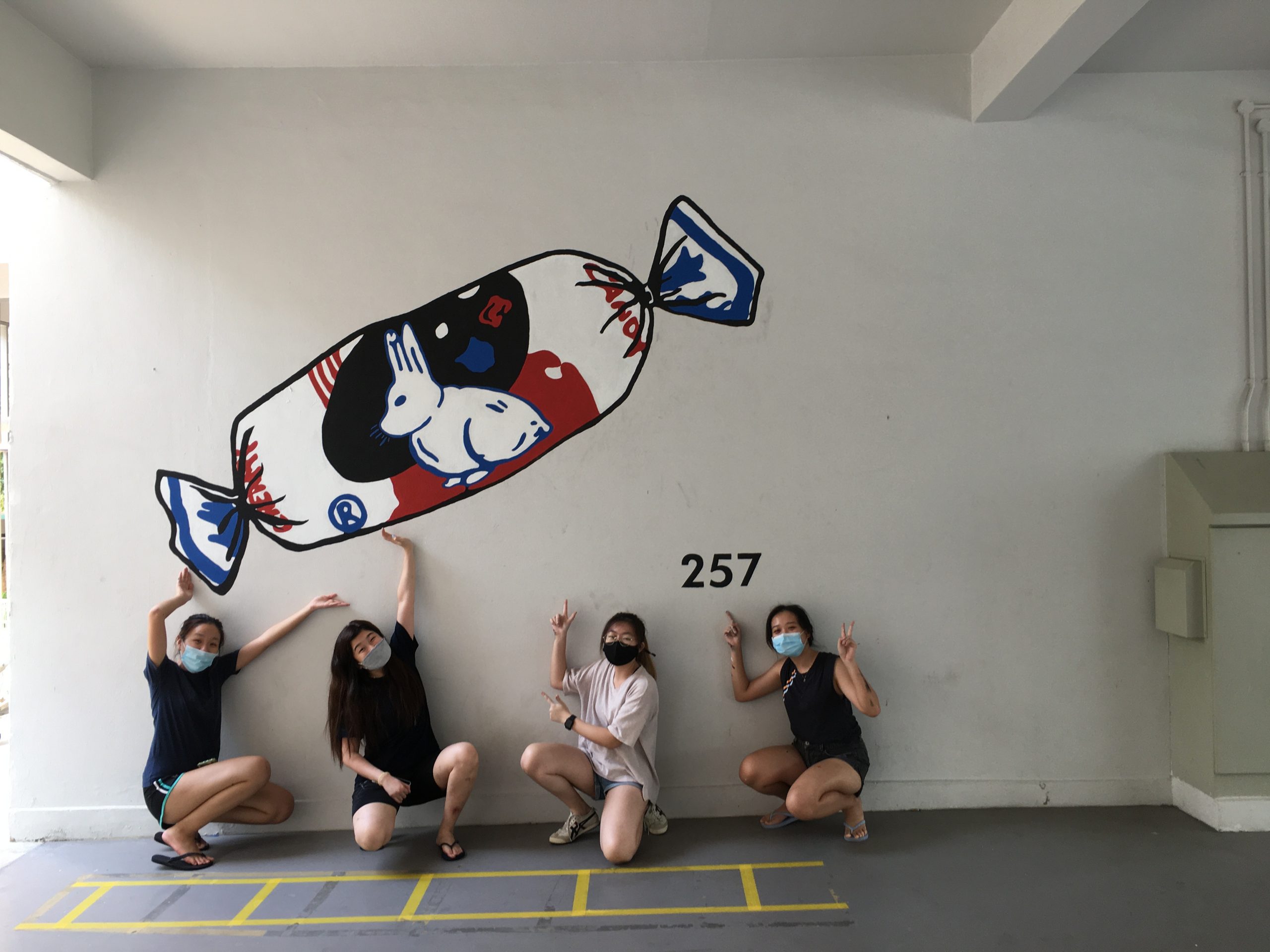
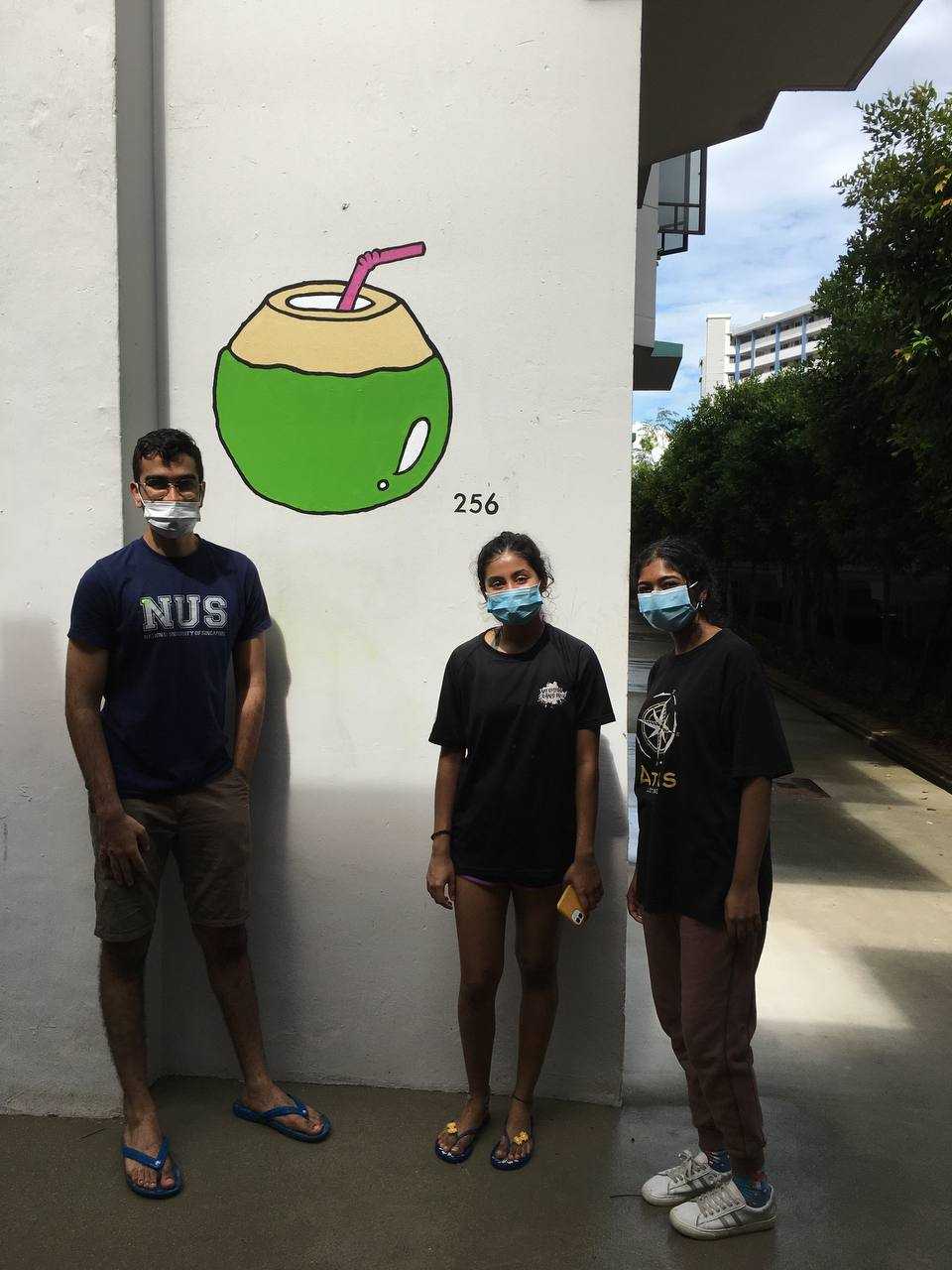
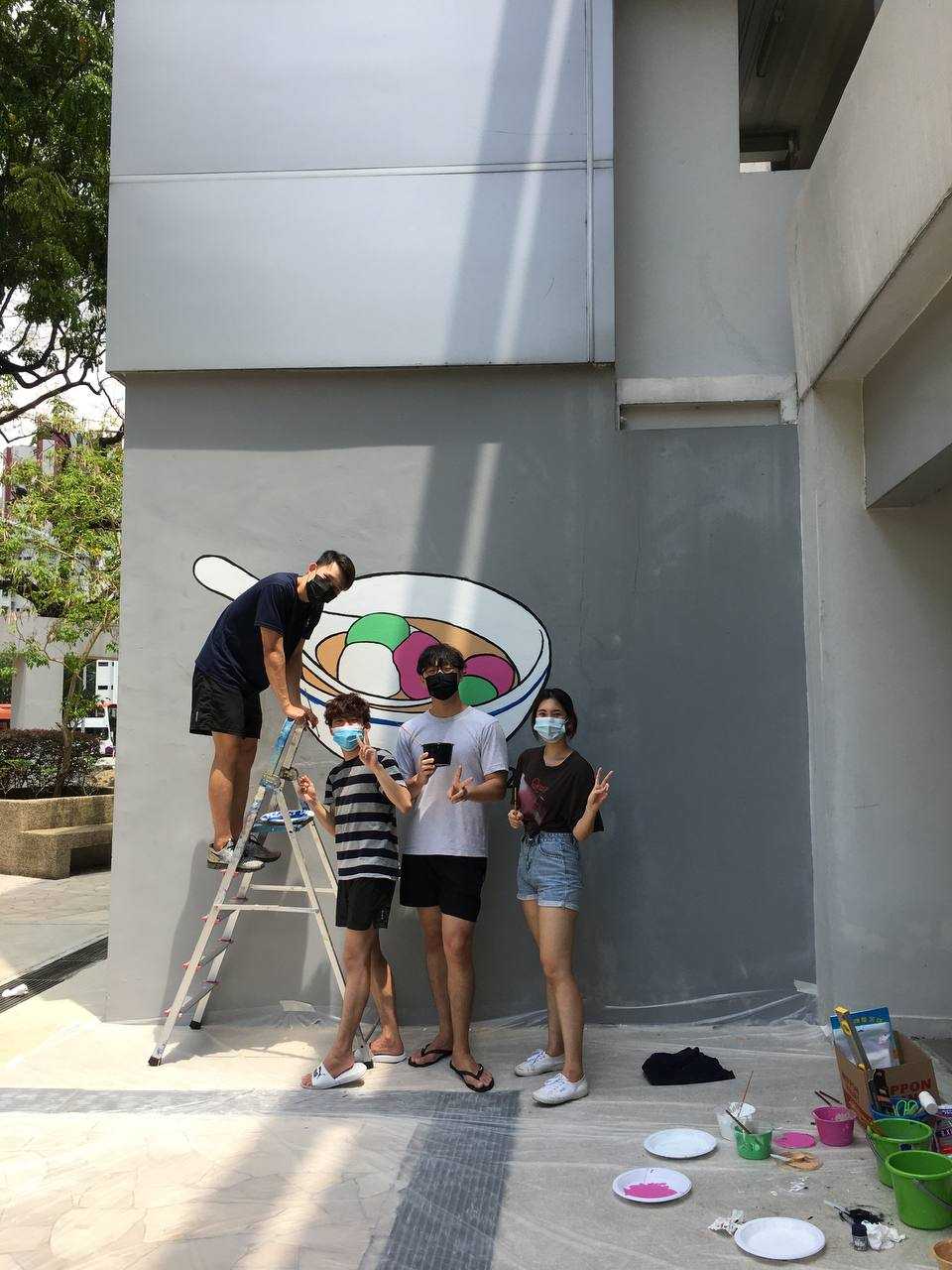
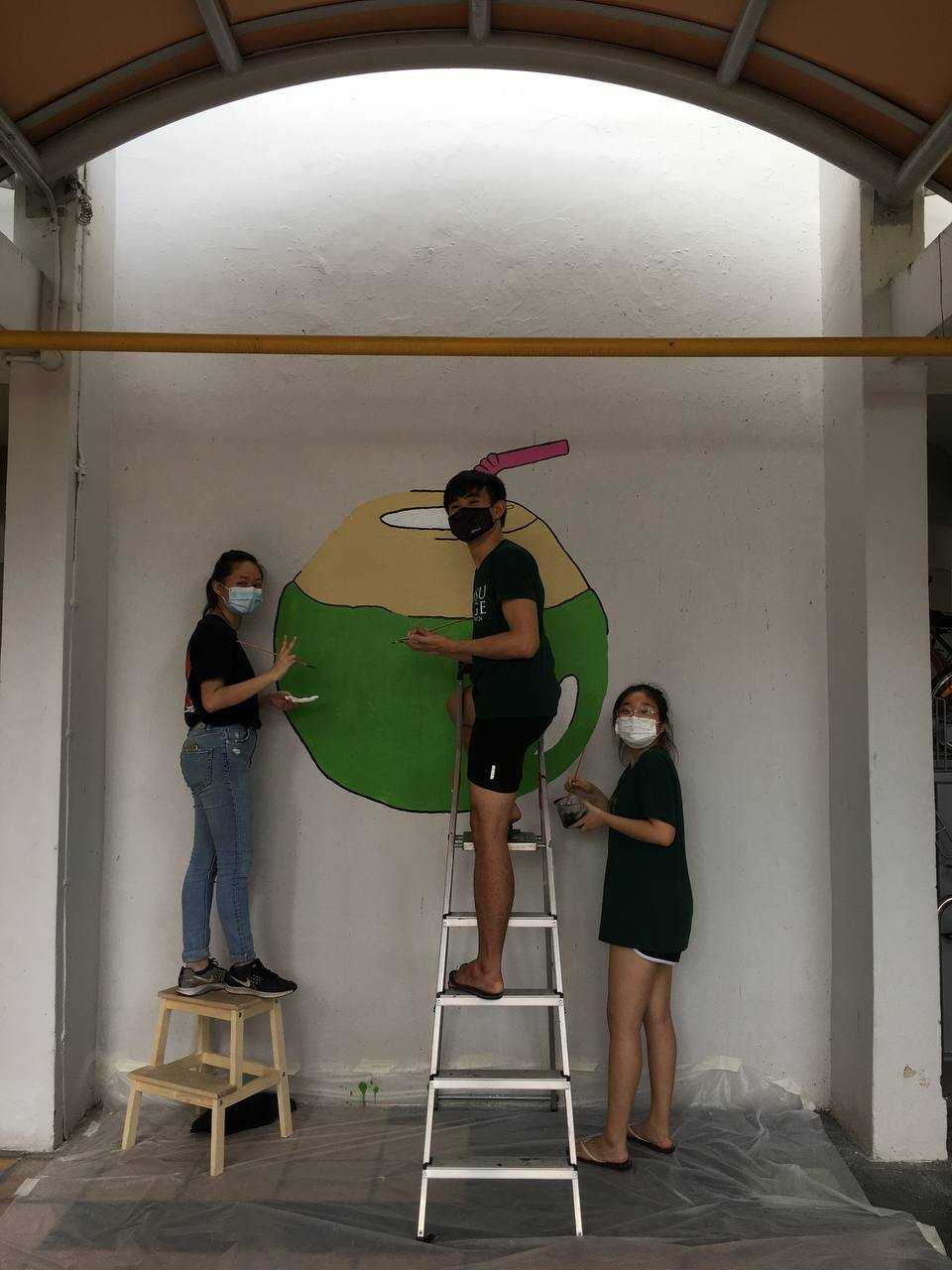
30 Tembusu College students, together with their lecturer Dr Margaret Tan and in partnership with the Alzheimer’s Disease Association, designed and painted 11 wayfinding murals to help elderly residents and those living with dementia navigate their neighbourhood.

Find out more here: https://pride.kindness.sg/art-helps-elderlies-dementia-care-find-way-home/


(Video source: Goh Yu En; image source: Dr Margaret Tan)

New Book Out By Tembusu Fellow Dr John Van Wyhe- ‘Charles Darwin: Justice Of The Peace’

It is little known that Charles Darwin was a justice of the peace for many years. The original case records do not survive. However a new book ‘Charles Darwin: Justice of the peace. The complete records (1857-1882)’ by Tembusu Fellow, Dr John van Wyhe and Christine Chua, have reconstructed a fascinating new chapter to the life of the famous naturalist based on local press reports.

Free PDF of the book can be found here:

http://darwin-online.org.uk/converted/pdf/2021_John_van_Wyhe_&_Christine_Chua,_Charles_Darwin._Justice_of_the_Peace_A2115.pdf

By Professor Tommy Koh: The scourge of racial prejudice in Singapore

Like most Singaporeans, I am concerned by several recent incidents of racism. In May, an Indian woman was confronted by a Chinese man for not wearing her face mask properly while brisk walking. The man abused her verbally, using a racial slur, and kicked her.
In the most recent incident, a Chinese man confronted a mixed race couple on Orchard Road, telling them that it was a disgrace for a Chinese girl and an Indian man to be together.

MY CONCERNS
I have three concerns. First, I am concerned that such incidents seem to be on the increase. Second, I am concerned by the appearance of Chinese chauvinism. Third, I am concerned that members of our Indian community seem to be the target of these recent attacks.

Singapore is a very successful multi-racial country. Citizens of different races live at peace and in harmony with one another. Most of our children and young people have the benefit of studying together in integrated schools and living in public housing which is racially integrated.

Our young men have the bonding experience of performing their national service in the army, police or civil defence. All our workplaces are racially diverse. There are no ghettos in Singapore.

This happy state of affairs is also due to our legal system, our institutions, our policies and to our people.

THE LEGAL SYSTEM
The highest law of Singapore is the constitution, which prescribes that all persons are equal before the law and are entitled to the equal protection of the law. The constitution also prohibits racial discrimination.

The Penal Code makes it a crime to utter words with the deliberate intent to wound the religious and racial feelings of any person. The Penal Code also makes it a crime to promote enmity between groups on grounds of religion or race, or for doing acts prejudicial to the maintenance of harmony.
In addition to the Penal Code, we also have the Sedition Act. Under this law, it is a crime to promote feelings of ill-will and hostility between different races or classes of the population.

In addition to the legal framework, the Presidential Council for Minority Rights was created in 1970.  The principal function of the council is to examine legislation and to ascertain if any of their provisions discriminate against any racial or religious minority.

The council is chaired by the Chief Justice and consists of eminent citizens. To date, the council has not issued any adverse report.

GOVERNMENT POLICIES
It is the policy of the Singapore Government to promote racial harmony. All the schools celebrate annually Racial Harmony Day. At the community level, the Government has established Inter-Racial and Religious Confidence Circles, which are inter-faith platforms formed in every constituency to promote racial and religious harmony.

All these efforts are intended to inculcate, in the minds of our citizens, young and old, the value of racial harmony.

The United Nations International Convention On The Elimination Of All Forms Of Racial Discrimination was adopted by the UN in 1965 and came into force in 1969. Singapore became a party to this important convention in 2017.

The convention requires countries to condemn all forms of racial discrimination and to pursue a policy of eliminating racial discrimination.

Countries which are parties to the convention are required to submit biennial reports to the committee established under the convention. By becoming a party to the convention, Singapore has agreed to have its record scrutinised by the UN committee.

STATE OF PUBLIC OPINION
A Channel NewsAsia-Institute of Policy Studies (CNA-IPS) Survey on Race Relations in 2019 revealed some important findings.
First, about 70 per cent of the respondents viewed the various policies meant to safeguard racial harmony as helpful in building trust between the races and in safeguarding minority rights.

Second, 85 per cent of the respondents acknowledged that Racial Harmony Day celebrations foster inter-racial trust. Third, 53 per cent viewed racism as a problem of the past. Fourth, 40 per cent reported that their close friends were mildly racists.

Fifth, about 44 per cent of the Malay respondents felt that they had been treated negatively because of their race, religion, education and income. Sixth, 62 per cent of the Indian respondents felt that they had been treated negatively because of their skin colour and their race.

It is significant that 40 per cent of the respondents in the CNA-IPS survey reported that their close friends were mildly racists.

It would seem from the survey that racial prejudice is quite widespread in Singapore, especially by the Chinese towards the Malays and Indians.

This was reflected in the result of a study conducted by Angeline Khoo and Lim Kam Ming of trainee teachers. The report of their study is contained in the 2004 book, Beyond Rituals And Riots: Ethnic Pluralism And Social Cohesion In Singapore, edited by Lai Ah Eng.

RACIAL STEREOTYPING
Khoo and Lim found that the trainee teachers held many stereotypes about the different races.

The Chinese were perceived to be kiasu, materialistic, industrious, practical, superstitious and ambitious.

The Malays were perceived to be very religious, loyal to family ties, tradition-loving, happy-go-lucky, lazy and kind.

The Indians were perceived to be tradition-loving, intelligent, loyal to family ties, loud, very religious and argumentative. The authors wrote that “only the Chinese trainees perceived Malays as lazy”.

Racial prejudice is morally wrong but not illegal. Nevertheless, we should fight against racial prejudice in Singapore whenever it rears its ugly head.
We should do so because such prejudice could affect the dignity and employability of members of the minority communities.

As we do not have a national commission of human rights, we should mobilise the weight of public opinion to combat prejudicial views and comments about members of the minorities.

CHINESE CHAUVINISM
I see evidence of Chinese chauvinism in Singapore. This could be due to several developments outside Singapore.

The rise of China in the world has naturally engendered pride in many Chinese Singaporeans. There is nothing wrong with this.

However, pride in China’s achievements should not be allowed to cause the Chinese in Singapore to become chauvinistic, meaning to feel superior to the other races.

There are two other factors at work. These are the growing strength of ethno-nationalism and of identity politics. We must not allow ethno-nationalism or identity politics to come to Singapore.

TARGETING INDIANS
I am also concerned by the anti-India mood in Singapore. Why are the Indians being targeted? I don’t know the answer.

It could be due to perception. There is a perception that there are too many expatriate Indians in Singapore. There is also the misperception that our free trade agreement with India – the Comprehensive Economic Cooperation Agreement or Ceca – has created a loophole for Indian professionals to work in Singapore.

Whatever the cause, it is time for the leaders of the majority community to speak up and to put a stop to it. Singaporeans cannot distinguish between an expatriate Indian and a local Indian. Therefore, all Indians, whether expatriate or local, have become targets.  Whether local or foreign-born, there is simply no justification for racist attacks.

WORK IN PROGRESS
I will conclude by quoting what Finance Minister Lawrence Wong said at the IPS Singapore Perspectives 2021 conference in January. He acknowledged that there is still racism in Singapore and that the government is committed to improving the situation. Yes, the situation may be better than it was 10 or 20 years ago but it is not perfect. We must work continuously to make it better.

By Professor Tommy Koh: The disabled and the arts in Singapore

My interest in connecting the disabled and the arts was inspired by three artists I admire: a musician, a painter and a poet. They convinced me that disability does not mean no ability. They showed me that a disabled person could still be a world-class artist. The human spirit is indomitable.

Ludwig van Beethoven is one of the world’s greatest composers. Born in Germany in 1770, he died in 1827, at the age of 56. When Beethoven was 45, he began to lose his hearing. He was completely deaf when he composed his magnum opus, the Ninth Symphony. At its premiere in Vienna in 1824, Beethoven stood next to the conductor Michael Umlauf. When the symphony ended, Beethoven couldn’t hear the applause until he turned around to face the audience.

Dutch painter Vincent van Gogh is one of the world’s most admired artists. He was born in 1853 and died in 1890, at the age of 37. He produced about 900 paintings in his lifetime but sold only a few of them. He painted his most famous work, Starry Night, when he was staying in a mental hospital. Van Gogh suffered from mental illness all his life. After a quarrel with his friend and fellow painter Paul Gauguin, he cut off a lobe of his ear. In 1890, he committed suicide.

The English poet, John Milton, was born in 1608 and died in 1674, at the age of 65. In 1652, he became blind. The precise cause of his blindness was unknown. However, his blindness didn’t stop him from writing. In 1667, Milton published his magnum opus, Paradise Lost. The epic poem, in blank verse, consists of 10 books, with more than 10,000 lines of verse. The poem is about the biblical story of the Fall of Man, and is considered one of the great poems of the English language.

Talented home-grown disabled artists

Singapore, too, has produced several very talented artists with disabilities living extraordinary lives. I shall refer briefly to pianist Azariah Tan, writer Tan Guan Heng, visual artists Chng Seok Tin, Victor Tan and Raymond Lau, and actor Timothy Lee.

Azariah Tan
I have often called Dr Azariah Tan, 30, Singapore’s Beethoven. He has lost about 85 per cent of his hearing and will gradually become deaf. But his disability has not prevented him from becoming an exceptionally accomplished pianist, and he has inspired audiences around the world. He graduated from the Yong Siew Toh Conservatory of Music at the National University of Singapore, and has a doctoral degree in music from the University of Michigan. He has won the first prize at several national and international competitions, and he was one of the four winners of the Goh Chok Tong Enable Award last year.

Tan Guan Heng
Tan Guan Heng, 84, is a gifted writer. He became blind at 29 because of an accident while playing hockey. He has written four books – two novels and two non-fiction books. His novel, My Love Is Blind, has been made into a musical. His third book is entitled 100 Inspiring Rafflesians, and his fourth, Pioneering Disabled And The Able, was launched in 2015. He was one of the winners of the inaugural Goh Chok Tong Enable Award in 2019.

Chng Seok Tin
Chng Seok Tin became blind at 33 after surgery to remove a brain abscess. She was a multi-talented artist: painter, sculptor, print maker, mixed-media artist, writer and songwriter. She was awarded the Cultural Medallion in 2005, and named Her World Woman of the Year 2001. She was a champion of Singapore’s Very Special Arts (VSA) non-governmental organisation (NGO). She died of cancer in 2019 when she was 72. Her works are currently on display at the National Gallery Singapore, in a group show of six post-independence artists.

Victor Tan
Victor Tan, 52, is one of Singapore’s finest sculptors. He creates works of imagination and beauty with steel wires. When I first saw his works at an exhibition, I could not believe that the sculptor was blind. One of my favourite sculptures by Victor is that of a father and son, on display near the Sun Garden of the Singapore Botanic Gardens.

Raymond Lau Poo Seng
Raymond Lau, 53, was affiicted with Tourette syndrome at the age of seven. He has learnt to live with the neurological disorder which results in sudden, involuntary movements and utterances. Born into a humble family, Raymond was talent-spotted by Brother Joseph McNally, who invited him to study at the LaSalle College of the Arts. In 2001, he won the Young Artist Award conferred by the National Arts Council. He is a successful painter with a following of collectors. He also teaches other disabled artists at VSA Singapore.

Timothy Lee
Timothy Lee, 21, is an actor with Down syndrome. He is currently acting as “Handsome” in the long-running television show Kin. His good performance is an inspiration to others born with the same condition. I hope our doctors will reconsider the advice they used to give to pregnant mothers to abort such foetuses. Timothy also won the Goh Chok Tong Enable Award in 2019.

Connecting the disabled community and the arts

In 1991, the Singapore Government asked me to set up the National Arts Council (NAC) and serve as its first chairman. I was a happy and active chairman. However, there was one area that I felt it overlooked – bringing arts to our disabled community.

In 1993, I decided to plug that gap by setting up an NGO to connect the disabled community and the arts. My American friends came to know about my intention, and persuaded me to set up the NGO as an affiliate of America’s VSA organisation, established by former president John F. Kennedy’s sister Jean Kennedy Smith in 1974.

The mission of the VSA was “to provide people of all ages, living with disabilities, the opportunity to learn through participation in and enjoy the arts”. The American NGO has affiliates in 52 countries, which pay it an annual fee. 

In 2011, VSA became a department of the Kennedy Centre for the Performing Arts in Washington, DC. Since then, VSA has become more domestically focused and less interested in its global affiliates. In view of this development, we have decided to cut our link to the Americans and rebrand ourselves. We will take the lead to form an Asean network of similar organisations.

I had five objectives in founding our own VSA. First, to provide an education in the arts to the disabled, especially the children. Second, to use the arts as a form of therapy for the disabled. Third, to enable our disabled citizens to find joy and self­ fulfilment through the arts. Fourth, to showcase the talents of our disabled citizens to the public. Fifth, to help the exceptionally talented to make a living as artists.

Arts education and showcasing young talents

VSA provides classes in art, music, dance and theatre. It conducts art classes for children and adults in painting and pottery, and offers classes in music, with a focus on the cajon, ukulele, piano, violin and singing, as well as different genres of dance. The NGO has benefited from collaboration with the Nanyang Academy of Fine Arts in visual art, dance company Raw Moves in dance, The Jazz Association (Singapore) in jazz and various partners in theatre.

To encourage our students and to showcase their talents to the public, VSA has organised exhibitions and concerts. Every year, it organises an art competition for children and youth with disabilities. The winning entries are exhibited in one of our shopping malls. VSA also organises an annual art exhibition at which the artworks are for sale. It also holds an annual concert by people with disabilities, called Welcome to My World. The concerts are inspiring events, featuring dancers who are deaf, musicians and singers who are blind, and actors and dancers with Down syndrome. Anyone who has attended one of the concerts would have been moved by the  talents on display and discarded whatever prejudice he might have had against the disabled.

VSA’s significant milestones

VSA was founded in 1993. In 1995, it was incorporated as a company limited by guarantee. It has  been conferred  the status of an  institution of public character. In 2001, VSA moved to its current premises – a Housing Board void deck – in Bedok. With the financial help of the Lee Foundation, the renovated premises house our administrative office and classrooms for art. In 2011, with the help of the NAC, it opened a second venue at the Changi City Point shopping mall, which was made available to us for free by Frasers Centrepoint. The space includes an art gallery, a dance studio and rooms for music classes.

In 2018, VSA celebrated its 25th anniversary by organising a four-day festival of arts for persons of disabilities, called True Colours. The festival had the support of Unesco and the Nippon Foundation. The concert at the Indoor Stadium was graced by President Halimah Yacob, and featured super-talented artistes from around the world. The festival also included an international  conference on the  arts and disability. In 2019, VSA contributed to Singapore’s celebration of the bicentennial, through the making of four murals in different locations in Singapore. Last year, VSA, with the financial support of Maybank, opened a gallery to display and sell the  works of disabled artists at Changi City Point. 

VSA Singapore turns 28 in September this year. Has it lived up to my expectations when I founded it in 1993? I think it has brought joy, dignity and empowerment to many persons with disabilities.

In the field of the arts, I am impressed by the formation of the Purple Symphony, an orchestra of over 100 disabled and able musicians. The orchestra was founded by MP Denise Phua, a champion of the disabled in Singapore. There are other ground-up initiatives, such as the Inclusive Arts Movement, started by Ron Tan, 29, a deaf pianist.

Public opinion towards the disabled still sub-optimal

The situation in Singapore for the disabled has improved a great deal in the last 30 years. The Singapore Government acceded to the UN Convention on the Rights of Persons with Disabilities in 2013. From 2019, compulsory education has been extended to children with moderate to severe special needs. 

Two disabled persons, lawyer Chia Yong Yong, 59, who has peroneal muscular atrophy, an inherited neurological disorder, and Yip Pin Xiu, 29, a gold medalist Paralympian swimmer, have been appointed as Nominated Members of Parliament.

However, the employment of the  disabled is still challenging despite the many incentives offered by the Government. I was Chng Seok Tin’s referee when she applied for a teaching position with one of our tertiary institutions. When the employer  found out that she was blind, she was not granted an interview.

Public opinion towards the disabled has improved but is still sub-optimal. This is another area in which Singaporeans do not behave like the citizens of other First World countries. Recently, two of my good friends asked me to help their talented son, an architect based abroad, to find a job in Singapore. He uses a wheelchair to get around. I wrote to several government  agencies and five of our top architectural  firms to ask if they would like to interview him. I received only one reply from an architectural firm, which hired him and renovated its office to accommodate his wheelchair.

I can empathise with why many of our disabled citizens feel like second-class citizens. My ambition is to help level the playing field for them. My dream is that, one day, all our disabled citizens will feel like first-class citizens.

By Professor Tommy Koh: The global campaign to combat ageism

One of the missions of the United Nations (UN) is to make this a more just and humane world. Towards this end, the UN has campaigned to combat discrimination against women, racial minorities and persons with disabilities.

The UN adopted the Convention on the Elimination of All Forms of Racial Discrimination (ICERD), in 1965; the Convention on the Elimination of All Forms of Discrimination Against Women (CEDAW), in 1979; and the Convention on the Rights of Persons with Disabilities (CRPD), in 2006. Singapore is a party to all three conventions.

Campaign against ageism
The UN has been considering the issue of discrimination against older persons for the past three decades. In 1990, the UN General Assembly designated Oct 1 as the International Day of Older Persons.
In 1982, the UN convened the first World Assembly of Ageing, in Vienna, Austria. The Vienna International Plan of Action – the first international instrument on ageing, guiding thinking and the formulation of policies and programmes on ageing – was endorsed by the UN General Assembly that year.

The second World Assembly of Ageing was held in Madrid, Spain, in 2002. In 2003, the UN General Assembly endorsed the Political Declaration and the Madrid Plan of Action on Ageing. Article 5 of the Madrid Declaration made a commitment to eliminate age discrimination.

In 2010, the UN General Assembly established the Open-Ended Working Group on Ageing. The group is considering developing a new UN convention to promote and protect the rights of older persons.

In 2016, the Assembly of the World Health Organisation (WHO) called upon the organisation to lead a global campaign to combat ageism, in collaboration with partners. In fulfilment of the mandate, WHO has been working with the UN, the UN High Commissioner for Human Rights and the UN Population Fund. The four institutions recently published their Global Report on Ageism. This essay is inspired by that report.

What is ageism?
Ageism means holding negative stereotypes about older persons, being prejudiced against older persons, and discriminating against older persons. In other words, ageism affects how we think, feel and act.

Ageism starts in childhood and is reinforced over time. Children pick up cues from those around them about their society’s stereotypes and prejudices, and internalise them.

They are also influenced by the media and popular culture. Both the media and popular culture tend to depict older persons in a negative light. Even academics are guilty of ageism. Many economists describe the trend of the ageing of the global population as a tsunami or disaster.

Attitude towards older persons however differs from culture to culture. In some cultures, the older persons are respected. In other cultures, they are despised. In general, the older person is viewed negatively in most societies.

How prevalent is ageism?
In the preface to the global report, the authors wrote: “This report shows that ageism is prevalent, ubiquitous and insidious because it goes largely unrecognised and unchallenged. Among older people, ageism is associated with poorer physical and mental health, increased social isolation and loneliness, greater financial insecurity and decreased quality of life and premature death.”

In his message, the UN Secretary-General, Antonio Guterres wrote: “Ageism is widespread in institutions, laws and policies across the world. It damages individual health and dignity as well as economies and societies writ large. It denies people their human rights and their ability to reach their full potential.”

The UN report states that, globally, one in two people is ageist against older people. In Europe, one in three older persons reported that he had been the target of ageism.

The report states that, globally, 55.5 per cent of the people hold ageist attitudes towards older people. Regionally, the highest percentage of people with ageist attitudes towards older people is in South-east Asia, at 86.4 per cent. The percentage in the Americas is 41.9 per cent and 44.2 per cent in Europe.

I find these findings surprising and counter-intuitive. Given the Asian value of respect for older persons, I had expected South-east Asia to be less prejudiced than Europe and the Americas. The conclusion is that the old Asian value has gone and been replaced by a new value which privileges the young and disrespects the old.

What are the objectives of the global report? First, to raise awareness about the problem. Second, to draw attention to the need to prevent ageism. Third, to call for action, across sectors and stakeholders.

Ageism In Singapore
Does ageism exist in Singapore? I think the answer is yes.

When President Halimah Yacob was the Speaker of Parliament and a member of the People’s Action Party’s Seniors Group, she said: “We are still an ageist society.”

She said that it was difficult for older workers to find a job. She urged Singaporeans not to “look at an elderly person and immediately assume that they will not be productive, they will not be adaptable, they can’t perform their job… Employment is one area we need to tackle”.

Singapore has a retirement age. It is set at 62 and employers are encouraged to re-employ their active retirees until the age of 67. Next year, the retirement age will increase to 63 and re-employment to 68.
The Ministry of Manpower has a Fair Consideration Framework which sets out requirements for all employers which forbid them to discriminate on characteristics unrelated to the job, such as age.
The Tripartite Alliance for Fair and Progressive Employment Practices has set out guidelines on fair employment practice. The guidelines prohibit age discrimination.

However, in spite of the Government’s efforts and exhortations, and the Tripartite Guidelines, the situation on the ground is very bad. Workers in mid-career, in their late 40s and early 50s, find it hard to get a job.

The same is even more true for older workers. Employers in Singapore, with few exceptions, hold ageist attitudes towards older workers. One exception is insurance company Prudential Singapore, which has abolished the retirement age.

Should Singapore have a law to make age discrimination illegal?

Many countries have enacted laws to make discrimination on account of age illegal. These include Australia, Canada, the European Union and the United States. The laws have had a positive impact on the employment of older workers.

Law against ageism?
Should Singapore consider enacting such a law?

My philosophy is to use the law as the last resort. We should try moral suasion before resorting to the law. My conclusion is that our employers have remained recalcitrant in spite of the Ministry of Manpower’s Fair Consideration Framework and the Tripartite Guidelines on fair employment. In view of this, it is time for the Singapore Government to consider enacting a law making it illegal to discriminate against anyone on account of his age.

There is a strong economic argument in favour of such a law. Singapore is short of manpower. At the same time, we are not employing older workers who have experience and wisdom. We should end the discrimination against older workers and make use of this pool of human resource. Most older Singaporeans want to work. We should let them work and be assets, not liabilities.

At the UN, I hope that Singapore will play a leadership role in the Open-Ended Working Group on Ageing. Let us help the UN to develop a new UN Convention to promote and protect the rights of older people.