By Professor Tommy Koh: Asean and European Union: A North-South success story

The terms “north” and “south” have special meanings in the vocabulary of political science and international relations. The term, North, refers to the rich or developed countries which are usually located in the northern hemisphere. 

The term, South, refers to the poor or developing countries which are usually located in the southern hemisphere. Relations between North and South have often been contentious.

The harmonious relationship between ASEAN and the European Union is therefore unusual and a North-South success story.

The dialogue partnership between ASEAN and EU began in 1977. In the past 41 years, the world has changed. The two organisations and their relationship with each other have also been transformed.

In this essay, I will focus on the strength of their present relationship and its future prospects.

The European Union does not enjoy a good press. Few people remember that the EU has kept the peace in Europe for over 60 years.

Trade and aid

Even without the United Kingdom, it is the second largest economy in the world, accounting for 24.7 percent of global GDP and 14.2 percent of world trade.

The EU is also the world’s biggest importer and exporter. It is also the world’s largest provider and recipient of direct investment.

The EU is ASEAN’s largest investor with a total cumulative investment of €131.6 billion in 2015. It is ASEAN’s second largest trading partner, in goods, accounting for 13.5 percent of ASEAN’s trade in 2015.

The two-way trade in 2016 stood at €201.5 billion. The trade in services is also substantial, totalling €67.4 billion in 2014.

ASEAN has kept the peace in Southeast Asia for over 50 years.

Economically, ASEAN is an important partner of the EU. The ASEAN economy is the fifth largest in the world. It is projected to become the fourth largest by 2050. The ASEAN economy has been growing at above 5 percent per annum in recent years.

ASEAN is EU’s fourth largest trading partner after the United States, China and Switzerland. The 10-member Southeast Asian grouping offers a market of 629 million consumers.

ASEAN’s imports from EU in 2015 was €83 billion. ASEAN’s imports have grown by 80 percent in the past 10 years. Importantly, the ASEAN economy is open and welcomes foreign investment.

ASEAN upholds free trade and economic integration. It also upholds the rule of law and the freedom of navigation.

The EU is a generous supporter of ASEAN in two ways. First, it provides significant Official Development Assistance to the less developed members of ASEAN.

Second, the EU supports ASEAN’s integration, with contributions totalling €268 million.

In addition, the EU has pledged over €2 billion to ASEAN countries bilaterally, to address their development gaps and to reduce poverty.

FTA negotiations

Singapore and EU have concluded a Free Trade Agreement. The EU has also concluded an FTA with Vietnam and is currently negotiating with four other ASEAN members.

The Singapore-EU FTA was intended to be a paving stone for a larger ASEAN-EU FTA.

At present, the European Commission and ASEAN are studying the merit of relaunching negotiations for an ASEAN-EU FTA.

We should proceed without undue delay. An FTA between ASEAN and the EU will create a combined market of over 1 billion consumers. It will be a game changer.

ASEAN wants an Open Skies Agreement with the EU. Negotiations for an ASEAN-EU Comprehensive Air Transport Agreement began in 2016. Let us redouble our efforts to conclude the negotiations.

Enhanced connectivity by air between the two regions will bring benefits to trade and tourism.

Cooperation between ASEAN and EU is not confined to the economic domain.

The EU is an active member of the ASEAN Regional Forum. Cooperation in security and defence has expanded to cover many areas of interest to both sides, such as maritime security, migration and border management, and chemical, biological, radiological and nuclear weapons.

There are two other important areas of cooperation. They are climate change and sustainability. Both ASEAN and EU support the Paris Agreement on Climate Change. Both sides also support the UN’s Sustainable Development Goals.

The EU is sharing with ASEAN its positive experience in the sustainable use of peatlands, in the reduction of CO2, the transition to a low-carbon economy and the development of sustainable and liveable cities.

The EU is also helping ASEAN to strengthen its management capacities to deal with disasters.

Learning From Each Other

We can and should learn from each other.

What can ASEAN learn from the EU? First, we can learn how the EU has managed to develop and grow rich without ruining its environment.

Second, we can learn how the EU has managed to balance growth with equity.

Third, we can learn from EU’s best practices in good governance and the rule of law.

It may be presumptuous of me to suggest that the EU can learn anything from ASEAN. Let me humbly suggest the following for the consideration of my European friends.

A few years ago, I was shocked to hear three Europeans leaders declaring, in succession, that multi-culturalism did not work.

Several of the ASEAN countries, such as Indonesia and Singapore, are extremely diverse, racially and religiously.

They enjoy a high degree of inter-racial and inter-religious harmony. The experience of these countries suggest that multi-culturalism can work provided you have the right policies and genuine respect for diversities.

There are two other areas of ASEAN’s positive experience which may be of interest to the EU. These are our strong families and our high savings rates.

Common Values and Ideals

We live in a time of uncertainty. The rules-based international order is under threat. Free trade, open economies and globalisation are being challenged. Multilateral institutionswhich support international cooperation, such as the UN and WTO, are being undermined.

At this perilous time, the leaders of ASEAN and EU should stand together to defend our common values and ideals.

Our leaders should consider issuing a joint declaration reiterating our beliefs in free trade, open economies, economic integration, multilateralism and the Rule of Law.

It is also time for the two sides to agree to elevate the relationship to a “Strategic Partnership”.

The ASEAN-EU relationship is strategically important as it brings together two important regions and regional organisations.

I believe both ASEAN and EU have a bright future. The relationship is mutually beneficial. In August 2018, Singapore will become the ASEAN coordinator of the ASEAN-EU relationship.

Singapore will do its best to conclude the ongoing negotiations successfully and to raise the relationship to an even higher peak.

By Professor Tommy Koh: Asean and Australia: From friends to partners

Last month, Prime Minister Malcolm Turnbull of Australia, invited the leaders of Asean, to attend a Special Summit in Sydney. Nine of Asean’s leaders attended the summit, which was held successfully and ended with the adoption of the Sydney Declaration.

A memorandum of understanding on cooperation to combat international terrorism was signed. At the same time, an Asean-Australia Business Summit and a Conference on Counter-Terrorism, were also held in Sydney.

Australia is Asean’s oldest dialogue partner. The dialogue began in 1974. In the past 44 years, both Asean and Australia have been transformed. The relationship has also changed in some fundamental ways.

What is the value of Asean to Australia? What is the value of Australia to Asean? What are the areas in which they have convergent and divergent interests? What is the future of the relationship?

Many Australians, including some members of the media, are not well informed about Asean. I am told that some younger Australians do not know what the acronym, Asean, stands for.

VALUE OF ASEAN TO AUSTRALIA

As for older Australians, they may see Southeast Asia more as a threat rather than an opportunity, remembering that in the Second World War, Japan attacked Northern Australia from bases in Indonesia.

What is the value of Asean to Australia?

The first value of Asean is economic. Asean has a single market of 635 million consumers. Australia has more trade with Asean than it does with the United States and Japan. Australia has invested over US$73 billion (2016) in Asean.

Asean’s economy (US$2.6 trillion) is twice as big as Australia’s economy (US$1.39 trillion).

Asean’s economy is already the sixth largest in the world and is projected to become the fourth largest by 2030.

Australia – and New Zealand – has a free trade agreement with Asean. There are over 100,000 Asean students studying in Australia universities. 1.4 million Asean citizens visited Australia in last year.

The second value of Asean to Australia is political.

Asean has kept the peace in Southeast Asia for over 50 years. As a neighbour, Australia benefits when the region is at peace.

Australia also benefits from the fact that Asean upholds international law, including the UN Convention on the Law of the Sea (UNCLOS).

Asean supports the freedom of navigation and overflight. It is in favour of a rules-based international and regional order.

In order to promote peace and cooperation in the Asia Pacific, Asean has created such regional institutions as the Asean Regional Forum (ARF) and the East Asia Summit (EAS) and has included Australia in both of them.

Australia has a population of only 25 million, smaller than that of Malaysia. Some people in Asean hold negative views of Australia. Such perceptions are based on the old Australia, an Australia which had a protected economy and a white immigration policy.

VALUE OF AUSTRALIA TO ASEAN

In the past 44 years, Australia has been transformed. Today, it has an open economy and champions multi-culturalism. In fact, there are a million Australian citizens with South-east Asian ancestry.

The new Australia embraces its diversity as a strength. The people-to-people links between Asean and Australia add strength to the relationship.

What is Australia’s value to Asean?

Australia brings both economic and political benefits to Asean. Australia is its seventh largest trading partner. Australia is a source of investment, technology and expertise.

Australia is helping Asean to educate and train many of their young people. It shares many of Asean’s values, principles and objectives.

Australia supports the central role which Asean plays in the region’s architecture.

Divergent Interests

There are some divergent interests between Asean and Australia. One example is our relationship with the US.

Australia is a treaty ally of the US In any dispute between the US and another country, Australia would be expected to support the US.

In contrast, Asean’s policy is to be close to all the great powers but not to be aligned with any of them.

The second difference is cultural. Southeast Asians tend to be more patient than Australians. Southeast Asians value face more than Australians do.

Southeast Asians favour mutual accommodation and consensus over clarity and majority rule. Southeast Asians tend to favour compromise over confrontation. They are generally more conservative than Australians and do not share the liberal values which are dear to Australians.

Sometimes, misunderstandings occur between Asean and Australia because of these cultural differences.

Convergent Interests

ASEAN and Australia enjoy more convergent interests than divergent interests. We believe in free trade, open economies and economic integration. We believe in the reality of climate change and will implement our responsibilities under the Paris Agreement conscientiously.

We believe in the United Nations, World Trade Organisation, International Civil Aviation Organisation, International Atomic Energy Agency, and other multilateral institutions of global governance

We believe that the South China Sea is part of the global commons and is governed by UNCLOS.

We support the UN’s Sustainable Development Goals. We wish to make the Asia-Pacific a region of peace, stability and prosperity. We support a regional architecture which is open, inclusive and led by Asean.

The theme of the Sydney Summit was security and prosperity. The theme overlaps with Asean’s priorities for this year, which are to strengthen our resilience and our capacity for innovation.

At Sydney, the two sides agreed to enhance our cooperation to combat terrorism, threats to cyber security, human-trafficking and other transnational crime.

We also agreed to work together to promote the digital economy and smart cities. We seek to conclude the negotiations for the Regional Comprehensive Economic Partnership (RCEP) this year.

Asean and Australia are determined to forge a bright future for themselves and for the Asia-Pacific region.

Sailing the Krakatoa seas

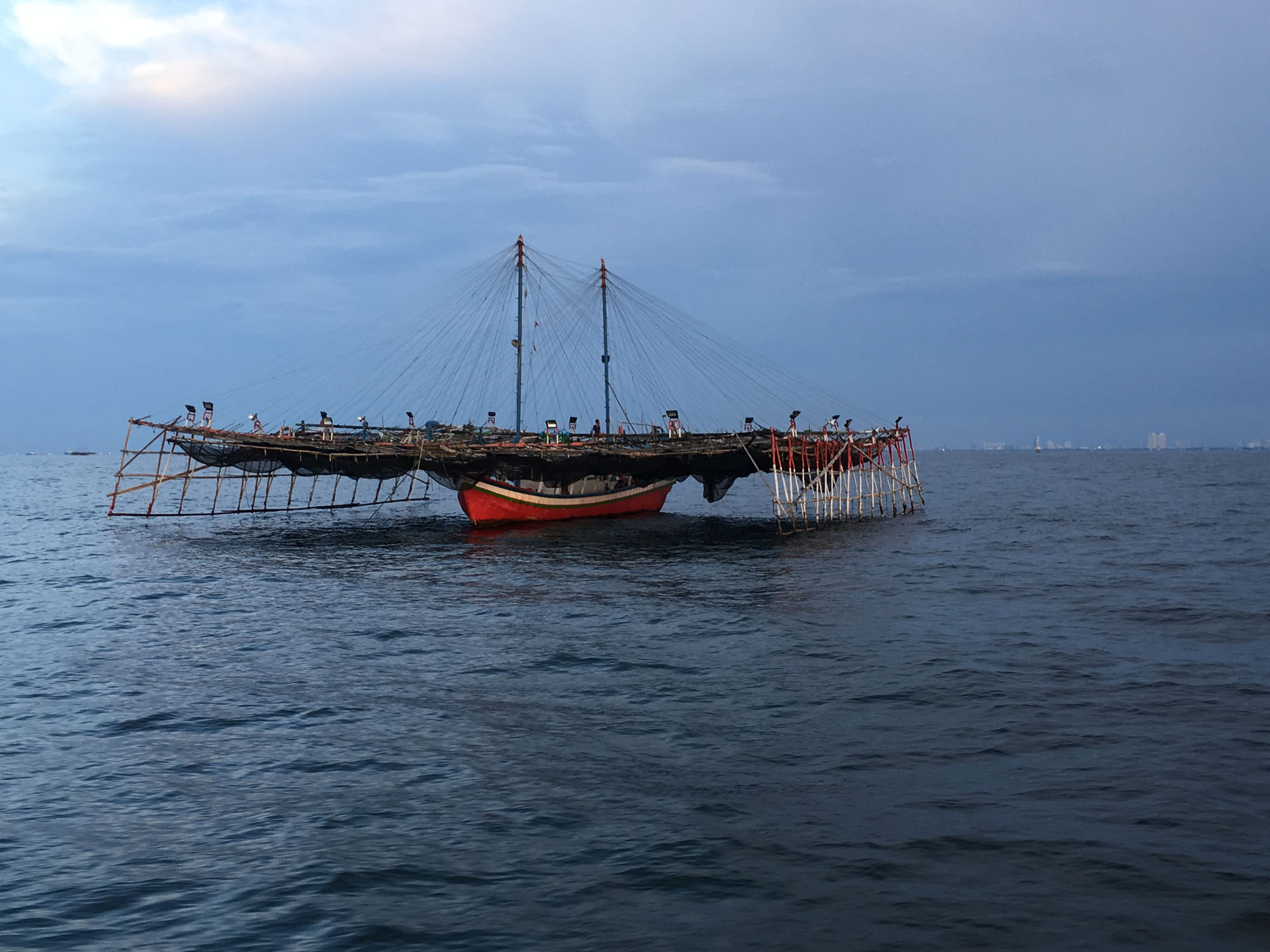
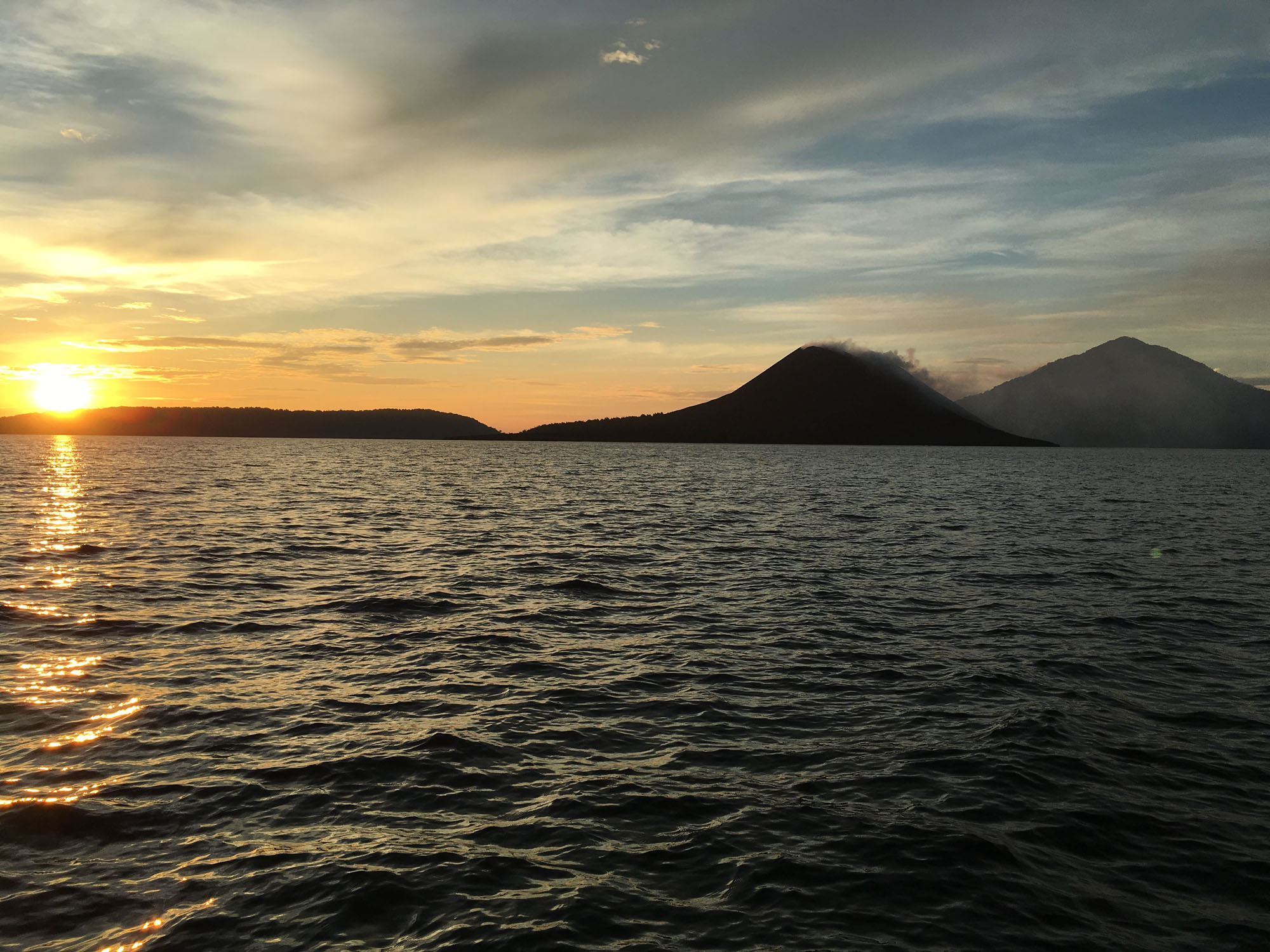
Scenic sunset in Kepulauan Seribu (“Thousand Islands”) on the 6th day of the voyage (Photo: Shermaine Yung)


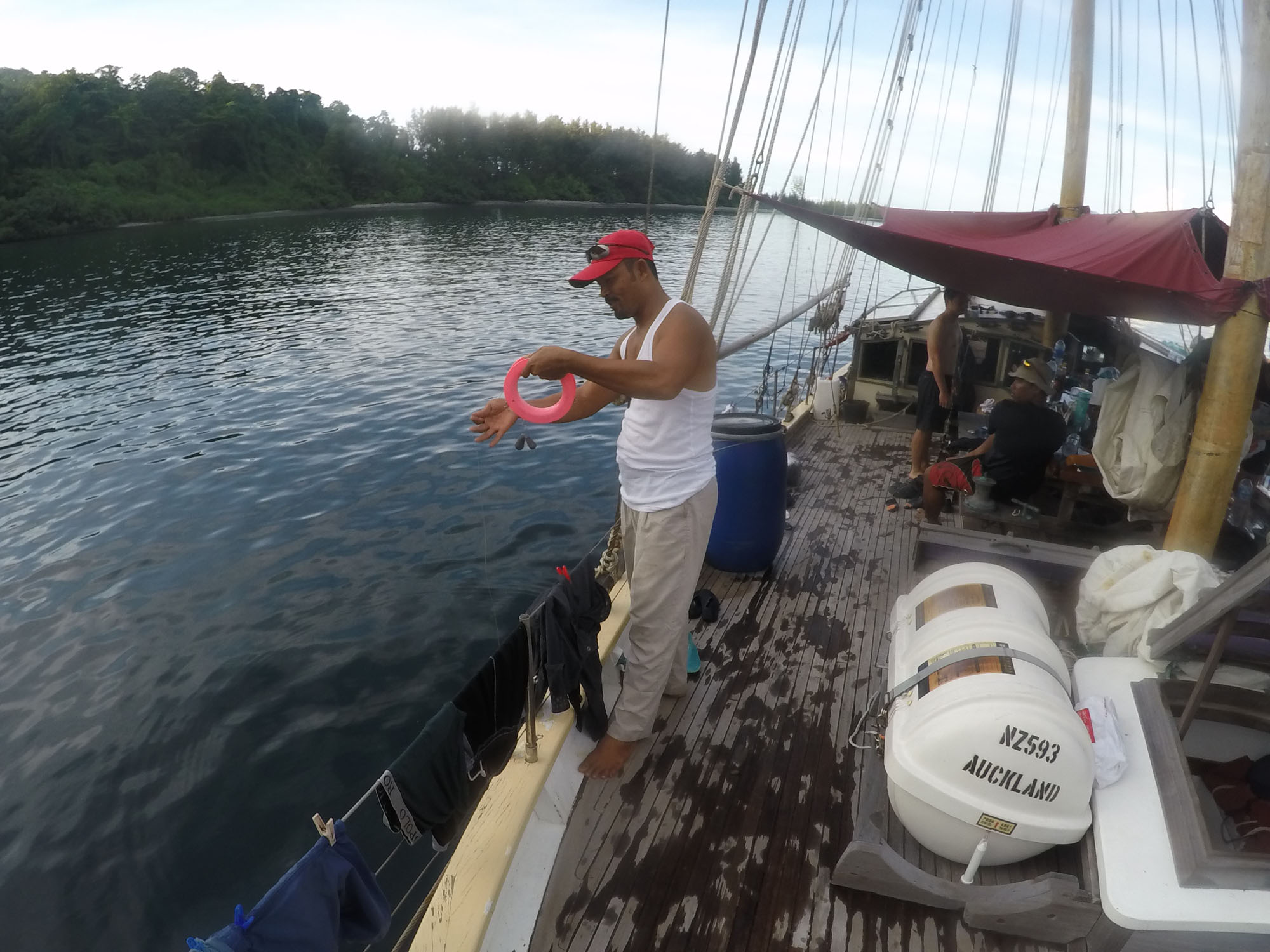
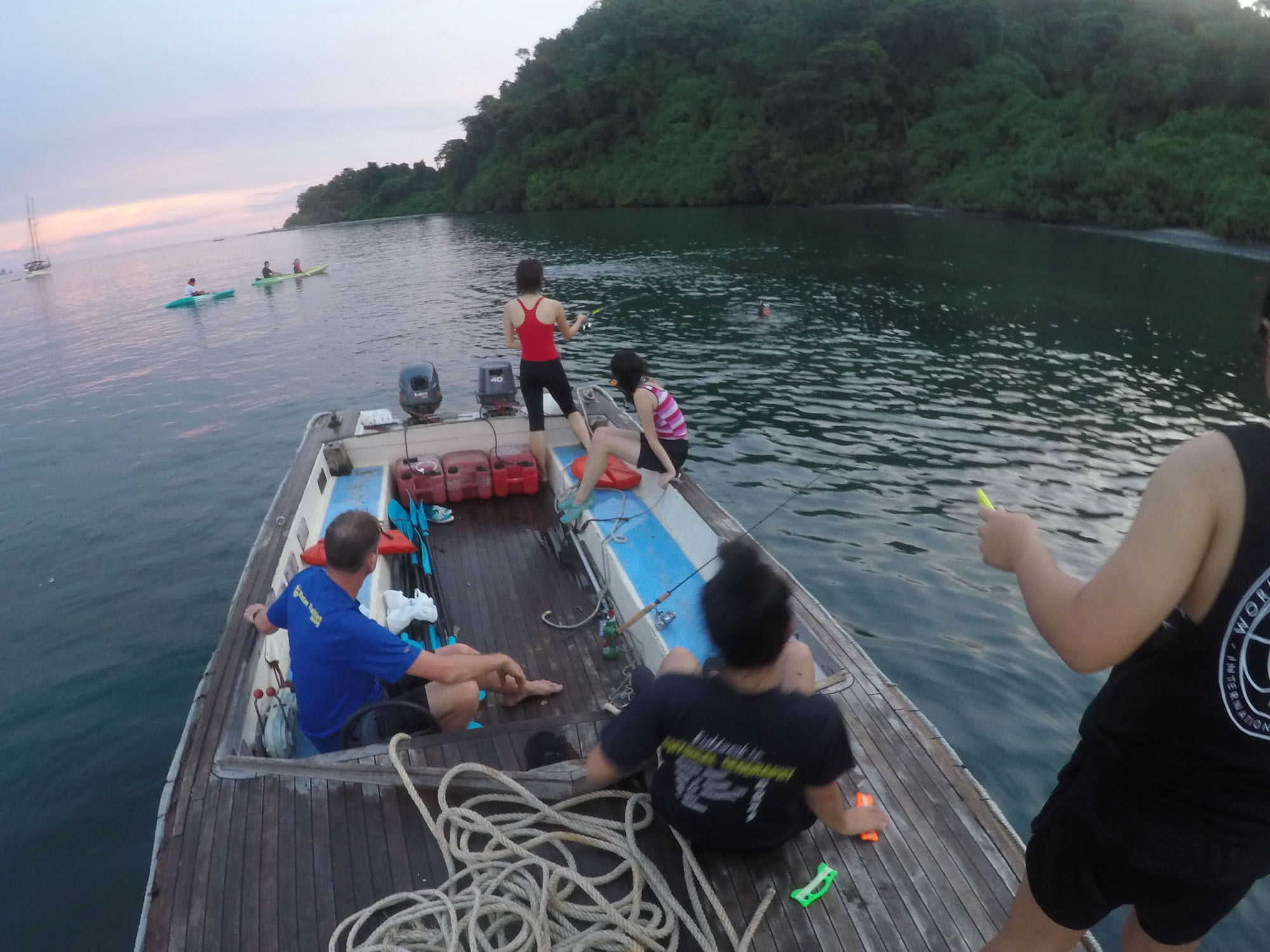
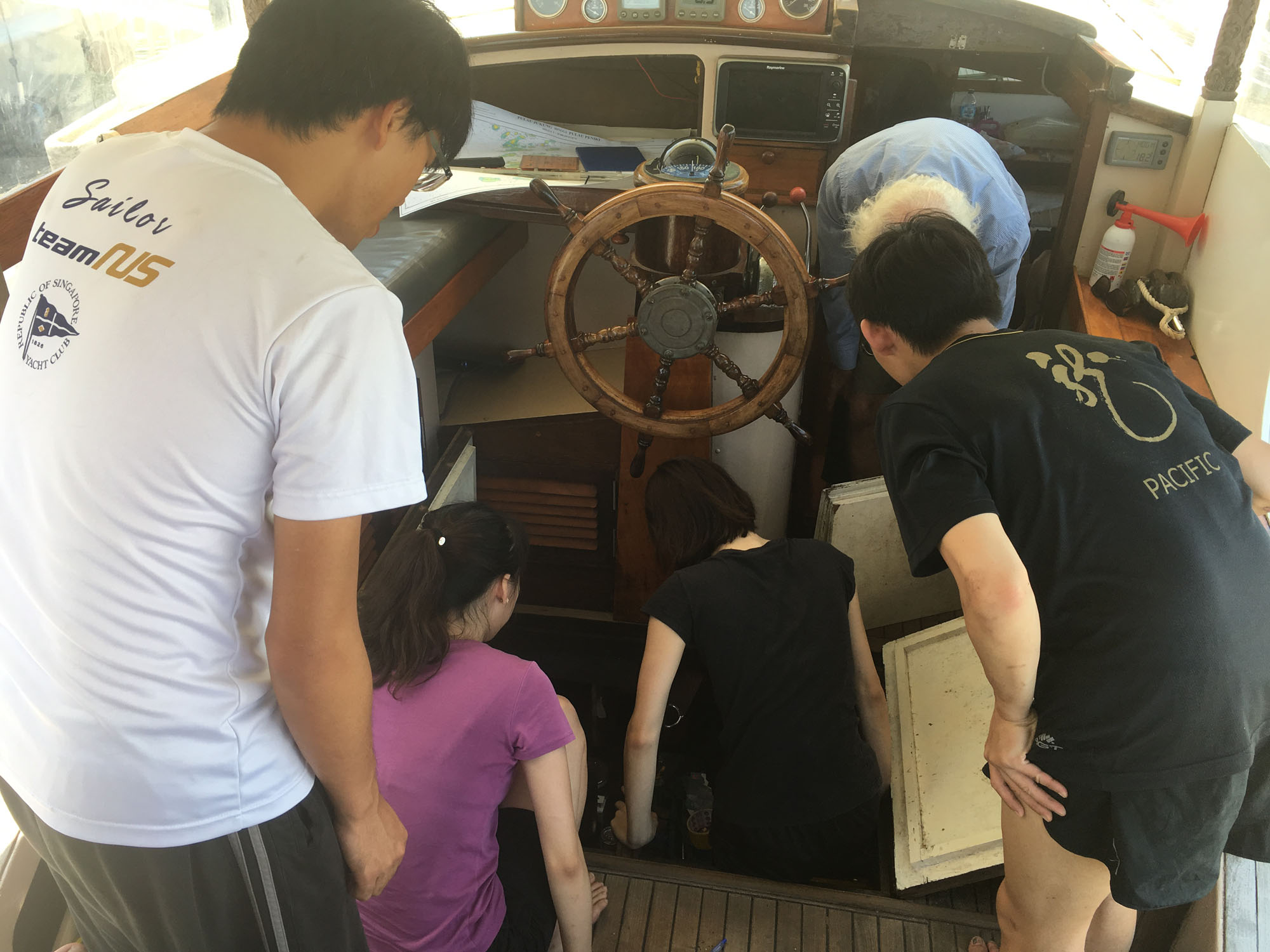
On 25 February, 15 NUS staff, students and alumni set off on a week-long NUS Study Trips for Engagement and EnRichment (STEER) voyage in collaboration with Tembusu College, from Jakarta to the Krakatoa archipelago. The trip was the ninth voyage by NUS Seafarers, an initiative of the Office of the Senior Deputy President and Provost, which has to date brought more than 100 NUS students and alumni on experiential sailing trips across Indonesia and the Philippines, teaching them about the biodiversity, as well as the economic, cultural and geographical aspects of these maritime nations. 

Associate Professor Martin Henz, NUS Computing and NUS Engineering, and Dr John van Wyhe, NUS Biological Sciences and Tembusu College Fellow pen their insights on the voyage. 

How might one fathom the vastness of the biggest explosion in human history, the Krakatoa eruption of 1883? Can textbooks ever adequately convey the immensity of such events, the destruction they wreak and the regional and even global fallout they produce?

The Krakatoa catastrophe took place only 135 years ago, and many of the resulting geological features still stand in plain sight. Thus, our response to the educational challenge was to take the students on-site and immerse them in the landscape formed by that catastrophic event.

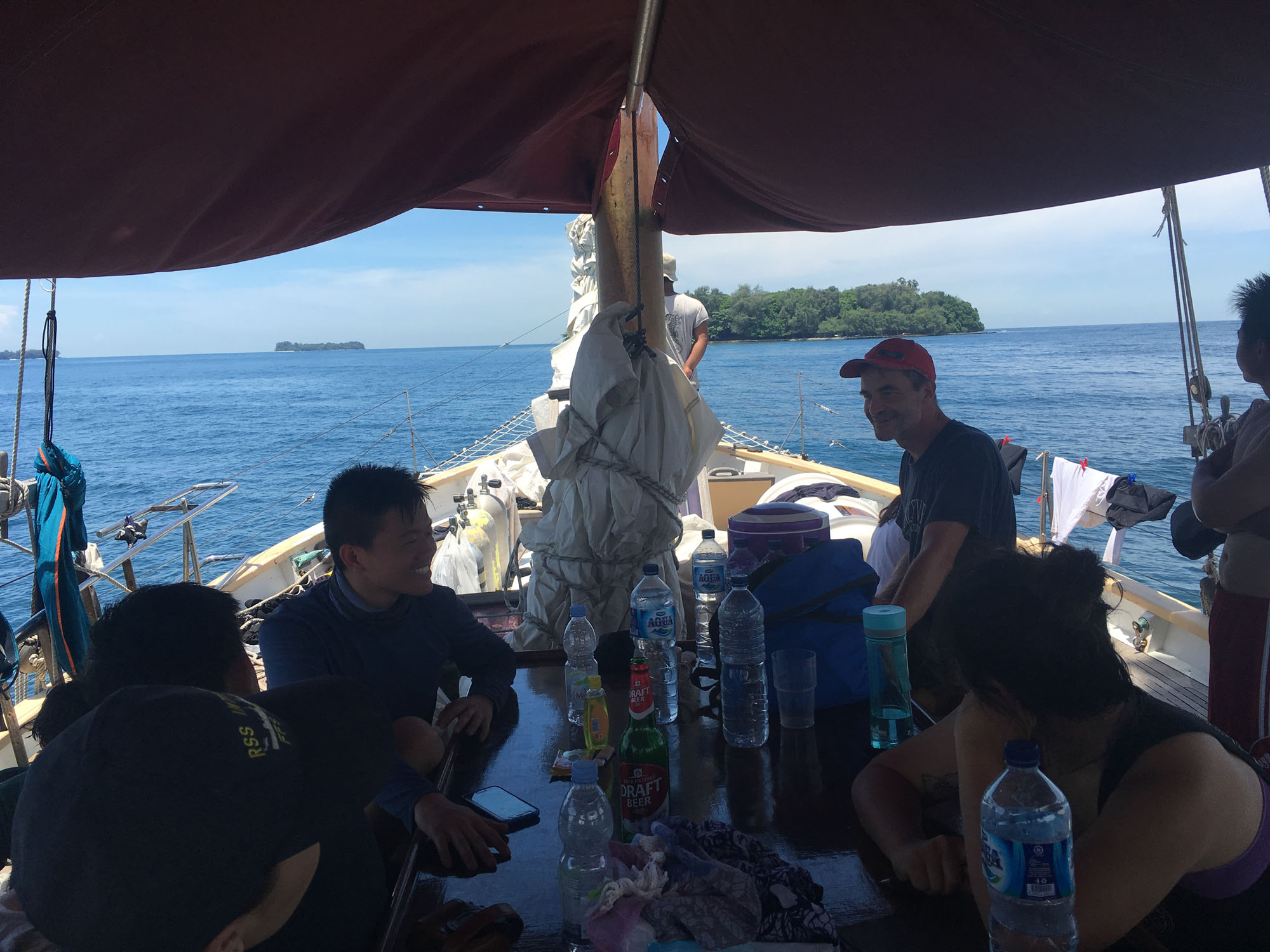
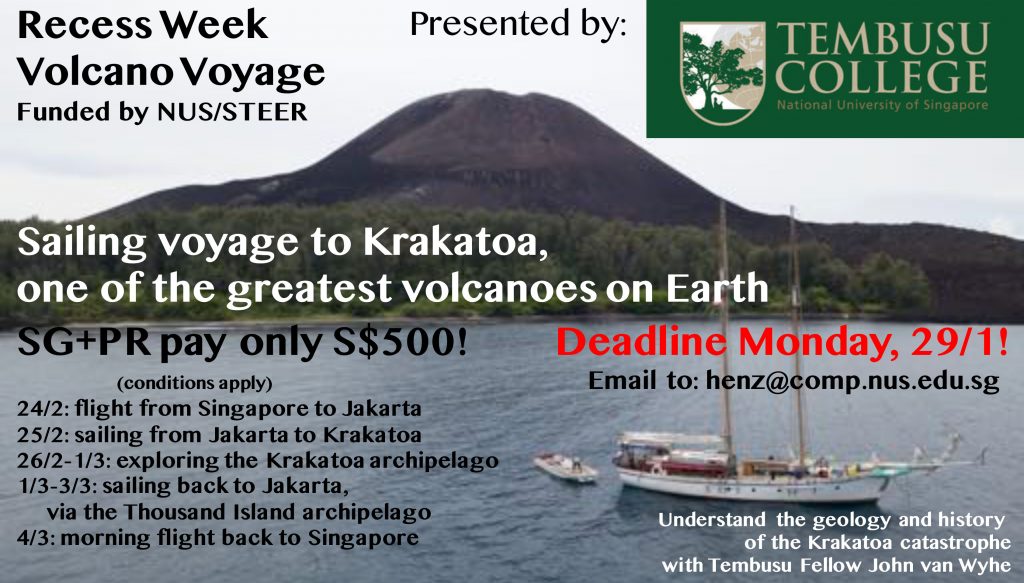
We organised a Tembusu College STEER voyage — our “Recess Week Volcano Voyage” — to the Krakatoa archipelago for nine NUS students, two international exchange students and two NUS alumni.

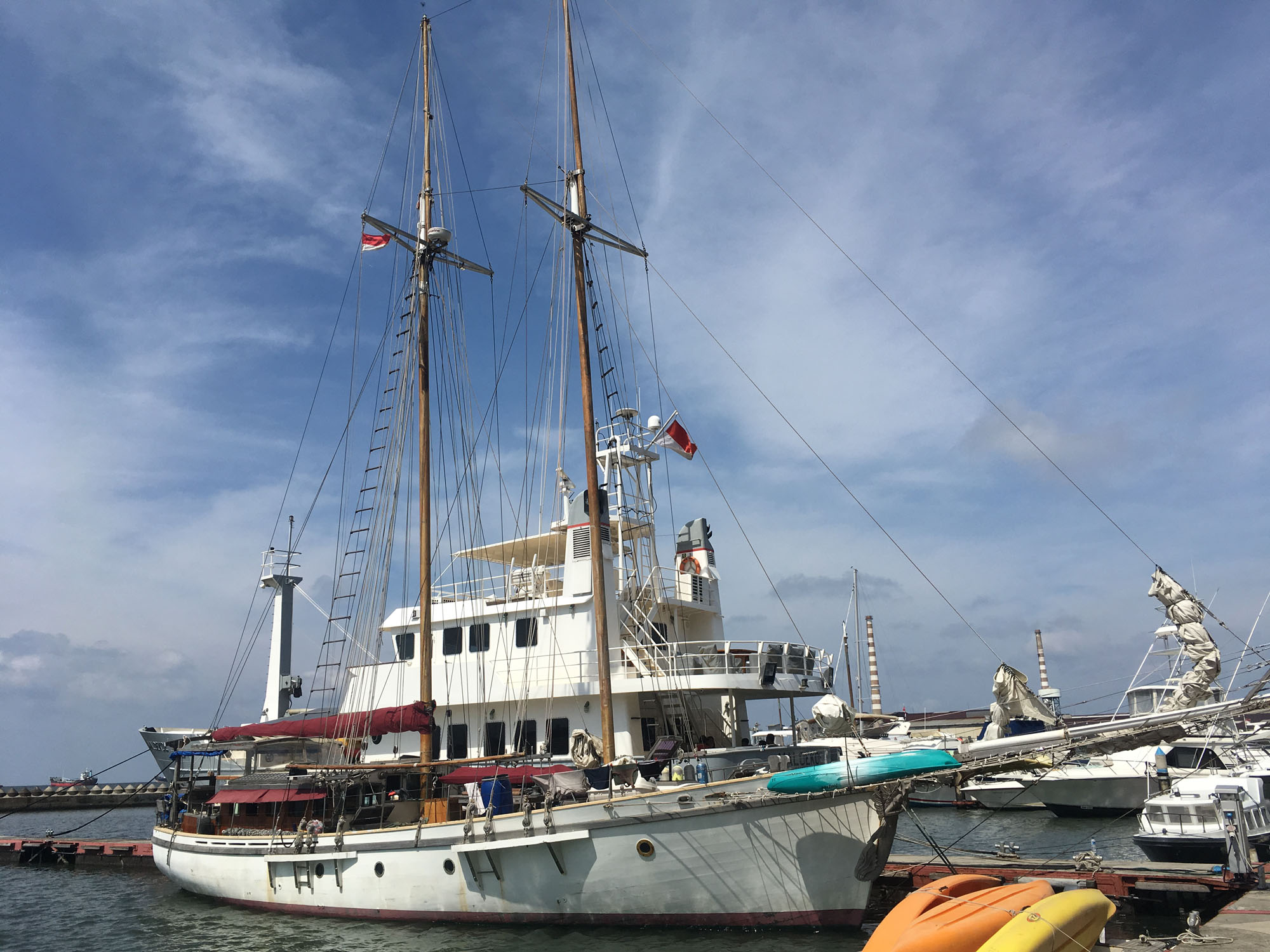
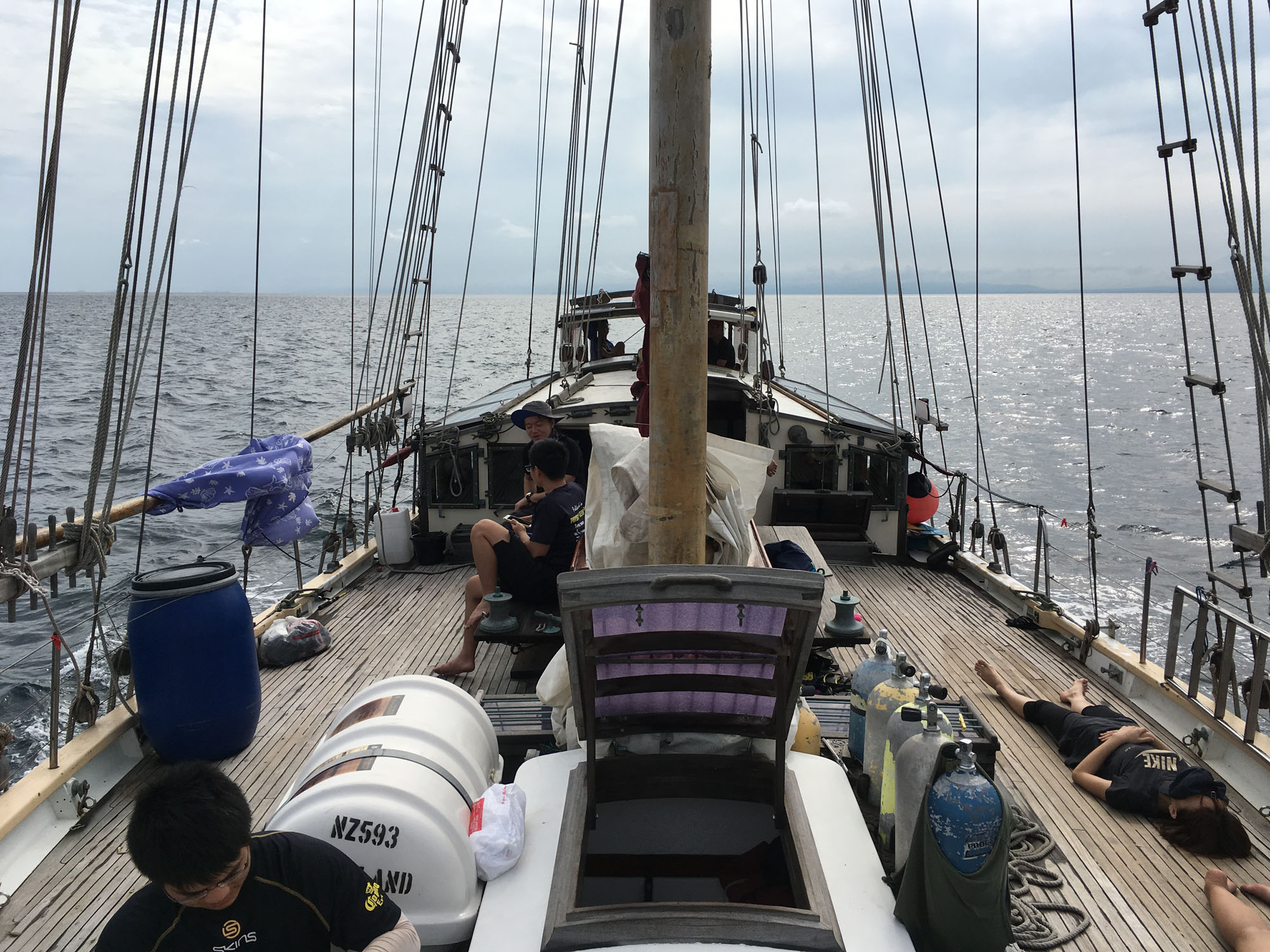
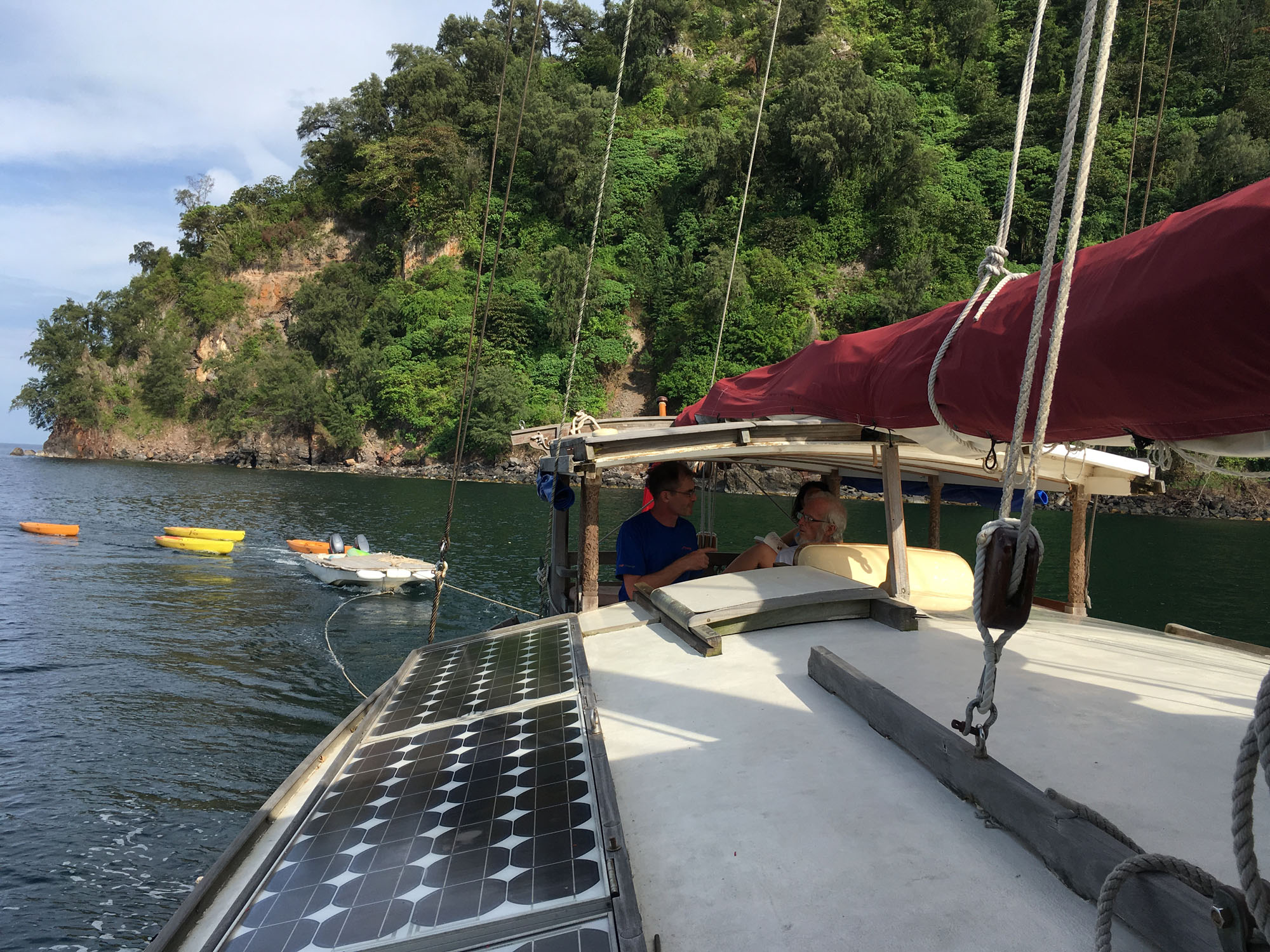
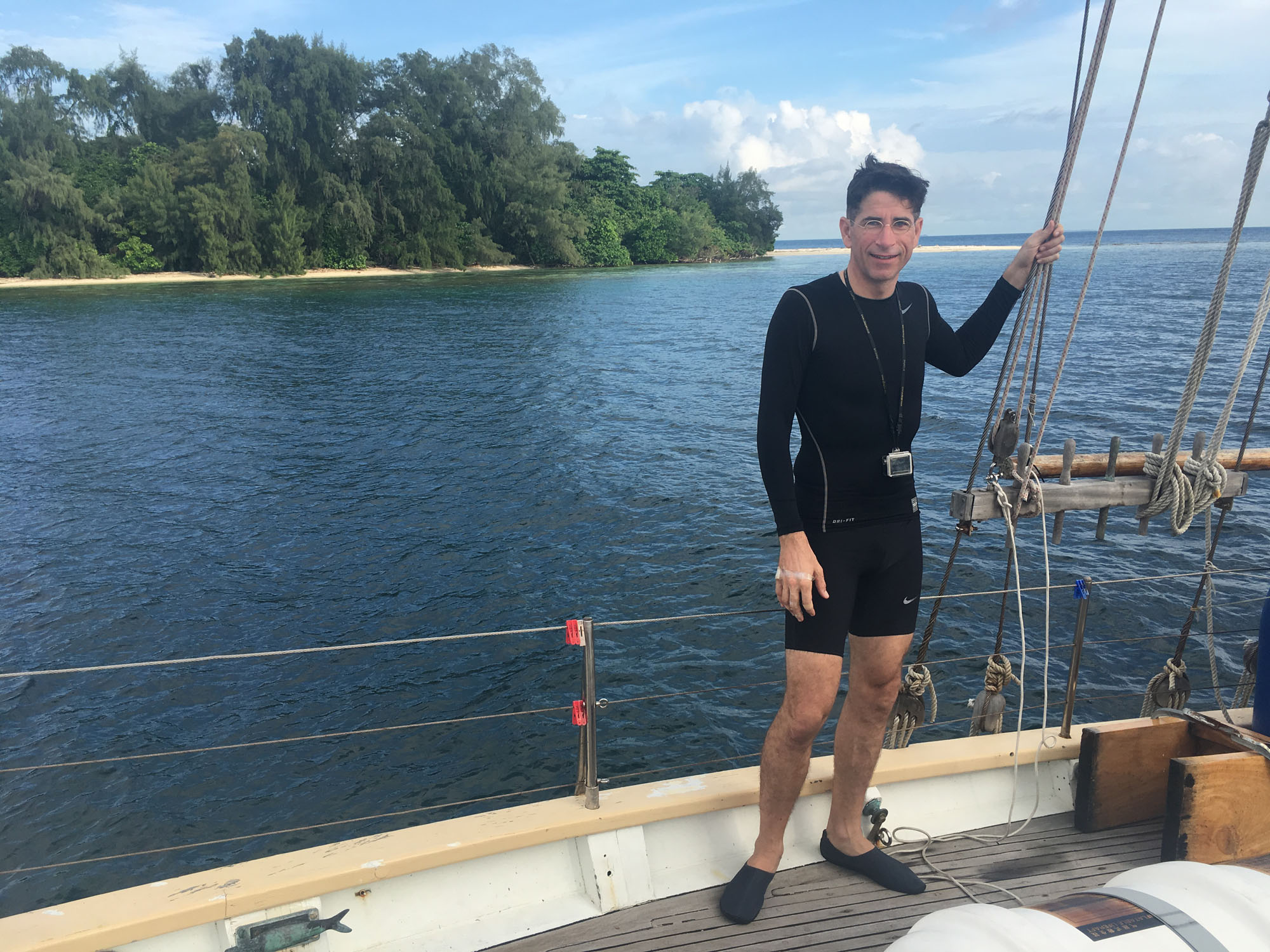
We boarded the 78-foot staysail schooner “Four Friends” in Jakarta on 24 February, set sail on the afternoon of 25 February, and reached the Krakatoa archipelago in the Sunda Strait in the early morning hours of the following day.

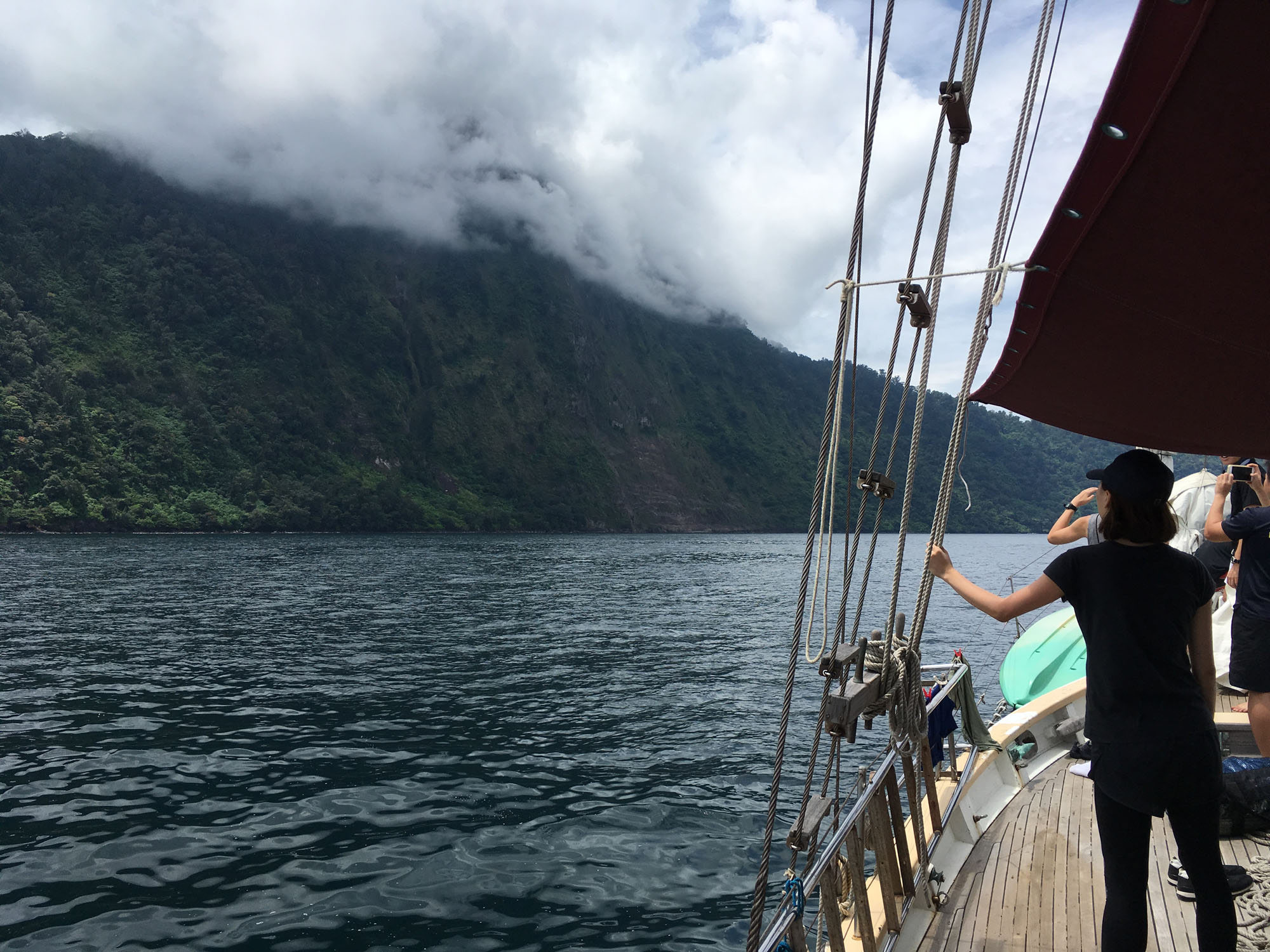
In front of Rakata Island, the largest remnant of the original Krakatoa volcano (Photo: Shermaine Yung)


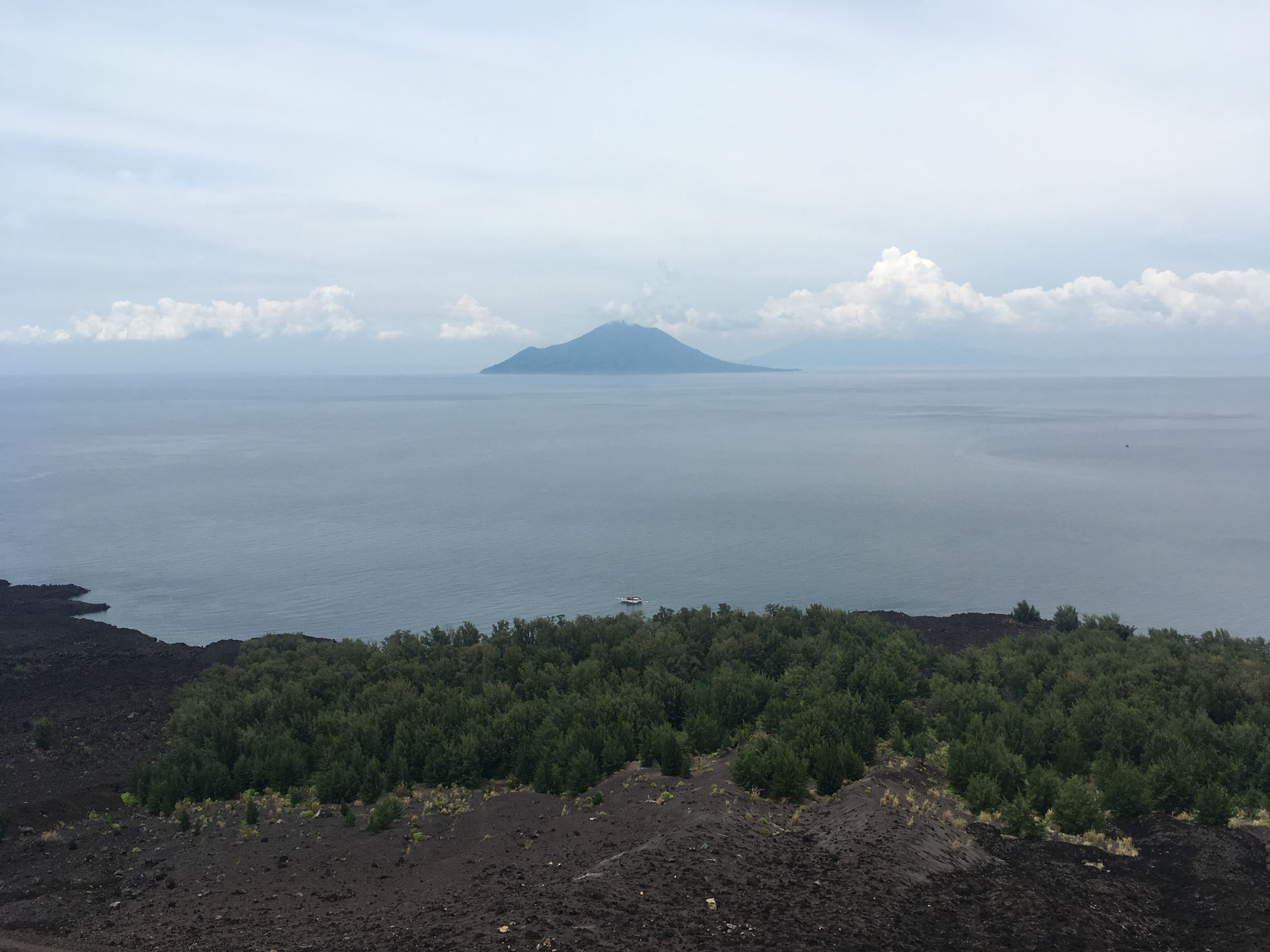
The next three days provided ample opportunities to study the archipelago, consisting of Rakata, the tallest island which is often partially hidden by clouds and comprises the southern flank of the original pre-1883 Krakatoa volcano; two smaller Krakatoa remnants called Rakata Kechil and Sertung; and Anak Krakatau, a new volcanic island that emerged in 1927 from the vast seafloor hole created by the explosion.

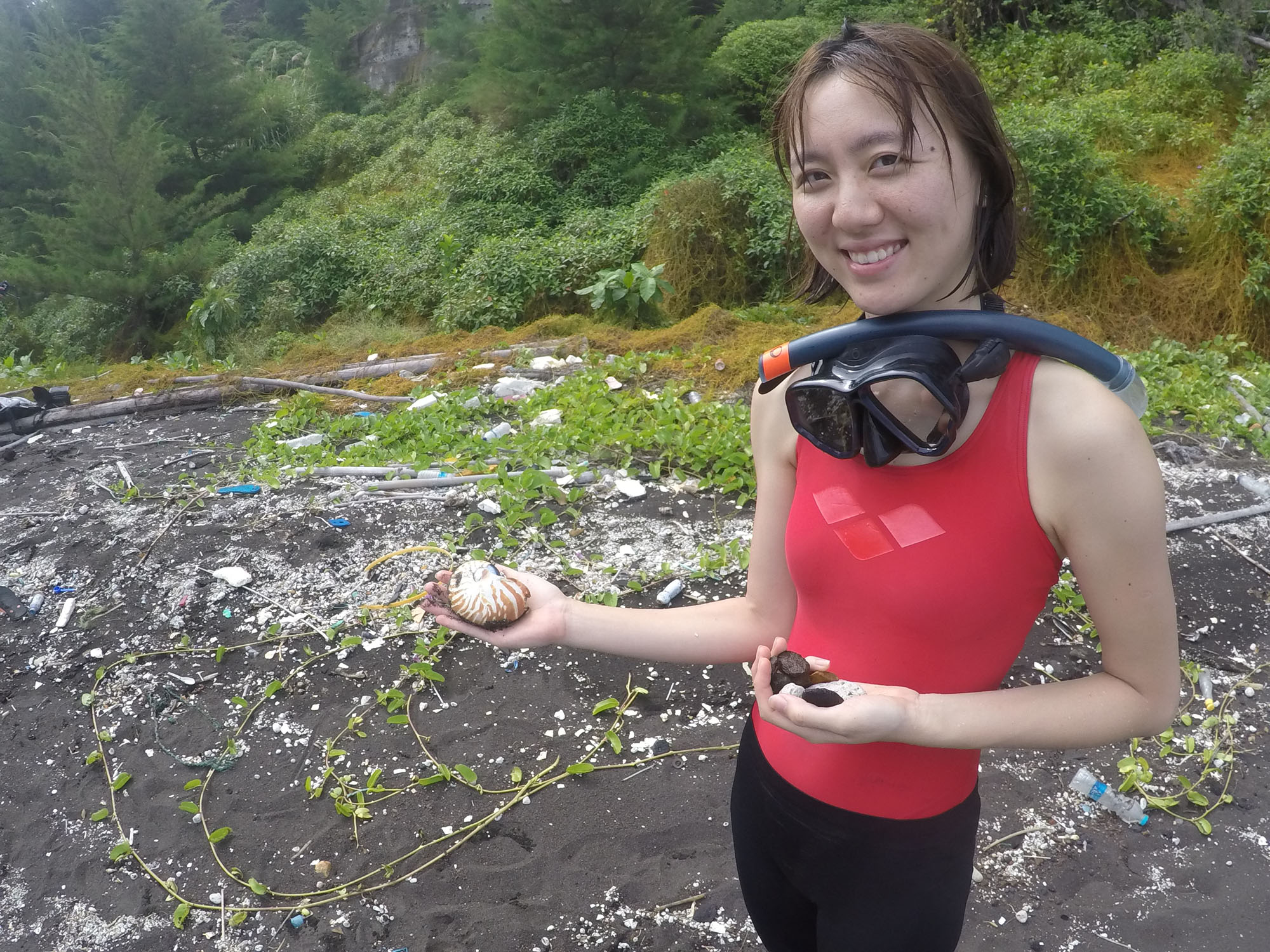
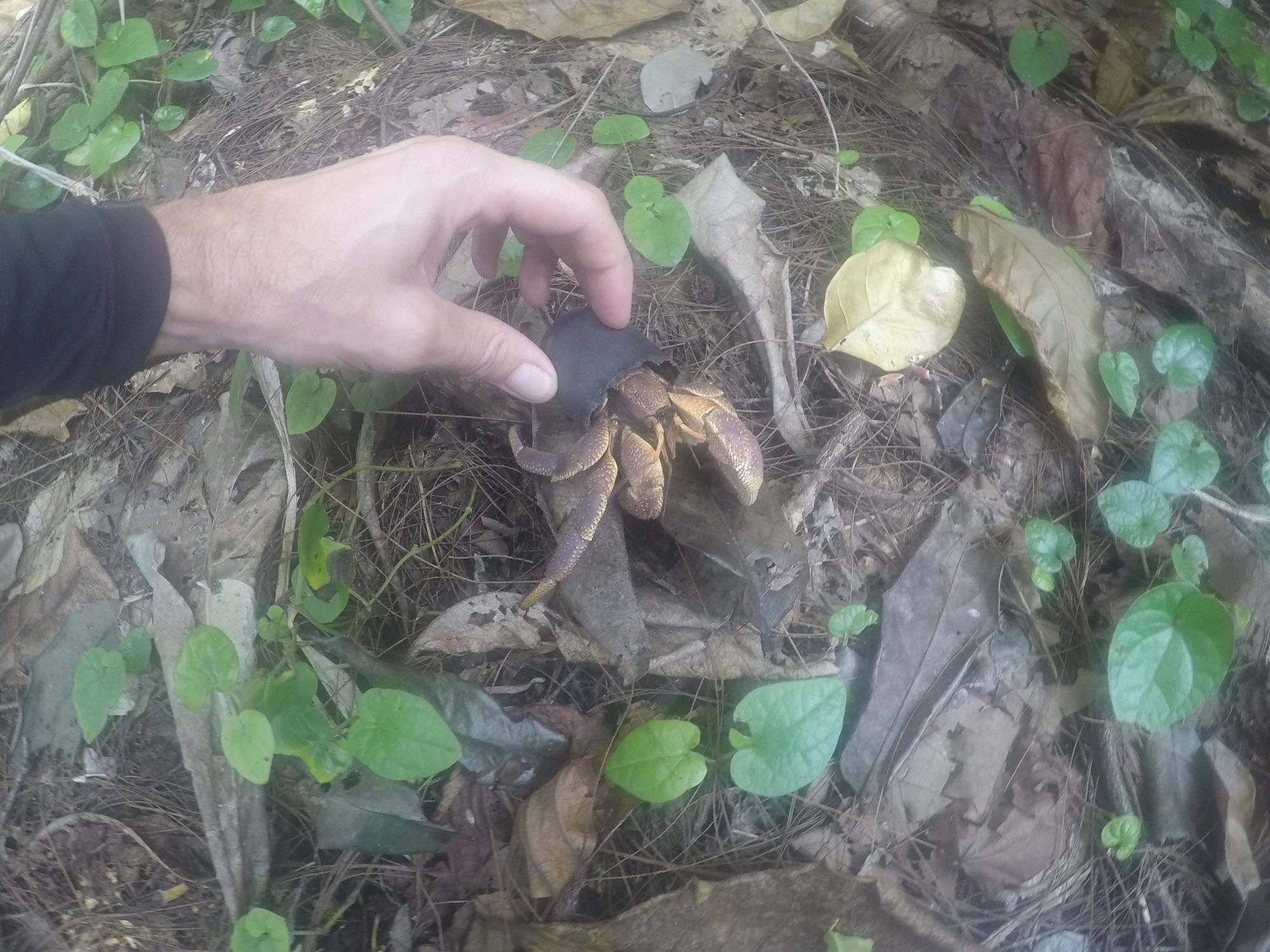
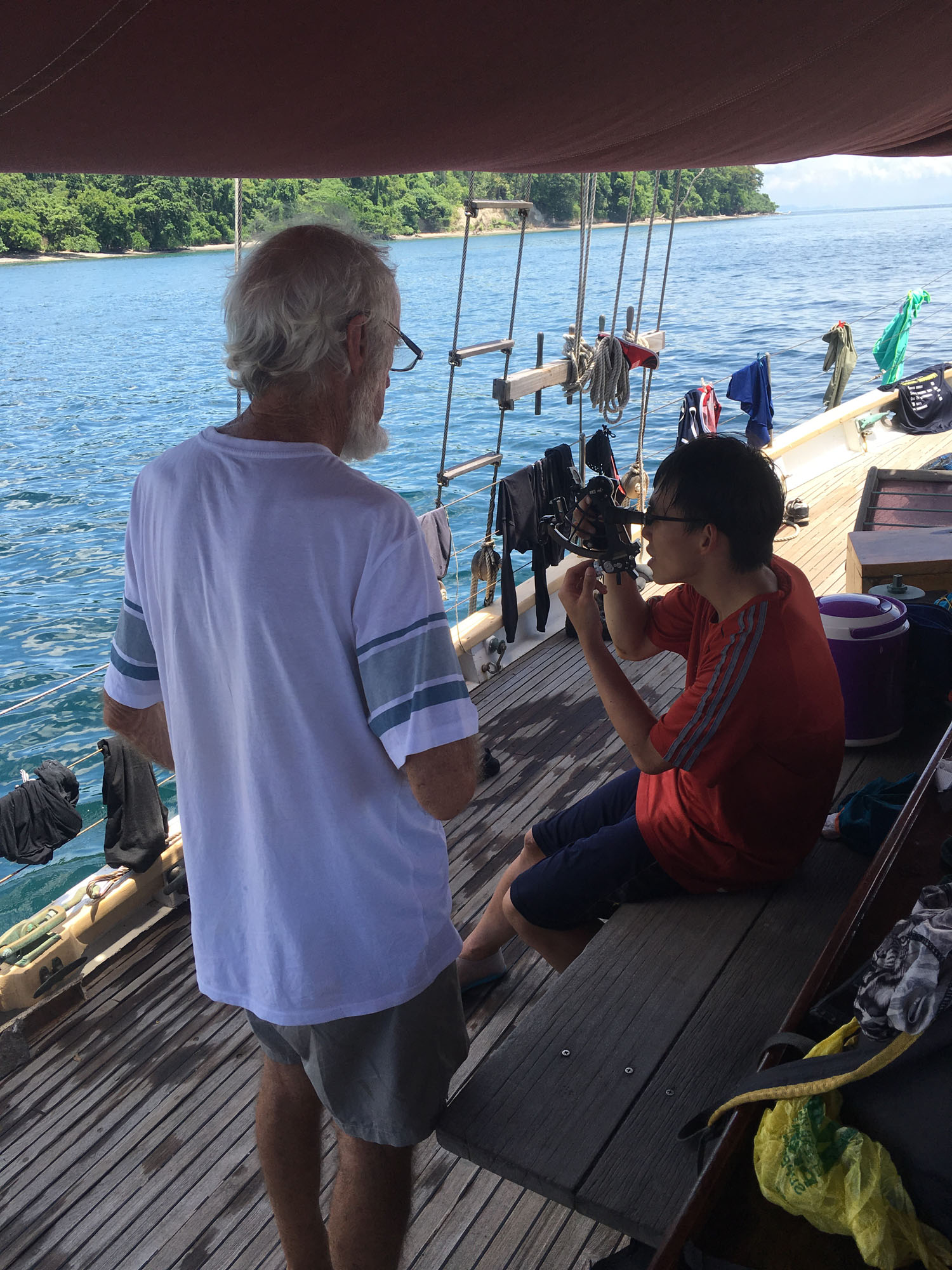
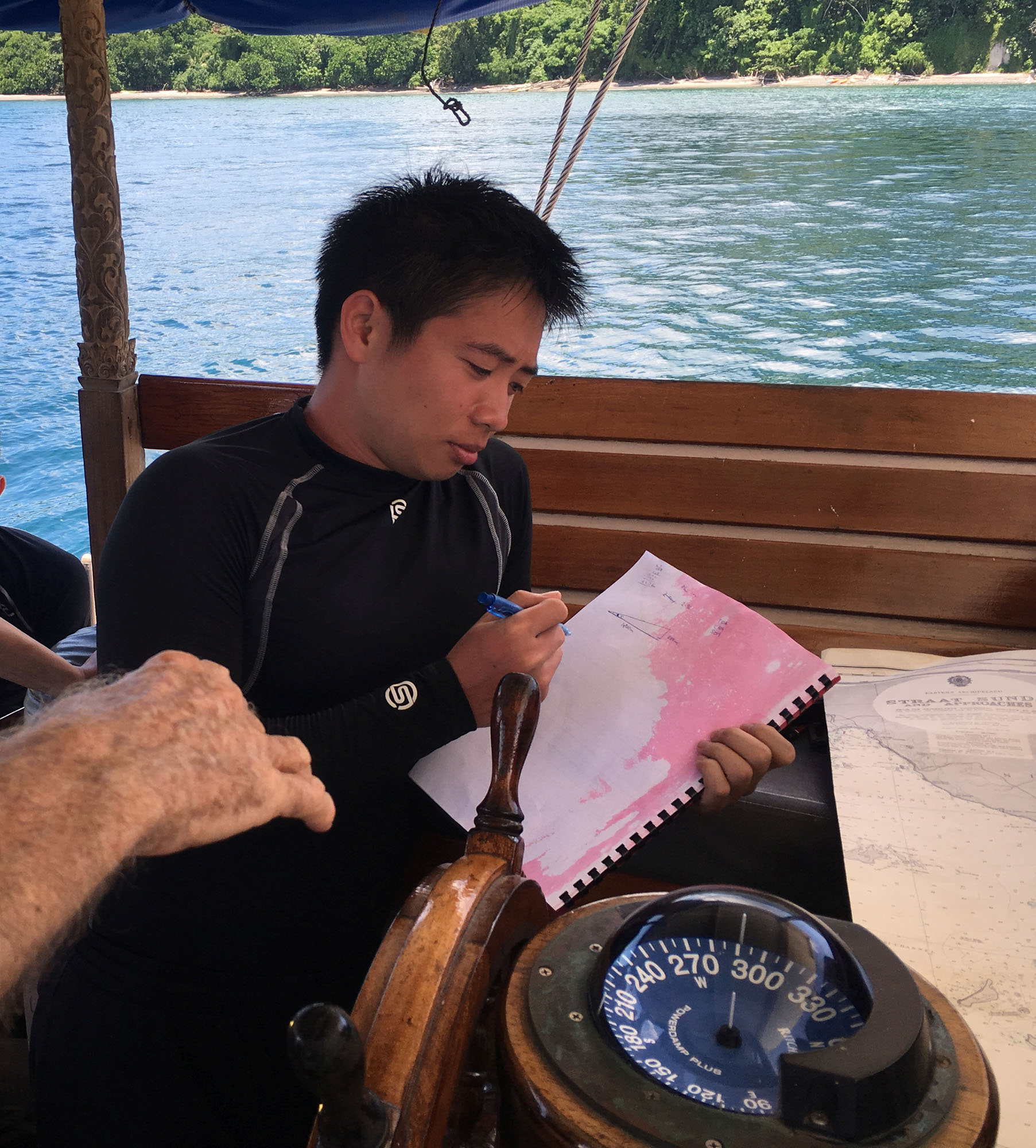
We explored the sea life that had re-established itself after the catastrophe, including several coral reefs and a large pod of dolphins, while snorkelling and navigating the area. We hiked through the tropical forests of Rakata and Rakata Kechil, which had grown back in the past 135 years on the fertile ash that the explosion had deposited on the surrounding islands. We established the heights of the peaks of Anak Krakatau (302m) and Rakata (810m) using sextant, GPS, radar and high school trigonometry.


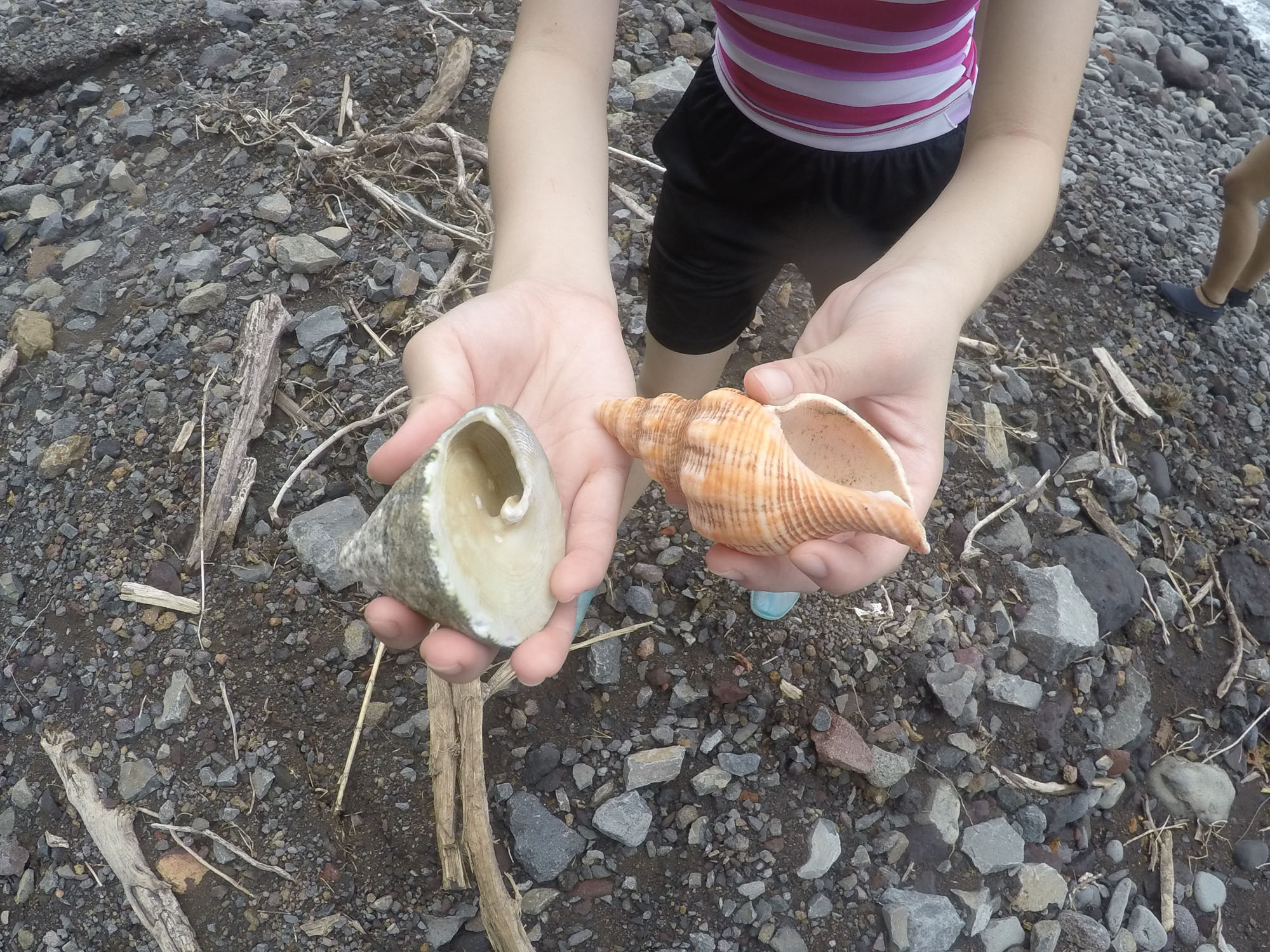
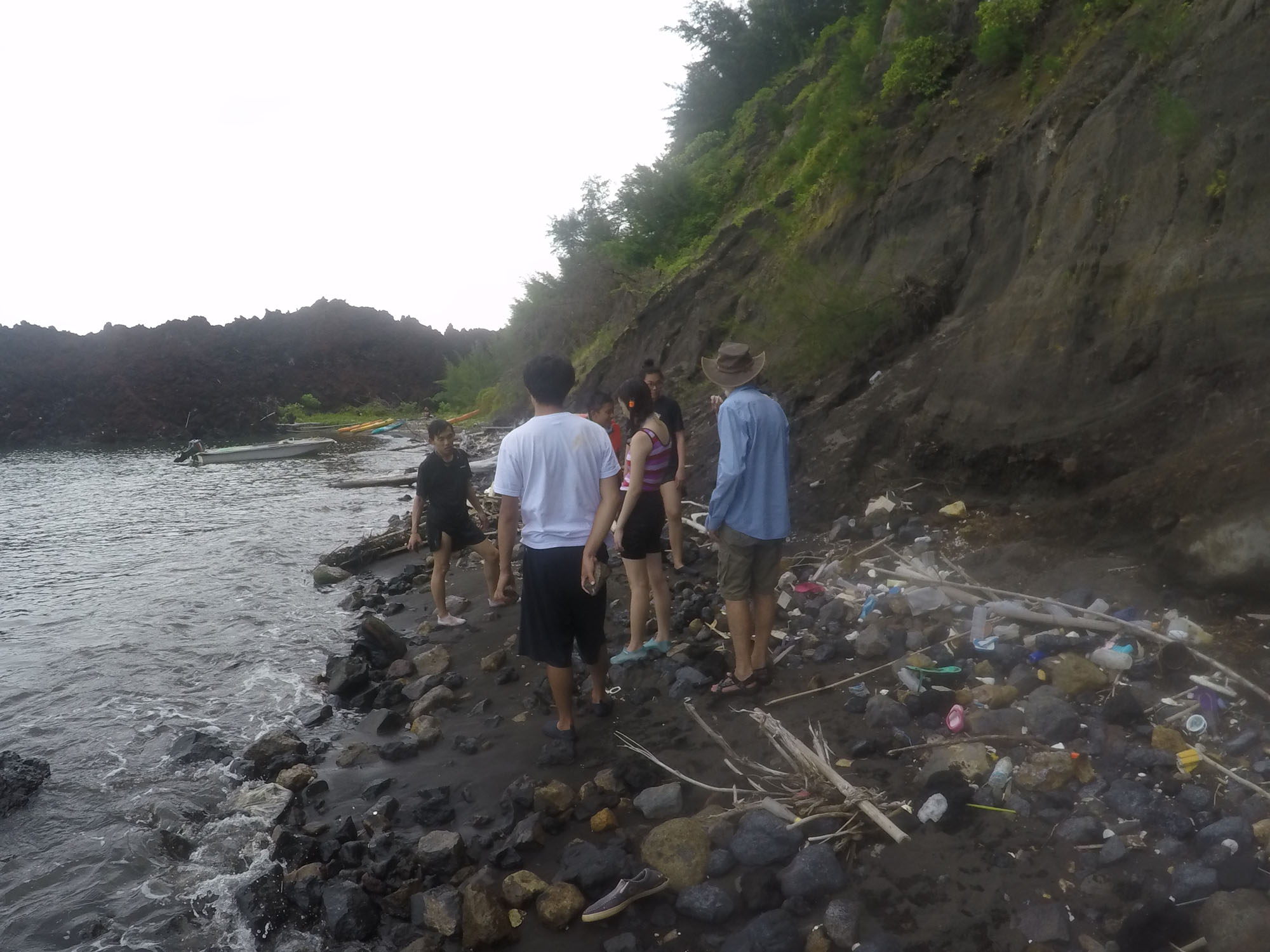
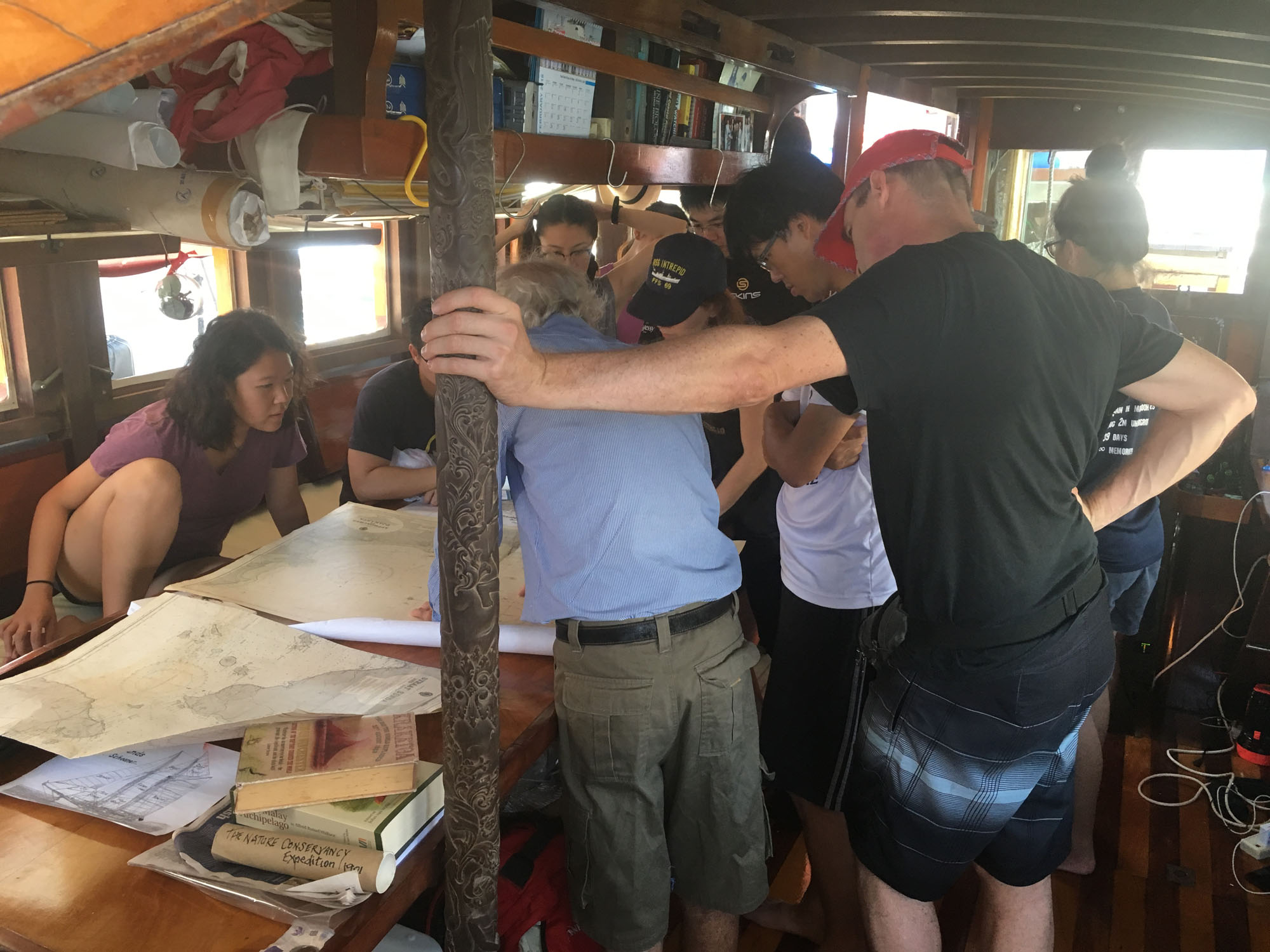
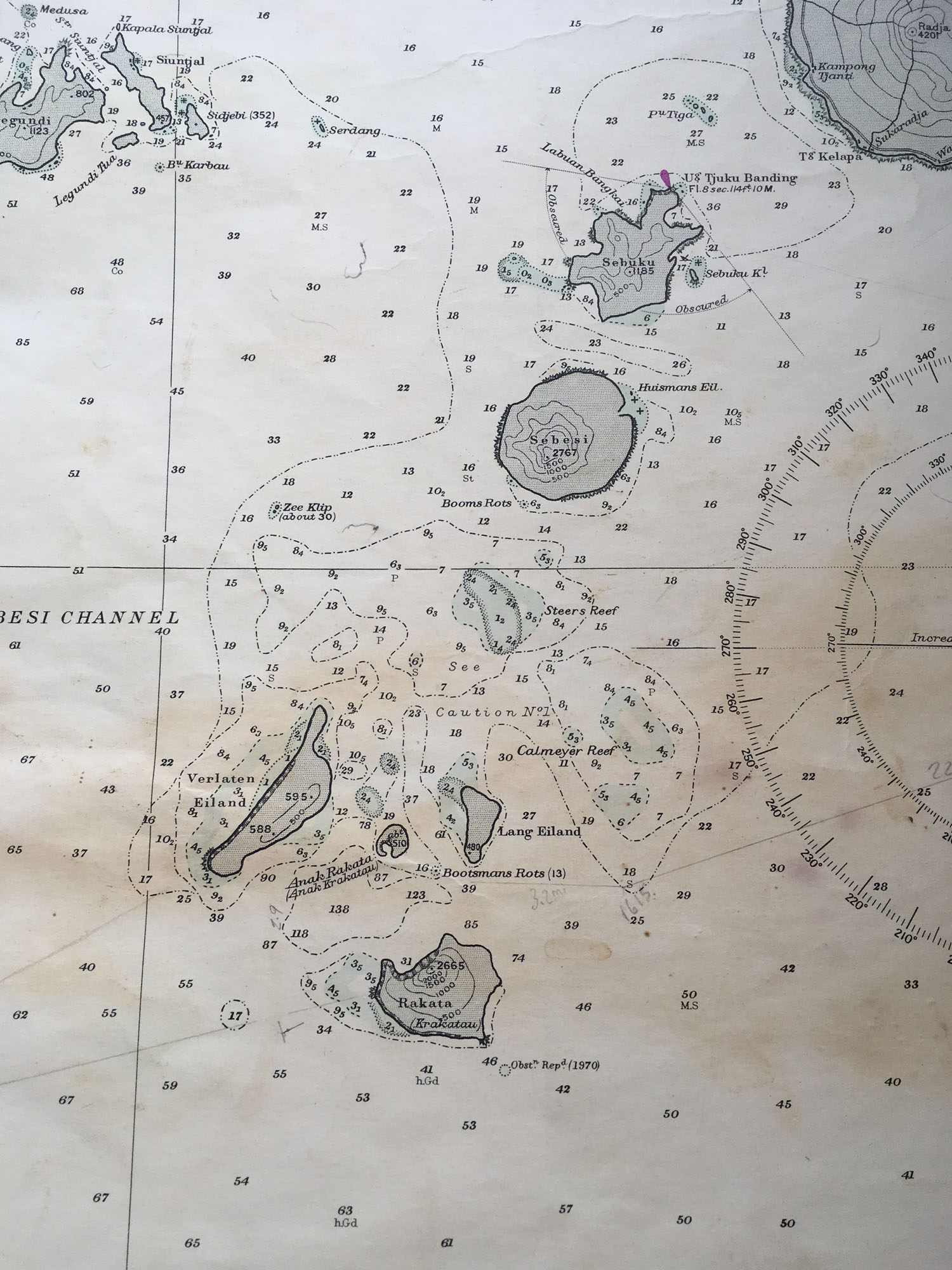
We examined rock samples from all four islands and conjectured their likely origin. While kayaking, we discovered pumice (volcanic rock) from recent eruptions, floating (yes, pumice is often lighter than water!) and washing up on the shores of the islands. We studied modern and historical maps and charts to complement our first-hand experiences.

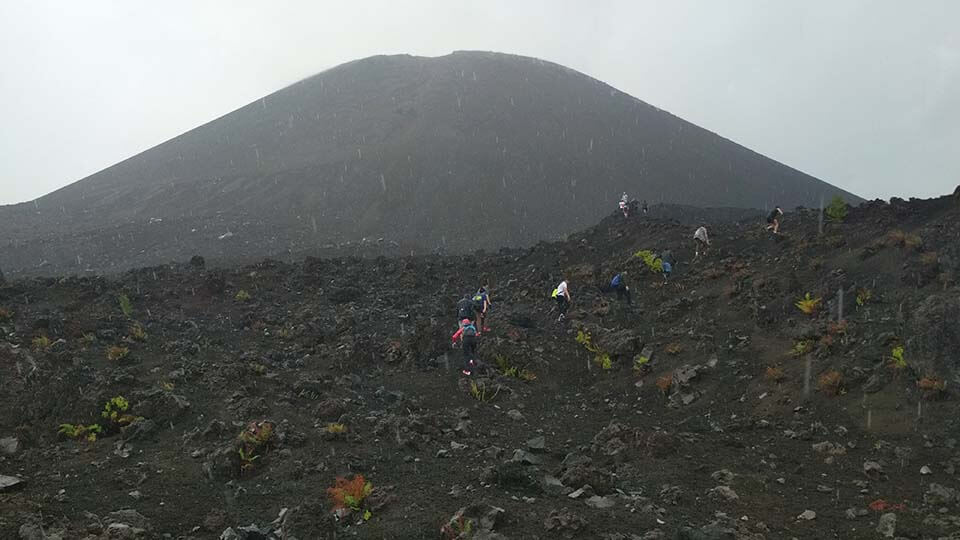
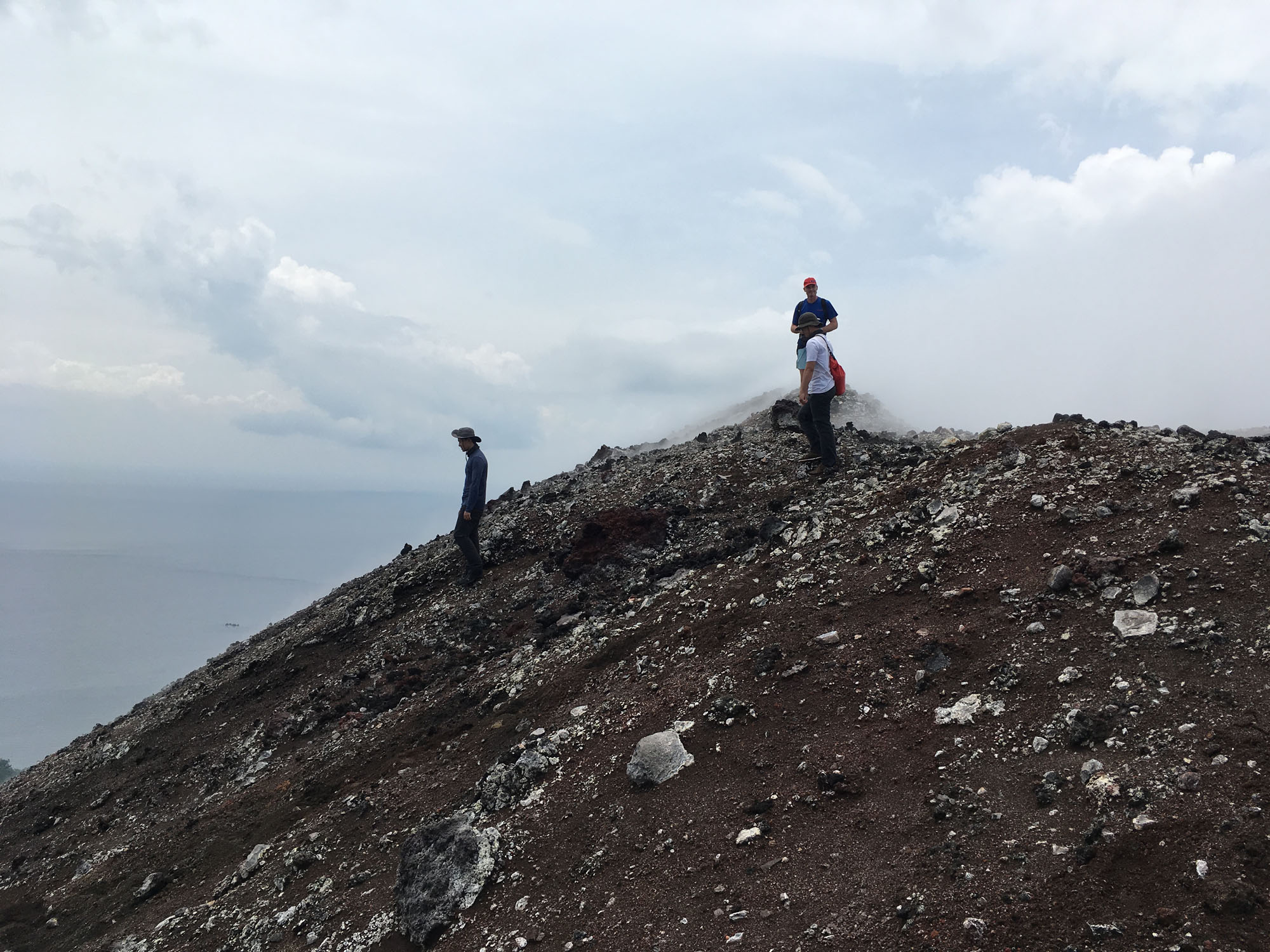
Then, on 28 February, our third day in the archipelago, the stars aligned. A steady northerly monsoon wind exposed a cloud- and gas-free ascent path on the northern flank of Anak Krakatau. The seismic readings that we monitored using a satellite phone and with a Singapore-based collaborator showed benign levels of volcanic activity, and visual inspection of the crater elevated our hopes that a visit to the summit might be possible that day. We landed on the island using our motor boat and kayaks and made our way to the foot of the mountain through a vast and rugged lava field.

“Dr John” — as he was endearingly called by the students — scouted out a suitable route for our ascent, while the remaining team further inspected the lava field. Year 2 NUS Computer Science and University Scholars Programme (USP) student Chu Qinghao, Year 4 NUS Industrial Systems Engineering and Management student Daren Lau and Assoc Prof Henz decided to follow in the footholds that Dr John had prepared for them. Continuous Very High Frequency communication with the nearby anchored schooner and with each other during the ascent enabled us to react to any possible changes in the cloud pattern over the volcano and other signs of danger.


Climbing a field of solidified lava leading to the crater of Anak Krakatau (Photo: Martin Henz)
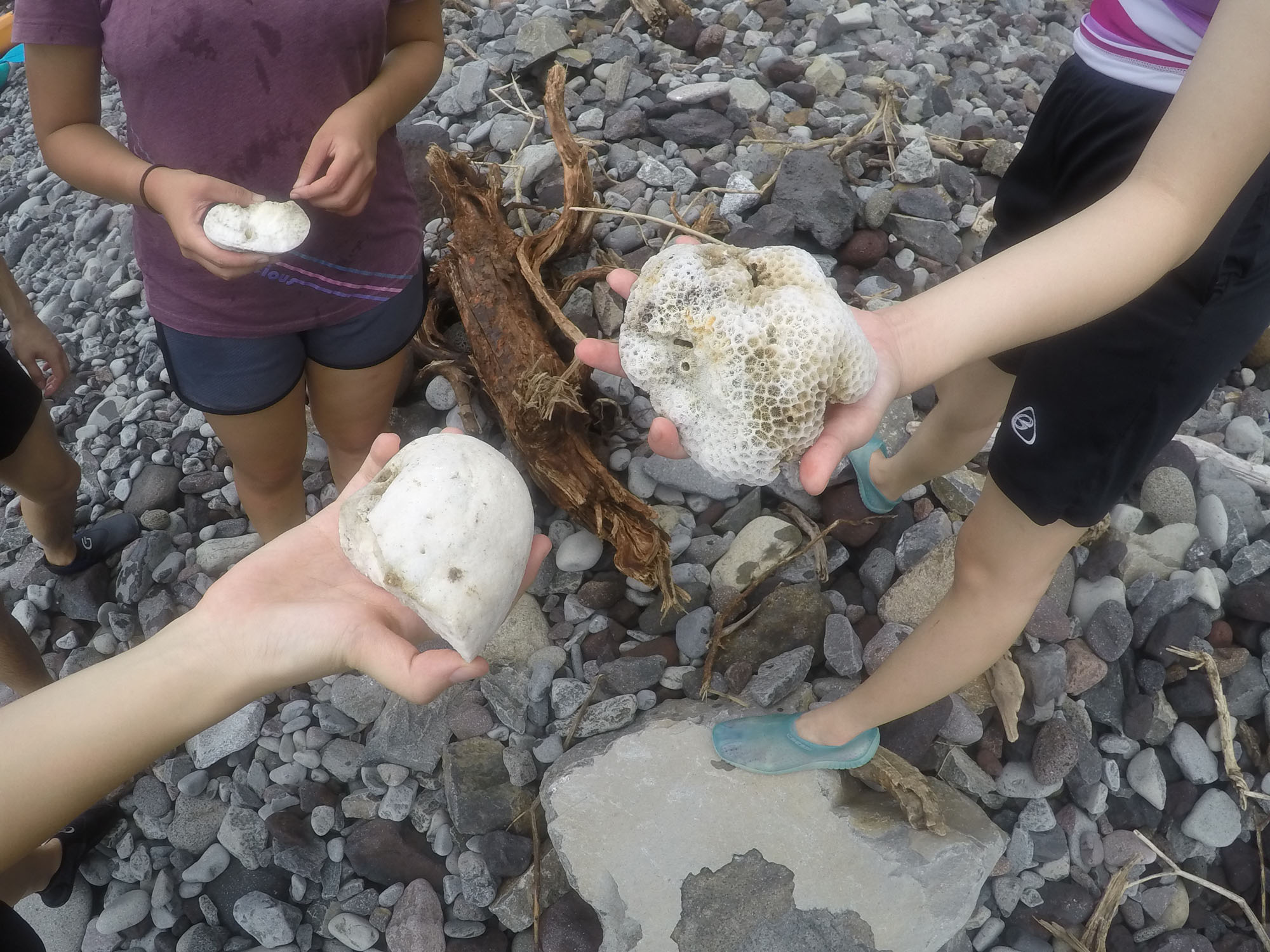
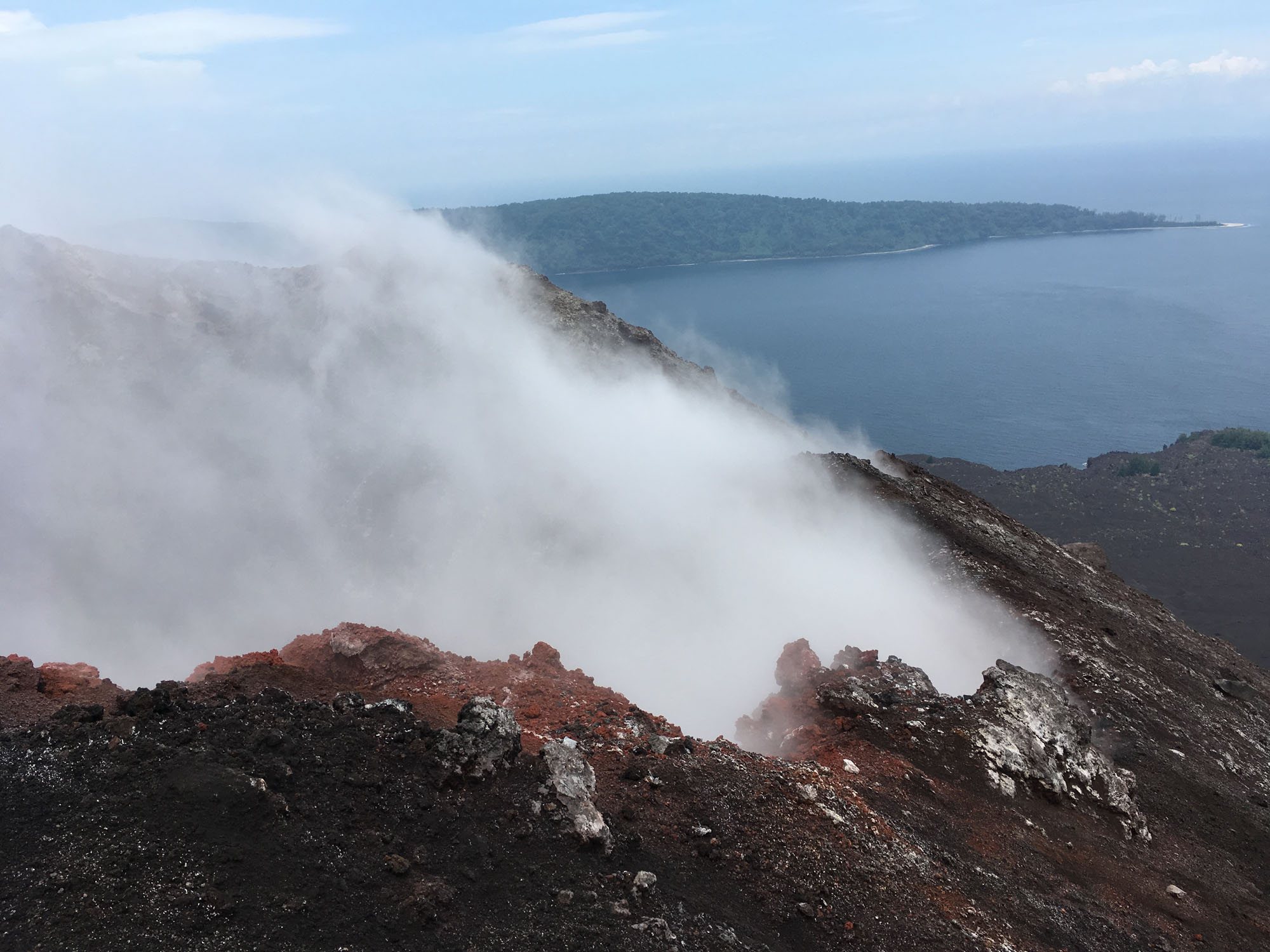
The summit provided breathtaking views of the seascape towards Sumatra. Breathtaking in quite a different sense was the direction towards the caldera! We saw a complex amalgamation of igneous rock and ash riddled with a myriad of tiny holes from which hot water vapour and volcanic gases oozed. We flew a drone over the caldera and took movies and pictures, before carefully descending along the same path.

“The best part of the trip for me was being able to see Krakatoa itself up close after having read and heard so much about it. The scale of the place was astounding and I still find it hard to believe that I was at the site of such a significant event,” said Year 4 NUS Geography student Grace Tang.

Another participant, Year 2 NUS Business and USP student Wong Li Ching called it a multisensory learning experience in nature’s classroom. “Spontaneous activities undertaken during the voyage encouraged experimentation and calculated risk-taking — these can hardly be learnt in the safe and organised learning environment in university. I felt connected to nature again,” she said.

Nicholas Seow, Year 4 NUS Geography student, added that the voyage proved that “geography is everywhere, you just need to be inquisitive and daring”.

Indeed, what better place to grasp the scale of the 1883 Krakatoa explosion than on top of the crater of Anak Krakatau, which grew from the depths of the sea at the site of the original volcano, with vapour and gases emerging from the ground on which we stood?

By Professor Tommy Koh: Why Asean is good for the US

Asean is important to the US for three reasons: geo-strategic, economic and political.

I will focus first on the geo-strategic. The United States is a superpower. As a superpower, it has interests all over the world, including South-east Asia.

What is the geo-strategic significance of South-east Asia to the United States?

The 10 countries of this region have a combined population of 630 million, which is twice the size of the US population. The region is well endowed with natural resources. It is the world’s seventh largest economy with a GDP of US$2.4 trillion (S$3.2 trillion) and is on a trajectory to become the fourth largest by 2050.
The world’s most important sealane, the Straits of Malacca and Singapore, passes through the waters of the region. The Lombok Strait, the Sunda Strait and the South China Sea are also important to international shipping and maritime trade.

Of the 10 member states of Asean, two, namely the Philippines and Thailand, are treaty allies of the US. They are designated as “major non-Nato allies”.

The US also has close defence ties with Malaysia and Singapore. The US Defence Department carries out joint military exercises with all the Asean countries. In 2015, the US and Asean raised their relationship to a “Strategic Partnership”.

ECONOMIC IMPORTANCE

The second importance of Asean to the US is economic. The US has invested more in Asean – US$306.5 billion – than in China, India, Japan and South Korea, combined.

Asean investment in the US, US$33 billion, is modest. It is, however, larger than China’s investment in the United States.

Asean is the fourth largest trading partner of the US. In 2016, the two-way trade stood at US$262.9 billion. The US has a surplus in trade in services. Asean has a surplus in trade in goods.


Even more business opportunities will emerge for American companies, given the region’s good growth prospects and its growing middle class.

I want to acknowledge that some US companies are sceptical about Asean economic integration and the Asean Economic Community.

Their experience on the ground shows that our journey is incomplete and there remains non-tariff barriers to doing business across borders. They feel that Asean has not yet become a single market.

At the same time, I would point out that Asean remains committed to free trade, economic integration and open economies. Asean is growing at about 5 per cent per annum. Its embrace of the digital economy, e-commerce and e-payment will boost our growth and create many new opportunities for US business.

It has been estimated that US exports to Asean, of over US$100 billion (S$132 billion), support 550,000 jobs for American workers. Many US companies, including many of the leading US multinational corporations, have a presence in Asean. Singapore alone hosts 4,200 US companies.

Tourism is another booming sector. In 2015, 3.5 million Americans visited Asean. A smaller number of Asean citizens, 780,000, visited the US in the same year.

It has been estimated that Asean visitors add US$5 billion to the US economy. The 55,000 Asean students studying in the US add another US$1.7 billion to the US economy.

Finally, the US has a Free Trade Agreement with Singapore, a trade agreement with Vietnam, and Trade and Investment Framework Agreements with Asean and nine of the Asean member states. The Trump administration is happy with the US-Singapore Free Trade Agreement as the US enjoys a trade surplus with Singapore. 

POLITICAL IMPORTANCE 

The third importance of Asean to the United States is political.

Asean has kept the peace in South-east Asia for 51 years. It has created and chairs several regional institutions, which include the United States, such as the Asean Regional Forum, the East Asia Summit and the Asean Defence Ministers’ Meeting Plus.

These forums are open and inclusive and help to improve mutual understanding and reduce suspicion and mistrust. In this way, Asean helps to maintain peace, stability and prosperity in the Asia-Pacific.

The US and Asean cooperate to deal with several non-traditional security challenges, such as humanitarian emergencies, the trafficking of drugs and humans, counter-terrorism, cyber security, non-proliferation, transnational crime, climate change, pandemic disease, and so on.

The US and Asean share some beliefs, such as, the rule of law, the peaceful settlement of disputes, and respect for international law, including the United Nations Convention on the Law of the Sea.

As a mark of respect for Asean and an acknowledgement of Asean’s importance to the US, in 2016, then President Barack Obama invited the 10 leaders of Asean and the Asean Secretary-General, to a special US-Asean Leaders’ Summit. The venue was Sunnylands, California, the same venue where President Obama had hosted Chinese President Xi Jinping in 2013.

The US-Asean Summit adopted the Sunnylands Declaration, which is a very significant document. It contains some consequential language such as, “US respect and support for Asean centrality and Asean-led mechanisms in the evolving architecture of the Asia-Pacific” and “the shared commitment to peaceful resolution of disputes, including full respect for legal and diplomatic processes in accordance with the universally recognised principles of international law and the 1982 UN Convention on the Law of the Sea”.

LOOKING AHEAD

I am pleased that the Trump administration appears to have continued with the previous administration’s pro-Asean policy. In April last year, US Vice-President Mike Pence visited the Asean Secretariat in Jakarta, becoming the most senior US leader to do so.

We appreciated his visit to our region, made when the administration was only three months old.

During his first year in office, President Donald Trump had invited four Asean leaders to visit him at the White House. The President attended the commemorative US-Asean Leaders’ Summit, in Manila,

last year.

He has accepted Prime Minister Lee Hsien Loong’s invitation to visit Singapore this year, possibly for the Asean-US Summit. We look forward to welcoming him to Singapore.

Many congratulations to our Rector, Prof Koh, on receiving the Padma Shri Award

On Thursday, 25 January 2018, Professor Tommy Koh was awarded the Padma Shri Award by the Republic of India. The Padma Awards are among the highest civilian honours given by India, and the awardees are named annually on the eve of Republic Day.

He was one of only ten individuals from Asean who were chosen to receive the Padma Shri, the fourth highest civilian honour which is awarded for “distinguished service” in various fields. 

We at Tembusu College send our heartiest congratulations to our dear Rector on this wonderful occasion. 

Tembusu Reading Pods AY2017/18 Sem 2

Register for your reading pod at Eventbrite by 4 Feb 2018

Read a book this semester with one of our four reading pod facilitators. Those interested may register for your reading pod at Eventbrite (click on the link). Deadline: 4 February 2018. Each reading pod accommodates only 5 participants excluding the facilitator(s). Hurry while stocks last.

You only need pay S$10 for the book of your choice. An email will be sent to participants to collect your book voucher (likely mid-February) from the Tembusu College Office when it is ready then proceed to make payment and collect your book at Bookhaven (UTown). Participants are liable to purchase the book once registration is confirmed. Starting date and venue for each reading pod to be confirmed. The facilitator will contact you via email.

Click on the images for more information.

  1. Catherine Nixey’s The Darkening Age: The Christian Destruction of the Classical Worldled by Dr John van Wyhe
    **Hardcopy of the books at subsidized rate will be provided to the first 5 sign-ups. Subsequent sign-ups are welcome to join in the reading pod but books will not be provided. 

  2. Vladimir Nabokov’s Pale Fire led by Dr Adam Groves

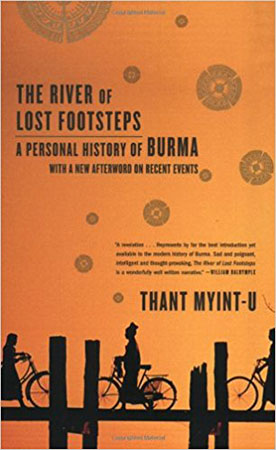
  3. Thant Myint-U’s River of Lost Footsteps led by Mr Reuben Wang
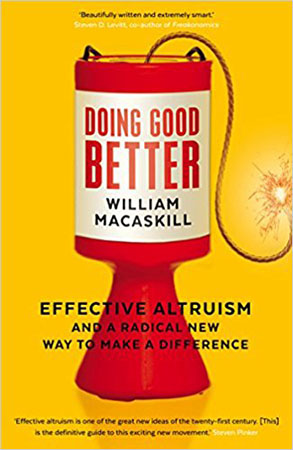
  4. William MacAskill’s Doing Good Better led Ashley Angela Toh
    **This is a combined reading pod with CAPT, with the reading pod conducted at Tembusu College. 

By Professor Tommy Koh: Why ASEAN is good for Singapore

The Asean Charter prescribes that the chairmanship of Asean shall rotate annually, based on the alphabetical order of the English names of the member states.

Singapore is the chairman for 2018. What are the roles and duties of the chairman? The first duty is to chair practically all the meetings of Asean, at every level and in every sector. At last count, Asean holds about 1,000 meetings a year.

The Asean Charter confers on the Asean chairman the following roles:

  • to actively promote and enhance the interests and well-being of Asean;
  • to ensure the centrality of Asean;
  • to ensure an effective and timely response to urgent issues and crisis situations, including providing its good offices; and
  • to represent Asean in strengthening and promoting closer relations with external partners.

Of the 10 Asean countries, the Singapore Government is one of the strongest supporters of Asean.

It is therefore disappointing to read that in a survey carried out by Blackbox recently, the Singapore public ranks last in its favourable attitude towards Asean.

Only 77 per cent of the Singaporeans surveyed had a favourable or very favourable view of Asean, compared with 85 per cent for all Asean countries.

Furthermore, 16 per cent of Singaporeans had an unfavourable view of Asean, as compared with 10 per cent for all Asean countries.

The purpose of this essay is to explain the importance of Asean to Singaporeans.

ECONOMIC BENEFITS

Asean brings enormous benefits to Singapore and Singaporeans.

The best way to demonstrate this is to remind Singaporeans that our domestic market consists of 5.6 million consumers. Under the Asean Economic Community, the ambition is to integrate the 10 economies into a single market and production base. This means that our domestic market is not 5.6 million but 628 million consumers.

The Asean economy is one of the fastest-growing economies in the world. It is currently the world’s seventh-largest economy. It is predicted that, by 2030, Asean could become the fourth-largest economy in the world.

Asean has a large and growing middle class. It has a relatively young population.

Unlike the protectionist trend elsewhere, Asean remains committed to free trade, regional integration and open economies.

As an example, Asean is currently driving the negotiation of a mega free trade agreement, involving Asean and six other economies, called the Regional Comprehensive Economic Partnership (RCEP).

When concluded, RCEP will be one of the biggest free trade areas in the world.

POLITICAL BENEFITS

What political benefits has Asean brought to Singapore and Singaporeans? The most important benefit is peace. Without peace, no economic endeavour would have been possible. Without peace, the minds of men and the resources of the Asean countries would have been focused on making mischief instead of development.

Without peace, Singapore’s journey from the Third World to the First would have been more difficult, if not impossible.

For the past 50 years, Asean has maintained the peace in South-east Asia. No two Asean countries have gone to war during this period.

For this reason, Kishore Mahbubani and Jeffrey Sng have proposed in their book, The Asean Miracle, that the Nobel Peace Prize should be awarded to Asean.

Another political benefit which Asean has brought to Singapore is that it has been able to establish partnerships with 10 major partners which, in chronological order, are: Australia, New Zealand, Canada, Japan, the European Union, the United States, South Korea, China, Russia and India.

Because Asean is a successful regional organisation and because it has an open and inclusive attitude towards its external stakeholders, the leaders of its dialogue partners come annually to meet with the leaders of Asean and to participate in Asean-led forums such as the Asean Plus Three (China, Japan and South Korea), Asean Regional Forum and the East Asia Summit.

Without Asean, none of the 10 member states would be able to attract the leaders of the most important countries of the world to meet annually with them. There is no better illustration of the importance of Asean unity and centrality than this.

OTHER BENEFITS

Asean has brought other benefits to Singapore and Singaporeans.

Asean is probably the most diverse regional organisation in the world. We speak different languages, worship different gods and have different forms of government. However, in spite of our differences, we have succeeded, over time and with much effort, in developing a sense of regional identity and solidarity.

This sense of solidarity has enabled Asean to respond promptly and effectively, to emergencies and crises such as Sars in 2003, the Indian Ocean tsunami in 2004 and Cyclone Nargis in 2008. I hope Asean will find it possible to play a helpful role in the humanitarian crisis in the Rakhine state of Myanmar.

Over the past 50 years, the governments and peoples of Asean have developed a culture of consultation, mutual accommodation and cooperation.

This ethos is very precious because the region faces many challenges which cannot be solved by any state alone. These challenges include climate change, terrorism, the trafficking of men, women and child, migration, refugees, transboundary pollution, conservation of biodiversity, and the health of the oceans and seas.

In addition to raising the standard of living and well-being of the citizens of Asean, the regional organisation has also helped to enhance the social, cultural and human rights of its citizens.

The establishment of the Asean Intergovernmental Commission on Human Rights, the Commission on the Promotion and Protection of the Rights of Women and Children, the adoption of the Asean Human Rights Declaration and the Asean Convention Against Trafficking in Persons, Especially Women and Children are important milestones.

There is one other achievement of Asean worth noting. Asean is committed to the peaceful settlement of disputes. It is also enjoined by the Charter to uphold the United Nations Charter, international law and international humanitarian law.

In other words, Asean supports the international rule of law.

SINGAPORE’S CHAIRMANSHIP

Singapore will have a busy year chairing Asean. Until August this year, Singapore will continue to be the Asean coordinator for Asean-China relations.

After August, Singapore will be the Asean coordinator for Asean-EU relations. This is an important relationship as the EU is Asean’s largest investor and second-largest trading partner.

The theme which Singapore has chosen for its chairmanship is Resilience and Innovation.

We want to enhance Asean’s collective resilience against such threats as terrorism, violent extremism, transnational crimes, cybercrimes and so on.

We also need to strengthen our unity and resilience in the face of more intense competition for influence by the great powers.

Asean must never allow itself to be divided. We want Asean to be more innovative to take advantage of the opportunities created by the sharing economy, the digital economy, e-commerce, e-payment, robotics, artificial intelligence, nanotechnology and so on.

The ambition is to connect the 628 million citizens of Asean digitally so that they can make cross-border transactions seamlessly. The ambition is to create an Asean network of smart cities. The ambition is to connect the hubs in various Asean countries for start-ups.

Asean has brought many benefits to Singapore and Singaporeans. I hope that, after reading this column, more Singaporeans will have a favourable view towards Asean.

At the handing-over ceremony in Manila in November last year, Prime Minister Lee Hsien Loong said: “Asean has built a stable, open and inclusive regional architecture, one that has brought about security, growth and development for our people.” I agree with Foreign Minister Vivian Balakrishnan, who said recently that Asean has a bright future and Singapore will use our chairmanship to help build that bright future.

Tembusu College Showcases Students’ Works at NUS Arts Festival 2017

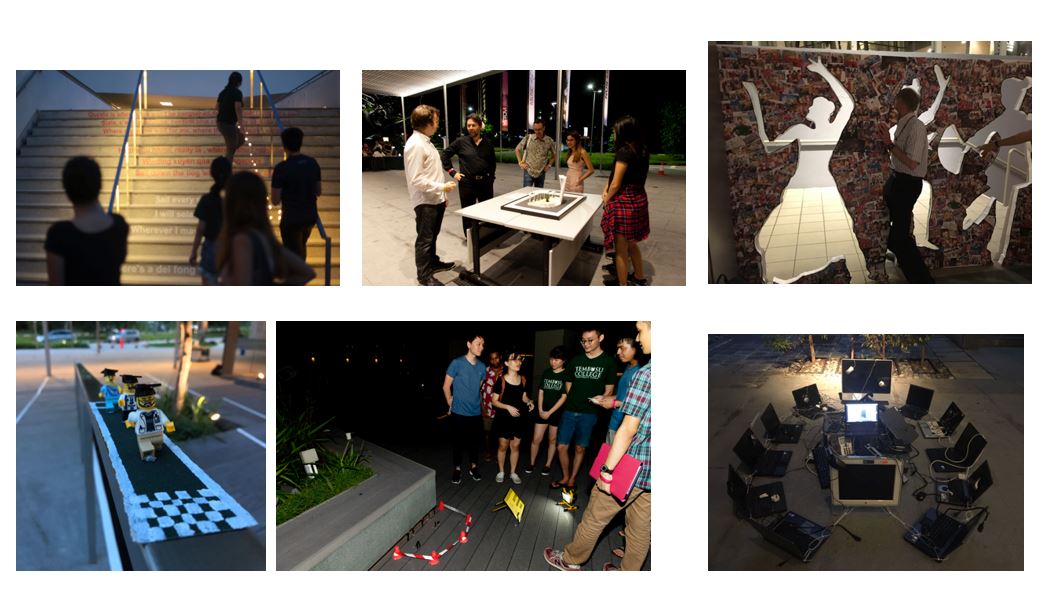
In AY2016/2017 Semester 1, Singapore as ‘Model” City? Senior Seminar collaborated with the NUS Centre for the Arts (CFA) to turn Alice Lee Plaza, a transitory space, into a meaningful art and cultural gateway. Through students’ interventions, we managed to enliven this space and engage the public in a conversation on reimagining the city and urban experience, first through a one-night exhibition, and later through a showcase of selected works during the NUS Arts Festival 2017.