Tembusu Reading Pods AY2016/17 Sem 2

Register for your reading pod  at  Eventbrite   by  20th January, Friday

Care to read and discuss a book outside your curriculum this semester? You need only pay S$10 for the book of your choice. Simply choose one of the eleven titles offered by students and fellows of Tembusu college and register for your reading pod at Eventbrite (click on the link) by 20th January, Friday. Each reading pod accommodates only 5 participants excluding the facilitator(s). Hurry while stocks last

Click on the images for more information.

1. Modern Romance by Aziz Ansari. Conducted by Shamraz Anver

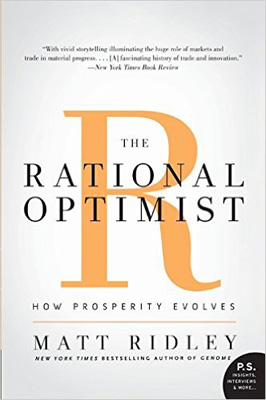
2. The Rational Optimist: How Prosperity Evolves by Matt Ridley. Conducted by Dr. John van Wyhe

This book is shockingly unconventional and questions some of the most fundamental beliefs of our age. It is described as: “A counterblast to the prevailing pessimism of our age, and proves, however much we like to think to the contrary, that things are getting better….The availability of almost everything a person could want or need has been going erratically upwards for 10,000 years and has rapidly accelerated over the last 200 years…Yet, bizarrely, however much things improve from the way they were before, people still cling to the belief that the future will be nothing but disastrous.”
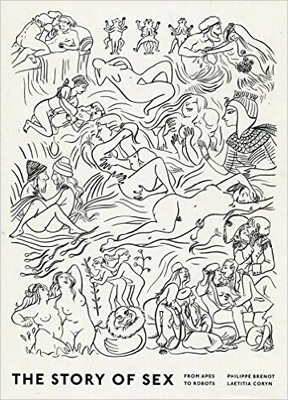
3. The Story of Sex: From Apes to Robots by Philippe Brenot. Conducted by Dr. Catelijne Coopmans and Jenny Zhang
4. Hiroshima Mon Amour by Marguerite Duras. Conducted by Dr. Jeremy Fernando (Sessions will be on conducted Mondays 6pm, Date TBC)

 

5. Hell’s Angels: A Strange and Terrible Saga by Hunter S. Thompson. Conducted by Dr. Adam Staley Groves

 

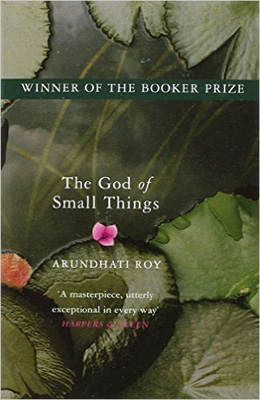
6. The God of Small Things by Arundhati Roy. Conducted by Deesha Menon

The God of Small Things is premised, in a careful balance of both poignance and simplicity, on Love Laws: of who should be loved and how. Roy fashions a complex web of relationships that are at first alien and un-homely — broken, forbidden, biased, and incestuous — but soon become comfortably familiar, and no less tragic.
 

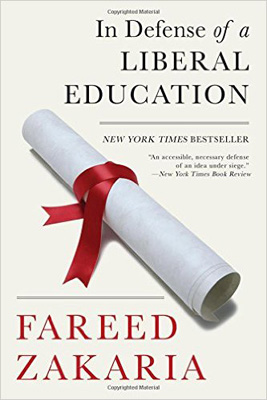
7. In Defense of a Liberal Education by Fareed Zakaria. Conducted by Pranay Arvind Suryavanshi
 

8. Sophie’s World by Jostein Gaarder. Conducted by Tshin Qi Zhou

 

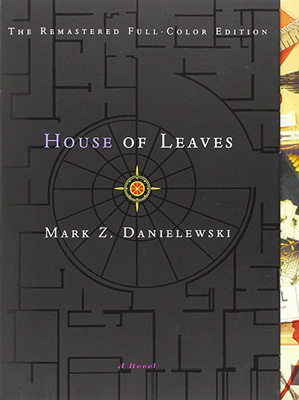
9. House of Leaves by Mark Z. Danielewski. Conducted by Lua Jiong How

What do you get when you assemble a mess of writings that is based on a blind man’s review of a documentary about a house with internal dimensions exceeding its exterior measurements that perhaps never existed, subsequently edited and annotated by a schizophrenic tattoo artist with degenerating sanity? Enter House of Leaves, a piece of ergodic literature that has attained a cult following. Some consider it horror, others call it a love story. The author says it is a conversation between three people. Whether you consider it pretentious or sophisticated, this is not a book for the faint of heart. It will not hold your hand and guide you, but will consume you. Everything means something, and everything is deliberately obscured. Nothing about this book is passive as it requires effort to decode, and it trusts you to do so. Spend some time to chew on it, otherwise “this is not for you.”(Danielewski, 2000)
10. All About Love: New Visions by Bell Hooks. Conducted by Erica Lim

 

11. Lolita by Vladimir Nabokov. Conducted by Amanda Soon Wan Shin

By Professor Tommy Koh: 2017: Three great expectations

When I think of 2017, three events dominate my mind. First, on Jan 20, Mr Donald Trump will be inaugurated as the 45th president of the United States of America. Second, on Aug 8, Asean will commemorate its 50th anniversary. Third, the next Singapore presidential election will be held on or before Aug 26. I wish to discuss each of those three events and explain why they are important and how they will have an impact on our lives.

THE TRUMP PRESIDENCY

The US is the only superpower in the world. It has the world’s largest economy, the most powerful military and very attractive soft power. There is no other country like it.

At the end of World War II, the US led the victorious allies in designing the post-war order. The vision was to create a new world order based on the sovereign equality of states, the rule of law and collective security.

On the economic side, the vision was to create an economic order based on free trade, stable currencies and cooperation to promote development. It was also part of the vision to promote democracy and human rights.

To fulfil that vision, several multilateral institutions were established. They include the United Nations, the International Monetary Fund, the World Bank and the General Agreement on Tariffs and Trade (which has evolved to become the World Trade Organisation).

Every US president since Franklin Delano Roosevelt has, to a greater or lesser extent, adhered to that vision and supported those institutions of global governance. The question is whether the 45th President of the United States, Mr Donald Trump, will do the same or depart from precedent and make a paradigm shift.

Under his leadership, will the US become isolationist?

Will the US continue to champion free trade and globalisation or will it become protectionist and pursue a mercantilist trade policy?

Will the US pursue the goal “to make America great again” with or without regard to the interests of others?

We do not know the answers to those questions. We can, however, take comfort from some of the individuals whom President-elect Trump has nominated. The Secretary of State and the Defence Secretary are two of the most important posts in the Cabinet. General James “Mad Dog” Mattis, the nominee to be the defence secretary, has a solid reputation in Washington. He earned his nickname in the Marine Corps as a charismatic and tough-minded military commander.

Mr Rex Tillerson, the nominee for the post of secretary of state, is well known to Singapore’s leaders. ExxonMobil, the company which he leads, is a major investor in Singapore and a good corporate citizen. Mr Tillerson is a free trader and has written in support of the Trans-Pacific Partnership. He has also testified in the US Congress in favour of the US acceding to the UN Convention on the Law of the Sea. He is not an ideologue but a pragmatist. If confirmed, we are confident that he will be a successful secretary of state.

ASEAN TURNS 50

On Aug 8, Asean will mark its 50th birthday. It is an event which all of us in Singapore and in South-east Asia should celebrate. When Asean was born in 1967, many pundits in the West predicted that it would die in its infancy. They pointed out that the region was too diverse and there were few commonalities among the founding five countries. This was a time when some commentators in the West had described Southeast Asia as the Balkans of Asia.

When the Cold War ended, the detractors of Asean in the West said that Asean was doomed. They described Asean as a creature of the Cold War. The reasoning was that with the end of the Cold War, Asean had lost its reason for being and would therefore fade away.

Over the past 50 years Asean has overcome many challenges. It has grown from strength to strength. It is today one of the world’s most successful regional organisations. I would highlight three of its most important achievements.

Asean has transformed South-east Asia from a region of war and conflict to a region of peace and stability. It is not yet possible to say that war between Asean countries is unthinkable. However, when an armed conflict occurred along the Cambodian-Thai border, Asean intervened by trying to calm the situation and urging the two sides to show restraint. Indonesia offered to send observers to the border. The UN Security Council outsourced the management of the crisis to Asean.

The second achievement of Asean is economic. The rise of Asean in the world economy is one of the three biggest growth stories of human history. Asean has become an economic community. The ambition is to create a single market and production base by eliminating tariffs and other trade barriers. With 620 million consumers, Asean has a combined GDP of US$2.3 trillion (S$3.3 trillion), making it the seventh- largest economy in the world. The combined GDP is projected to increase by more than fourfold to US$10 trillion by 2030. This will make Asean the fourth-largest economy in the world.

The third achievement of Asean is perhaps the most remarkable. The 10 member states of Asean have been able to unite and act as one. It has established fruitful relations with its 10 dialogue partners, which include all the major powers. It has established several forums to promote dialogue, mutual trust and cooperation, such as the Asean Regional Forum, Asean Plus Three, the East Asia Summit and the Asean Defence Ministers Plus. Asean chairs all these forums.

Does Asean have a bright future? I think Asean has a bright future but it faces several important challenges.

The first challenge is to ensure that it is securely anchored in the hearts and minds of the 620 million citizens of Asean. Asean must not be seen by the people as a project of the elite and of big business.

The second challenge is for the individual governments of the 10 countries to take good care of the people who will be adversely affected by trade liberalisation and economic integration. This must be done in order to avoid a populist backlash of the nature we have seen in Britain and the US.

The third challenge is to stay united in the face of intensified competition by the major powers, especially between the US and China. Individual Asean governments must have the wisdom to realise that Asean must remain united and neutral if it is to retain the central role it plays in the regional architecture.

ELECTING SINGAPORE’S EIGHTH PRESIDENT

The Singapore electorate will elect its eighth president on or before Aug 26. The Singapore Government has declared that the next presidential election will be reserved for Malay candidates. Singapore has not had a Malay president since Mr Yusof Ishak in 1970.

I had expected my Malay friends to welcome the decision to have a reserved election for our eighth president. Much to my surprise, several of my Malay friends told me that they did not like the idea. They explained that it would violate the principle of meritocracy. They said they would prefer a Malay president to be elected in an open competition and not in a reserved election.

What is my attitude towards the issue? I hold the view that the highest office of our Republic, the presidency, should not be the monopoly or the duopoly of one or two ethnic groups. It should be held by worthy individuals from the different ethnic groups.

I like the old system of the Parliament electing the president. Under that system, we had an excellent Malay president, Mr Yusof Ishak, and an excellent Eurasian president, Dr Benjamin Sheares.

The Government is not confident that, in an open election, we will ever elect a Malay or a Eurasian to that high office. This is the rationale behind the procedure of reserving an election for a particular ethnic group. Is it a violation of the principle of meritocracy? We have two competing principles at play: the principle of meritocracy and the principle of inclusiveness.

In most situations, the principle of meritocracy should prevail over the principle of inclusiveness. However, in this case, I would like the principle of inclusiveness to prevail over the principle of meritocracy. I therefore look forward to voting for an eminently qualified Malay candidate next year to be our eighth president.

Indian Ocean should be for peace and not competition

The Indian Ocean should be used for peaceful purposes and not become a “theatre of great power competition”, a noted diplomat and lawyer said today while asserting that countries should emulate India’s example to settle their maritime disputes. 

“We should act in accordance with the principles of the United Nations Charter. The sea should be used for peaceful purposes,” said Tommy Koh, who has served as president of the third UN Conference on Law of Sea. 

Koh, also Singapore’s ambassador at large at a workshop on ‘the Maritime Governance In South Asia: The Potential For Trade, Security and Sustainable Development’, said that countries should refrain from using the sea to launch attacks on their neighbours. 

“If disputes arise between states, they should be settled peacefully, in accordance with international law,” he said at the workshop organised by the Institute of South Asian Studies, a Singapore think tank. 

“We want relations between states to be based on the rule of law and not on might is right. We do not want the Indian Ocean to become a theatre of great power competition. States should cooperate with one another to suppress piracy and other threats to international shipping,” he added. 

The law governing the Indian Ocean is international law including UN Convention on the Law of the Sea, Koh said while regretting the fact that not all Indian Ocean Rim countries were parties to the convention. 

While noting disputes on territorial claims, Koh said that several countries have settled their disputes over maritime boundaries peacefully and in accordance with the law. 

He cited the example of Bangladesh and India having referred to their dispute to the International Tribunal for the Law of the Sea, as well as Bangladesh and Myanmar having referred their dispute to arbitration.

“I hope that other states, with outstanding maritime boundary disputes, will emulate the examples of Bangladesh, India and Myanmar,” said Koh in a veiled reference to China at the opening of the two-day workshop. 

China claims the whole of disputed South China Sea. The Philippines, Vietnam, Malaysia, Brunei and Taiwan have counter claims over the area. 

By Professor Tommy Koh: Is Singapore the new sick man of Asia?

On Dec 8, I read in the online publication Asia One a report emanating from Hong Kong about the Singapore economy. The report stated that “morale in Singapore is at rock bottom” and that “some economists call Singapore the new sick man of Asia”. 

The report motivated me to think more deeply about the current state of the Singapore economy and its future prospects. In this essay, I wish to discuss four questions.

First, what is the current state of the Singapore economy? 

Second, is the Singapore economy the worst-performing economy in Asia?

Third, are the problems of the economy cyclical or structural?

Fourth, should we be pessimistic or optimistic about the prospects of the Singapore economy?

STATE OF THE ECONOMY

The Singapore economy is projected to grow at 1.4 per cent this year.

With the exception of tourism and related industries, the other sectors of the economy are not doing well.
Manufacturing, finance and insurance, construction, wholesale and retail are all experiencing weak growth.
Non-oil domestic exports have actually shrunk, compared with a year ago. Fortunately, the unemployment
rate remains very low at 2.1 per cent.

In view of these facts, it is not surprising that the Business Optimism Index is in negative territory.

WORST IN CLASS?

Is the Singapore economy the worst-performing economy in Asia?

Singapore’s per capita gross domestic product (GDP) last year was $72,711, the highest in Asia. Singapore’s
performance should not be compared with those of low-income or middle-income countries because they
are at different stages of their economic development.

Singapore should be compared with other high-income economies in Asia, namely Japan, South Korea,
Taiwan and Hong Kong. Those four economies are projected to grow at 2.4, 2.6, 1.1 and 2.1 per cent,
respectively, this year. Singapore is not the worst in class. Taiwan is.

PROBLEMS CYCLICAL OR STRUCTURAL?

Are the problems of the Singapore economy cyclical or structural in nature? I would argue that they are
mainly cyclical but there may be some structural issues which we should consider.

It is a well-known fact that Singapore’s external trade is three times the size of its GDP. We are the most trade-dependent economy in the world. World trade is weak and this has affected our economy very badly.

In addition, with the exception of India and Asean, all the other major trading partners, such as China, the
United States, Europe and Japan, are experiencing sub-optimal growth.

Another factor which has affected us is the downturn in the oil and gas industry.

Some of our thoughtful economists have, however, pointed out that there are some structural problems.
They point to high costs, restrictive labour policy and risk-averse policymakers as three of the problems.
They point out that many small and medium-sized enterprises are being squeezed by high rental, on the one
hand, and the inability to employ more foreign workers, on the other hand.

Some of my friends have decided to close their businesses. They told me that they could not survive the
constant pressure of escalating rental. The invention of the real estate investment trust (Reit) is a boon for
investors but a bane for tenants.

An Irish friend who has lived in Singapore for over three decades recently warned me that Singapore is in
danger of becoming a rentier society.

PESSIMISM OR OPTIMISM?

Should we be optimistic or pessimistic about the future of the Singapore economy? I am optimistic for these
reasons:

•    Singapore has a corruption-free business environment and the rule of law is strong.
•    We have world-class infrastructure and good connectivity.
•    It is easy to do business here and we enjoy industrial peace.
•    We have a skilled and hard-working workforce.
•    We have a critical mass of interlocking activities in our financial and regional business hubs.
•    We have an IT-literate population and we aim to transform Singapore into a smart nation.
•    We have a culture of accepting change and embracing technology, including disruptive technologies.

HUMAN RESOURCE DEVELOPMENT

In our new world, the most important resource of a country is its people. Brain power is more important
than muscle power. Knowledge-intensive industries represent the future. Innovation, creativity and
productivity are the new engines of growth.

Singapore is doing a very good job in educating and training its young people. Singapore’s Primary 4 and Secondary 2 students were ranked No. 1 for maths and science in the 2015 Trends in International Mathematics and Science Study, organised by the International Association for the Evaluation of Educational Achievement. 

Singapore’s 15-year-old students also came in at No. 1 for mathematics, science and reading in the 2015 Pisa survey conducted by the OECD in 72 countries. 

Finally, the National University of Singapore and Nanyang Technological University have been ranked No. 1 and No. 2 respectively in the 2016 Times Higher Education ranking of premier universities in Asia. 

INTERNATIONAL ENDORSEMENT

There are two highly respected Swiss institutions, the World Economic Forum (WEF) and the Institute of Management Development (IMD), which publish an annual index ranking the countries of the world according to economic competitiveness.

In the WEF’s Global Competitiveness Index (2016-2017), Singapore is ranked No. 2, after Switzerland. In the IMD’s 2016 World Competitiveness Scoreboard, Singapore is ranked No. 4, after Hong Kong, Switzerland and the US.

I am confident that when the world economy recovers and world trade bounces back, Singapore’s economy will experience an upturn. 

Singapore is investing wisely in education and skills training. Led by the Committee on the Future Economy, we are preparing to reinvent ourselves again in order to take advantage of the new opportunities in the digital economy, in the disruptive technologies and much more. 

Singapore is very fortunate to sit astride the three biggest growth stories of human history, namely China, India and Asean. 

We will participate in these growth stories.

In my view, Singapore has a very bright future. 

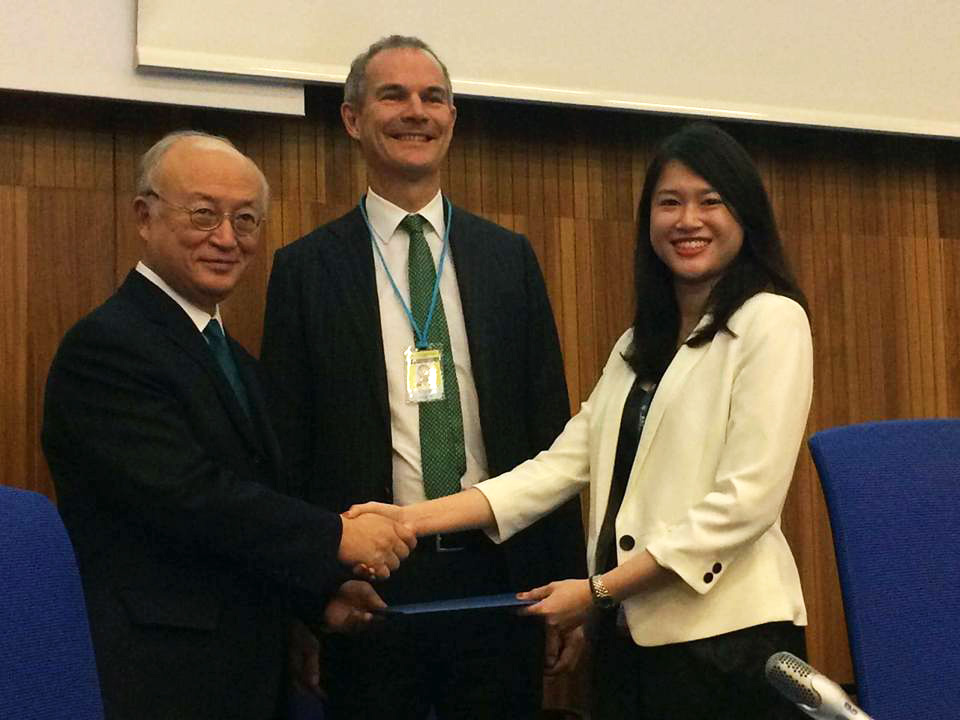
Tembusu College congratulates Noor Azura Zuhairah on her win at the IAEA essay competition

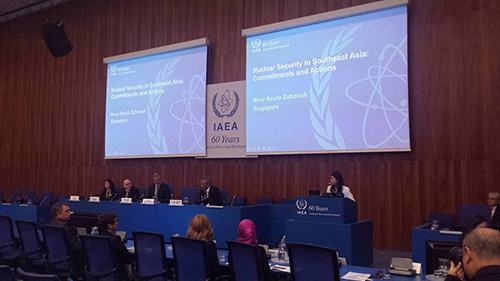
Tembusu College sends our warmest congratulations to our alumnus, Noor Azura Zuhairah binte Abdul Aziz, on her wonderful achievement at the International Atomic Energy Agency (IAEA) essay competition on ‘How to Improve Nuclear Security. She was one of three winners in the agency’s first ever such event, which was sponsored by the Permanent Mission of the UK to the IAEA.

Her entry was entitled, ‘The future of nuclear security in Southeast Asia: commitment and actions’.

To read Azura’s essay please go to : https://www.iaea.org/sites/default/files/16/12/2016_essay_competition_winner_essays.pdf (pg 11-20)

Azura with Yukiya Amano, Director General of the IAEA

By Professor Tommy Koh: Donald Trump presidency: Memo from an old friend of the US

Dear President-elect Trump

I write this memo as an old friend of the United States. I also do so as someone who has worked for many years to promote mutual understanding and friendship between Asians and Americans.

The relationship between America and Asia is particularly important because Asia is rising and some in America may perceive the rise of China as a threat to American prosperity and security.

EMULATE REAGAN

My first piece of advice is for you to emulate former president Ronald Reagan. When Mr Reagan was elected as president, there were fears that his right-wing posture and election rhetoric might lead to a war between the US and the Soviet Union.

Mr Reagan ran for office from the right but he governed from the centre. He appointed strong, competent and experienced men and women to serve in his administration. He empowered them and did not try to micromanage them.

In the same way, my hope is that you will recruit some of the most qualified, competent and experienced men and women, within and without the Republican Party, to serve in your administration. The Republican Party has a deep talent pool. Since you are an iconoclast, you should also consider appointing some outstanding politically independent individuals to join your team.

ELECTION RHETORIC IS NOT POLICY

My second piece of advice is to disregard your election rhetoric in the making of policy. In the course of the long campaign, you made remarks that resonated with the audience or your constituency but which would make bad policy. You should avoid the trap of being held accountable for those remarks. You need not have a bad conscience about it because every US president before you did the same thing. You are just following a well-known US tradition.

US-JAPAN RELATIONS

The country in Asia that needs your reassurance the most is Japan. The Japanese are nervous about your attitude towards the US-Japan security alliance. They are worried about the reliability of the US nuclear umbrella. The trust of the Japanese government and people in the US is at stake.

This is happening at a time of rising nationalism in Japan. A new generation of Japanese leaders are beginning to express the view that the time has come for Japan to transcend the US-inspired peace Constitution and to amend Article 9 of the Constitution.

This process will be accelerated if the trust of the Japanese people in the reliability of the US security guarantee is undermined. If Japan becomes a “normal” country and decides to acquire nuclear weapons, this will set in train developments in North-east Asia, which could destabilise the whole region.

It is therefore important for you to reassure your Japanese ally of your commitment to the US-Japan security alliance. This alliance is important not only to the two contracting parties, but also to the peace and security of the entire Asia-Pacific region.

US-CHINA RELATIONS

Another country in Asia that needs your urgent attention is China. In the course of the campaign, you said some unkind things about China. You threatened to withdraw from the World Trade Organisation (WTO) and impose tariffs on Chinese exports to the US.

As a friend of both the US and China, I would like to say that you should not regard China as an enemy of the US. The truth is that you are dependent on each other.

China is your biggest creditor country and the US is China’s largest export market. Beyond economics, you have congruent interests in nuclear non-proliferation, climate change, the Korean peninsula, Iran, terrorism and other issues.

For over 40 years, every US administration since the Nixon administration has pursued a bipartisan policy towards China. The policy is to engage China and to persuade it to be a responsible stakeholder. The policy is to cooperate with China where your interests converge, to compete where they diverge and to manage your differences on the basis of mutual respect and mutual benefit. It would be good if you could affirm your support for this policy.

There are many in Asia who worry that the US and China may fall into the Thucydides Trap. We do not want a hot or cold war between the incumbent hegemon and the challenger.

On the question of your trade policy, many in Asia are extremely nervous about your protectionist election rhetoric. We understand that one of your constituencies consists of workers who have lost their jobs because of the closure of their industries or companies. Many of them have remained unemployed for many years. Their towns and villages have been devastated by such closures. They have become victims of a vicious circle. You have promised to bring their jobs back and to prevent US companies from relocating their manufacturing operations overseas.

As a good businessman, you know that competition is a fact of life and protectionism is a dead-end road.

You know that technology and the relentless logic of comparative advantage will force some industries and some manufacturers to relocate in order to survive.

Instead of trying to protect jobs in such sunset industries, you should focus on promoting jobs in sunrise industries. Instead of erecting walls against foreign competition, you should focus on incentivising sunrise industries to locate in these depressed areas of your country, to reskill the workers who have been laid off and to provide a cushion to support them in the transition.

America’s future is in the sunrise industries and not in the sunset industries. The truth is that, on the whole, free trade and globalisation are forces for good and not evil.

As a businessman, you know how important it is for the business environment to be stable, transparent and rules-based. What is true of the domestic economy is also true of the world economy. We need a stable, transparent and rules-based international economic order. The WTO provides such an order for international trade. The WTO serves US national interests.

US-ASEAN RELATIONS

Of all the sub-regions of Asia, the one sub-region that is the most peaceful, prosperous and friendly to the US is South-east Asia.

The sub-region has a population of over 600 million, hosts more US investment than China, Japan and India put together, is blessed with abundant natural resources and sits astride some of world’s most important sea lanes. The sub-region also has a world-class regional organisation, Asean.

Since 2009, except for 2013, the US president has held an annual summit meeting with the 10 leaders of Asean. The US president has conscientiously attended the annual meeting of the East Asia Summit.

It would be very good if you could reaffirm the US commitment to Asean and make every effort to attend the two summits. It would also be greatly appreciated by this region if the Trump administration could reaffirm the US support for Asean unity and neutrality, as well as the central role it plays in the regional architecture.

I join the many friends of America in Asia in saying that we would very much like to see you succeed as president. Good luck.

Yours respectfully, Tommy Koh.

The writer served as Singapore’s Ambassador to the US from 1984 to 1990. He is currently co-chair of the China-Singapore Forum and the Japan-Singapore Symposium.