Professor Tommy Koh: Peace at Sea
The article where Prof Koh’s article was feature on The Straits Times can be found here.


The article where Prof Koh’s article was feature on The Straits Times can be found here.
Even though Asia, as a region, is on the rise in its hard power, particularly economically, it is already successful in its projection of soft power, Professor Tommy Koh, Ambassador-At-Large, Ministry of Foreign Affairs, said in a dialogue with young Singaporeans.
Citing well-known soft power indices and rankings, Prof Koh, who is also special adviser at the Policy Studies and chairman of the Centre for International Law at the National University of Singapore, said he was surprised that Asian countries did not feature more prominently in these indices and rankings. He also said he did not agree with these conclusions. Japan and South Korea, he said, were examples of Asian countries where the ascendancy of soft power had matched their economic rise.
Singapore’s success
In his address at the Eighth Khwaish Lecture on April 30 on Does Asia Have Soft Power?, organised by Young Sikh Association (Singapore), Prof Koh pointed out Singapore’s success in building its soft power, which allowed her to maintain its influence and power within the region and globally.
He specific three important sources of Singapore’s soft power:
– Having one of the world’s most diverse populations, both religiously and racially.
– Having good governance and being one of the least corrupt countries in the world.
– Having a well-planned out city and infrastructure.
Due to these strengths, Singapore has impressed many politicians who send their people to study the Singapore model and how they could implement the same system, which Prof Koh said was an example of the city-state’s soft power.
When it comes to exerting influence on the global scale, despite not being a permanent member of any of the three large international groupings – the UN Security Council, the G7 and the G20 – Singapore still wields great clout due to its representation and chairing of the Forum of Small States and the Global Governance Group.
During facilitated dialogue sessions before the dialogue segment of the lecture, 91 per cent of the 100 participants indicated through a poll that Singapore has soft power, while 87 per cent believed that Singapore is effective in its management of international relations.
About 95 per cent of participants felt that soft power is important for Singapore.
Prof Koh revealed that Singapore has started to use history and culture as elements of its soft power projection.
For example, Singapore embassies and high commissions around the world make an effort to show-case the Singapore culture.
The lecture series is part of YSA’s mission of creating world-ready young Singaporeans, enhancing mutual understanding of issues of common concern and fostering friendships across ethnic groups so that young Singaporeans continue to remain engaged with the rest of Singapore society and the global community.
Undergraduates from Tembusu College (National University of Singapore), the American University of Central Asia in Bishkek and Indiana University participated in a small project conducted by Prof Anne Pyburn while she was in teaching in Kyrgystan. They were asked whether they think heritage is important, and if so, why? The answers were charming, sincere, poetic and surprisingly varied. Despite general agreement on the value of heritage, preservation, and the importance of recognition of a shared past, the students’ answers showed that ideas about heritage are extremely personal.
Although this is an extremely preliminary and small scale study, it has implications for the value of the concept of “world heritage” which tends to distance people from their own history and make the past seem homogeneous, irrelevant, and boring. It also inclines people to think that there is only one correct story about the past, which many scholars have begun to see as Colonial and damaging to Indigenous peoples and groups who are politically disadvantaged. Promoting world heritage may not be the best mechanism for preservation or even education. We should probably begin to talk about the world’s “many heritages”.
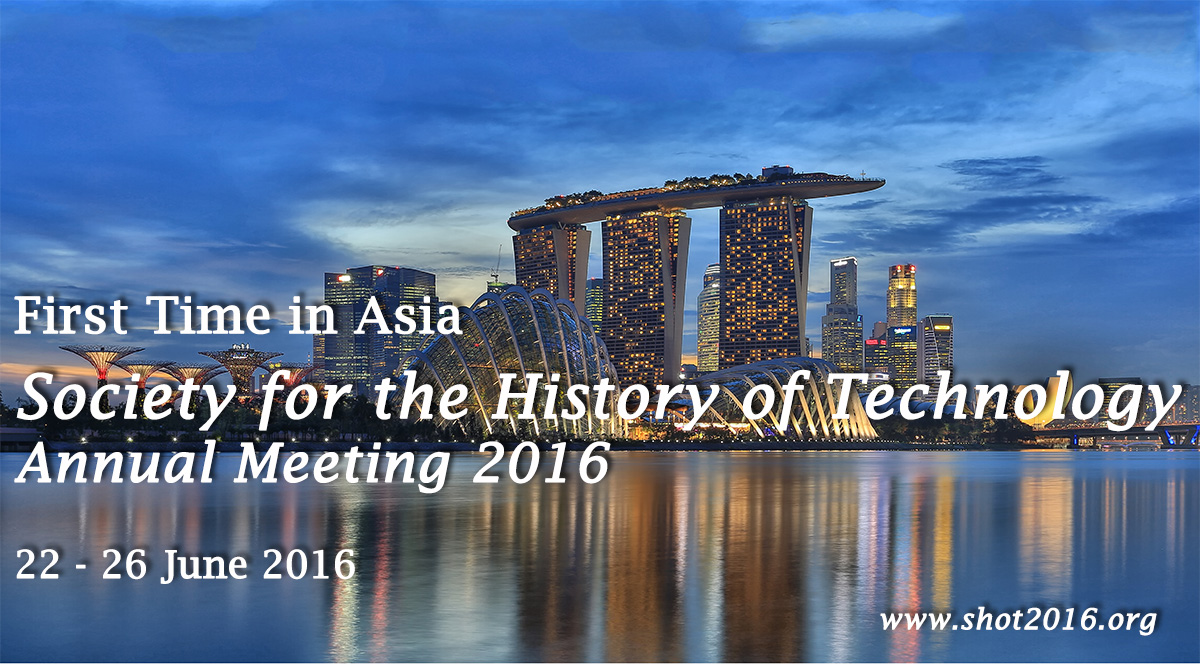
Recruiting Student Helpers
Date:
20 – 27 Jun 2016
Remuneration:
S$8/hr + CPF contribution by NUS
Working Hours:
8 – 10hr a day depending on your role (request for specific working hours negotiable)
Job Descriptions:
(1) Logistics/Ushers (e.g. put up signage, moving/rearranging of furniture, portable stage, etc.)
(2) Registration & Information desks duties
(3) Panel Session Helpers (e.g. getting rooms ready for sessions, IT/AV support, etc.)
(4) Photographers
(5) Tour Assistants (e.g. travel with the tour group, etc.)
Interested parties, please register by 12 May 2016. For any enquiries, please email Jocelyn at rctchsj@nus.edu.sg.
The article where Dr John van Wyhe’s work was featured can be found here.
The EDB Society is pleased to announce the next session in the Pioneering The Future Series on 8 April 2016, with Keynote Speakers:
– Ambassador-at-Large Professor Tommy Koh, renowned international lawyer and negotiator, and Singapore’s former ambassador to the United Nations and the United States; currently Special Adviser of the Institute of Policy Studies and Chairman of the Centre for International Law, NUS; also a keen patron of the arts, heritage and the environment;
– Lieutenant-General (Rtd) Winston Choo, Singapore’s first Chief of Defence Force, serving an illustrious 33-year military career; after which he held diplomatic appointments as envoy to several nations including Australia, South Africa and Israel. He also served as Chairman of the Singapore Red Cross Society.
The theme of the forum is “International Relations, Security & Resilience”. It will be held at The Arts House at 4 – 6 pm (Registration & Reception start at 3 pm), and will be moderated by Mr Han Fook Kwang, Editor-at-Large The Straits Times.
Pioneering The Future Series pays tribute to our Pioneer Leaders who have contributed to Singapore’s transformation, and draws insights for future engagement and development. The Straits Times will feature the event and invite questions from its readers to be selected for the Q&A. Inputs will be later collated for publication.
As there is limited capacity, kindly RSVP to Mrs Lisa Tan at edbsoc@gmail.com by 21 March 2016 (first come, first serve). You may also wish to include your questions, if any, in your reply.
Visit us to find out more about our modules (University Town College Programme), and join our college tour to check out our unique facilities, house activities and the many interest groups on display.
Wish to find out more about Tembusu College during NUS Open Day 2016 on 12 March 2016 (Saturday)? We will be happy to talk with you at our college booth located at the Education Resource Centre (ERC), right above Starbucks at University Town!
Talks:
We will be telling you more about Tembusu College and the University Town College Programme (UTCP) during the following talks:
12:00PM, Stephen Riady Centre, Level 1, Seminar Room 2 (by Director of Residential Life, Dr Kelvin Pang)
3:00PM, Stephen Riady Centre, Level 1, Seminar Room 3 (by Master of Tembusu College, Assoc. Prof. Gregory Clancey)
Do attend the talks to hear more about us!
Guided Tours:
You are highly encouraged to visit us at Tembusu College between 9:00AM to 6:00PM and join us on our college tour, brought to you by our very own college students! During the tour, you will be able to find out more about college life and the various interest groups from the students themselves, and check out our living areas (and hopefully, soon to be yours!), Learn Lobe and Dining Hall. Over at the Learn Lobe, you will get a chance to visit our themed rooms (Reading Room, The Abbey, The Atlas and the Games Room). Say hello to our Fellows and ask them a question or two if you are curious about our UTCP modules. So come on down to Tembusu College to find out more about us this Open Day!
Before that…
Armed with a go-pro, our Tembusu Ambassadors snuck around, documenting our facilities and a small number of interest groups, to present to you what goes on in Tembusu College! What is it like in this Home of Possibilities? Take a peek here right now!