Applications to the University Town College Programme (UTCP) at Tembusu College for Semester 2 of the Academic Year 2013-2014 will be received from Tuesday 12th November to Friday 15th November. We welcome applications from current undergraduates for a limited number of places.
UTCP Application Portal for Freshmen and Seniors
Please see our admissions page for details.
The famous naturalist Alfred Russel Wallace collected natural history specimens throughout Southeast Asia from 1854-1862. One of the least known of the players in Wallace’s story is his Malay assistant Ali, from Sarawak. This article combines the surviving evidence to bring Ali and his role in the expedition out of the shadows. Several corrections to traditional accounts are emphasized; these include the fact that Ali was not always a collecting assistant, but at first a cook; Ali did not travel with Wallace for the rest of his voyage, but left him for an entire year; and Ali may have collected the majority of Wallace’s bird specimens. In addition, Ali’s wages and itinerary are reconstructed for the first time. It is concluded that Ali made a major contribution to Wallace’s scientific understanding of the Malay archipelago, not just with new ornithological discoveries like Wallace’s Standard Wing (Semioptera wallacii), but by his contributions of knowledge.
Reference:
2015 “I am Ali Wallace”: The Malay assistant of Alfred Russel Wallace. Journal of the Malaysian Branch of the Royal Society vol. 88, Part 1, No. 308 (June): 3-31.
Tembusu College is seeking dedicated and enthusiastic students to serve as Tembusu Ambassadors!
*Note: this is a separate recruitment from the UTown Ambassadors.
Your Ticket to the World!
Are you proud to be part of Tembusu? Tell it to the world! As Tembusu Ambassadors, we promote and showcase our Home of Possibilities to prospective students during outreach events, such as NUS Open Day or Admissions interviews.
On special occasions, Tembusu Ambassadors also suit up to host local and foreign Ambassadors and diplomats when they visit Tembusu College or UTown. It’s a great opportunity to groom your leadership skills and communication abilities.
What do Tembusu Ambassadors do?
Who is an ideal candidate?
* All new Tembusu Ambassadors are required to attend a two-day training retreat to Batam during Recess Week (21 and 22 September). Please check and ensure that your passport has at least six-month validity. Otherwise, we would recommend that you renew your passport as soon as possible.
 | “I joined the Tembusu Ambassadors because I was interested in serving the College by developing its external image and reputation. I was also keen on engaging with foreign dignitaries on behalf of the College. Here, I learnt important networking skills, as well as how to lead others. The flat structure of the Ambassadors developed our ability to lead each other through respect and service, rather than out of one’s formal position. The main highlight and takeaway is definitely the camaraderie that came out from serving, and organizing events together. Although our tenure lasts a couple years, the friendships forged are timeless.” — David Wong recently graduated with a M.SC in Global Governance and Diplomacy. He is currently a Manager at the International Enterprise Singapore. |
 | “Back when I was a new student, I had the opportunity to interact with some members of this wonderful team, whom were great influences in my decision to join Tembusu College. I subsequently decided to join the Tembusu Ambassadors to contribute and be part of the positive experience that guests and prospective students would have with the college. I immensely enjoyed working with this enthusiastic bunch of college ambassadors, and have been rewarded with lasting memories and the many friendships that have been forged in this warm community.” — Rachel Lim is a Year 4 Business student specializing in Marketing. |
 | “With the Tembusu Ambassadors, I joined a team of sterling fellow College residents, each endowed with his or her own unique, distinctive talents, yet all of whom shone brightly in collectivity. That all of them eventually ended up as cherished and treasured friends was entirely a heartening bonus. Open Day was my favourite occasion of the Academic Calendar, and that was certainly the case in large part due to the seminal work we accomplished as a team. For those who find themselves up to the task(s), Tembusu Ambassadors may just turn out to be the coolest, coziest, and most rewarding room you’ll find here in the ‘Home of Possibilities’.” — Vinod Ashvin Ravi graduated with Honours in Political Science. He is currently with the Ministry of Foreign Affairs. |
 | “Joining the Tembusu Ambassadors was the best decision I’ve made in my last year at Tembusu College. Not only could I share my knowledge of and love for Tembusu to prospective students and parents on Open Day, I also gathered invaluable networking and people skills from hosting distinguished guests of the college. Organizing internal and outreach events have also helped us grow as a team. I am truly grateful for this opportunity to contribute back to my beloved college, and I really cherish the friendships that have blossomed thus.” — Liu Yingda is a recent graduate with a M.Phil in Advanced Chemical Engineering. She will begin her work as a Technologist at Shell soon. |
 | “Being a Tembusu Ambassador gave me the opportunities to engage in conversations with VIPs while representing the College at the same time. I did not join the team knowing the craft fully but the exposure has increased my confidence when interacting with these guests. My encounters with people from different backgrounds and under varying degree of formality have also enabled me to carry myself appropriately. I am really thankful that I was entrusted with such a responsibility by the College.” — Sarun Udomkichdecha is a Year 4 student majoring in Southeast Asian Studies. |
How to apply:
Period of Appointment: One Academic Year (subject to review after first semester of service)
Do come for our information session on 3 September 2015 (Thursday), 8:00PM at the Reading Room. We’d love to tell you more about our experiences! Please indicate your interest in attending here.
For any inquiries, feel free to drop an email to: tembusuambassador@gmail.com
During the Inaugural Dinner on 18 August 2015, A/P Gregory Clancey, Master of Tembusu College, declared the Komodo Dragon to be the ‘Animal of the Year’ for AY2015/2016.
Komodo Dragons are listed as ‘vulnerable’ in the IUCN Red list of Threatened Species. Due to threats such as loss of habitat, hunting and human encroachment, the wild population of komodo dragons is slowly dwindling. There are only about 6000 dragons left in the wild and they are only found on the islands of Komodo, Rinco and Flores. With just 350 breeding females remaining and the general difficulty to keep the dragons in captivity, efforts must be undertaken to raise awareness and protect their habitats.
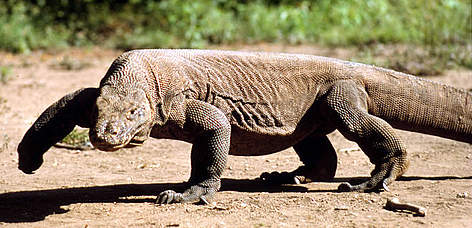
The idea of promoting one of the five house namesakes as Tembusu’s ‘Animal of the Year’ was devised by the student-led Tembusu Wildlife Association in AY2014/2015. This is to remind members and friends of the college that our namesake animals are real ones, are truly endangered, and need our help.
The five house animals are: Ponya (the red panda), Tancho (the red-crowned crane), Gaja (the Asian elephant), Ora (the Komodo dragon) and Shan (the snow leopard).
Last year, our Rector, Professor Tommy Koh chose the Asian Elephant, a critically endangered species, to be the animal of the year, citing the extremely dire conditions that this rapidly dwindling species faces through poaching and habitat loss.
In a month-long effort — entitled the ‘Rector’s Shield Initiative’ — students in each of the five houses of Tembusu organized a pledge campaign, video nights, posters, among other things, and raised over a thousand dollars for the Elephant Nature Park in Chiang Mai, Thailand. A group of six Tembusu students went on a trip to the park last May to volunteer and gain first-hand knowledge about elephant conservation.
This year, the spotlight will be on the namesake of Ora House, the Komodo Dragon.
In semester 1, time will be devoted to getting to know these giant lizards and their plight; and the first four weeks of semester 2 will see the second edition of the Rector’s Shield Initiative.
For questions or ideas regarding animal/environmental conservation, please contact Dr Catelijne atrctcc@nus.edu.sg.
Image Credit:
WWF / Michel Terrettaz
Retrieved on 29/7/2015 from Komodo Dragon – WWF
References:
In October 2013, President Xi Jinping of China addressed the Indonesian Parliament. It was a historic occasion because relations between the two countries were restored only in 1990, following a long period of estrangement caused by the Indonesian allegation that the Chinese Communist Party had abetted the Indonesian Communist Party’s attempt to seize power.
In his important address, President Xi proposed the 21st Century Maritime Silk Road. Earlier that year, during his visit to Kazakhstan, he had proposed reviving the overland Silk Road. The two proposals and the Asian Infrastructure Investment Bank are three of President Xi’s flagship projects.
ANCIENT ROUTE
Historical and archaeological records show that, for several thousand years, Arab, Persian, Indian Ceylonese, Chinese and Southeast Asian traders and seafarers had been traversing the East China Sea, South China Sea, the Indian Ocean, the Arabian Sea and the Persian Gulf. This vast expanse of oceans and seas can be called the Indo-Pacific. What were the traders buying and selling to one another?
Southeast Asia exported its spices, scented woods, feathers of exotic birds, tortoise shell, ivory and rhino horns. China exported its three treasures of silk, porcelain and tea. The Indian exports included textiles, precious metals and jewellery. Arabia exported frankincense, glass and horses. The trade was, however, not just in goods but also of ideas, cultures and religions. An important characteristic of the ancient maritime trade was that it was conducted peacefully.
There are two lessons we should learn from the ancient maritime Silk Road. The first is the importance of the freedom of navigation. Without the freedom of navigation, shipping and maritime trade would not have prospered.
The second lesson is the importance of multiculturalism. The participants of the maritime trade were people from different countries. They belonged to different races, religions, languages and cultures. They traded successfully because they treated one another with mutual respect. For example, Arab traders were allowed to build mosques to practise their faith in the Chinese port city of Quanzhou in the Fujian province. This is the spirit and ethos of the ancient maritime Silk Road which we should adopt.
SINGAPORE AND THE MARITIME SILK ROAD
Singapore was a node in the ancient maritime Silk Road. Archaeological excavations at Fort Canning, along the banks of the Singapore River and the Kallang estuary have uncovered thousands of glass shards, beads, globules, ceramics and coins.
The ceramics found at Fort Canning are of Chinese origin and are datable to the 14th century. The Chinese ceramics found near the Singapore River are from the 14th to the 19th centuries. The Chinese coins were from the Northern Song dynasty (960-1127).
We have also found ceramics from Thailand, Vietnam and Myanmar. This shows that ancient Singapore was already an entrepot port, trading with China, India, Indonesia, Thailand, Myanmar and Vietnam.
The modern Singapore is a major shipping nation and port state. It is only logical that Singapore should be an important hub in the 21st Century Maritime Silk Road.
NEW OPPORTUNITIES
I support President Xi’s proposal for the following reasons: The proposal will boost trade, shipping, tourism and the development of maritime infrastructure, and enhance connectivity and promote better mutual understanding between and among people.
11 will create many new economic opportunities and many new jobs. It will also complement and reinforce Asean connectivity. I also see positive synergy between President Xi’s proposal and Indonesian President Joko Widodo’s vision of developing Indonesia as a maritime axis.
Funding for infrastructure projects of merit should not be a problem with the creation of the Asian Infrastructure Investment Bank. There’s also a role for the private sector’s financial institutions in funding these projects.
SOFT INFRASTRUCTURE
While the primary focus is on developing hard infrastructure, we should also pay attention to the soft infrastructure. We should cooperate in developing our human resources and in the sharing of skills and expertise. We should encourage more people-to-people contacts and exchanges, especially among our young people.
We should develop a culture of respecting diversity and promoting better interfaith and intercultural understanding. To succeed, the 21st Century Maritime Silk Road must be based on the principle of mutual respect and mutual benefit.
When disputes arise, they should be settled peacefully, in accordance with international law, including the United Nations Convention on the Law of the Sea. The rule of law must prevail over the rule is right.
THREE SUGGESTIONS
I would like to make three suggestions for China’s consideration. First, China should work harder to explain its proposal and to gain the understanding and trust of China’s neighbours. At present, there is a deficit of trust between China, on the one hand, and Japan, Vietnam, the Philippines and India, on the other.
Second, China should adopt an open and inclusive approach. All countries should be welcome to participate and no country should be excluded.
Third, China should listen to the region. It should sincerely solicit the views of the countries of the region and be prepared to take them into account in future iterations of the proposal. The best outcome is for the proposal to evolve from being seen as a Chinese project to being the region’s project. It is desirable for China to obtain the region’s ownership of the proposal.
OPEN AND INCLUSIVE
I support President Xi’s 21st Century Maritime Silk Road because it will bring many benefits to the countries and peoples of the Indo-Pacific.
The new maritime silk road should reflect the spirit and ethos of the ancient maritime Silk Road.
The new road should be linked to the Asean Connectivity Masterplan.
To succeed, the new road should be open and inclusive, based upon the principles of mutual respect, mutual benefit and the rule of law. It should have the ownership of the region.
Singapore can play a useful role in narrowing the gap between China and the region. Singapore’s private sector can also play a positive role in turning President Xi’s vision into reality.
Dear Toby and Tara, You will be 54 and 50 years old, respectively, when Singapore celebrates its 100th anniversary in 2065.
If the last 50 years is a guide, you will probably experience as many dramatic changes as I have in the n the past 50 years. I expect that cures will be discovered for such dreaded diseases as cancer, dementia, diabetes, Parkinson’s. Thus, I fully expect that both of you will continue to lead healthy, productive, energetic lives for many more decades, as life expectancy may exceed 100 by this time.
I expect solar energy to become increasingly competitive and that, one day, it will replace energy from fossil fuels. I expect agriculture to be more productive and less demanding of water. Revolutionary changes will take place in all aspects of our lives, in ways which are unimaginable today.
However, the purpose of my letter is not to join the pundits and futurologists in anticipating the changes that will take place in the next 50 years.
What I want to do is to talk to you about things that I hope will not change. I want to talk about values, beliefs and customs which are or should be timeless.
LOVE SINGAPORE
First, you should love your country.
Singapore maybe a small and young country; it is, however, an extraordinary country. If all goes well, we would have remained a stable, peaceful country with our own government, our own military and law enforcement agencies.
In our country, people of different races, colours and religions live in peace and harmony. We celebrate our diversity as a blessing and not as a defect. We recognise and reward talent and merit and we dislike class, privilege and snobbery. We treat our women well and our talented women have helped to make Singapore the success that it is. We are admired for our integrity, reliability and competence. If I have another life to live, I would like to be born again in Singapore.
LOVE THE WORLD
Second, you should love the world.
By “the world”, I mean both the human world and the natural world. I believe in the Confucian philosophy that, under heaven, all men are brothers and all women are sisters. It is not enough to love Singapore - you should also love the human family. Because of globalisation and the technological revolution, we truly live in one world and our lives are inextricably linked. For example, we should be concerned about the growing health crisis in South Korea at this juncture in July 2015 because Mers is very likely to spread from there to other countries.
We should empathise with the refugees fleeing persecution and despair in Myanmar because they are part of the Asean family.
Even if, by the time you read this, these countries and organisations have evolved into different forms, we should feel a bond with people around our region, and indeed all around the world, with whom we share a common humanity.
We should also love and respect the natural world because the earth is our home. If we continue to abuse nature, to degrade our ecosystems and neglect our duty as the stewards of the global commons, we will sooner or later face an environmental crisis.
I hope that you and your generation will have the wisdom to make a paradigm shift to a new and more sustainable model of economy and civilisation.
LOVE FAMILY
Third, love your family.
No matter how many technological advances are made, one thing is for sure: Your mother and father, your grandparents, your godparents and other relatives have loved you from the day you were born.
Your parents have made sacrifices and will continue to make sacrifices in order to give you a happy childhood and a good start in life. Remember that the key people in the world who love you unconditionally, in good times and in bad times, are your parents. Be good to your parents when you are grownup and when they are old.
There is a disturbing trend in Singapore of children abandoning their elderly parents. I hope that, by the time you read this, this remains a small minority and does not become commonplace.
MAKE FRIENDS FOR LIFE
Fourth, make friends for life.
Most human beings are social animals. We need the company of good friends in order to be happy and to thrive. Make good friends and keep them for life.
Many Singaporeans hold a functional or transactional attitude towards friends. You are my friend only as long as you are useful to me. The moment you are no longer useful to me, I will “unfriend” you. This is a bad attitude and smacks of opportunism. The good friends I have made in my childhood, school, university and at various points in my career, both here and abroad, have enriched my life.
DO NOT WORSHIP MONEY
Fifth, do not worship money.
There is a joke that the main form of worship in Singapore is the worship of money. Singaporeans are a materialistic and money-loving people.
My attitude towards money is that we all need to make money in order to provide for our family and to be able to lead a dignified life. My goal in life is, however, not to make money but to help build a better Singapore and a better world. You should remember that money can’t buy you good health, peace of mind or a happy family.
In fact, money often sows discord in families. Money can buy you a big house and a big car but not a good reputation. It is more important for you to do a job which brings you joy and satisfaction than a job which you do only because it brings you a lot of money. Pursue your talent and your passion and not money.
BE KIND
Sixth, be a kind person.
Of all the virtues, the one that I value the most is kindness. You should be kind to everyone you meet. Many Singaporeans have a selective approach to kindness. They are kind to their bosses or persons in authority over them. They are less kind towards their subordinates. I do not regard such a person as a kind person.
A kind person is one who is kind to everyone, including strangers. In my experience, kindness begets kindness.
BE LOYAL
Seventh, be a loyal person.
Loyalty is a virtue which seems to have gone out of fashion. I believe that one should be loyal to one’s country, spouse, school, university, employer, friends and institutions. I am loyal to my old school, Raffles Institution, and have never said no to a request from the school. I am loyal to the National University of Singapore, Harvard and Cambridge because they have helped to educate me.
Because I served for nine years as a director of DBS, it is my primary banker. Because I served for five years as a director of Singtel, I subscribe only to Singtel for my telecommunication needs. Because I served for over five years on the international advisory board of Toyota, I own and operate a car made by Toyota. I have patronised the same tailor and optician for as long as I can remember.
This may be seen by some as an old-fashioned attitude but I would like to think that loyalty, like kindness, should never go out of fashion.
BE HEALTHY AND RICH CULTURALLY
Eighth, try to lead a healthy and culturally rich life.
My father taught me to exercise every day in order to keep physically fit. I swim or walk every morning. My father also taught me to love books and to enjoy reading. I read both books of fiction and nonfiction every day.
My mother taught me to enjoy the arts. I feel very privileged to have served as the founding chairman of the National Arts Council and as the second chairman of the National Heritage Board. I hope you will develop your own interests in culture and the arts. They will bring great joy to your life.
I hope you will grow up to be a good man and a good woman. I wish you happy, healthy, peaceful and productive lives.
Your loving Ye Ye,
Tommy Koh
Tembusu College is opening the new academic year with the largest number of teacher and student-led reading pods ever! This semester we are introducing 9 books lovingly selected by members of the college. Choose one to read and discuss with your peers (only 5 students to a reading pod) and facilitator.
Those interested may register at the reception counter and pay only S$10 for a brand new book. Deadline for registration is 21st August 2015 (Friday).
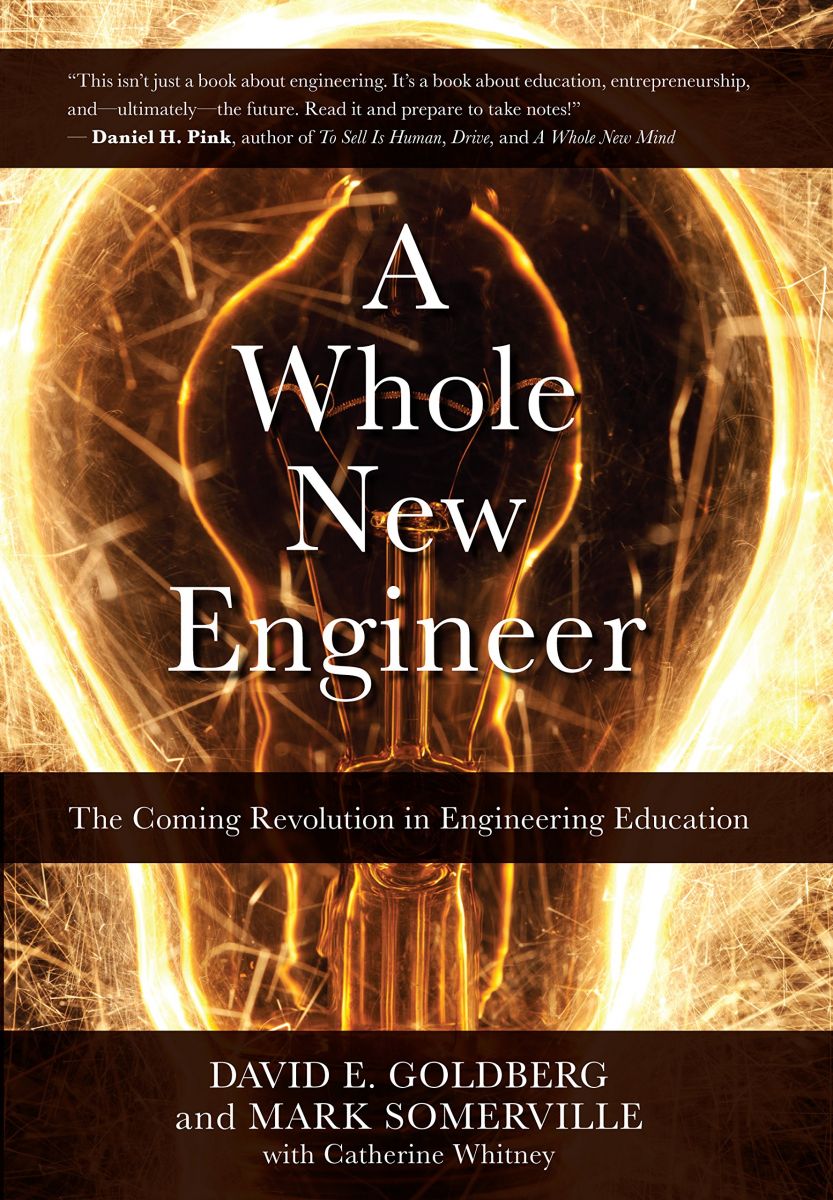
(1) David E. Goldberg and Mark Somerville (with Catherine Whitney). A Whole New Engineer: The Coming Revolution in Engineering Education led by Dr. Catelijne Coopmans
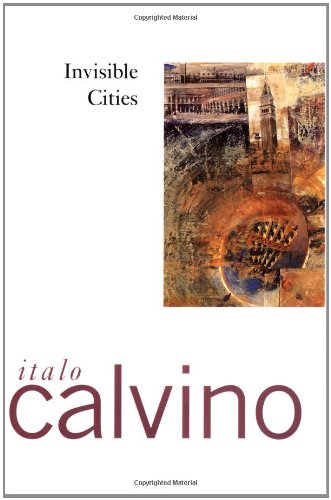
(2) Italo Calvino’s Invisible Cities led Dr. Tyson Vaughan
(3) Harper Lee’s Go Set A Watchman led by Dr. Connor Graham

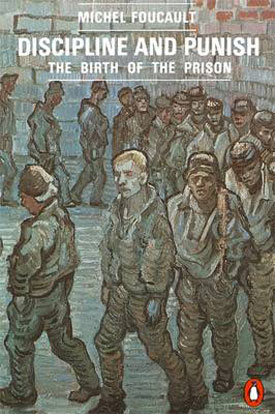
(4) Michel Foucault’s Discipline and Punish: The Birth of the Prison led by Dr. Jerome Whitington
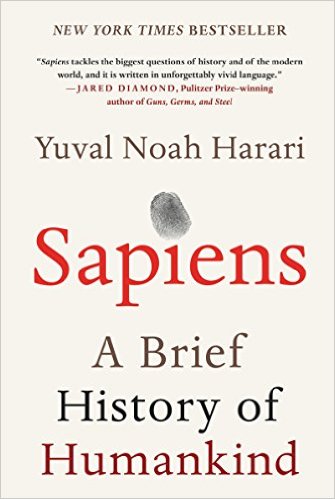
(5) Yuval Noah Harari’s Sapiens: A Brief History of Humankind led by Dr. John van Wyhe
(6) Marguerite Duras’ The Malady of Death led by Dr. Jeremy Fernando

(7) Fernando Pessoa’s The Book of Disquiet led by Dr. Adam Groves

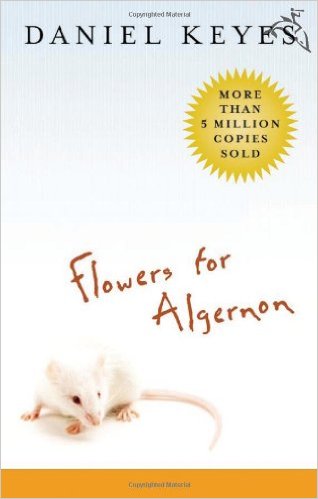
(8) Daniel Keyes’ Flowers for Algernon led by Navin Vijay Wadhwani
(9) Kazuo Ishiguro’s Never Let Me Go led by Shawn Lim You Hao

In May, six students from the Tembusu Wildlife Association – Sheryl Lee, Nasir Idris, Sheeraja Sridharan, Tan Yong Khai, Goh Yue Quan and Nicholas Chua – spent 10 days at the Elephant Nature Park in Chiang Mai, Thailand. The purpose of the trip was to gain a hands-on understanding of Asian elephant conservation efforts by assisting the park and learning from the local community and park coordinators.

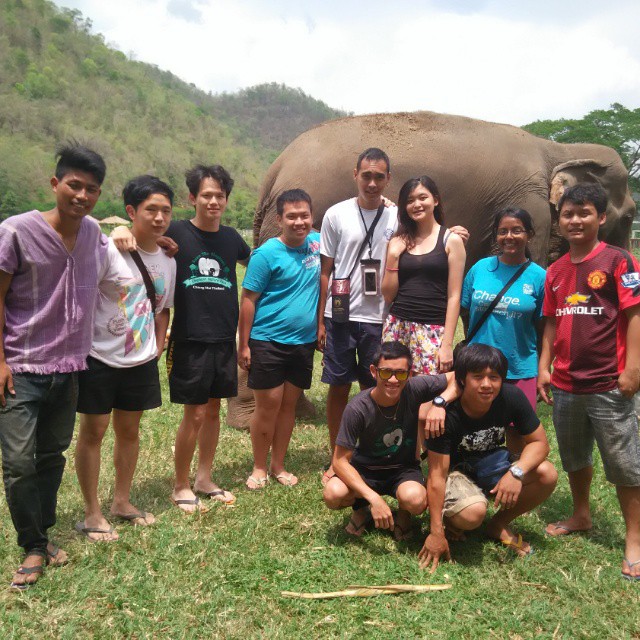
They wrote a blog about it, in which they offer some thoughtful reflections on their volunteer experience in light of the broader problem of rescuing elephants from abuse. Group members also offer some thoughtful reflections on their volunteering experience in light of the broader problem at hand.


NUS News covered the trip in an article and a video. The article contains an interview with Sheeraja and Sheryl, tWild’s President and External Outreach Director respectively. The video features Sheryl and Nasir, who also had a key role in organizing the trip.
Salutations
Mr S S Teo, Chairman, SBF,
Minister Fu Ying, Chairperson, Foreign Affairs Committee of the National People’s Congress of China,
Mr Wang Jinzhen, Vice-Chairman, China Council for the Promotion of International Trade,
Pak Havas Oegroseno, Deputy Coordinating Minister of Maritime Affairs, of Indonesia,
Judge Paik Jin-Hyun of the International Tribunal for the Law of the Sea,
Ambassador Ong Keng Yong
Your Excellencies
Distinguished Speakers
Ladies and Gentlemen
Thank You
2. I would like to join Mr S S Teo and the Singapore Business Federation in welcoming all of you, especially, our foreign friends to Singapore and to this important forum. I believe that this is the first occasion on which President Xi Jinping’s 21st Century Maritime Silk Road proposal, is being discussed outside China.
3. I would also like to express my deep gratitude to Minister Fu Ying for accepting my invitation to join us at this forum. Minister Fu Ying is one of China’s most accomplished diplomats. She won the hearts and minds of the peoples of Australia and the United Kingdom, when she served as China’s Ambassador to those countries. She was China’s Vice Foreign Minister in charge of Europe and, subsequently, Asia. She is currently the Chairman of the Committee on Foreign Affairs of the Chinese National People’s Congress.
My Three Points
4. In accordance with my wife’s advice, I will make three points. My first point is on the ancient maritime silk road and some lessons we can learn from it. My second point is to explain why I support the 21st Century Maritime Silk Road. My third point is to make some suggestions for China’s consideration.
The Ancient Maritime Silk Road
5. Historians, such as Professor Wang Gungwu and archaeologists, such as Professor John Miksic, have told us that trade and travel have taken place for thousands of years in the East China Sea, South China Sea, Indian Ocean, the Arabian Sea and the Persian Gulf. Arab, Persian, Indian, Ceylonese, Southeast Asian and Chinese seafarers and traders had been active in the ancient maritime silk road for at least two millennia.
6. I have benefitted greatly from reading Wang Gungwu’s study of China’s Nanhai Trade, covering the period of over 1,000 years, from the Han to the Tang dynasties. I have enjoyed reading John Miksic’s book, Singapore and The Silk Road of The Sea: 1300 to 1800. I have also gained many new knowledge and insights from Anthony Reid’s two books, Southeast Asia in the Age of Commerce: 1450-1680. Another book which I highly recommend is Sugata Bose’s A Hundred Horizons: The Indian Ocean in the Age of Global Empire.
7. What all these books tell us is that, for thousands of years, the people of Southeast Asia had been trading among themselves and, with China, India, Ceylon, Arabia and Persia. What the world wanted from Southeast Asia were spices, the feathers of exotic birds, tortoise shell, pearl, ivory and rhino horns. What the world wanted from China were silk, ceramics and tea. From Arabia came frankincense, glass and horses. India exported textile, metal and precious stones. But, as Wang Gungwu has pointed out, the trade was not just of goods but also of ideas, cultures and religions.
8. Some famous travellers had written about their sea journey along the maritime silk road. Let me just mention two of them. The Venetian, Marco Polo had travelled to China, in 1271, during the Yuan Dynasty, by land. However, in 1292, he returned to Europe by sea, departing from the port of Quanzhou, in the Fujian province, and stopping at Sumatra, Ceylon, the Malabar coast of India before arriving in the Persian Gulf.
9. The great Moroccan traveller, Ibn Battuta, went on his haj to Mecca. However, instead of going home, he made a detour which lasted 23 years. In India, he found employment with the Sultan of Delhi. He was sent by the Sultan of Delhi, as one of his Ambassadors to China in 1342. He travelled to China from India and from China to his hometown of Tangier by sea. His route was similar to that of Marco Polo.
10. There are two lessons we should learn from the ancient maritime silk road. The first is the importance of the freedom of navigation. Without the freedom of navigation, shipping and maritime trade would not have prospered. The second lesson is the importance of multiculturalism. The participants of the ancient maritime silk road were people from different countries and of different races, religions, languages and cultures. They treated one another with mutual respect. For example, Arab traders were allowed to build mosques in Quanzhou to practise their faith. This is the spirit of the ancient maritime silk road which we should adopt.
Reasons In Favour Of Proposal
11. I support the 21st Century Maritime Silk Road proposal for the following reasons. The proposal will boost trade, shipping, tourism, the development of maritime infrastructure, enhance connectivity and promote better mutual understanding between and among the people. It will create many new economic opportunities and jobs. Another reason for supporting the proposal is that it complements the Master Plan on ASEAN connectivity. I hope China will link the two projects and make them mutually reinforcing. I also see synergy between President Xi’s proposal and Indonesian President Jokowi's vision of developing Indonesia as a maritime power. With the creation of AIIB, funding for infrastructure projects of merit is assured.
12. While the primary focus is on developing hard infrastructure, we should also pay attention to the soft infrastructure. We should cooperate on the development of our human resource and the sharing of skills and expertise. We should encourage more people-to-people contacts and exchanges, especially among our young people. We should develop a culture of respecting diversity and promoting better inter-faith and inter-cultural understanding. The 21st Century Maritime Silk Road will only succeed if it is based upon the principle of mutual respect and mutual benefit. If disputes arise, they should be settled peacefully and in accordance with international law, including the UN Convention on the Law of the Sea. The Rule of Law must prevail over the rule that might is right.
Some Suggestions For China’s Consideration
13. I would like to make a few suggestions for China’s consideration. The first suggestion is that China should work harder to gain the understanding and trust of China’s neighbours and partners. I observe that, at present, there is a deficit of trust between China, on the one hand, and Japan, Vietnam, the Philippines and India, on the other. Because of this deficit of trust, there is unnecessary speculation about China’s strategic objective in launching this initiative.
14. My second suggestion is that China should adopt an open and inclusive approach. All countries are welcomed to participate in this project and no country is excluded.
15. My third suggestion is for China to solicit the views of countries in the region. China should listen to the region. It should be prepared to incorporate the views and concerns of countries in the region in future iterations of the proposal. The best outcome is for the proposal to evolve from being a Chinese project to being the region’s project. It is desirable for China to obtain the region’s ownership of its proposal.
CONCLUSION
16. I shall conclude. I support President Xi Jinping’s 21st Century Maritime Silk Road proposal because it will bring many benefits to the countries and peoples of the East China Sea, South China Sea, Indian Ocean, Arabian Sea and the Persian Gulf. The new road should reflect the spirit and ethos of the Ancient Silk Road. The new road should be linked to the ASEAN Connectivity Masterplan. To succeed, the new road should be open and inclusive, based on the principles of mutual respect, mutual benefit and the rule of law and enjoy the ownership of the region.
17. Thank you.
. . . . . . .