Tembusu Ambassadors Are Recruiting!


Your Ticket to the World!

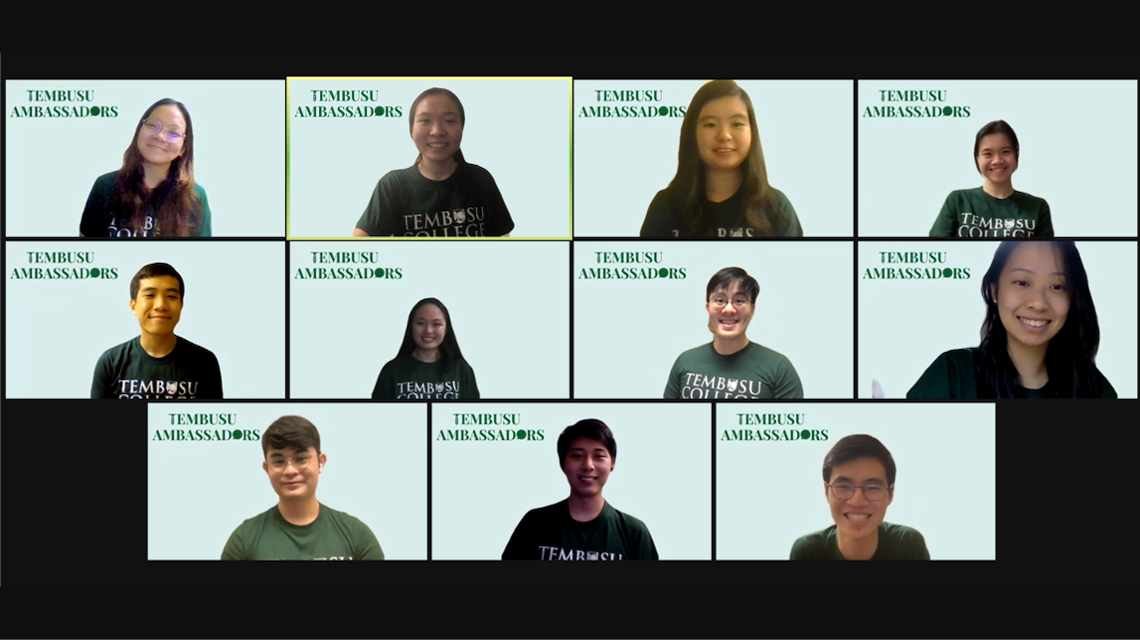
Can’t stop talking about Tembusu and eager to share your love for our college to the world? Look no further!

As Tembusu Ambassadors, we promote and showcase our college to prospective students and their parents at various tertiary institutions and members of the public during outreach events, such as NUS Open Day and college admissions interviews. We also reach out to prospective students and parents via the creation of content and designing of posts for our official Instagram account. We aim to showcase the vibrancy of residential life, our diverse academic programmes and various opportunities that our college provides.

On special occasions, Tembusu Ambassadors also suit up to host distinguished local and foreign guests when they visit Tembusu College or UTown. It is a great opportunity to hone your leadership and communication skills, while creating memorable experiences as representatives of the college.

What do Tembusu Ambassadors do?

  • Promote residential college education to prospective students at various tertiary institutions
    e.g. High Schools, Junior Colleges and Polytechnics
  • Welcome visitors and distinguished guests
  • Conduct campus tours around Tembusu College
  • Assist in managing college events (e.g. Tembusu Forums and tour management for Open Day)
  • Curate content and design posts for our official Instagram and YouTube accounts to showcase different elements of Tembusu College
  • Be involved in a working group within the team (AY2020/2021 Semester 2 and AY2021/2022 Semester 1: Social Media – Regular Events, Module Showcase and Tembusu Portraits – and Open Day)*

*Working groups are reviewed and formed during our annual retreat so they are subjected to changes

Who is an ideal candidate?

We are looking for responsible, personable and committed Tembusu College students (Freshmen, Seniors) who are team players and are excited to share their love for the college to prospective students and external guests!

 

“Joining the Tembusu Ambassadors provided me the opportunity to get involved with the College’s various external engagements which ranged from sharing my Tembusu experience with prospectus students during school outreaches to hosting foreign dignitaries on behalf of the College. While the Tembusu Ambassadors is a meaningful platform to serve the College, it is also an avenue for personal growth – throughout my six years as a Tembusu Ambassador, I was able to develop into a confident and effective communicator. My role as an Ambassador has also enabled me to meaningfully reflect on my holistic development in the College. Alongside these opportunities, I also forged friendships with diverse and dynamic team members who are deeply passionate about sharing and curating the Tembusu experience. If the thought of these opportunities excite you, go for it; apply to be a part of the Tembusu Ambassadors family!”

— Murni Marisa graduated from NUS with a M. Soc. Sci in Political Science. She is currently working at the Ministry of Trade and Industry.
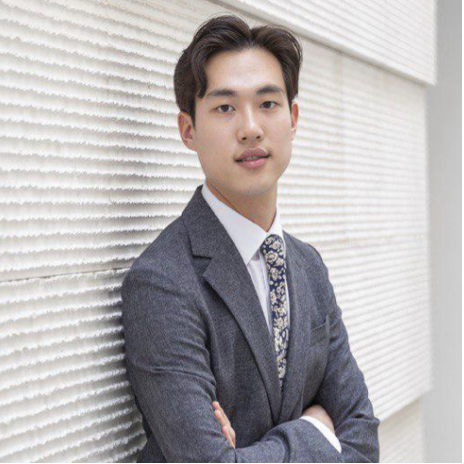
“If I had to choose some of my best memories in NUS, my experience as a Tembusu Ambassador would definitely be on the list. Presenting our college to high-profile university administrators from around the world, acquainting with diplomats and other distinguished guests, and not to mention, working with the most passionate and brightest students in the college who later became some of my closest friends; are only small glimpses of the many things that I got to experience as a Tembusu Ambassador. If you wish to make your university life meaningful, there is no doubt that joining the Tembusu Ambassador family will help you realize that. Hope to see you in the future at our Tembusu Ambassador family gathering!”

— John Hong Hoon Seock graduated with a B.A. in Political Science. During his time as an undergraduate, John was an active student leader of the Korean community in NUS. He is currently serving in the Republic of Korea Armed Forces.

“Four years ago, due to my lack of knowledge, I did not apply to Tembusu College. When I realised that some of my friends had secured a place there, I was compelled to apply. Looking back, it was one of the best decisions of my university life. Similarly, I regretted not applying to Tembusu Ambassadors in my freshman year. I always sought for a community that aims to achieve, be it winning in sports, fighting for a cause or serving the college. After spending a year in college, I knew that Tembusu Ambassadors was a place I wanted to be part of. Thankfully, I had a second chance and applied. Looking back at the events I was part of and how much I grew during my time in Ambassadors, I can safely say I have received much more than I had expected. At the same time, I had the opportunity to serve the college through various platforms and in doing so, prevented many students from making the same mistake I had made a long time ago – take the plunge!”

— Rajesh Mishra graduated with a B.Sc (Honours) in Physics. He is currently a Research Assistant with the NUS Centre for Quantum Technologies and pursuing a MSc in Mathematics at NUS.

“Being a part of the Tembusu Ambassadors has been an invaluable experience. As a freshman, I was interested in the way we communicated with others; students, parents or visitors to the College – participating in outreach sessions, Tembusu Forums and Open Days were great platforms for us to bring Tembusu to the world. However, I also learnt that the Ambassadors was (and still is) more than that. Every passing year with the Ambassadors presents new challenges, mainly because the team is always questioning – what has gone well, what can be improved, and how can we learn from it? At the same time, we are encouraged to grow as individuals through these driving questions too. As much as some of my greatest personal hurdles stemmed from the Tembusu Ambassadors, this was also the place where I gained the most self-awareness and growth. Through the Ambassadors, I’ve met peers whom I truly look up to, and am slowly growing to be a better version of myself.”

— Cheryl Lim graduated with a M.Arch from NUS.
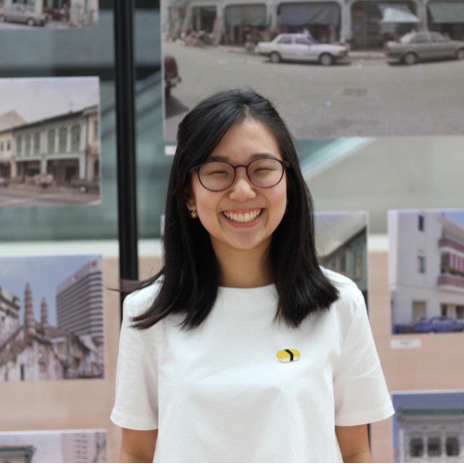
“I was attracted to the role of a Tembusu Ambassador as I treasured the opportunity to meet people from different backgrounds; whether it was the occasional foreign dignitary that came to visit or the fresh-eyed prospective student. What I most enjoyed about being an Ambassador was representing the college at various outreach events. While sharing about Tembusu, I also had the chance to challenge these students to think more deeply about their university education and in my own way inspire them to see their experience as more than just their academics I saw it as an opportunity to help them imagine how Tembusu could be a home of possibilities for them as well, and that made the experience very meaningful for me.”

— Dawn Seow graduated with a B.Soc.Sci in Psychology and Social Work. She is currently an Associate Librarian with the National Library Board.
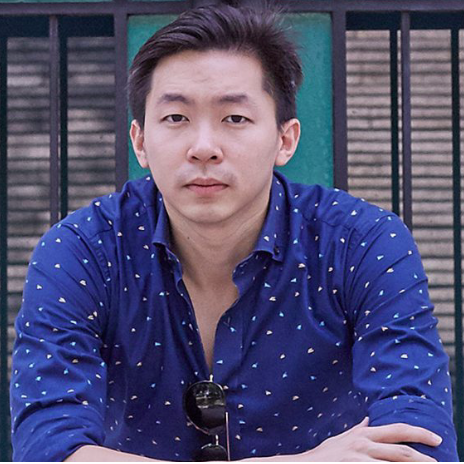
“I joined the Tembusu Ambassadors because I was interested in serving the College by developing its external image and reputation. I was also keen on engaging with foreign dignitaries on behalf of the College. Here, I learnt important networking skills, as well as how to lead others. The flat structure of the Ambassadors developed our ability to lead each other through respect and service, rather than out of one’s formal position. The main highlight is definitely the camaraderie that came out from serving, and organizing events together. Although our tenure lasts a couple years, the friendships forged are timeless.”

— David Wong holds a MSc in Global Governance and Diplomacy (Distinction) from the University of Oxford, and a B.Soc.Sc. in Political Science from NUS. He is currently a Consultant with Bain & Company.
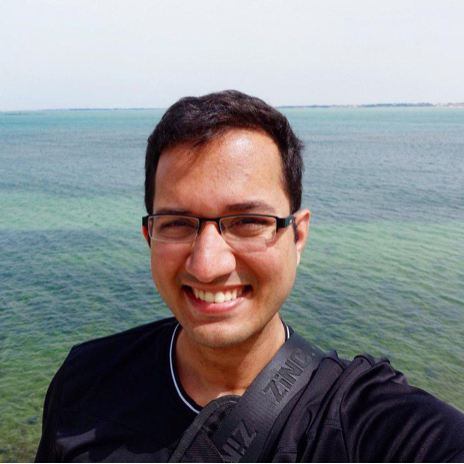
“Joining the Tembusu Ambassadors offers you a unique platform and opportunity to serve and give back to the College we all love, as custodians and curators of the Tembusu brand externally. We bring the first impressions of our “Home of Possibilities” into the hearts and minds of prospective students and parents – in other words, in many ways we set the ball rolling for future cohorts of Tembusians – as well as prominent guests at events like the Inaugural and Annual Dinners and Tembusu Forums. A heavy responsibility, yes, but also an immensely exciting one. Along the way, you will find yourself honing your creativity, communication and teamwork, skillsets that will hold you in good stead for life’s subsequent challenges. The diversity within the team, and our own College experiences, only adds to our lustre, and perhaps you too, like me, will find yourself forming the most fulfilling and enduring friendships of your University days among your fellow Ambassadors. Go ahead, give it a shot – for those up to the task, being a Tembusu Ambassador will only make your time at the College all the more richly memorable and rewarding :)”

— Vinod Ashvin Ravi graduated with a B.Soc.Sci (Honours) in Political Science. He is currently working at the Ministry of Foreign Affairs.
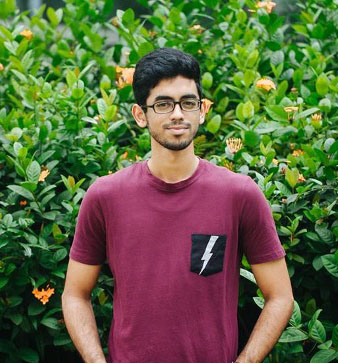
“When I was first applying to be an Ambassador, I wanted to grow my confidence in engaging and communicating with external stakeholders. My Ambs experience enabled me to grow in so many other aspects than what I imagined. Over the years, more than giving me the opportunity to lead, being a Tembusu Ambassador gave me the opportunity to plan college-wide events, think big without losing attention to details and most importantly share what makes Tembusu special to so many prospective students.

Whether you are interested in growing yourself personally or are keen on leading initiatives to bring Tembusu to the world, do consider applying to be an Ambassador because the experience will give you that, and so much more.”

— Sai Surya is currently pursuing a Double Degree Programme in Engineering & Economics in NUS. He is the Co-Founder of Young Sustainable Impact SEA.

“Joining the Tembusu Ambassadors provided me the opportunity to get involved with the College’s various external engagements which ranged from sharing my Tembusu experience with prospectus students during school outreaches to hosting foreign dignitaries on behalf of the College. While the Tembusu Ambassadors is a meaningful platform to serve the College, it is also an avenue for personal growth – throughout my six years as a Tembusu Ambassador, I was able to develop into a confident and effective communicator. My role as an Ambassador has also enabled me to meaningfully reflect on my holistic development in the College. Alongside these opportunities, I also forged friendships with diverse and dynamic team members who are deeply passionate about sharing and curating the Tembusu experience. If the thought of these opportunities excite you, go for it; apply to be a part of the Tembusu Ambassadors family!”

— Murni Marisa graduated from NUS with a M. Soc. Sci in Political Science. She is currently working at the Ministry of Trade and Industry.

How to apply:

  1. Submit the Tembusu Ambassadors Application Form. Do note that the application period is 01 December 2020, 0000 to 12 December 2020, 2359.
  2. Shortlisted candidates will be informed of their interview slots by 14 December 2020.
  3. Interviews will be conducted either on Zoom or in person between 16 December 2020 to 19 December 2020 (inclusive). More details will be shared with shortlisted candidates. You are highly encouraged to attend the interview in business attire, if possible.

Period of Appointment: One Academic Year (subject to review after first semester of service)

Do come for our information session on 16 November 2020, 8:00PM-9.30PM on Zoom. We’d love to tell you more about our experiences and the application process! Please register here for the information session before 16 November 2020, 7:00PM. We may close registration once the capacity is reached so do register early!

For any inquiries, please feel free to drop an email to: tambassadors@nus.edu.sg.
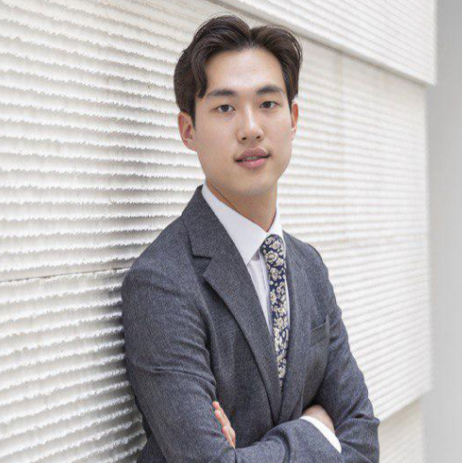
“If I were to list out my best memories from NUS, my experience as a Tembusu Ambassador would definitely be on the list. Presenting our college to high-profile university administrators from around the world, acquainting with diplomats and other distinguished guests, and not to mention, working with the most passionate and brightest students in the college who later became my closest friends; are only small glimpses of the many things that I got to experience as a Tembusu Ambassador. If you wish to make your university life meaningful, there is no doubt joining the Tembusu Ambassador family will help you realize that. Hope to see you in the future at our Tembusu Ambassador family gathering!”

— John Hong Hoon Seock graduated with a B.A. in Political Science. During his time as an undergraduate, John was a member of the NUSSU EXCO and an active student leader of the Korean community in NUS. He is currently serving in the military as a First Lieutenant at the Republic of Korea Air Force Headquarters.
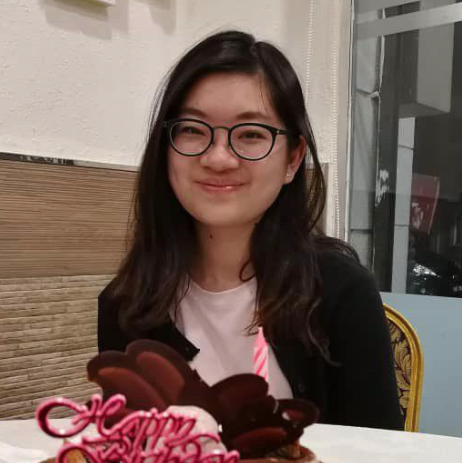
“Being a part of the Tembusu Ambassadors has been an invaluable experience. As a freshman, I was interested in the way we communicated with others; students, parents or visitors to the College – participating in outreach sessions, Tembusu Forums and Open Days were great platforms for us to bring Tembusu to the world. However, I also learnt that the Ambassadors was (and still is) more than that. Every passing year with the Ambassadors presents new challenges, mainly because the team is always questioning – what has gone well, what can be improved, and how can we learn from it? At the same time, we are encouraged to grow as individuals through these driving questions too. As much as some of my greatest personal hurdles stemmed from the Tembusu Ambassadors, this was also the place where I gained the most self-awareness and growth. Through the Ambassadors, I’ve met peers whom I truly look up to, and am slowly growing to be a better version of myself.”

— Cheryl Lim graduated with a M.Arch from NUS. She is currently working at the Defence Science and Technology Agency (DSTA).
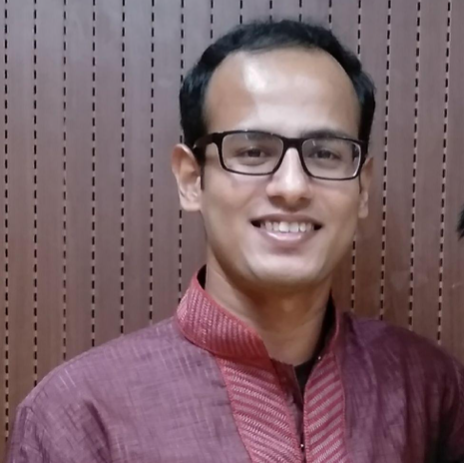
“Four years ago, due to my lack of knowledge, I did not apply to Tembusu College. When I realised that some of my friends had secured a place there, I was compelled to apply. Looking back, it was one of the best decisions of my university life. Similarly, I regretted not applying to Tembusu Ambassadors in my freshman year. I always sought for a community that aims to achieve, be it winning in sports, fighting for a cause or serving the college. After spending a year in college, I knew that Tembusu Ambassadors was a place I wanted to be part of. Thankfully, I had a second chance and applied. Looking back at the events I was part of and how much I grew during my time in Ambassadors, I can safely say I have received much more than I had expected. At the same time, I had the opportunity to serve the college through various platforms and in doing so, prevented many students from making the same mistake I had made a long time ago – take the plunge!”

— Rajesh Mishra graduated with a B.Sc (Honours) in Physics. He is currently pursuing a MSc in Mathematics at NUS and working as a Quantum Scientist at Entropica Labs.
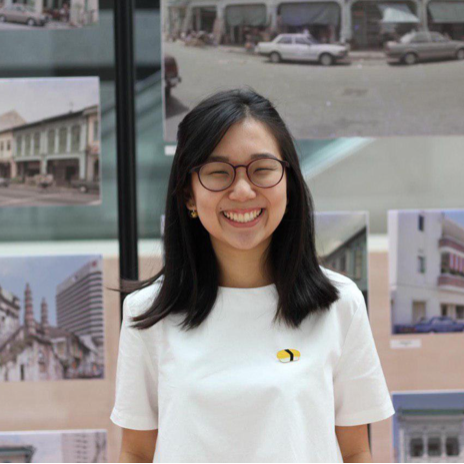
“I was attracted to the role of a Tembusu Ambassador as I treasured the opportunity to meet people from different backgrounds; whether it was the occasional foreign dignitary that came to visit or the fresh-eyed prospective student. What I most enjoyed about being an Ambassador was representing the college at various outreach events. While sharing about Tembusu, I also had the chance to challenge these students to think more deeply about their university education and in my own way inspire them to see their experience as more than just their academics I saw it as an opportunity to help them imagine how Tembusu could be a home of possibilities for them as well, and that made the experience very meaningful for me.”

— Dawn Seow graduated with a B.Soc.Sci in Psychology and Social Work. She is currently an Experience Designer with the National Library Board.
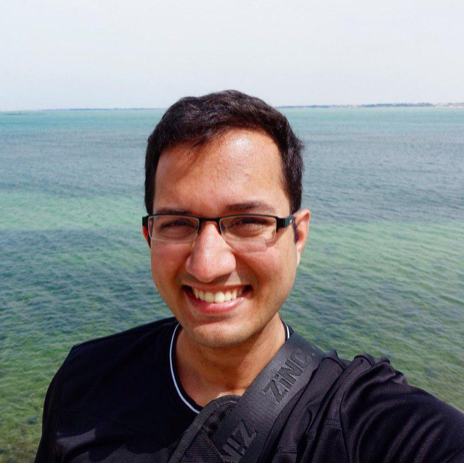
“Joining the Tembusu Ambassadors offers you a unique platform and opportunity to serve and give back to the College we all love, as custodians and curators of the Tembusu brand externally. We bring the first impressions of our “Home of Possibilities” into the hearts and minds of prospective students and parents – in other words, in many ways we set the ball rolling for future cohorts of Tembusians – as well as prominent guests at events like the Inaugural and Annual Dinners and Tembusu Forums. A heavy responsibility, yes, but also an immensely exciting one. Along the way, you will find yourself honing your creativity, communication and teamwork, skillsets that will hold you in good stead for life’s subsequent challenges. The diversity within the team, and our own College experiences, only adds to our lustre, and perhaps you too, like me, will find yourself forming the most fulfilling and enduring friendships of your University days among your fellow Ambassadors. Go ahead, give it a shot – for those up to the task, being a Tembusu Ambassador will only make your time at the College all the more richly memorable and rewarding :)”

— Vinod Ashvin Ravi graduated with a B.Soc.Sci (Honours) in Political Science. He is currently working at the Ministry of Foreign Affairs.
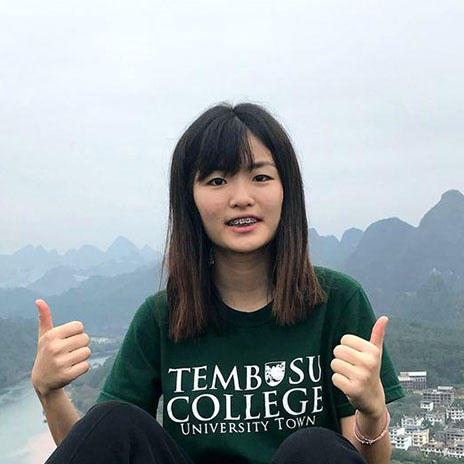
“One thing that I learnt from my time in Ambassadors was the art of active listening. Listen intently, and you will welcome stories from different walks of life — stories from invited guests about their illustrious careers, concerns from parents, or questions from prospective students who were once like us, nervous yet excited about university life. These brief yet genuine exchanges were moments I enjoyed during my time as a Tembusu Ambassador! If you are hungry for stories, and want to share your love for Tembusu with the world, do consider applying to become an Ambassador!”

— Chermaine Bok is currently a Year 4 medicine student at the NUS Yong Loo Lin School of Medicine.
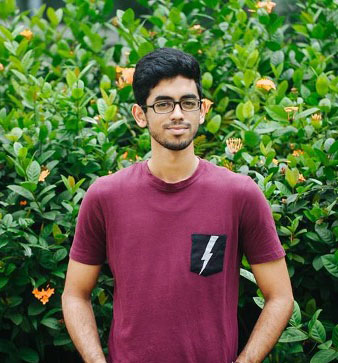
“When I was first applying to be an Ambassador, I wanted to grow my confidence in engaging and communicating with external stakeholders. My Ambs experience enabled me to grow in so many other aspects than what I imagined. Over the years, more than giving me the opportunity to lead, being a Tembusu Ambassador gave me the opportunity to plan college-wide events, think big without losing attention to details and most importantly share what makes Tembusu special to so many prospective students.

Whether you are interested in growing yourself personally or are keen on leading initiatives to bring Tembusu to the world, do consider applying to be an Ambassador because the experience will give you that, and so much more.”

— Sai Surya graduated with a BSocSci (Honours) in Economics and BEng (Honours) in Engineering. He is the co-founder of Young Sustainable Impact SEA and Interseed, and he is currently working as an analyst at the Future of Mobility Solution Centre, Deloitte.

“Joining the Tembusu Ambassadors provided me the opportunity to get involved with the College’s various external engagements which ranged from sharing my Tembusu experience with prospectus students during school outreaches to hosting foreign dignitaries on behalf of the College. While the Tembusu Ambassadors is a meaningful platform to serve the College, it is also an avenue for personal growth – throughout my six years as a Tembusu Ambassador, I was able to develop into a confident and effective communicator. My role as an Ambassador has also enabled me to meaningfully reflect on my holistic development in the College. Alongside these opportunities, I also forged friendships with diverse and dynamic team members who are deeply passionate about sharing and curating the Tembusu experience. If the thought of these opportunities excite you, go for it; apply to be a part of the Tembusu Ambassadors family!”

— Murni Marisa graduated from NUS with a M.Soc.Sci. in Political Science. She is currently working at the Ministry of Trade and Industry.

How to apply:

  1. Submit the Tembusu Ambassadors Application Form (will be made available during application period). Application period: 28th November 2021,12AM to 11th December 2021, 12PM.
  2. Shortlisted candidates will be informed of their interview slots by 13th December 2021.
  3. Interviews will be conducted on Zoom between 15th December 2021 to 19th December 2021 (inclusive). More details will be shared with shortlisted candidates. You are highly encouraged to attend the interview in business attire, if possible.

Period of Appointment: Ongoing appointment for entire tenure in Tembusu College, subject to semesterly reviews

Do come for our information session on 17th November 2021, 8:30PM-10PM on Zoom. We’d love to tell you more about our experiences and the application process! Please register here for the information session before 17th November 2021, 6:30PM.

For any inquiries, please feel free to drop an email to: tambassadors@nus.edu.sg.

By Professor Tommy Koh: Will the US and China cooperate or clash?

The relationship between the United States and China is the most important bilateral relationship in the world. It will affect the interests of many countries in the world, including the Asean countries.

Asean wants to be on good terms with both countries and do not wish to take sides in the rivalry between them. It is not as easy task given the complicated nature of US–China ties.

 There are areas in which they have convergent interests and other areas in which their interests diverge.

Where their interests converge, we expect them to cooperate. Where they diverge, we expect them to compete. At the moment, there is too little cooperation and too much competition.

What are some of the areas in which they have convergent interests? They include winning the fight against Covid-19, helping the world economy to recover, the climate crisis, the biodiversity crisis, the oceans crisis, the non-proliferation of nuclear weapons, strengthening the World Health Organisation’s capacity to combat future pandemics, revitalising the World Trade Organisation, North Korea, Afghanistan and Myanmar.

In areas where the US and China have convergent interests, the imperative is for the two countries to cooperate.

For example, cooperation to deal with the climate crisis should not be made conditional to other considerations. For this reason, I was disappointed by the response of the Chinese Foreign Minister Wang Yi to the US Special Presidential Envoy for Climate Change John Kerry. Mr Wang said that Chinese cooperation with the US will depend on the state of their overall relationship. This should not be the case.


Healthy And Unhealthy Competition

Competition between US and China need not be bad. I shall give three examples of healthy competition.

First, it is healthy competition for the US and China to see who can produce the most effective vaccines against Covid-19. It is also healthy rivalry when both compete to see who can donate the most amount of vaccines to the developing countries, either through the WHO’s Covax Facility or bilaterally.

Second, it is healthy competition for the US and China to bring to next month’s United Nations Climate Change Conferencethe most ambitious proposals concerning greenhouse gas emission reduction targets or financial support for the developing countries.

Third, I would like to see healthy competition between the US and China to develop the best clean technology and to lower carbon emissions. This will help the world make a successful transition to a low carbon economy.

I will now give you three examples of unhealthy competition.

First, there are voices in both the US and China who want to decouple the US and Chinese economies. The two economies are so interlinked and inter-dependent that it will be very difficult to decouple them. Even if it were technically possible to do, it would bring disaster to both economies and to the rest of us who are linked to both.

Second, the proposal to decouple technology is a bad idea. We, in the Asean countries, want to be able to source technology from both the US and China. We do not want to be told that we can no longer do that, and we will have to choose between using American technology and Chinese technology.

Third, it is unhealthy competition for either country to use online falsehood or to mount a campaign to interfere in the domestic politics of the other country, or to launch a cyber attack against the other country.


Perception And Policies

President Joe Biden’s China policy is not clear. He has described China as a competitor. Other senior officials in the Biden administration have, however, described China as a threat. If China is a competitor, there is room for cooperation. If China is a threat, there is no room for cooperation.

As for President Biden’s trade policy on China, the recent address by Ambassador Katherine Tai, the US Trade Representative, seemed to suggest that the new trade policy is very much like former President Donald Trump’s trade policy.

What is President Xi Jinping’s America Policy? The Chinese have been quite consistent in saying that China is not seeking to replace America as the global superpower. Chinese leaders have also emphasised that they support the rules-based international order and are not seeking to overthrow it. Do the Americans believe the Chinese narrative? I am afraid that they do not. They believe that the Chinese agenda is to displace the US from the Western Pacific and to become the world’s greatest power.


Taiwan, South China Sea

The biggest stumbling block to improving relations between the US and China is the absence of trust. To put it simply, they do not trust each other. To rebuild trust, the two countries should communicate more. President Trump had done away with the mechanisms for communication between the two sides, established by President Barack Obama. The two countries should also look for opportunities to work together. By working together, they will begin to trust each other again.

I think it is fair to say that at the highest level of the two governments, there is agreement to manage their competition responsibly and to avoid conflict.

However, this consensus does not appear to be reflected in their actions. Each side seems determined to provoke the other.

I am very concerned by the two potential flashpoints, Taiwan and the South China Sea.  If not handled carefully, actions taken by the US and China in the two domains could lead, intentionally or unintentionally, to a clash.


Detoxing Ties

The world welcomes the good news that President Biden and President Xi will hold a virtual summit before the end of this year. We all hope that the summit will succeed in stabilising their relationship and in reducing the mutual distrust.

I urge the two leaders to consider launching a joint US-China initiative on Covid-19 or climate change. I would also urge them to consider taking coordinated steps to reduce the tension surrounding Taiwan. Such agreements would change the toxic atmosphere of their current relationship.

The world is big enough to accommodate the incumbent superpower, the US, and the rising power, China. If wisdom prevails in Washington and Beijing, the intense competition will not tip over into conflict. There is, however, no guarantee that this will happen. Conflict between the US and China is still improbable. It is, however, no longer beyond the realm of possibility.

By Professor Tommy Koh: Justice for our Paralympic athletes

Like many Singaporean, I was surprised to learn that the winners of the gold, silver and bronze medals at the recently concluded Paralympic Games are paid one-fifth of the amounts paid to the winners of the same medals at the Olympic Games. This is wrong and the difference should be done away with.

First, some background: Unlike the Olympic Games, which has ancient roots, the Paralympic Games began only in 1960 at the Summer Olympic Games in Rome. At those games, only 400 athletes from 23 countries took part. In comparison, 4,403 athletes from more than 162 countries participated in the Tokyo 2020 Paralympic Games.

It was only in 2001, that the International Olympic Committee and the International Paralympic Committee entered into an agreement that the two games should be held in the same host city, using the same facilities and following each other.
What is the objective of the Paralympic Games? It is to showcase the achievements of the athletes and not their disabilities. It is also to send a message to the world that the 15 per cent of the world’s population which suffers from some form of disability, should be treated with respect and dignity.

Watching the Paralympic Games on television earlier this month was an amazing experience. It should convince even the sceptical that disability does not mean no ability.

The competition also showed that the human spirit is truly indomitable. I could not help thinking that it is just as difficult to win a medal at the Paralympics, as it is to win one at the Olympics. There is therefore no rational basis for treating the Paralympic medal as inferior to the Olympic medal.
Currently, the cash payout for an athlete winning a gold medal at the Paralympics is $200,000 – or one-fifth of the $1 million reward for those who achieve Olympic gold.

I salute all our Paralympic athletes and, especially, our double gold medal winner, backstroke swimmer Yip Pin Xiu. She is an inspiration and should be accorded the same treatment that Joseph Schooling received when he won a gold medal for the 100m butterfly event at the 2016 Rio Olympic Games.


Issues of rights and values
It is wrong to reward the winners of medals at the Paralympic Games lesser amounts than the winners of the same medals at the Olympic Games – and notably, it is also inconsistent with the letter and spirit of the Convention on the Rights of Persons with Disability.
Singapore became a party to the convention in 2013. Two of its guiding principles are equality and non-discrimination. Our current practice is unequal and discriminatory.

There is another reason to end the disparity. It is not about money. It is about respect and dignity.

Are we saying to our disabled athletes that they are worth only one-fifth of the able athletes? The answer must surely be that they are as valuable to Singapore as other Singaporeans. If we believe in this value, then I say, end the discrimination and reward the Paralympians the same amounts as we reward the Olympians.


A similar experience
I am reminded of an experience I had when I was the chairman of the National Arts Council. I was negotiating with the Ministry of Education on the financial support it was prepared to give to our two arts colleges, the Nanyang Academy of Fine Arts and the Lasalle College of the Arts.
The ministry was prepared to give the colleges financial support on the basis that each student would be granted 50 per cent of the per capita grant given to students at polytechnics.

I was advised to accept the offer by the then Minister for Information and the Arts George Yeo. I rejected it as I could not accept the implication that our arts students were only half as valuable as our poly students. Instead, I worked hard to help the two colleges raise funds from other sources. Years later, Deputy Prime Minister Tony Tan, reversed the policy of the ministry and agreed to treat the students at the two colleges on par with the poly students.

We should emulate the example of our neighbour, Malaysia, and also of Australia and the United States, which pay the same amounts to their Paralympians and their Olympians. It is the right thing to do, morally and legally.

It will raise the morale of our disabled athletes and citizens. It will make all Singaporeans feel better about our country and the values it stands for.

Tembusu College Students Win Star Award for Community Engagement

Tembusu College students, Malcom Lau, Francisco Chensan and Pang He Xuan, were awarded the NUS Engineering Faculty’s Star Award for group community engagement.

The students founded the group All Hearts on Deck (AHOD) to inspire community spirit and service by celebrating the unsung heroes in our midst. The students identified two key groups of unsung heroes at the college – 24 Tembusu student leaders undertaking a multitude of responsibilities within and outside of the college, as well as the housekeeping team taking care of our college grounds and facilities.

The students launched a series of exhibition at the college lobby to showcase the student leaders and their contributions, in hopes the exhibition will inspire Tembusians to step up and serve their community. At the same time, the team also encouraged their peers to appreciate and engage with the housekeeping team in charge of our college grounds. They created posters to introduce and humanise the housekeepers responsible for each level, and encouraged residents to be considerate by not overloading the common waste bins, but to use the refuse rooms instead to discard their waste. They also organized a “Lunch Jio with Cleaners” for students to socialise with the housekeeping team. During the event, 13 students had lunch with the cleaners and learned about their daily lives, interests, and aspirations. The cleaners’ meals were kindly sponsored by students, along with the prizes for the games that were played during the event.

In our fast-paced but efficient society, it is often easy to take things for granted and forget the invisible labour that enable our world to function smoothly. As pointed out by Malcom Lau, group leader of AHOD, “this initiative stems from our viewpoint that many contributions are often neglected in the present society, yet should be recognised and celebrated”. So, thank you AHOD for reminding us of our humanity; the college is proud of your efforts!

By Professor Tommy Koh: A warm welcome to Kamala Harris

The Vice-President of the United States, Kamala Harris, will visit Singapore from Aug 22 to 24. The people of Singapore warmly welcome her visit for three reasons.

The first reason is that she is the first woman elected to that office. This is very significant to Singapore because we have designated this year as the Year of Celebrating SG Women. She is an inspiration to the women of Singapore.

The second reason is that she is the first US Vice-President of Indian descent. Her brilliant mother, Dr Shyamala Gopalan, was from Chennai, Tamil Nadu. She earned a PhD from University of California at Berkeley and was an endocrinologist. She devoted her life to research on breast cancer. Many Singaporeans will feel a connection to Ms Harris because they are Tamil-speaking and trace their roots to Tamil Nadu.

The third reason is that she represents the most powerful country in the world. Her visit conveys the message that Asean and the countries of this region are important to her country.

Her visit follows upon the recent visit of the US Defence Secretary Lloyd Austin to Singapore, Vietnam and the Philippines, and the visit of the Deputy Secretary of State Wendy Sherman to Indonesia, Thailand and Cambodia.

The US has played a very important role in the political and economic life of this region.
Politically, the US has championed the post-World War II, rules-based international order and multilateralism. The US supports the international rule of law, international law, and the UN Convention on the Law of the Sea.

The US supports Asean and the central role which it plays in the region’s forums and economic integration. The presence of US forces in the region has helped to maintain peace and security and a balance of power.

Economically, US supports free trade. The opening of its enormous market to exports from Asia have helped countries of the region to break out of poverty and catch up with the West. US investment, trade and official development assistance have helped the region to prosper.

One of the best things which the US has done for the region is to invite its bright young men and women to study at some of America’s best universities under the Fulbright Foreign Student Program and other programmes.

Areas of convergence
There are many areas of convergent interest between the US and Singapore, and the US and Asean.

The first area is in trade and investment. The US is the largest investor in Singapore and Asean. The US is Singapore’s third-largest trading partner in goods, and Singapore’s top trading partner in services. Singapore is the third-largest Asian investor in the US, after Japan and the Republic of Korea.

The US and Singapore concluded a Free Trade Agreement in 2003 and it came into force in 2004. To complement this, the two countries should negotiate a new agreement on digital economy.

Another area of convergent interest is climate change. Singapore and the US played an important and constructive role in negotiating the 2015 Paris Agreement on Climate Change.

The two countries share a commitment to implement that agreement faithfully. There are many opportunities for the two countries to cooperate in, such as green standard-setting, clean energy, green buildings, sustainable transport, and green finance.

A third area of cooperation is in strengthening the rule of law and multilateralism. For small countries such as Singapore, our very existence and prosperity depend on them.

Areas of concern
I would also like to share with Vice-President Harris some of the region’s concerns.

Is America reliable?
Following the recent events in Afghanistan, many have asked whether the US is reliable. Can the Vice-President assure America’s friends and partners in the region that President Joe Biden was right to withdraw US forces from Afghanistan and that this has nothing to do with the reliability of US commitments to its allies and partners?

Is America pro-free trade?
The countries of Asean and Asia have prospered on free trade. Has President Biden rejected the protectionist policy of his predecessor? Is he supportive of free trade? Will the US return to the Comprehensive and Progressive Agreement for Trans-Pacific Partnership? The agreement, signed by 11 countries in 2018, had evolved from the Trans-Pacific Partnership, which did not come into force after the US withdrew from it in 2016.

Will the US lift its veto over the appointment of appellate judges at the World Trade Organisation (WTO)? The dispute settlement system of the WTO has been paralysed by former President Donald Trump’s refusal to approve the appointment of such judges.

Will America clash with China?
Singapore and Asean would like to continue as the good friends of both the US and China. We watch with growing concern the deterioration in the relationship between the two great powers.

We would like the two countries to resolve their differences peacefully. We are concerned that the fiery rhetoric being exchanged by Washington and Beijing may lead to clashes between the two countries over, for example, Taiwan. Can the Vice-President assure us that peace will be maintained and there is no danger of war?

I shall conclude by reiterating my warm welcome to Vice-President Harris. I want to assure her that Singaporeans have a very positive view of her country.

We highly value the constructive role played by the US in the political and economic life of the region. We wish the US well and hope that it will lead the world to a more peaceful, most just and more prosperous world.

By Professor Tommy Koh: A Tribute To Four Malaysians

I am a contrarian. I observe that Malaysians and Singaporeans like to criticise each other. They seldom praise each other. I want to be the first Singaporean official to praise, not one, but four Malaysians.


They are:
Tun Mohamed Suffian, a distinguished judge and former Lord President of the Federal Court of Malaysia, who dedicated his life to the promotion and protection of the rule of law.
Ambassador Tan Sri Zainal Abidin Sulong, former secretary-general of the Foreign Ministry
Dato Albert Talalla (Bertie to his friends), who has had a long and successful career in Malaysia’s diplomatic service.
Tun Ahmad Fuzi Abdul Razak, a former diplomat who has been Yang di-Pertua Negeri (governor) of Penang since 1 May 2021.

Mohamed Suffian: A man of integrity
I came to know Tun Mohamed Suffian in 1961 when I sat for my final exams at the National University of Singapore (NUS) Law School, which was then known as the University of Malaya in Singapore. Final year students were examined by both our teachers and a panel of external examiners, who we found truly intimidating. It comprised the Solicitor-General of Singapore Victor Winslow, two High Court judges from Malaya, Mohamed Suffian and Eusoffe Abdoolcader, the Dean of the Melbourne University Law School Sir David Derham, and Professor L.C.B (Jim) Gower of London University.
Appearing before this panel for my oral examination was both a happy and terrifying experience. I will always be grateful to them for awarding me with First Class honours. After graduating, I returned to the law school and joined its faculty. I kept in touch with both Judge Mohamed Suffian and Judge Abdoolcader. I followed, with pride, the career of Judge Suffian as he was appointed as the Chief Justice and, then, as the Lord President of the Federal Court.
During my tenure as Dean of the NUS Law School from 1971 to 1974, I nominated only one person for the honorary degree of Doctor of Laws. He was Tun Mohamed Suffian. I served as the Public Orator at the University commencement in 1972, when Tun Suffian received his doctoral degree.
Why do I admire him? He was intellectually brilliant but very humble, and a man of integrity. He was a good judge and had devoted his life to serving the cause of justice. I remember he was outraged by the sacking of his successor, Tun Salleh Abbas, by then Prime Minister Dr Mahathir Mohamed. Five senior judges, including Judge Abdoolcader, were suspended during the 1988 judicial crisis.
I was very honoured when the University of Malaya invited me to deliver the inaugural Tun Suffian Public Lecture in 1989. Tun Suffian passed away in September 2000 at the age of 82.


Diplomatic warrior Zainal Abidin Sulong
Tan Sri Zainal Abidin Sulong was a career diplomat. He rose through the ranks and retired as the Secretary-General of Wisma Putra, which is equivalent to the Permanent Secretary of Singapore‘s Ministry of Foreign Affairs. He was posted to the United Nations as Malaysia’s Permanent Representative, from 1980 to 1984, which overlapped the period when I was Singapore‘s UN Permanent Representative from 1974 to 1984. The four years when Zainal and I were at the UN were critical to Asean.
On Dec 25, 1978, Vietnam invaded Cambodia, overthrew the Khmer Rouge regime and imposed a new government, backed by Vietnam. The five Asean countries decided that they had to oppose Vietnam’s action because it posed a danger to Thailand and we could not condone the behaviour of a country, which had sent its armed forces across an international boundary into the territory of another state.
The fight between Asean and Vietnam at the UN was a baptism of fire for the Southeast Asian regional grouping. The odds seemed stacked against us as Vietnam had the support of the Soviet Union, its allies and India. The five Asean Permanent Representatives from Indonesia, Malaysia, Philippines, Singapore, and Thailand met frequently to strategise our battle plans and next moves.
In the end, and much to the surprise of the world, Asean prevailed over Vietnam at the UN. I will always remember Zainal Sulong, who died in 2010 at age 77, as one of the five Asean diplomatic warriors. He was courageous, fearless, eloquent, calm under fire and a dependable ally.

Career diplomat Albert (Bertie) Talalla
Dato Albert Talalla, known as Bertie to his friends, was a career diplomat, having served as Malaysia’s Ambassador to China, Germany, and the United States. Bertie was in Washington from 1986 to 1991, while I was there from 1984 to 1990. We were colleagues and good friends.
There were six Asean Ambassadors – from Brunei, Indonesia, Malaysia, Philippines, Singapore, and Thailand – in Washington at that time. We constituted the Asean Washington Committee (AWC). We liked each other and worked well together. We believed in strength in numbers. For example, if we wanted to see a senior US official or a US Congress member, we were more likely to succeed if the request came from the six of us. We also divided the work among us. Each embassy would specialise on one topic. For example, Singapore focused on trade policy, Malaysia on palm oil. We also went on roadshows to different parts of America to tell the Asean story, its relevance to the US and to highlight our concerns. In one city, Bertie told me he was tired of talking about palm oil. He asked me to speak on palm oil at our next stop, and he would cover trade. I agreed and became quite knowledgeable about palm oil. This is an example of the camaraderie among us.

Crossing path with Tun Ahmed Fuzi
Tun Ahmed Fuzi Abdul Razak, the current Governor of Penang, has also been a career diplomat. He was Deputy Chief of the Malaysian Embassy in Washington between 1987 and 1989, where our paths crossed for the first time. I was Singapore’s Ambassador from 1984 to 1990. We became friends. He was a star even then and rose through the ranks to eventually become the Secretary-General of Wisma Putra from 2001 to 2006.
Tun Ahmad Fuzi and I were on opposite sides of a legal dispute between Malaysia and Singapore, over the Republic’s land reclamation activities in Pulau Tekong and in Tuas. On July 4, 2003, Malaysia dropped a bombshell on Singapore. It sent Singapore a diplomatic note, referring the dispute to arbitration, under the United Nations Convention on the Law of the Sea (UNCLOS). Singapore responded by pointing out that the law required both sides to attempt to resolve their differences through negotiations first before resorting to arbitration.
On Aug 13 and 14, 2003, a Malaysian delegation, led by Tun Ahmad Fuzi, met our delegation, headed by me, in Singapore. The talks went well and Malaysia promised to host a second round in Putra Jaya.
However, no second round was held. Instead, Malaysia applied to the International Tribunal for the Law of the Sea (ITLOS), based in Hamburg, for provisional measures to stop Singapore’s reclamation activities until the outcome of the arbitration.
The matter was considered by ITLOS, in September 2003. The Malaysia Agent in the case was Tun Ahmad Fuzi and I acted for Singapore. The oral hearings were held over three days. On Oct 8, 2003, ITLOS rendered its judgment, which did not grant the provisional measures which Malaysia had asked for. Instead, the tribunal instructed the two countries to establish a group of independent experts to conduct a joint study into Malaysia’s allegations. This was the proposal I had made to the tribunal in my concluding statement.
On Nov 5, 2004, the Group of Experts submitted its unanimous report to the two governments, which later agreed to accept it and to resume negotiations. After two intensive rounds of talks held in Singapore and at the Hague, in the Netherlands, the two delegations agreed on a settlement.
The Land Reclamation case was a very complex one, involving several stages. The fact that we were able to resolve all our differences amicably was due, in part, to Tun Ahmad Fuzi’s leadership. He was fair-minded and a perfect gentleman. It was a pleasure to have worked with him, even though we were on opposite sides.
Our path crossed again two years later. In 2007, we were appointed by our respective governments to the High-Level Task Force to draft the Asean Charter. I chaired the group in the second half of 2007. We were racing against time to present the Charter to the Asean Summit in November that year.
There were many difficult issues to resolve, such as, human rights and the mobility of labour. Because of our friendship and the goodwill between us, Tun Fuzi helped me to achieve consensus on several occasions.

Build on common interests and friendships
I conclude with three messages for young Singaporeans and Malaysians. First, do not demonise each other. Instead try to get to know each other better. You have much in common, be it the way you speak, the music you listen to, the books you read, the movies and sitcoms you watch, the comedians and actors you follow on either side of the Causeway, or most importantly, the food we all enjoy.

Second, our two countries have many more areas of common interest than differences. We are each other’s second-largest trading partners and major investors. COVID-19 highlighted these areas of common interest and interdependencies, like the cross-border flow of goods and services.

Third, there are good people on both sides and friendships between Singaporeans and Malaysians are in the interests of both countries.
The bonds of friendships established over time will allow for frank and friendly discussions of our differences to take place with confidence, and contribute to their amicable resolution. My own friendships with my diplomatic counterparts from Malaysia and elsewhere are testament to this.

By Professor Tommy Koh: Can Small Countries Win Medals At The Olympic Games?

The 2020 Tokyo Olympic Games which played out before an audience of mostly empty seats ended on Sunday in a ceremony that echoed the restraint of the two-week long games. We must thank the Government and people of Japan for delivering on their promise to hold a safe and secure Olympic.
Singapore sent a team of 23 athletes to compete in 12 events at the 32nd Summer Olympics in Tokyo. All the athletes did their best. They deserve our gratitude for their sacrifices and best efforts. However, the Team Singapore did not win any medal, prompting some Singaporeans to ask the question: Can small countries win medals at the Olympic games?

I have therefore decided to look at the final medal tally of the Tokyo Olympic for an answer.

First, I should explain that one does not have to be a member of the United Nations to participate in the Olympics. Thus, Puerto Rico (part of the United States), Bermuda, Hong Kong (part of China), Chinese Taipei (Taiwan) and Kosovo (not a member of the UN), were allowed to participate in the games.

By small countries I mean countries whose populations are below 10 million. This is the criterion used by the Forum of Small States, an informal grouping established by Singapore at the UN in 1992, to define who are eligible to join the grouping which has 108 members today.

A surprising discovery
I was surprised to discover that 25 small countries and territories had won a total of 113 medals in Tokyo. I decided to dig deeper and separate them into three divisions: those with a population below one million; (ii) those whose populations are between one million and five million; and (iii) those whose populations are between five million and 10 million.

If size is destiny, the countries and territories whose populations are below one million should have no chance of winning any medal. I am vindicated in my belief that size is not destiny. There are five medal winners in this division.

Bahamas, with a population of only 389,000 people, won two gold medals. Sprinter Steven Gardiner won the gold in the men’s 400 metres, while Shaunae Miller-Uibo took the gold in the women’s 400 metres. Fiji, with a population of 889,000, won the gold in rugby, defeating New Zealand in the final. Bermuda has a population of 63,000 people and still managed to win a gold medal in the women’s triathlon. Grenada, with a population of 112,000, won a bronze medal in the men’s 400 metres. San Marino, a tiny landlocked European country surrounded by Italy, has a population of only 34,000 and yet won a silver and two bronze medals.

There are 13 countries and territories in Division II.

The most successful country is New Zealand. With a population of 4.9 million, it won seven golds, six silvers and seven bronzes, a total of 20 medals.

Jamaica has a population of 2.9 million. It won four gold, one silver and four bronze medals, a total of nine medals. We will remember for a long time the astounding sight of seeing three Jamaican women, winning the gold, silver and bronze medals in the women’s 100 metres.

Slovenia has a population of two million. It took three golds in canoeing, cycling and sport climbing, a silver in judo and a bronze in cycling, a total of five medals.
Ireland (4.9 million population) won two golds in rowing and boxing and two bronzes in rowing and boxing.

Qatar (2.8 million population) went home with two gold and one bronze medals in Tokyo. Qatar’s famous high jumper Mutaz Essa Barshim graciously decided to share the gold medal with his Italian rival Fianmarco Tamberi, in one of the most emotional and heartwarming moments in Olympic history. Qatar’s weightlifter Fares Elbakh, also known as Meso Hassouna, won the second gold medal.

The other medal winners in this division were from Kosovo, Latvia, Puerto Rico, Bahrain, Lithuania, Namibia, Botswana and Kuwait.

In Division III, there were six countries and one territory: Norway, Sweden,Switzerland, Denmark, Jordan, Finland and Hong Kong.

Norway (5.3 million population), won four gold, two silver and two bronze medals, for a total of eight. Norway won gold in the triathlon, men’s 400 metres hurdles, men’s beach volleyball and men’s 1,500 metres. Norway’s Karsten Warholm smashed his own world record and set a new record for men’s 400 metres hurdles. Another Norwegian, Jakob Ingabrightsen, won gold in the hotly contested men’s 1,500 metres.

Sweden (10 million population) won three golds and six silvers, taking a total of nine medals. Sweden’s gold medal winners – Daniel Stahl in men’s discus, and Armand Duplantis in pole vault – were much admired. The third gold was won in the equestrian team jumping event.

Switzerland (8.5 million population) won three golds, four silvers and six bronzes, making a total of 13 medals. The three gold medals were won in cycling (mountain bike), shooting and tennis. The Swiss female tennis player, Belinda Bencic, won the gold medal in the women’s tennis singles. The more celebrated tennis stars, such as Naomi Osaka and Ashleight Barty, were eliminated in the early rounds.
Denmark (5.8 million population) won three golds, four silvers and four bronzes, making a total of 11 medals. The gold medals were won in sailing, cycling and badminton. China’s world Number One badminton player, Chen Long, was defeated in the final in Tokyo by Denmark’s Viktor Axelsen. After losing the match, Chen Long graciously told Axeleen that he deserved to win.

Hong Kong (7.5 million population) gained one gold, two silvers and three bronzes. It won a gold in men’s fencing, two silvers in women’s swimming, and three bronzes in women’s cycling, table tennis and kata (a karate form). Hong Kong’s Grace Lau put up a very good performance, winning a bronze medal in the women’s solo kata match.

Small countries can win medals
From the results of the Tokyo 2020 Olympic games, the answer to the question which I posed at the beginning of this essay is a resounding yes. The lesson for Singapore is that small countries can win medals in the Olympic games.

What can Singapore learn from the successful medal-winning countries? I urge the Singapore Olympic Committee and our Sports Council to set up a committee to look into this question.

I offer the following three hypotheses for discussion. First, we should have an ecosystem which systematically spots talent among our students. Second, we should offer the talented students, if interested, a programme of training, coaching and mentoring, for free. Third, our society must truly value excellence in sports and make it possible financially for talented athletes to pursue their passions.

We must also develop a culture of supporting our athletes, in good times and in bad times. 

Tembusu Students Paint Wall Murals In Aid Of Dementia-Friendly Community

30 Tembusu College students, together with their lecturer Dr Margaret Tan and in partnership with the Alzheimer’s Disease Association, designed and painted 11 wayfinding murals to help elderly residents and those living with dementia navigate their neighbourhood.

Find out more here: https://pride.kindness.sg/art-helps-elderlies-dementia-care-find-way-home/


(Video source: Goh Yu En; image source: Dr Margaret Tan)

New Book Out By Tembusu Fellow Dr John Van Wyhe- ‘Charles Darwin: Justice Of The Peace’

It is little known that Charles Darwin was a justice of the peace for many years. The original case records do not survive. However a new book ‘Charles Darwin: Justice of the peace. The complete records (1857-1882)’ by Tembusu Fellow, Dr John van Wyhe and Christine Chua, have reconstructed a fascinating new chapter to the life of the famous naturalist based on local press reports.

Free PDF of the book can be found here:

http://darwin-online.org.uk/converted/pdf/2021_John_van_Wyhe_&_Christine_Chua,_Charles_Darwin._Justice_of_the_Peace_A2115.pdf