Kay Yeo Hui Qin won Bert Peeters Prize for Best Student Project in NSM Semantics

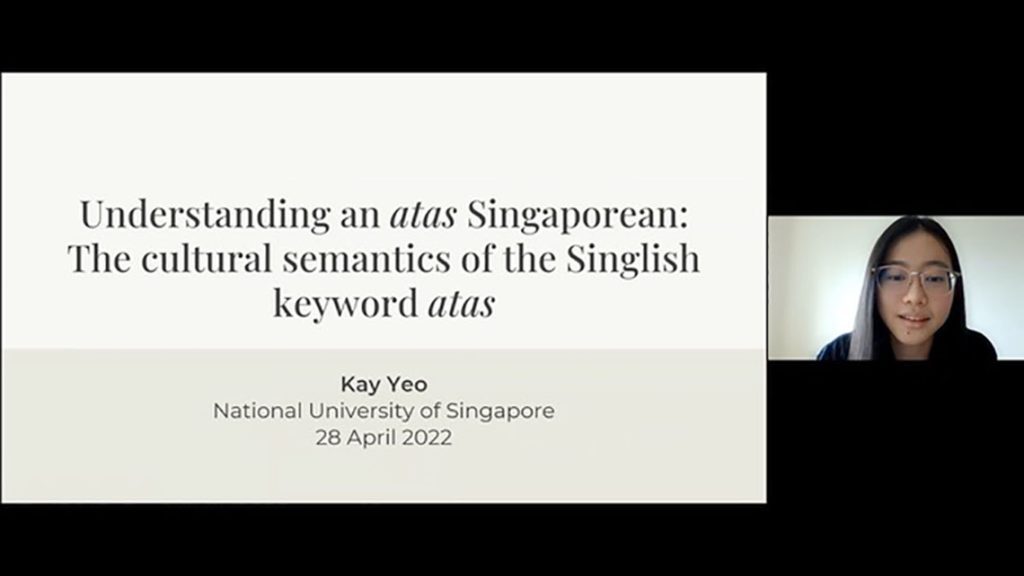
The college would like to send its heartiest congratulations to Year 2 student Kay Yeo who won the inaugural Bert Peeters Prize 2022 for her essay “Understanding an atas Singaporean”. What started out as an assignment for the IEM2 module ‘What’s in a word?’ Meaning across cultures, it developed into a 4000-word paper submission with the support of Kay’s IEM tutor, Dr Wong Jock Onn. It nailed the Prize for Best Student Project in NSM Semantics annual writing competition (https://nsm-approach.net/bert-peeters-prize) earlier this year. The prize was named after Bert Peeters who was an NSM (natural semantic metalanguage) semanticist and he passed away in 2021.

Kay drew inspiration from her interactions with her friends where she learnt about the word ‘atas’. According to Kay, what piqued her interest in the term was that it is culturally significant because when someone calls another ‘atas’, it could be to draw distance or to confirm one’s desire to be like the other. She tried to capture such conflicting ideas reflected in the use of the term in her winning submission.

The judges’ comments were:

“Your essay on “Understanding an atas Singaporean” is truly excellent. It is extremely clear and well-reasoned, draws on a good range of naturally occurring examples, and provides the necessary cultural contextualisation. I look forward to meeting you online at NSM-Con2022 and hearing your presentation. You clearly have great potential as an NSM researcher. I dearly hope you will advance to higher studies.” –Cliff Goddard, Professor in Linguistics, Griffith University

“An excellent choice of a word to nominate and explore as a Singaporean key word. Culturally very illuminating topic. Very well-chosen examples of use presented as evidence for the proposed analysis. Excellent use of data sources, a very useful survey. At the same time, the limitations of this data collection are properly acknowledged in the Conclusion.” –Anna Wierzbicka, Professor of Linguistics (Emerita), The Australian National University

Kay presented her paper at a recent NSM conference. Here is a link to the YouTube video recording of Kay’s presentation: https://youtu.be/piP5xm3gfbI

N_Bert Peeters Prize Certificate_Kay Yeo

By Professor Tommy Koh: UNCLOS is 40 today. Should we celebrate?

On April 30, 1982, the United Nations Convention on the Law of the Sea (UNCLOS) was adopted after nine years of negotiations. There are currently 168 parties to the convention, which came into force in 1994.

Today, on the 40th anniversary of its adoption, is UNCLOS still relevant?

ln this essay, I want to put forward the view that the convention is still relevant and fit for purpose. I believe that we should celebrate the anniversary for the following reasons.

1. It replaced chaos with order

UNCLOS had put an end to a period of chaos and unilateralism in the law of the sea. The first country to make an unilateral claim was the United States. In 1945, President Harry Truman issued a proclamation claiming jurisdiction and control of the natural resources of the country’s continental shelf. The US action was followed by an avalanche of claims by Chile, Peru, Brazil, El Salvador, Panama and Uruguay. These Latin-America countries claimed some form of jurisdiction, extending to 200 miles from their coasts.

Separately, Iceland claimed a fishery zone of 50 miles. Indonesia and the Philippines made claims based on the concept of archipelagic states. By 1976, a majority of the countries of the world claimed a territorial sea of 12 miles, as opposed to the traditional limit of 3 miles.

UNCLOS had put a stop to these unilateral claims. This is why I have called the convention, the “constitution for the world’s oceans”. All countries, including those who are not parties to UNCLOS, accept the convention as the foundation of the legal order governing the uses and resources of the oceans.

2. It’s the mother of 3 successful institutions

UNCLOS has given birth to three successful institutions. The first is the International Tribunal For The Law Of The Sea (ITLOS), based Hamburg, Germany. ITLOS is a specialised international court, focusing on disputes between states, on the interpretation and application of the convention.
ITLOS has proven to be a useful addition to the International Court of Justice. The fear by some that the tribunal and the court may develop conflicting jurisprudences on the law of the sea, has proven to be unfounded.

The second institution is the International Seabed Authority (ISA), based in Kingston, Jamaica. The ISA has jurisdiction over the resources of the deep seabed and ocean floor, beyond the limits of national jurisdiction. It plays an important role in regulating mineral-related activities in the international seabed area.

For instance, ISA has a deep seabed exploration contract with Ocean Mineral Singapore for a mine site located between Hawaii and Mexico. The site contains deposits of polymetallic nodules bearing important minerals such as copper, nickel, cobalt and manganese, as well as rare earths.

The third institution is the Commission on the Limits of the Continental Shelf. This is a technical body which examines claims by coastal states to continental shelves beyond 200 miles.

3. It protects the marine environment

UNCLOS is one of the most robust environmental treaties. The convention imposes a clear obligation on all states to protect and preserve the marine environment.

The convention treats the oceans as an ecological unity. It seeks to protect the oceans and marine environment from all sources of pollution.

I welcome the recent decision by the UN Environment Assembly to begin negotiations for a new treaty on marine plastic pollution.

4. It keeps the peace at sea

UNCLOS has helped to prevent conflicts at sea. Wars can occur when the law is not clear or when there is no law. For example, Iceland claimed an exclusive fishing zone of 50 miles. The UK rejected the claim. The result was a war between them in 1972 and 1973 over fishing rights. There were also many disputes between the United States and the coastal states of Latin-America overfishing rights.

The clear rules in the convention, on the rights and obligations of coastal states and other states, in the different maritime zones, are critical in avoiding conflict. UNCLOS has therefore contributed to peace at sea.

5. It provides for compulsory dispute settlement

One of the unique features of UNCLOS is the system of compulsory dispute settlement. Any country which becomes a party of the convention is bound by the system.
For example, in July 2003, Malaysia initiated arbitral proceedings against Singapore under UNCLOS. Malaysia also applied to ITLOS for provisional measures. Singapore accepted the legal challenge and agreed to participate in the arbitration. Singapore also appeared before ITLOS to rebut Malaysia’s claims and request for provisional measures.

The system enhances the prospects that dispute between states, on the interpretation and application of the convention, will be settled peacefully.
Since the convention came into effect, states have made good use of the modalities provided by the convention, including arbitration, adjudication and compulsory conciliation.

I regret to say that there are a few countries which are parties to the convention, and which do not wish to be bound by the system of compulsory dispute settlement even though it is clear that there is no opt-out clause or escape hatch.

6: It’s a post-colonial and revolutionary treaty

UNCLOS is a post-colonial treaty, with developing countries playing a major role in its making.

It is also not a codification treaty. One the contrary, it is a revolutionary treaty and contains many new concepts of law, such as the exclusive economic zone, straits used for international navigation, transit passage, archipelagic waters, archipelagic sea lane passage and the common heritage of mankind. The view that UNCLOS is a product of the West is without merit.

7. It’s a living document

UNCLOS is 40 years old. Is it still fit for purpose? Is it able to respond to new challenges and developments?

My answer is that UNCLOS is a living document. It is able to respond to new challenges and developments.

Let me cite one example: The convention was faced with the problem of how to regulate two categories of fish: highly migratory species such as tuna, and species like salmon, which lives in more than one jurisdiction during its life cycle. In 1995, the UN was able to adopt a new agreement on Highly Migratory and Straddling Fish Stocks. The agreement was adopted by the UN General Assembly as an Implementation Agreement, under UNCLOS.

There is currently a UN conference, chaired by a Singaporean, Ambassador Rena Lee. The conference is seeking to reach agreement on the conservation and sustainable use of biological diversity, in areas beyond national jurisdiction. If the conference is successful, and I am confident that it will be, the outcome will be embodied in a new Implementation Agreement, under the convention.

8. Climate Change and Sea Level Rise

Climate change and sea level rise will impact many aspects of the law of the sea. Sea level rise poses an existential threat to some countries, especially, the small island developing countries.

The convention contains the legal instruments to address this monumental challenge, but states must act and do so urgently. The Secretary-General, Antonio Guterres, has described the situation as a Code Red for humanity.

A Precious Victory

I hope I have succeeded in persuading the readers that we should celebrate the 40th anniversary of UNCLOS.

The convention – the product of hard-fought negotiations lasting almost a decade is a victory for the United Nations, a victory for international law and the rule of law and a victory for the peaceful settlement of disputes.

This victory is precious, especially in the current difficult circumstances the world faces. I am glad that I was able to play a very small part in this story.

impacT featured Nurturing young leaders in public policy and social impact

Tembusu’s student interest group impacT has been featured in the NUS news. As a student-led organisation, it strives to provide tertiary students with exposure to public policy and social impact. They have invited various prominent personalities working in policy-making, foreign policy and social service agencies to their workshops and podcasts.


For more details, read on here: https://news.nus.edu.sg/nurturing-young-leaders-in-public-policy-and-social-impact/ 

Change in Rector of Tembusu College

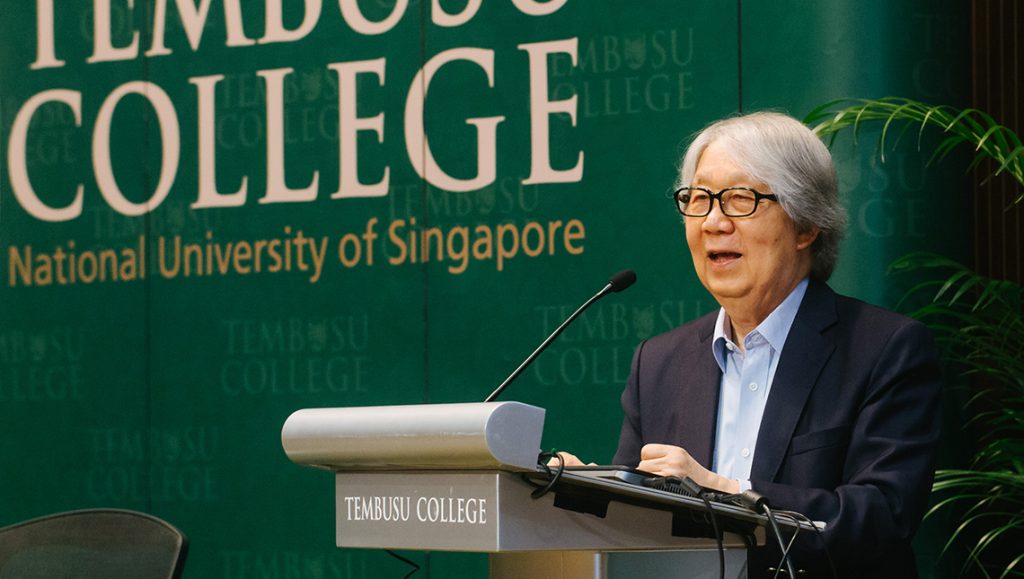
The College bids farewell to Professor Tommy Koh and is deeply grateful to him for his dedication and invaluable contributions over the last twelve years as Rector of Tembusu College. As the founding Rector, he has contributed much to the College’s programmes, and has encouraged students to embrace diversity and be inspired by people from all walks of life. He has organised and chaired the Tembusu Forum which is the College’s flagship project to discuss issues important to Singapore, the region, and the world. He invited many renowned speakers and dignitaries to the Forum and in doing so took Tembusu College to the world. He will relinquish his role as Rector of Tembusu College on 30 June 2022. We wish him the all the best in his future pursuits.

Mrs Lim Hwee Hua has been appointed Rector of Tembusu College, with effect from 1 July 2022. Hwee Hua was first elected to Parliament in December 1996 and served till May 2011. Her last roles were as Minister in the Prime Minister’s Office, Singapore, and concurrently as Second Minister for Finance and for Transport. Between 2002 and 2004, she was Deputy Speaker of Parliament and Chairman of the Public Accounts Committee.

Prior to joining the Singapore Cabinet, she enjoyed a varied career in financial services. At Temasek Holdings (2000-2004), she served as Managing Director and oversaw divestments, restructured companies, and boards; established strategic relations with key foreign counterparts; and sat on boards including those of PSA, Keppel and Mapletree.

Mrs Lim Hwee Hua is currently engaged in private equity (Tembusu Partners, Kohlberg KravisRoberts), banking (United Overseas Bank, Westpac Bank), and maritime services (BergesenWorldwide Group). She also sits on a number of boards and has been a Distinguished Visiting Fellow at the NUS Business School and the Lee Kuan Yew School of Public Policy. Between 2011 and 2014, she served on the Ernst & Young Global Advisory Council.

Students at Tembusu College will benefit immensely from Hwee Hua’s rich, varied, and interesting career and leadership experiences.

By Professor Tommy Koh: The war in Ukraine and the laws of war

Russia began a war against Ukraine on Feb 24. Since then, Russian bombs, missiles and artillery shells have killed Ukrainian civilians, destroyed schools, hospitals and many residential buildings. Several friends have asked me whether there is any international law which prohibits attacks against civilians and public infrastructure? Another asked whether there is any international law against the use of chemical, biological and tactical nuclear weapons? In this essay, I will try to answer these questions.

I want to begin by paying a tribute to a visionary Swiss man, Mr Henry Dunant. In 1859, there was a battle between France and its Italian ally, on the one side and Austria, on the other. The battle over the struggle for Italian unification was fought in Solferino and won by France and its Italian ally. When the war was over, many wounded soldiers were left to die on the battlefield.

Mr Dunant was appalled by what he saw. He wrote a book, entitled, A Memory of Solferino. The book, published in 1862, aroused the conscience of many of its readers. Mr Dunant and his friends founded the Red Cross in 1863 to help wounded soldiers in an impartial and neutral manner.


THE BEGINNING OF THE LAWS OF WAR
In 1864, the international community adopted the Geneva Convention which sought to protect wounded soldiers on the battlefield and established the neutrality of the medical personnel assisting such soldiers.

This was the beginning of the development of the laws of war, now known as International Humanitarian Law (IHL). The International Committee of the Red Cross, the Red Cross and Red Crescent Societies and Switzerland have made and continue to make enormous contributions to the noble objective of “humanising” warfare.

In 1986, the 25th International Conference of Red Cross and Red Crescent movement adopted the fundamental principles of the movement. The seven principles are humanity, impartiality, independence, neutrality, voluntary service, unity and universality. It is inspiring to see the representatives of the Red Cross working in Ukraine in spite of the danger to their lives.

There have been many important developments in IHL since 1945. The UN Charter prohibits the use of force except in self-defence or when authorised by the UN Security Council.


CRIMES AGAINST HUMANITY
The 1947 judgement of the Nuremberg Military Tribunal, formed by the four major allied powers – The United States, Great Britain, France and the Soviet Union after WWII – contained a new international crime: crimes against humanity. What is new is that individuals can be held responsible for breaches of international law. The principles of the judgment were approved by the UN General Assembly in 1948 by Resolution 177.

It is beyond dispute that war crime is part of international law. The attacks by Russian forces against civilians, schools and hospitals are war crimes.

In a war, it is legitimate to attack military targets. It is not legitimate to attack non-military targets.


BIOLOGICAL, CHEMICAL AND NUCLEAR WEAPONS
Russia has alleged that Ukraine is operating laboratories for making biological weapons with US support, which the UN said it is not aware of. This raises the question whether the use of biological weapons is prohibited by international law. The answer is yes.
The UN adopted the Biological Weapons Convention in 1972. It came into force in 1975, prohibiting the use of biological weapons. Russia joined the Convention in 1975 and is bound by it.

Fears have been raised that chemical weapons may be used against Ukraine. Is there any law prohibiting the use of chemical weapons? The answer is yes. In 1993, the UN adopted the Chemical Weapons Convention. It came into force in 1997. The Convention is implemented by the Organisation for the Prohibition of Chemical Weapons (OPCW), based in the Hague, Netherlands. Russia became a party of the Convention in 1997 and is therefore bound by it.

Russia is not a party of the 2017 Treaty on the Prohibition of Nuclear Weapons, which came into force in 2021. The treaty prohibits the threat or use of nuclear weapons.

In 1994, the UN General Assembly requested the International Court of Justice (ICJ) for an advisory opinion on the legality of the threat or use of nuclear weapons.

In its opinion given in 1996, the ICJ stated that there was no source of law, customary or treaty that explicitly prohibits the possession or even use of nuclear weapons. However, the court also stated that the use of nuclear weapons must be in conformity with the law on self-defence and the principles of international humanitarian law.

Since Ukraine is the victim of Russian aggression, the argument by Russia that it is acting in self-defence is obviously without merit. Therefore, it would be illegal for Russia to use tactical nuclear weapons against Ukraine. This could also be a violation of the principles of international humanitarian law, which prohibit the use of weapons which are indiscriminate, cause unnecessary suffering and serious damage to the environment.


LANDMARKS IN INTERNATIONAL HUMANITARIAN LAW
I would like to refer briefly to some landmarks in the development of international humanitarian law.

In 1948, the UN adopted the Convention on the Prevention and Punishment of the Crime of Genocide. Genocide is such a heinous crime that the convention has conferred on all parties of the convention the right to bring legal actions against any offending state. In pursuance of this rule, Gambia has initiated legal proceedings against Myanmar in the ICJ, alleging that the Government of Myanmar is committing genocide against the Rohingyas. The case is ongoing.

In 1949, the UN adopted four conventions in Geneva. They are known as Geneva Conventions I, II, III and IV. The fourth convention protects civilians in time of war and is therefore relevant to the Ukraine war.

In 1998, the UN adopted a treaty in Rome establishing the International Criminal Court (ICC). Known as the Rome Statute of the ICC, the treaty came into force in 2002. The treaty is controversial and has only 123 parties.

The Rome Statute establishes four core international crimes: genocide, crimes against humanity, war crimes and the crime of aggression. There is no time limit for these crimes.

The court has jurisdiction over crimes only if they are committed in the territory of a state party or if they are committed by a national of a state party. Russia and Ukraine are not parties of the Rome Statute.

Although Ukraine is not a state party to the Rome Statute, it has exercised its prerogative to accept the court’s jurisdiction over alleged crimes under the Rome Statute occurring on its territory, pursuant to article 12(3) of the statute, dating from 2013 and including the current conflict in its territory.

On Feb 28, ICC prosecutor Karim Khan announced he would seek authorisation to open an investigation into the situation in Ukraine, on the basis of the office’s earlier conclusions arising from its preliminary examination, and encompassing any new alleged crimes falling within the jurisdiction of the court.

In early March, the ICC prosecutor received a referral to the same effect from 41 states parties, and decided to proceed to open an investigation into the situation in Ukraine.

In accordance with the overall jurisdictional parameters conferred through these referrals, the scope of the situation encompasses any past and present allegations of war crimes, crimes against humanity or genocide committed on any part of the territory of Ukraine by any person from Nov 21, 2013.


THE ICJ AND RUSSIA
The law is clear. Attacks against civilians, schools and hospitals are war crimes. Russia is a party to both the UN Biological Weapons Convention and the Chemical Weapons Convention. It is therefore under a legal obligation not to use such weapons against Ukraine. Russia cannot legally use tactical nuclear weapons against Ukraine because such weapons can only be used in self-defence.

Can Russia be held accountable for its actions in Ukraine? Russia is accountable to the International Court of Justice, which has just ordered, in an interim judgment, that Russia immediately suspend its military operation in Ukraine. It is, of course, true that the court has no power to enforce its judgment. However, a country which defies a judgment of the court could be considered as a lawless rogue nation.

Launch of Interactive Map!

Interested to navigate through the spaces where residential and student activities take place in Tembusu College? We have just launched our new Interactive Map online! 

Click on this link to take a look at our Map!

By Professor Tommy Koh: Ukraine, international Law and the security of small states

In the ancient world, there was no such thing as the rule of law. It was a world in which might was right. Small countries had no choice but to live under the mercy of bigger and more powerful countries.

There is a famous saying, in ancient Greece, that “the strong do what they can and the weak suffer what they must”. In Chinese literature, we find a similar view about the fate of small countries. The ancient Chinese said that “small countries have no foreign policy”.


The 1945 Revolution
The world changed in 1945, with the establishment of the United Nations. The charter of the United Nations is a revolutionary document. It contains several cardinal principles of the post-war international legal order. I shall refer to three of them.

First, the charter confers on all states, big and small, sovereign equality under international law. What this means is that, legally, all states are equal and are entitled to the same rights. An example of this norm is that, in the UN General Assembly, every member state has one vote.

Second, the charter imposes a duty on all member states to settle their international disputes by peaceful means. In fact, force can only be used in self-defence to repel an armed attack on that state.

Third, the charter imposes a duty on all member states to refrain from the threat or use of force against the territorial integrity or political independence of any state.


Ukraine’s Legitimacy and territorial integrity
Does Russia have the right, under international law, to question the legitimacy of Ukraine? The answer must be no.

Ukraine was a constituent state of the Soviet Union, from 1945 to 1991. When the Soviet Union was dissolved in 1991, Ukraine became an independent state and was recognized by the Russian Federation.

The UN allowed the new state of Ukraine to occupy the seat which used to be occupied by the Ukrainian Soviet Socialist Republic. The Russian Federation did not object to the move.

Ukraine’s legitimacy as a sovereign and independent state has therefore been recognised by the UN and by the world, including Russia, since Aug 26 1991.
In 2014, Russia invaded and occupied Crimea, a part of Ukraine. Russia carried out a so-called ‘referendum’ to determine the wishes of the people of Crimea. According to Russia, the people of Crimea voted in favour of integration with Russia. The legal question is whether Russia had the right to annex Crimea.

The answer should be no. Crimea is part of the sovereign territory of Ukraine. Russia had no right to invade and annex Crimea. Russia’s conduct violated the UN Charter’s obligation not to use force against the territorial integrity of Ukraine. Apart from the UN Charter, there is also a rule of customary international law against the acquisition of territory by military conquest.

The annexation of Crimea by Russia, was considered by the UN General Assembly. On March 272014, the Assembly adopted a resolution (100 in favour, 24 against and 58 abstentions) affirming the UN General Assembly’s commitment to the territorial integrity of Ukraine, within its internationally recognised borders. The resolution also rejected the 2014 Crimean referendum as invalid.

On Feb 21 2022, the Russian Parliament enacted a law recognising the independence of the Donetsk People’s Republic and the Luhansk People’s Republic. Donetsk and Luhansk are two regions of eastern Ukraine with many Russian speakers. On the same day, President Vladimir Putin signed decrees recognizing their independence.

The legal question is whether Donetsk and Luhansk continue to be part of the sovereign territory of Ukraine. The answer should again be  yes. What Russia has done is clearly a violation of the territorial integrity of Ukraine. The so-called independence of Donetsk and Luhansk has been recognised by only a handful of governments. As far as international law is concerned, Donetsk and Luhansk are not independent states.

Ukraine and Nato
In 2008, Ukraine applied to join the North Atlantic Treaty Organisation (Nato). Russia objected to the application on the ground that it posed a threat to its security.

The legal question is whether Russia has a right to oppose the wishes of Russia’s neighbours to join either the European Union (EU) or Nato.

I believe the correct answer is that Russia has no such right. I would also point out that, in 1999, Russia had signed the Istanbul Document of the Organization for Security and Co-operation in Europe (OSCE). Under article 8 of that document, Russia acknowledged the right of Ukraine to choose or change its security arrangements.

It is the sovereign right of Russia’s neighbours to join any organisation they wish to do.

In 1993, I was the UN Secretary-General’s Special Envoy to Russia, Estonia, Latvia and Lithuania. I succeeded in brokering compromises between Russia, and its three Baltic neighbours, on the timing of the withdrawal of Russian troops from Estonia and Latvia and the closure of Russian bases.

I took the opportunity to recommend to the leaders of Estonia, Latvia and Lithuania, to apply to join the EU, for their economic well-being and to join Nato, for their security. Today, all three countries are members of EU and Nato.


Attack on Ukraine
In the run-up to present crisis in Ukraine, Russia issued its neighbour an ultimatum : If Ukraine refused to give Russia a guarantee that it would never join Nato, Russia would launch a “special military operation” against it. Ukraine refused to yield to Russia’s demand. On Feb 24, Russia launched an armed attack against Ukraine, deploying its army, navy and air force.

Is there any justification, under international law, for Russia’s action?
The answer is again no. Russia has no legal justification for its armed attack against Ukraine. Russia has violated several principles of the UN Charter and of international law, including the principle of the non-use of force to settle international disputes and the principle of respect for the territorial integrity and political independence of states.
Russia has tried to justify its action on the ground of self-defence. This is an absurd argument since Ukraine has not attacked Russia or threatened to do so. Ukraine is not even a candidate to Nato.

Russia’s action is particularly reprehensible because it is a signatory of the 1994 Budapest Memorandum on Security Assurance. Under that memorandum, Ukraine, Belarus and Kazakhstan agreed to give up their nuclear weapons. In return, Russia, the US and UK assured the three countries that they would protect them from any threats to their territorial integrity. It is totally unacceptable that a guarantor of Ukraine’s territorial integrity should itself be the violator.


Action at The UN
The conflict has been considered by the UN Security Council and the General Assembly.

At the Security Council, Russia vetoed a draft resolution sponsored by 87 states. The council convened a special emergency session under the United for Peace resolution of the General Assembly, the first since 1982.

On March 2, the General Assembly adopted a resolution, with 141 in favour, five against and 35 abstentions. The resolution deplored Russia’s invasion of Ukraine and called on Russia to withdraw all its forces from Ukraine.

The UN’s Secretary-General, Antonio Guterres, has stated that Russia’s actions against Ukraine are a violation of Ukraine’s territorial integrity and sovereignty and are inconsistent with the principles of the UN Charter. 


Implications For Small States
Russia’s armed attack against Ukraine has serious implications for the small countries of the world. In his powerful speech in  Parliament on Feb 28, Foreign Minister Vivian Balakrishnan said: “The sovereignty, the political independence and the territorial integrity of all countries, big and small, must be respected. Singapore must take any violation of these core principles seriously, wherever and whenever they occur. This is why Singapore has strongly condemned Russia’s unprovoked attack on Ukraine.”

At the UN General Assembly, Singapore’s Ambassador, Burhan Gafoor, declared, “It is important that all countries, especially the small states, send a clear signal that we are united for peace, we are united to defend the principles of the UN Charter, and we are united to uphold international law.”

I shall conclude by making two points.  First, for the past 77 years, since the founding of the UN, we have been strengthening the rule of law in the world.  We have been able to convince most countries, most of the time, including big and powerful countries, that it is in their long-term national interests, to comply with the rule of the law.  If Russia were to succeed, it will set a very bad precedent for the world.  It will undermine the rule of law and may encourage other powerful countries to emulate its example.

Second, Russia’s action undermines another very important achievement of the international community.  We have progressively strengthened the legal culture of settling international disputes by peaceful means.  We have been able to reduce the tendency by powerful states to resort to force to settle their international disputes.  Russia has a dispute with Ukraine.  The dispute should be settled by peaceful means.  Instead, Russia is seeking to settle the dispute by waging war against Ukraine.  Russia should listen to the voices of the world.  141 member states of the UN have called upon Russia to stop the war and to withdraw its forces from Ukraine.

Tembusu Student Projects in Shortlist & Finalist of URA-REDAS SPARK Challenge 2021

Andrew and Chee Meng with their work Cash Love Clout

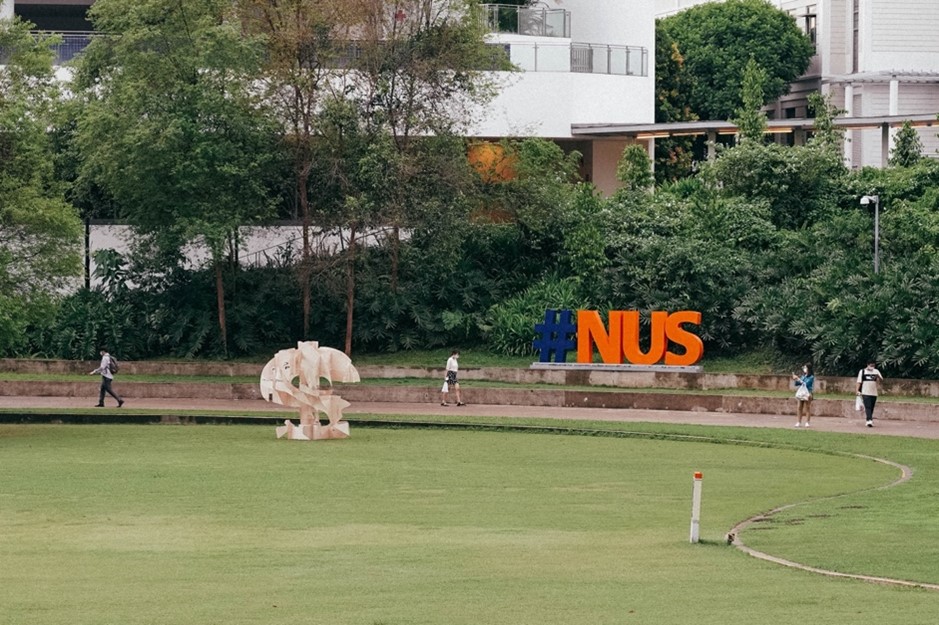
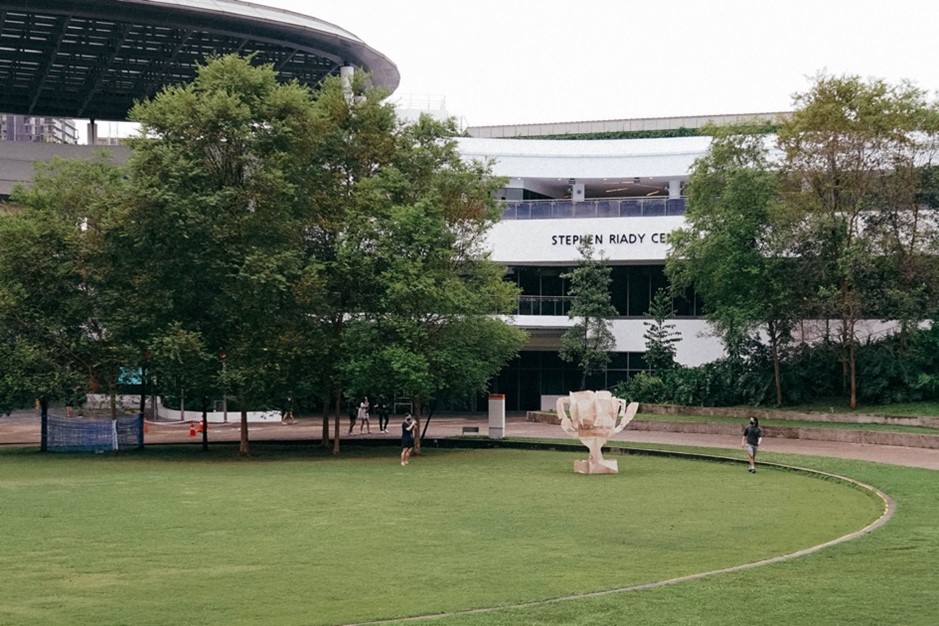
Two intervention projects from Tembusu College’s Singapore as ‘Model’ City? senior seminar were shortlisted for the third edition of URA-REDAS SPARK Challenge 2021, and one made it to the finalist stage! 

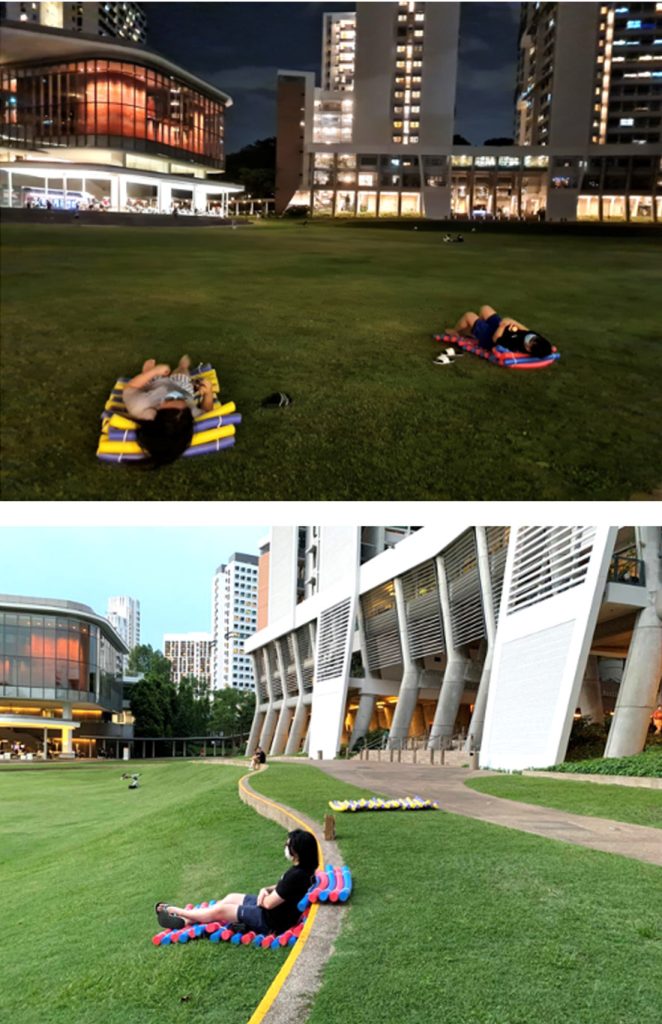
The URA-REDAS SPARK Challenge is a national competition aimed at revitalising public spaces through innovative solutions and smart design interventions. Andrew Lee and Chan Chee Meng proposed their project 💵❤️🏆 (Cash Love Clout), while Kay Yeo and Julianne Leow, in partnership with Fayola, submitted the work Oodles of Noodles.

From mid-March 2022, Andrew and Chee Meng’s prototypes will be exhibited at Paya Lebar Quarters and SingPost Centre. Please head down to these malls to experience their work, and don’t forget to vote for them.

Well done students, for demonstrating what you have learnt in the classroom can have relevance and impact in the larger society!

View Video of Cash Love Clout.

View The Straits Times coverage of Cash Love Clout.

Kay and Fayola’s proposal for Paya Lebar BID
Andrew and Chee Meng’s proposal for Paya Lebar BID

Cash Love Clout in UTown, NUS, and as seen from 3 different points of view
Students enjoying Oodles of Noodles at Town Green, NUS
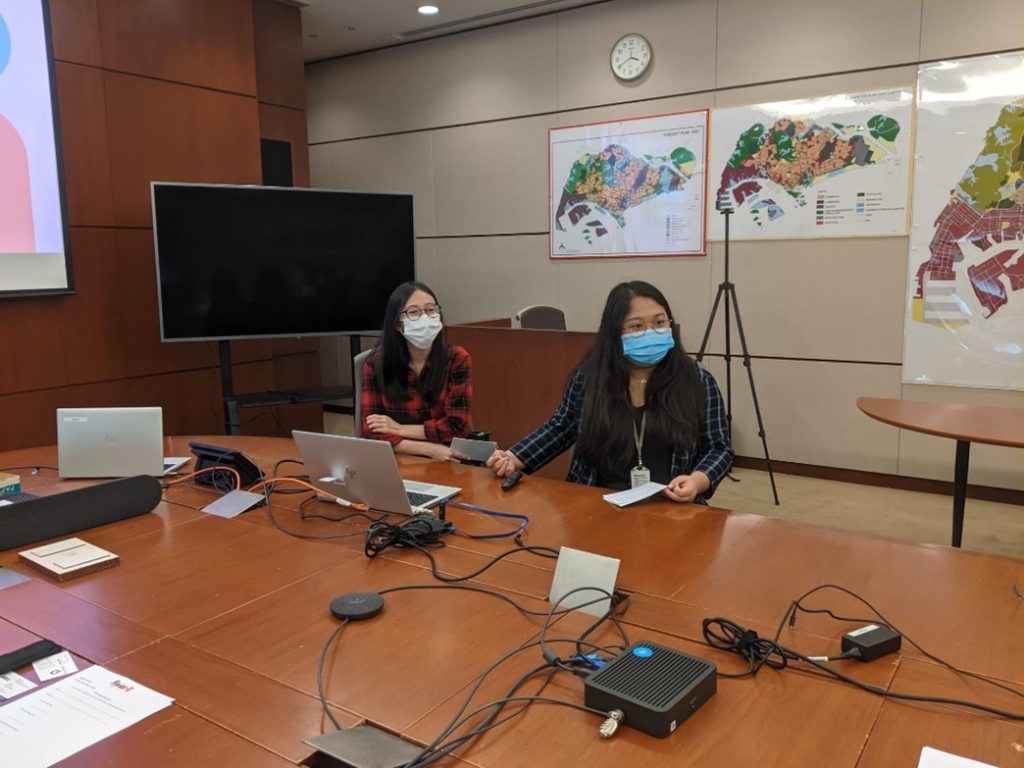
Kay and Fayola presenting their ideas during the shortlist stage
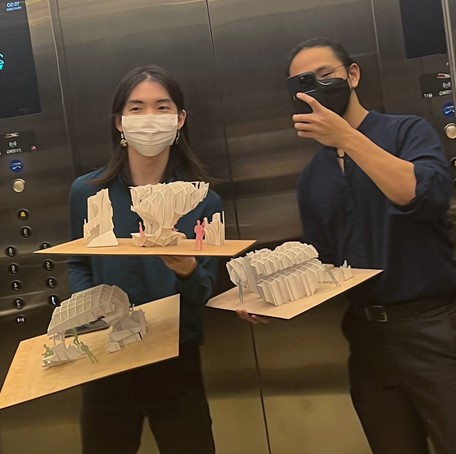
Chee Meng and Andrew posing with their models

See you at Tembusu College Open House 2022!

Interested to find out more about Tembusu College? Come join us at our Open House 2022!


2022 Open House In-Person Tours

Curious to know what Tembusu College looks like? Sign up for a guided tour around the College, hosted by our very own Tembusu students. You will be able to view and learn more about the residential facilities, learning opportunities and vibrant student life activities we have in the College! We look forward to seeing you on 5 March!

  • Date: 5 March 2022
  • Registration link: Eventbrite
  • Pre-registration for the guided tour will close on 4 March 2022, 12noon.
  • What to take note of:
    • Only visitors who are (i) fully vaccinated, (ii) medically ineligible for vaccinations, or (iii) have recovered from COVID-19 in the last 180 days are allowed on the tour. You will be asked to show proof of vaccination via Trace Together, or other official documentation for (ii) or (iii), during registration. You may be denied entry otherwise.
    • Due to COVID-19 restrictions, we are only able to allow entry to visitors who have registered for the specific time slot (one ticket per visitor).
    • NUS provides free shuttle buses into University Town on 5th March 2022. The buses will run at regular intervals. However, please factor in the time required to get to Tembusu College, should there be a huge demand for the bus services. For more information, please visit the official NUS Open House website. You may also wish to visit https://tembusu.nus.edu.sg/contact for more information about getting to Tembusu College by public transport.

Unable to make it for our in-person tours? No worries! You can view our Virtual Tour videos (Residential Life & Academic Programme and Student Life) and Official Instagram Page to find out more about what we do at Tembusu College!

2022 Instagram activities

  • Commonly Asked Questions

Check out our Official Instagram Page to find out the answers to some Commonly Asked Questions we often receive. This series will be launched in the week of 21st February 2022.

  • Instagram Ask-Me-Anything

Have a question that is not yet answered? We will be collating your questions via an Instagram Ask-Me-Anything segment in the week of 8th March 2022 and we will be answering them via Instagram Stories in the following weeks!

2022 Launch of Interactive Map

Interested to navigate through the spaces where residential and student activities take place in Tembusu College? We have just launched our new Interactive Map online!

Click on this link to take a look at our Map!