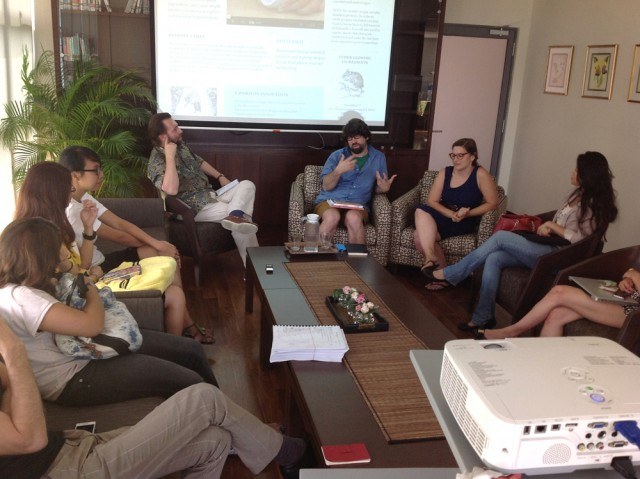
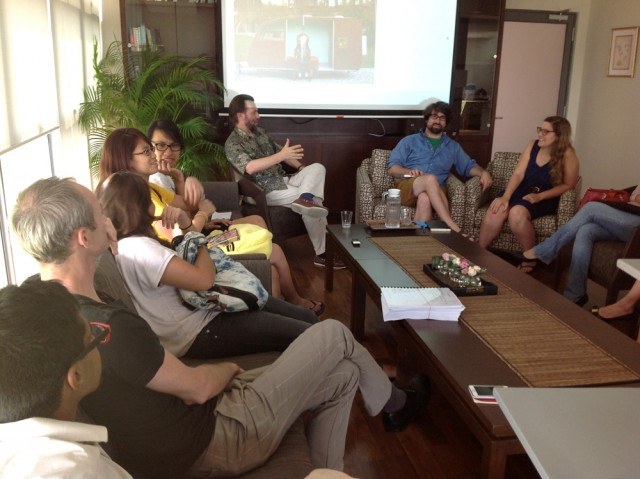
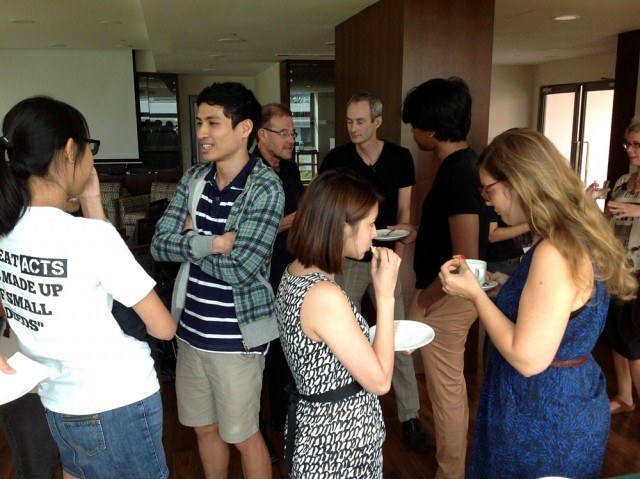
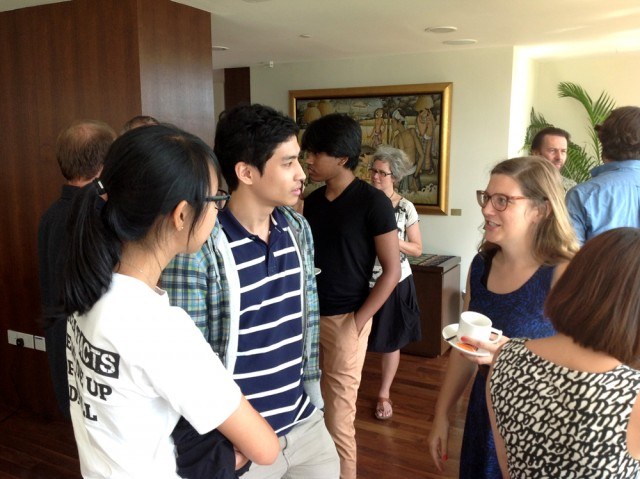
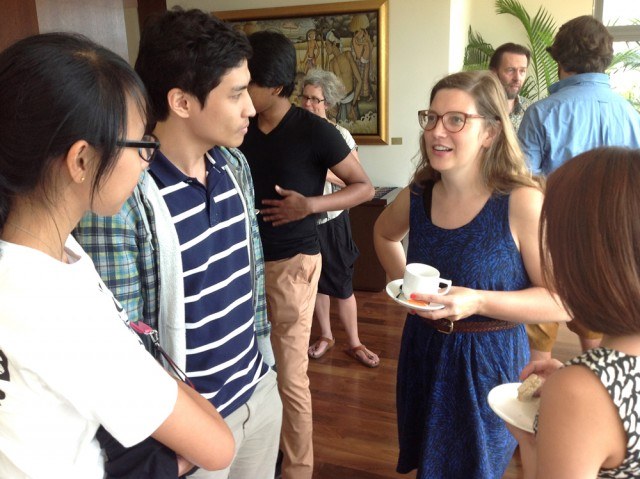
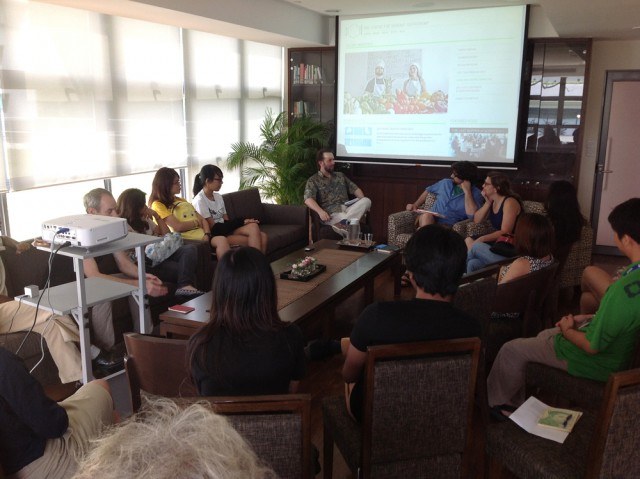
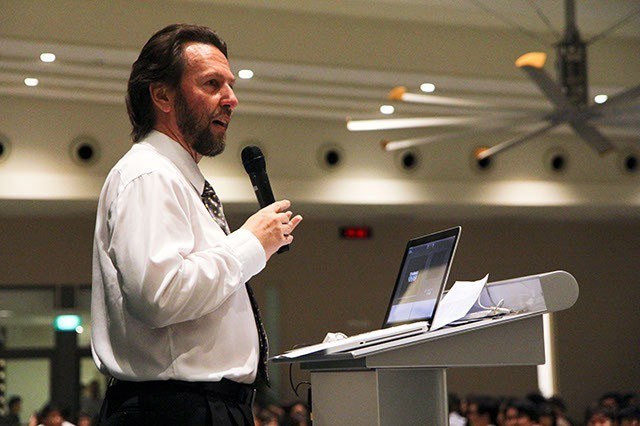
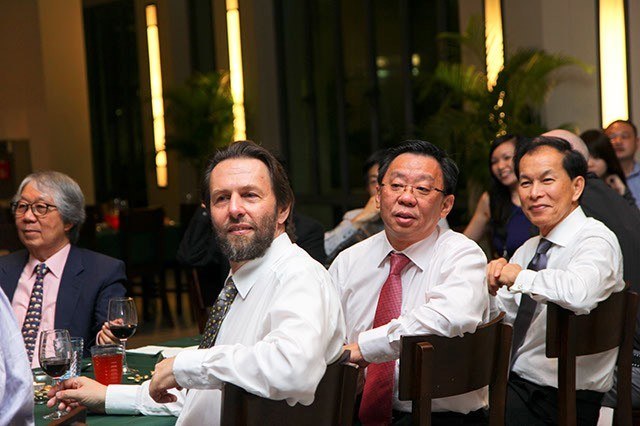
Fellow’s Tea with Mr. Marco Mazzi

Click to enlarge

20th November 2012, Tuesday, 3pm

Master’s Common Lounge
Only 30 Seats available

Please register below:

Bio:

Marco Mazzi (Florence, Italy, 1980) is an Italian essayist, art theorist and photographer living and working in Tokyo. He worked as an editor in the publication of books of contemporary Japanese poetry, such as The Other Voice, the first Italian translation of Yoshimasu Gozo’s poetry. Mazzi studied Contemporary literature at the University of Florence and visited Japan, where he studied Japanese avant-garde art and visual poetry.

He held exhibitions at the 798 Art District in Beijing (China), the Komaba Art Museum of Tokyo and the Torino ArtissimaArt Fair(Italy). In January 2008 The Watari Museum of Contemporary Art of Tokyo held the first solo exhibition of the artist in Japan. In October 2009 the Museo Laboratorio di Arte Contemporanea (MLAC, Rome) held Mazzi’s exhibition Seeing and Knowing, the Naturalization of Vision, curated by the Italian writer and art critic Lorenzo Carlucci. In March 2010 he took part to the exhibition Il medium disperso(MLAC, Rome) together with Keren Cytter and Clemens Von Wedemeyer. In 2008 Mazzi founded the non-profit organization Relational Cinema Associationwithin the University of Waseda in Tokyo.

The project involves screening of films and videos by the following artists: Francesca Banchelli, Eric Baudelaire, Johanna Billing, Josef Dabernig, Gianluca and Massimiliano De Serio, Harun Farocki, Marine Hugonnier, Mark Lewis, Amie Siegel, Apichatpong Weerasethakul. In 2010 Mazzi shoot a documentary film Kiju Yoshida and a Vision of Fear, in collaboration with Kiju Yoshida, the well-known Japanese film director.

10 Years Of Driving Sustainability – A Business Model For The Future

10th Annual Roundtable Meeting

on Sustainable Palm Oil

10 Years Of Driving Sustainability –

A Business Model For The Future

31 October 2012, Resorts World Sentosa, Singapore

Keynote Address by

Prof Tommy Koh

Ambassador-At-Large, Ministry of Foreign Affairs

Salutation

1 DPM Tharman Shanmugaratnam; Dr Jan Kees Vis, the President of RSPO; Mr Darrel Webber, the Secretary General of RSPO; members of the Roundtable; Ladies and Gentlemen.

Thank Yous

2 I wish to thank RSPO for inviting me to join you in celebrating the 10th anniversary of RSPO this morning. After receiving the invitation, I consulted Elaine Tan of WWF and Shawn Lum of The Nature Society (Singapore) on whether I should accept the invitation. They urged me to do so. Elaine told me the story of how it all began in 2001. Shawn said it was an opportunity to engage with an important constituency on sustainable development

Bertie Talalla

3 Talking about palm oil brings back happy memories of my six years as the Ambassador of Singapore to the US and my friendship with the Malaysian Ambassador, Mr Bertie Talalla. ASEAN had only six Ambassadors in Washington, between 1984 and 1990. The six of us were good friends and used to travel together to various cities and states, to project ASEAN, to network and to explain our interests and concerns to the American people. In those roadshows, I would talk about the importance of free trade. Bertie Talalla would talk about the merit of palm oil and seek to rebut the anti-palm oil propaganda, which was then very strong in the US. I remember that, on a few occasions, Bertie told me that he was tired of talking about palm oil and requested that we switch places. I acceded to his request and I would talk about palm oil and he would talk about trade. I think the Malaysian palm oil industry owes me, at least, a good lunch for having acted as their unofficial spokesman in the US!

Negative Image of the Palm Oil Industry

4 When I told my wife that I had agreed to speak to the palm oil industry, she was puzzled. She observed that, almost every year, Singapore suffers from haze, emanating from forest fires in Indonesia. She asked if some of the fires were not started by palm oil plantations. I told her that it was true that some of the bad guys in the industry were still using fire to clear land for palm oil plantations. However, I assured her that the members of the Roundtable were the good guys who did not do so. The point of this story is to remind you that the reputation of the industry is being tarnished by the bad behaviour of a minority and that, as a result, palm oil suffers from a bad image in the minds of Singaporeans. Since satellite photography enables us to pinpoint the locations of the fires and the names of the plantations responsible for setting them, I would urge the NGOs of Indonesia, Malaysia and Singapoe to name and shame them.

The Many Uses of Palm Oil

5 I also suspect that most Singaporeans have no idea of the many uses of palm oil and of its importance to the world economy and to Malaysia and Indonesia. I learned that palm oil is the second most traded vegetable oil after soy. I learned that almost 90 per cent of the world’s palm oil exports are produced in Malaysia and Indonesia. I was surprised at how ubiquitous palm oil is. It is used as edible oil for cooking, baking and in animal feed. Its non-edible uses include soap, detergent, oleo chemical products, gum candles, cosmetics, fuels, etc. In view of the above, the certain prospect is that the industry will continue to grow in the coming years, especially in Asian markets, such as China, India and Indonesia. RSPO’s vision to transform the markets to make sustainable palm oil the norm is, therefore, a very important one.

What Has RSPO Achieved?

6 The story of how RSPO began is a teachable one. In 2001, WWF approached the Malaysian Palm Oil Association, Golden Hope Plantations and a number of companies in the UK, Switzerland and Netherlands to explore the possibility of starting a Roundtable on Sustainable Palm Oil. The responses were positive. The first roundtable took place in Kuala Lumpur in August 2003. In 2004, RSPO had 47 members. By now, the membership has increased to 1,000. The membership comprises stakeholders from the seven sectors of the industry, namely, producers, processors, traders, consumer goods manufacturers, retailers, banks and investors, and NGOs.

7 I would summarise RSPO’s achievements to date as the following:

(a) the adoption of eight principles and criteria for sustainable palm oil production (2005);

(b) the adoption of the members’ code of conduct (2006);

(c) the adoption of the RSPO certification system (2007);

(d) the adoption of the RSPO supply chain certification system (2008);

(e) launch of RSPO trade mark (2011); and

(f) creating a forum which is progressively transforming the whole industry globally.

Challenges for the Future

8 The first decade has been a period of very significant and substantial progress. On 25August 2011, the industry reached a turning point by hitting the first one million hectares of certified production area. The latest number is 1.5 million hectares. The global production of CSPO has reached almost 7.7 million tonnes. While we celebrate these milestones, we should remind ourselves that 7.7 million tonnes represent only 14 per cent of global palm oil production. In other words, 86 per cent of global production is uncertified. I hope that when we meet again in 10 years time, the whole or nearly whole of the global production would have come under RSPO’s certification. It will take a gigantic effort to raise the bar but, with determination, I am confident that it can be done. I also hope that in the coming years, the RSPO will take on the agenda of conserving biodiversity.

Singapore and the RSPO

9 Although there are no palm oil plantations in Singapore, Singapore has a stake in RSPO. Some of the palm oil companies are listed here. Some of the owners live here. Singapore is a major centre of oil trading, including the trading of vegetable oils. Singapore will benefit if all palm oil plantations in Indonesia, Malaysia and elsewhere, meet the RSPO standard.

10 I recall that RSPO’s membership is drawn from seven sectors. One of those sectors is banks and investors. I have noticed with disappointment that none of Singapore’s banks is a member of RSPO. I must, of course, acknowledge that several foreign banks, which are members of RSPO, have offices in Singapore. I would respectfully request them to consider doing so. I hope the DPM, who is concurrently our Finance Minister, will endorse my sentiment.

Conclusion

11 I shall conclude. The theme of this roundtable is whether RSPO is a business model for achieving sustainability in the next 10 years as well as it has done in the first decade. My short answer to the question is yes. Let me give you three reasons for my answer. First, the roundtable unites the industry and the environmental movement. This is much more productive than confrontation and mutual recrimination. Second, the roundtable includes the stakeholders from all sectors of the industry, both upstream and downstream. Third, the roundtable seeks to promote sustainability in a pragmatic, step by step approach, beginning with a set of principles and criteria, progressing to a code of conduct and on to a system of certification, and finally the issuance of a trade mark. The RSPO is, therefore, a viable business model for the future.

12 Thank you.

Are Singaporeans A Kind or Unkind People?

“JOURNEYING TOGETHER FOR KINDNESS”

A NATIONAL CONFERENCE ON KINDNESS

SATURDAY, 20 OCTOBER 2012

MARINA MANDARIN HOTEL


Keynote Speech: Are Singaporeans A Kind or Unkind People?

by

Prof Tommy Koh

Rector, Tembusu College, and

Special Adviser, Institute of Policy Studies


Salutation

1                  Minister Lawrence Wong; Mr Koh Poh Tiong, Chairman of the Singapore Kindness Movement; Dr William Wan, General Secretary of the Singapore Kindness Movement; Ms Braema Mathi, President of MARUAH; Madam Moliah Hashim, Chief Executive Officer of Yayasan Mendaki; High Commissioner Syed Hasan Javed of Pakistan, Ladies and Gentlemen.


Kind Singaporeans or Unkind Singaporeans?


2                  I have decided to review the evidence in order to answer the question:  Are Singaporeans a kind or unkind people?  I begin by acknowledging that there is evidence to support both sides of the proposition.  Let us examine some of the evidence supporting the view that Singaporeans are not a kind people.


Facts Supporting View that Singaporeans are Unkind


3                  First, there are many instances in which foreign workers have been subjected to unkind treatment by their employers.  Some foreign workers are housed in unsanitary and inhumane circumstances.  Some employers do not pay their workers promptly or at all or make all kinds of unreasonable deductions from their wages.  The worst case was probably the employer who left his injured foreign worker to die on the road side.


Treatment of Foreign Maids


4                  Second, I have often read in our newspapers about the unkind treatment of our foreign domestic workers or maids.  Some maids have been sexually abused by their male employers.  Other maids have been physically or psychologically abused by both their male and female employers and members of their families.  Some common complaints by maids include not being given enough time to rest, food to eat and a decent place to sleep in.  I was disappointed that some employers opposed the government’s belated decision to grant all maids a weekly day of rest.  I also think that more can be done to prevent maids from falling to their deaths by being required to clean the windows of their employers’ apartments in an unsafe manner.


Abandoning Elderly Parents


5                  Third, I am distressed by one growing trend in Singapore, which is, the abandonment of elderly parents by their children.  My wife works as a volunteer in a hospital run by a group of churches.  She has come across elderly women, either living alone or in institutions, who have complained to her that their children never visited them.  I wonder if our cherished virtue of filial piety is beginning to wither.


Treatment of Disabled


6                  Fourth, I think we could be kinder in the treatment of our disabled.  Let me start with the education of our disabled children.  I see no good reason for exempting disabled children from the law on compulsory education.  The quality of education available to disabled children varies a great deal depending upon the capacity of the voluntary welfare organisation providing the service.  For example, the Pathlight School for children with autism is world class.  In contrast, the School for the Blind is stuck in the third world.  Employment opportunities for the disabled is another problem area.  When I was the Ambassador to the US and based in Washington DC, I took a special interest in our hearing impaired students studying at the world famous Gallaudet University.  I encouraged the Singapore students to return to Singapore upon graduation.  Of the group that came back, only one got a job to teach at the School for the Deaf.  The rest returned to America, where employers were willing to employ them in the occupations they had studied for.  Mobility is another big problem.  My blind friend, Cassandra Chiu, and her guide dog, Esme, have encountered no end of problems in seeking to gain access to office buildings, shopping malls, trains, buses, restaurants, in spite of the fact that such access had been approved by MCYS, MUIS, SMRT, SBS, etc.  In Korea, it is a crime for anyone to deny a blind person, accompanied by a guide dog, access to any public place.


Cruelty Towards Animals


7                  Fifth, I think one test of the kindness of a people is how they treat their animals.  As an animal lover, I am appalled by the reports I have read of cruelty towards animals.  I cannot understand why there are some sadists among us who apparently enjoy torturing and killing animals.  I am glad that our society, the police and our courts have taken a strong position against such offenders.  Cruelty of any kind, against any sentient being, should have no place in Singapore.


Facts Supporting View that Singaporeans are Kind


8                  Let me now turn to examine the facts which support the view that Singaporeans are a kind people.


Treatment of Foreign Workers


9                  First, for every unkind employer of foreign workers, there are probably several who treat their workers kindly.  Some employers house their workers in very good dormitories, provide them with healthy food and social amenities.  In addition, there are NGOs, such as TWC2 and HOME, which champion the rights of foreign workers.  I have also come across doctors, lawyers and other professionals who volunteer their precious time to look after the welfare of these workers.  There is a restaurant in Little India which provides foreign workers with free food.


Treatment of Maids


10              Second, the same is probably true for maids.  For every unkind employer, there are probably several kind employers who treat their maids with kindness and respect.  I have seen families who treat their maids as members of their families.  I have also come across employers who have shown extraordinary kindness towards their maids, for example, by paying for their medical treatment or helping them with their children’s education or giving them time off to further their education.


Response to Humanitarian Disasters


11              Third, Singaporeans always respond, with generosity, to humanitarian disasters abroad, especially those in nearby Asia.  I remember the massive response by Singaporeans to the Indian Ocean tsunami in 2004, to the Cyclone Nargis in Myanmar, to the Szechuan earthquake and to the Tohoku tsunami in Japan.  If Singaporeans do not have kind hearts, I do not think they would have responded so generously.


Philanthropy


12              Fourth, the National Volunteer and Philanthropy Centre (NVPC) has reported that, between 2004 and 2010, donations by individuals to all charities rose by 16 per cent a year.  For the past 10 years, 2001 to 2011, donations to charities, which can provide tax deductions for donations, rose by 9 per cent each year.  In 2010, Singaporeans contributed a total of $1,070 million to philanthropy.  Contributions to the President’s Challenge, Community Chest and the Straits Times Pocket Money Fund have increased every year.  Philanthropy has taken root in Singapore and, like America, is becoming part of the culture of Singaporeans.  In 2010, 85 per cent of Singaporeans donated money to charity.  In addition, Singapore is emerging as an important philanthropic hub of Asia.  Under the leadership of NVPC, Singapore is also becoming a thought leader in philanthropy.


Volunteerism


13              Fifth, the good news is that Singapore is also becoming a nation of volunteers.  The percentage of Singaporeans who volunteer has gone up from 15 per cent in 2004 to 23 per cent in 2010.  The fact that some of our schools require their students to perform a certain number of hours of community service has helped to propel the trend.  At my College, Tembusu College at NUS, we have some students who have adopted an orphanage in West Timor as well as many students who collect food to deliver them to needy families.  I am very impressed by the spirit of our young people.  Many of them are helping the poor, the disadvantaged, the marginalised, in different countries in Asia and elsewhere.


Kindness to Strangers


14              Sixth, I am frequently cheered by the letters in the forum page of The Straits Times.  The letter writers are both Singaporeans and foreign visitors.  All of them expressed their gratitude to Singaporeans, often unnamed, who have gone out of the way to show kindness to strangers.  My foreign friends have told me that they are very impressed by the kindness of Singaporeans.


Conclusion


15              Let me conclude.  I believe that, on the whole, Singaporeans are a kind people.  In a poll conducted by SPH, in November 2011, on what virtues the Singaporeans considered important to them, kindness came in second, after honesty.  There is a minority of unkind people here as there are everywhere.  There are, however, areas in which we can do better.  We can be kinder in the treatment of the elderly and the disabled.  I appeal to our young train riders to be kinder to the elderly, disabled and pregnant commuters.  We should also aspire to be kinder to all who share the spaces that we work, live and play in, regardless of age, gender and ethnicity.  We should be kind to fellow workers, irrespective of rank and hierarchy.  Bosses should be kinder to their staff in respect of work-life balance and profit̢sharing.  Neighbours should be tolerant and kind to one another.  Our drivers should try to be more kind and courteous to fellow drivers, motor-cyclists, cyclists and pedestrians.  We could be kinder to our cyclists and consider following the good example of New York by designating special lanes for them.  We should stand up against the minority of selfish people who oppose dormitories for foreign workers, hospices, facilities for the elderly, in their neighbourhood.  Let the voices of the majority of Singaporeans, who are kind, rise above those of the unkind minority.


.  .  .  .  .

[as at 20 Oct 12]

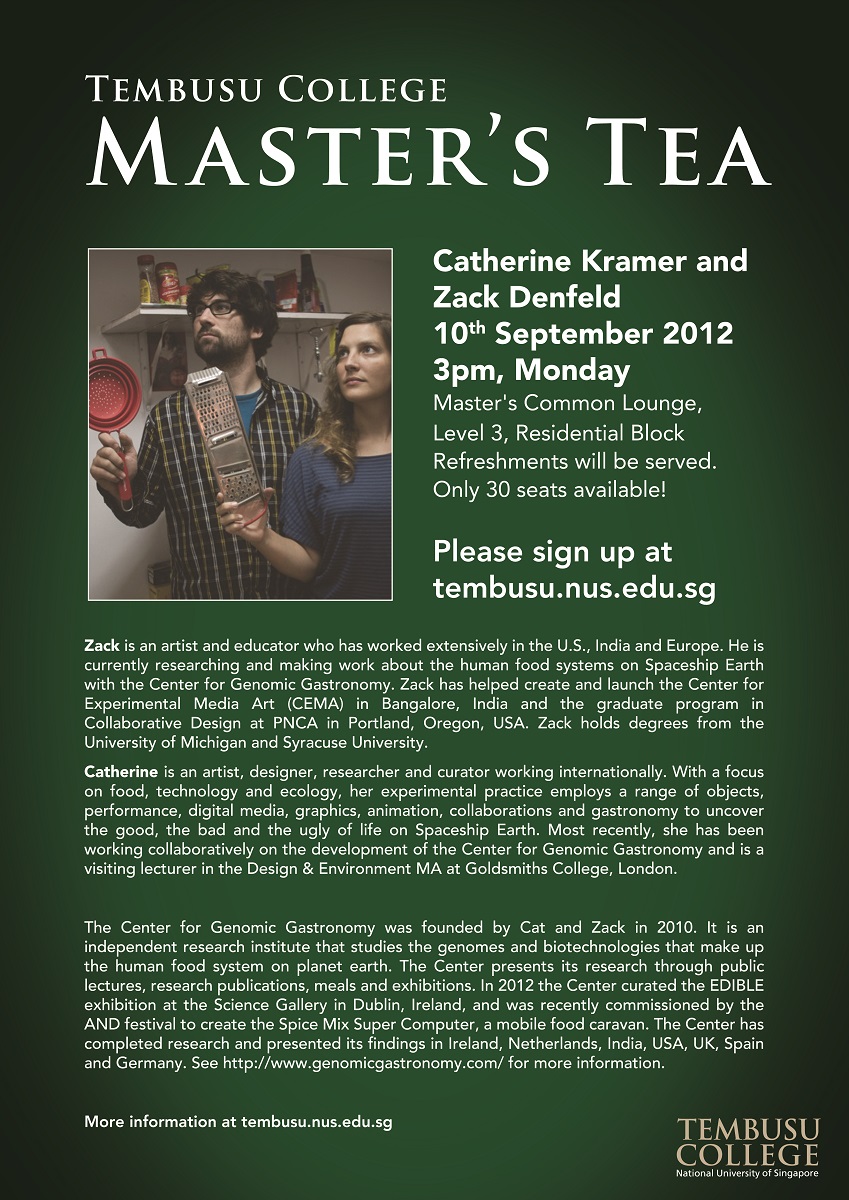
Master’s Tea with Mr. Zack Denfeld and Ms. Catherine Kramer

Click to enlarge

Tembusu College Master’s Tea

Catherine Kramer and Zack Denfeld

10th September 2012

3pm, Monday

Master’s Common Lounge,

Level 3, Residential Block

Refreshments will be served.

Only 30 seats available!

Please sign up at dev-tembusu-nus.pantheonsite.io

Zack is an artist and educator who has worked extensively in the U.S., India and Europe. He is currently researching and making work about the human food systems on Spaceship Earth with the Center for Genomic Gastronomy. Zack has helped create and launch the Center for Experimental Media Art (CEMA) in Bangalore, India and the graduate program in Collaborative Design at PNCA in Portland, Oregon, USA. Zack holds degrees from the University of Michigan and Syracuse University.

Catherine Kramer
Catherine is an artist, designer, researcher and curator working internationally. With a focus on food, technology and ecology, her experimental practice employs a range of objects, performance, digital media, graphics, animation, collaborations and gastronomy to uncover the good, the bad and the ugly of life on Spaceship Earth. Most recently, she has been working collaboratively on the development of the Center for Genomic Gastronomy and is a visiting lecturer in the Design & Environment MA at Goldsmiths College, London.

The Center for Genomic Gastronomy was founded by Cat and Zack in 2010. It is an independent research institute that studies the genomes and biotechnologies that make up the human food system on planet earth. The Center presents its research through public lectures, research publications, meals and exhibitions. In 2012 the Center curated the EDIBLE exhibition at the Science Gallery in Dublin, Ireland, and was recently commissioned by the AND festival to create the Spice Mix Super Computer, a mobile food caravan. The Center has completed research and presented its findings in Ireland, Netherlands, India, USA, UK, Spain and Germany. See http://www.genomicgastronomy.com/ for more information.

More information at dev-tembusu-nus.pantheonsite.io

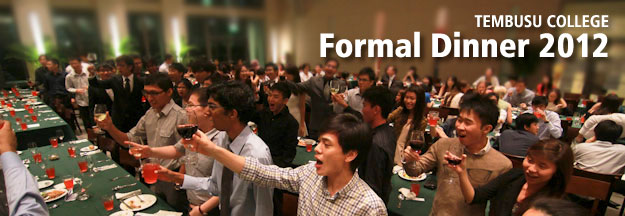
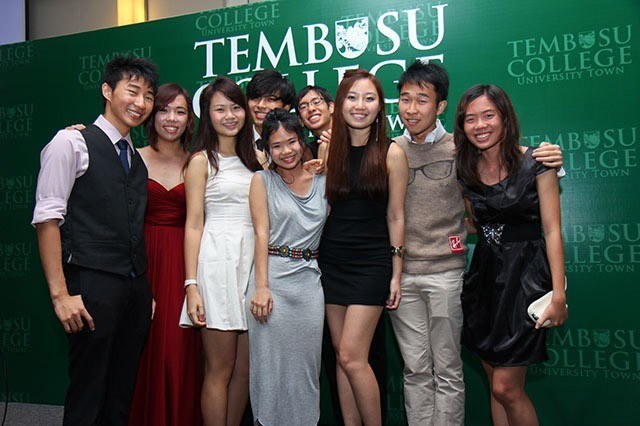
Tembusu Formal Dinner 2012

Click to enlarge

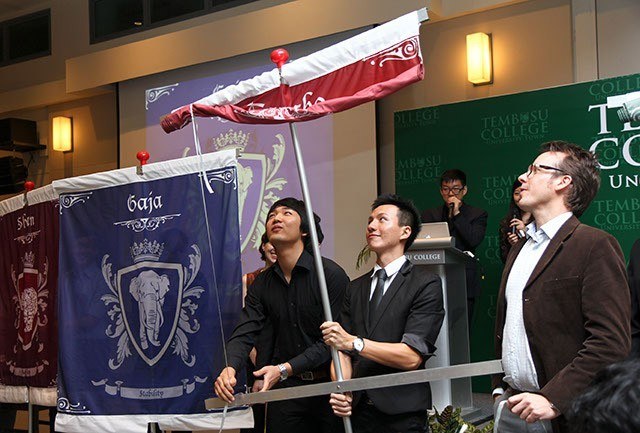
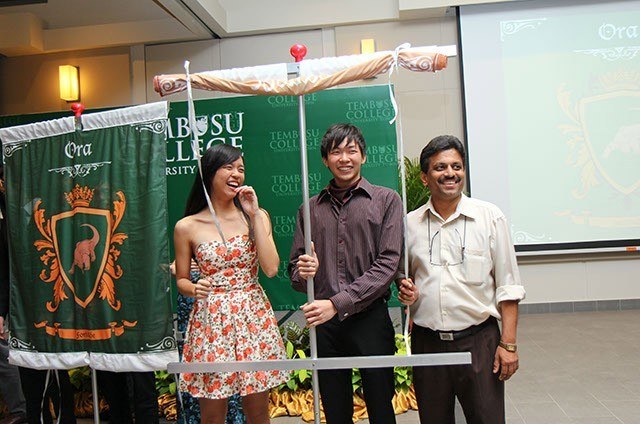
A night to remember what we have accomplished for the last one year, to thank students for their hard work in making all these happen, and to say goodbye to our first batch of alumni.

Japan’s Prospects and Challenges: A View from Southeast Asia

SPEECH AT THE INTERNATIONAL HOUSE OF JAPAN

ON THE OCCASION OF ITS 60TH ANNIVERSARY CELEBRATIONS

3 OCTOBER 2012, TOKYO, JAPAN

Japan’s Prospects and Challenges: A View from Southeast Asia

by

Prof Tommy Koh[*]

Ambassador-At-Large, Ministry of Foreign Affairs, Singapore

Co-Chairman, Japan-Singapore Symposium

1 Most of my friends, both Asians and Westerners, have a pessimistic view about Japan’s future. They think that Japan is in terminal decline. They point to the facts that Japan has a shrinking population, a stagnant economy, an insular mindset, a huge public debt, an unstable political system and weak leaders. As a contrarian, I do not subscribe to this conventional wisdom. I believe that Japan can overcome its challenges. I believe that Japan has many strengths which are under‑estimated. I believe that Japan can still have a bright future. The following are the reasons for my optimism.

My Faith in the People of Japan

2 First, I believe in the people of Japan. I believe that they will overcome the many challenges which beset their country. The strengths and virtues of the Japanese people were on display when the Northeast of Japan (Tohoku) was struck by a devasting earthquake and tsunami on 11 March 2011. There were no panic and lawlessness. There were no scenes of looting. Instead, the people reacted with calm, courage, discipline, unity and civic‑mindedness. The world had never seen a people behave in such an exemplary manner in the face of such a great tragedy. The recovery from the triple disasters has taken place smoothly and rapidly. This has given the Japanese people a new spirit of self-confidence which had been missing for a long time.

The Quality of the Japanese Workforce

3 Second, I believe in the high quality of the Japanese workforce. I was a member of Toyota’s International Advisory Board for five years (1996-2001). I was, therefore, able to observe the workers of Toyota. What I saw was a workforce which was one of the best educated, trained and diligent in the world. This is one of the core strengths of the Japanese economy. The competitiveness of an economy depends, in part, on the quality of its human resource. Japan should, however, raise its labour productivity. According to the 2011 report of the Japan Productivity Center, Japan’s labour productivity ranked no. 20 among the 34 OECD countries. The low labour productivity is due largely to the retail sector and over-staffed corporate headquarters.

Work Ethic and Culture of Excellence

4 Third, I admire the Japanese work ethic and the pervasive culture of excellence. The people of Japan are extremely hard‑working. It must be the only country in the world in which people actually die of over-work! The work ethic is a core value of the Japanese people. So is the culture of excellence. Every Japanese worker, no matter what his or her job or occupation, seeks to achieve excellence. We see this in the attitudes of the sushi chef at his counter, the potter at his kiln, the interpreter in her booth, the worker on the factory floor, etc. I suspect that this culture of excellence has contributed to the high reputation of the Japanese brand and products.

Science, Technology, Innovation

5 Fourth, the competition among the advanced economies is increasingly driven by technology and innovation. Japan has a strong track record of innovation and new technology. Japan used to dominate the world in consumer electronics and white goods. In recent years, Japan seemed to be falling behind the United States and Korea, in such areas as electronics and mobile phone technology. Japan remains, however, a world leader in automotives, robotics, game technology, anime, photographic technology and green technology. Japan spends 3.8 per cent of its GDP on Research and Development (R&D), out-spending the US (2.7 per cent) and Germany (2.6 per cent). 21 per cent of all patents granted by the US in 2009 were to Japanese inventors. According to the World Intellectual Property Organization (WIPO), Japan’s share of patent applications globally has risen from 10 to 20 per cent in the past 10 years. Japan should do more to exploit its investments in R&D and its innovation by translating its new inventions into products and services for the world market.

Global Champions

6 Fifth, in the corporate world, Japan has produced some notable global champions. There are 68 Japanese companies in the Fortune Global 500. Many of these companies are world class. Other companies, such as, Rakuten and Uniqlo, are likely to join this club. These two companies are using English as one of their working languages. This will make them more competitive internationally. It is important for Japan to produce more global champions because such companies are profitable, attract talented employees, generate innovation and good jobs, as Heang Chhor, the former head of McKinsey in Japan, has argued in the book, Reimagining Japan (2011, at page 430).

Japan‘s Soft Power

7 Sixth, Japan has a very attractive soft power. The world admires Japan as a peaceful and beautiful country. It is immaculately clean and takes excellent care of its environment. It has a long and rich history and its heritage in the arts and crafts has been carefully preserved. Japanese design, fashion and architecture are much admired. Japan is viewed as both prosperous and egalitarian. There is a high level of social trust and harmony. The quality of life is high and various aspects of Japan’s popular culture, such as its cuisine, ikebana, judo, manga, anime, J-Pop, have been embraced by the world. The Japanese people are viewed as polite, cultured and considerate. They are also admired for their inner strength and never‑say-die attitude. This was best exemplified by the victorious Nadeshiko Japan, which, in spite of the relative small size of its players, defeated the bigger-sized US team in the final of the FIFA World Cup in 2011. The same team won the silver medal in the 2012 Olympic Games in London, losing to the US in the final. I wish also to praise the contributions which Japan has made, under UN auspices, to peace-keeping and nation-building, in Cambodia, Timor Leste, Aceh, and Mindanao. Japan has also played a positive role in the reconstruction of Sri Lanka, after the conclusion of the civil war. I would encourage Japan to do more in the pursuit of peace.

Japan’s Five Challenges

8 What are Japan’s biggest challenges? I will comment on the following challenges:

(a) Demography;

(b) Gender;

(c) Education;

(d) Business; and

(e) Leadership.

The Demographic Challenge

9 First, Japan’s demographic challenge. There are two aspects to this challenge: (i) Japan has the world’s fastest ageing population; and (ii) Japan’s population has been shrinking since 2005 because the Japanese are not reproducing themselves. Japan’s total fertility rate is 1.4. Singapore is afflicted with the same problems. In spite of many financial incentives and more generous maternity leave, the total fertility rate of Singapore hovers around 1.2. There is an ongoing national debate in Singapore on how to raise our fertility rate to the French and Nordic levels. We are re-examining our policies relating to maternity and paternity leaves, subsidised childcare for infants and young children, early or pre-kindergarten education, the role of the father in child-rearing, the work-life balance, etc. Without prejudging the outcome of this review, I must confess that I am not very optimistic about the prospect of raising our fertility to or near the replacement level of 2.1. I suspect the same is true of Japan.

Making up the Deficit

10 In order to make up the deficit, Singapore imports people through its immigration policy. As a result, our population has grown progressively from 2 million in 1970 to 4 million in 2000, to its current level of 5 million. The optimum size of the Singapore population has not been settled, but I suspect it will be around 6 million.

11 Singapore’s capacity to absorb immigrants is due, partly, to our history as an immigrant nation and, partly, to our diversity. Our population consists of citizens whose forefathers had migrated to Singapore from China, South Asia, Southeast Asia and West Asia. As a result, we have developed a culture of accepting diversity. Multiculturalism is in our DNA. There is very little zenophobia in Singapore. However, in recent years, especially during the boom years, Singapore had taken in too many foreigners. The influx was greater than our absorptive capacity, straining our infrastructure and amenities and causing great discomfort to Singaporeans. The Singapore Government has since recalibrated its policy. According to the opinion polls, 70 per cent of Singaporeans are in favour of immigration.

Can Japan accept Immigrants?

12 The question I wish to pose to my Japanese friends is whether Japan can liberalise its immigration policy in order to prevent its population from shrinking? Can the Japanese people, who are used to living in a homogenous society, accept foreigners? Is Japan willing to assimilate talented foreigners into the Japanese family? If the answers to these questions are no and if the fertility rate remains low, then we are faced with the scenario of a Japan with a shrinking population. This will have many implications for Japan and for the world. If the answers to my questions are yes, then we face an entirely different scenario, of a global Japan, energised by the infusion of new talent from the rest of Asia.

In Praise of Older Workers

13 The Japanese people enjoy the longest life span in the world of 83 years. By 2030, people over the age of 65 could account for one‑third of Japan’s population. This is going to be the trend in the developed world as people live longer, but it will happen in Japan first. Demographers and economists generally view this in a negative light as they assume that the older people will stop working and become dependants. Hence, they talk about the worsening dependency ratio of ageing societies.

14 I would like to urge Japan to become the world’s thought leader on ageing. Instead of viewing older people as a liability, we should view them as an asset. A few years ago, Mr Lee Kuan Yew, the first Prime Minister of Singapore, caused a consternation in Singapore when he proposed that the concept of mandatory retirement be abolished. He has often said that retirement equals death. I agree with his philosophy. We should encourage older people, who are fit and who wish to work, to continue to do so. I am very proud of the fact that my dentist and tailor are both 80 years old and my optician is 82 years old. We need a radical re-think about ageing. Can Japan be our thought leader?

The Gender Challenge

15 Second, I want to refer to Japan’s gender challenge. The Japanese society is viewed by us in Southeast Asia as a male‑dominated society. We note that 30 per cent of women drop out of the work force after marriage. Another 20 per cent drop out after the birth of the first child. As a result, women’s participation in the work force, at 50 per cent, is relatively low. We have also noticed the under-representation of women in policy-making and senior positions, both in the public and private sectors. Japan was ranked no. 94 out of 134 countries in the 2010 Gender Gap Index of the World Economic Forum. In the UN Human Development Index, Japan is ranked 8 in the world. However, in the Gender Empowerment Measurement, Japan is ranked 59. As a generalisation, I would say that there is greater gender equity in Southeast Asia than in Japan. Japan should seriously consider how to empower its women so that this talented and well‑educated human resource can make a bigger contribution to the country. I suspect that the solution lies both in improving the childcare infrastructure and in changing the mindset of the Japanese men towards women. The fact that women are treated as second class citizens was brought home to me by the way Japan treated its male and female football teams on their way to the Olympic Games. The medal-winning women’s team was flown to London in economy class whereas the men’s team, which has not won a medal of any colour, was in business class.

The Education Challenge

16 Third, I want to comment briefly on Japan’s education challenge. Japan has good schools and universities. Tokyo University is regularly ranked among the top 10 or top 20 in the world. What then is the problem? One problem which Japan shares with others in East Asia is that, because of their Confucian heritage, their education systems tend to emphasize rote-learning and respect for authority. Without undermining our strengths, we need to produce more independent and critical thinkers. Another problem is that Japan’s education system is not producing global citizens. Unlike the trend in Southeast Asia, the trend in Japan is that fewer students are going abroad to study. Is it too radical to suggest that Japanese universities should consider requiring their students to study one year abroad? There are very few universities in Japan which offer degrees, either at the under-graduate or post-graduate levels, in English. I am an academic adviser to the Ritsumeikan Asia-Pacific Univeristy, located in Beppu, Oita Prefecture. The university teaches in both Japanese and English and 50 per cent of the students are non-Japanese. Japan needs more such universities. Japan’s elite universities have the potential to re-make themselves into Asia’s leading centres of learning, in areas in which Japan has excelled. The question is whether Japan’s leaders have such a vision. Do the leaders of Japan envision a future in which Japan’s elite universities will compete with those of the United States for the best and brightest students of Asia?

The Business Challenge

17 Fourth, the challenges faced by Japanese business. Japanese business face challenges at home and abroad. Let me begin with the challenges they face at home. According to Dr Klaus Schwab, the Executive Director of the World Economic Forum, the three biggest obstacles encountered by business in Japan are: (i) policy and government instability; (ii) tax rates and regulations; and (iii) inefficient government bureaucracy. Dr Schwab wrote that, “The macroeconomic environment is challenging enough; the larger problem, though, is that Japanese politics is in disarray. There have been six Prime Ministers since 2006. This kind of churning makes such reforms difficult to implement.” (Reimagining Japan, pages 125‑126).

18 Japanese business also face many challenges abroad. According to Gordon Orr, Brian Salsberg and Naoyuki Iwatani of McKinsey, “Japan’s biggest companies have been losing relative market share over the past ten years: their proportion of the Fortune 500’s total revenues decreased to 13 per cent, from 35 per cent, between 1995 and 2005 …. [Japan’s] share of the world’s export value of electronic goods has fallen from 30 per cent in 1990 to less than 15 per cent today …. Many Japanese companies have no alternative to globalization if they hope to continue growing.” (Reimagining Japan, page 151).

19 It will be culturally very challenging for great Japanese companies to transform themselves into great multinational companies. The boards of most Japanese companies do not have any foreigners. The same is true of their senior management and their talent pools. Most Japanese executives are not proficient in English, the business language of the world. Although difficult, such a transition can be made. Companies such as Nissan, Komatsu, Takeda, Shiseido, Uniqlo and Rakuten, have successfully embarked on such a journey.

20 My question to the leaders of business in Japan is whether they are convinced that their companies have no alternative but to globalize. If they are convinced, do they have the will to bring about this transformation. As Shinzo Maeda, the Chairman of Shiseido, has written, “There is a Japanese saying that change starts at the top and cascade to lower levels. That is true for us. Once we made the commitment to embrace diversity at the top, everything else began to cascade in the right direction. Now we are pushing for diversity at every level”. (Reimagining Japan, page 162).

The Leadership Challenge

21 Fifth, perhaps the most difficult challenge facing Japan is the leadership challenge. For over three decades, the leadership of Japan was provided by a golden triangle, consisting of the political leaders of the Liberal Democratic Party (LDP), the leaders of the bureaucracy and the leaders of the business community. This governance structure has been broken. As a result of scandals and growing incompetence, the LDP has lost the confidence of the Japanese people. For the same reasons, the public has also lost its trust in the bureaucracy. The leaders of the bureaucracy used to provide the country with both ideas and stability. They can no longer play that role. There is no other institution which has filled the policy vacuum. Japan does not have great think-tanks like those in the United States which are constantly throwing up new ideas and policy proposals. There are also few public intellectuals in Japan of national stature who can provide the country with intellectual leadership.

22 Politically, things seem to be in a state of a flux. After the LDP lost power, Hosokawa, Hata and Murayama, from the left, provided Japan with an alternative leadership. They were, however, not successful and have since faded away. In the meantime, the Democratic Party of Japan (DPJ) has emerged as the new alternative to the LDP. The DPJ is suspicious of the bureaucracy and has unwisely chosen to govern without its support. In the short time that it has been in power, the DPJ has changed the leadership of the government from Hatoyama, to Kan, and to Noda, in quick succession. At a time when Japan needs strong and visionary leaders, neither party seems able to fulfil this need.

23 Professor Gerald Curtis at Columbia University, an expert of Japan, has written that: “The public’s disappointment with the DPJ is matched by a lack of enthusiasm for the LDP, or for any of the several small parties that have recently been created by defectors from the LDP. Japanese politics, like the economy itself, has fallen into a deep funk with no clear way out.” (Reimagining Japan, page 129).

24 A new generation of younger Japanese has entered politics. Many have been elected to the Diet in the 2009 elections. The question is whether these new leaders will rise to the challenge. Will they be able to envision a new future for Japan that will capture the people’s imagination and support? Will they have the wisdom to forge a new partnership with the bureaucracy, business and civil society? Will they re-energise existing political institutions or build new political institutions? Will all these happen soon so that Japan will stop drifting?

Conclusion

25 Let me conclude. Japan has played a very important role in the rise of Asia. Japanese investment, technology and Official Development Assistance (ODA) have enabled the countries and peoples of ASEAN/Southeast Asia, to make rapid progress in their social and economic development. The Fukuda Doctrine of 1977 continues to be a beacon guiding Japan and ASEAN in their engagement. The ASEAN-Japan partnership is strong, substantive and trouble-free. It is a partnership founded on shared interests, common objectives and a high level of mutual trust. ASEAN has a vested interest in a vibrant, prosperous and self-confident Japan. We wish Japan success in meeting its historic challenge of re-making an inward-looking Japan into a global Japan. History has shown us that Japan has the capacity to make such historic transformations. The Meiji Restoration and Japan’s post-war reconstruction are two such examples. A global Japan will be a boon to Japan, to Asia and the world.

[26 Sep 12, 3.00pm]


[*]Speaking in his personal capacity.

Who will lead Asia

The Straits Times

www.straitstimes.com

A REPLY TO HUGH WHITE

Who will lead Asia

Unlike the big powers, Asean is acceptable to all the stakeholders

By TOMMY KOH FOR THE STRAITS TIMES

Published on Sep 29, 2012


AUSTRALIAN academic Hugh White penned a thought-provoking essay in The Straits Times' By Invitation column last week: "Time for a small meeting of big powers" (ST, Sept 19, 2012).

His central thesis is that great changes are taking place in the Asia-Pacific region which will lead to a new order. He thinks this cannot be achieved through the various Asean-led institutions such as the East Asia Summit (EAS). He argues that what we need is a "concert of Asia" consisting of the United States, China, Japan and India.

Concert of Asia

TO WHITE, who is professor of strategic studies at the Australian National University and a visiting fellow at the Lowy Institute, we face a choice. He wrote: "Would we rather be in the room when the great powers fail to agree on how best to manage their relations, or out of the room when they succeed in agreeing?"

Concert of powers

WHITE is not the first Australian to propose that Asean's centrality in regional institutions be replaced by a small group of powerful countries. A few years ago, there was another Australian proposal to replace Asean with a "concert of powers" consisting of eight countries: the US, China, Japan, Russia, India, Indonesia, Australia and South Korea. The proposal was opposed by Asean and failed to gather support.

I am against White's proposal for the following reasons.

An antiquated idea

FIRST, the idea that the destiny of our region is to be decided by a directorate of one superpower and three major powers is an antiquated one which belongs to another time and another century.

In the bad old days, before the United Nations was founded, the big countries would meet to decide on the fate of other states. National boundaries were arbitrarily redrawn, territories were exchanged and some small countries simply disappeared from the map of the world.

We now live in a world where countries, big and small, demand a seat at the table and a say on their collective future. It is a world in which power has to be exercised in consonance with laws, conventions and principles. We live in an imperfect world, but it is not a lawless world.

Gang of Four and Perm Five

SECOND, White argues that when the four big powers meet exclusively among themselves, they will succeed in solving the problems of the region. He adduces no evidence to support his argument. We can, however, draw an analogy between White's gang of four and the five permanent members of the UN Security Council. The Council consists of the five victorious powers of 1945 – the US, China, Russia, France and Britain, which have permanent seats and the power of veto, and 10 non-permanent

http://www.straitstimes.com/st/print/506198 01/10/2012

members.

Do the Perm Five have a good track record of being able to deal with threats to international peace and security? The record is a mixed one. Very often, the five permanent members of the Security Council are unable to agree – for example, on Syria. I suspect that White's gang of four will be no more successful than the five permanent members of the Security Council.

Inclusiveness is a strength

THIRD, White argued that the inclusiveness of forums such as the EAS is a "fatal weakness". He wrote: "The inclusiveness of the EAS or other large-scale forums means there are too many people at the table for serious great-power negotiations to take place."

I would point out that great- power negotiations usually take place bilaterally. I would also point out that in our region, there is a deficit of trust between and among the major powers. The US and China, China and Japan, and China and India do not trust each other. Left to themselves, they are very unlikely to be able to agree on a shared vision and a road map for the region. The inclusion of Asean and other small and middle powers changes the atmospherics of the group. As a trusted facilitator, Asean is often able to forge a consensus and reconcile the competing interests of the various parties. This is a role which the major powers cannot play, individually or collectively.

Asean+3

FOURTH, there is a heightened state of tension between Japan and South Korea and between China and Japan. Fortunately, they belong to a group called Asean+3. Asean takes no sides in the disputes between those three countries. Asean is, however, a stakeholder. It is, therefore, able to urge them to exercise restraint and to remind them of the substantial interests which they share in common and the inseparable link between North-east Asia and South-east Asia.

Tension and conflict in North- east Asia will adversely affect South-east Asia and the rest of the region. Asean is, therefore, able to play a helpful role in regional affairs by building confidence, reducing misunderstanding and mutual suspicion, and nurturing a culture of cooperation. Asean is a force for peace in the region.

Weakness as strength

FIFTH, the central role which Asean plays in regional affairs attracts both envy and puzzlement. According to the textbooks and the Realist theory of international relations, the strong should lead the weak and not the other way around. By this logic, the region should be led by the gang of four and not Asean. What these critics do not understand is the special characteristics of our region.

Let us use the analogy of choosing someone to drive the regional bus. Japan may agree to let the US drive the bus, but China will never agree. Nor will China agree to let India drive the bus, and vice versa. The only driver which the US, China, Japan and India will agree upon is Asean.

George Yeo, Singapore's former foreign minister, was right when he said that Asean's weakness is paradoxically its strength. Asean is acceptable to all the stakeholders. Asean has a good track record of prudence, pragmatism and good judgment in driving the regional bus. However, for Asean to continue to be accepted by all the stakeholders, it must remain united and neutral. This is the most important challenge facing Asean's leaders when they meet at the EAS in Phnom Penh in November.

The writer is chairman, Centre for International Law, NUS, and Special Adviser, Institute of Policy Studies.

By Invitation features leading writers and thinkers from Singapore and the region.

Copyright © 2012 Singapore Press Holdings. All rights reserved. 

Singapore Writers Festival: Walking with AR Wallace

Walking with AR Wallace

03 November 2012
1130am – 1230pm

Featuring: John van Wyhe, Paul Sochaczewski
Venue: ilovebooks.com Pavilion, Campus Green, Singapore Management University (Capacity: 120)
Moderator: Stephen McCarty

Often over-shadowed by Charles Darwin, Alfred Russel Wallace played a crucial part in the theory of evolution. Follow his adventures across Southeast Asia and Singapore with historian-scientist John van Wyhe and journalist-writer Paul Sochaczewski as they tell us more about the intrepid explorer and naturalist.

Museum Rendezvous: Art and DIY Science

Art and DIY Science
Saturday, September 29th, 3pm
Free Admission (event only)

Museum Rendezvous is a public forum at ArtScience Museum designed to provide audiences with an opportunity to engage in dialog with practitioners working at the intersection of art and science. The series continues this month with “Art and DIY Science”.

Venue
ArtScience Museum at Marina Bay Sands
Expression Gallery (Level 4)
Marina Bay Sands Pte Ltd
10 Bayfront Ave, Singapore 018956