Tag: 2018
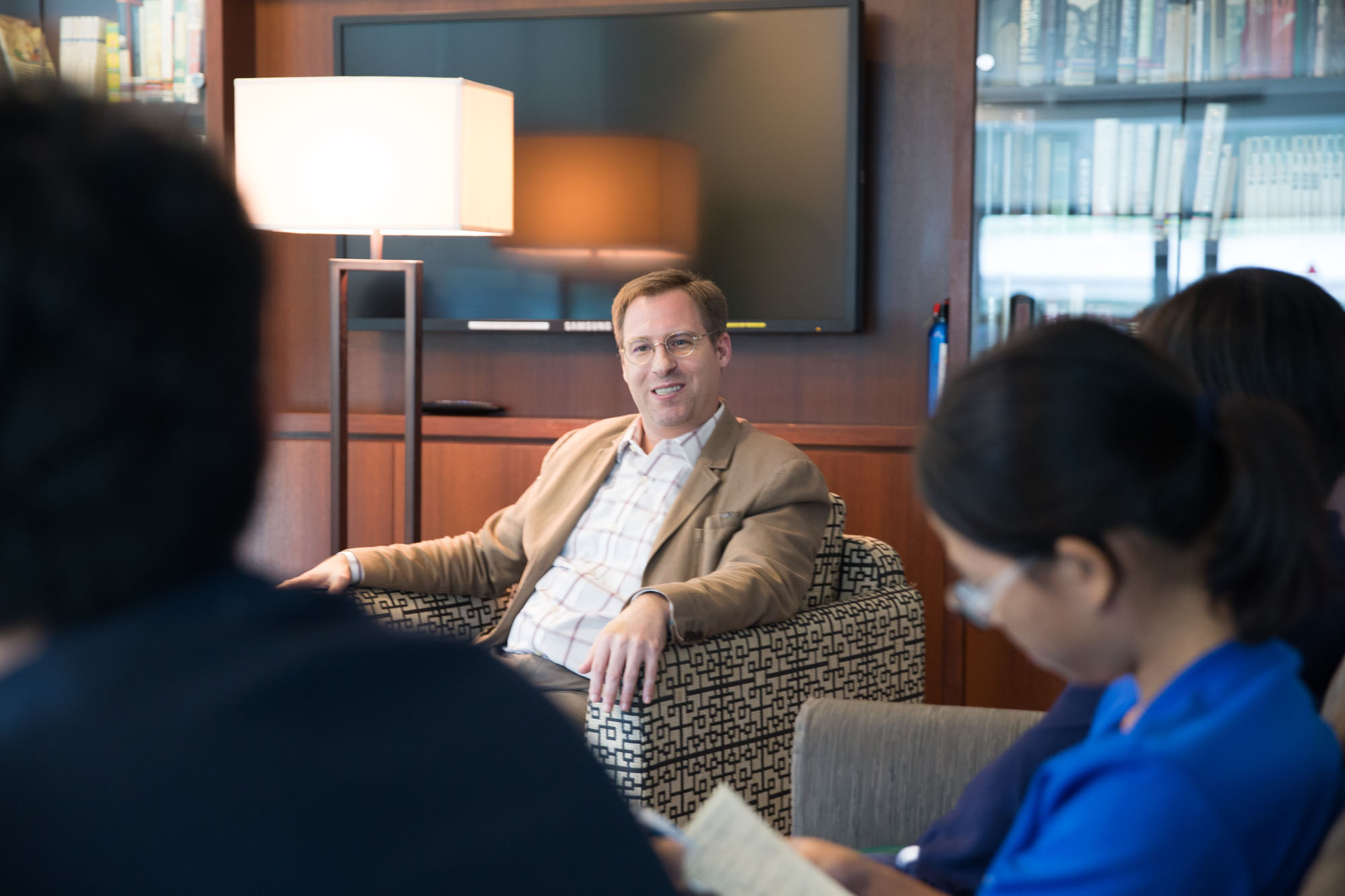
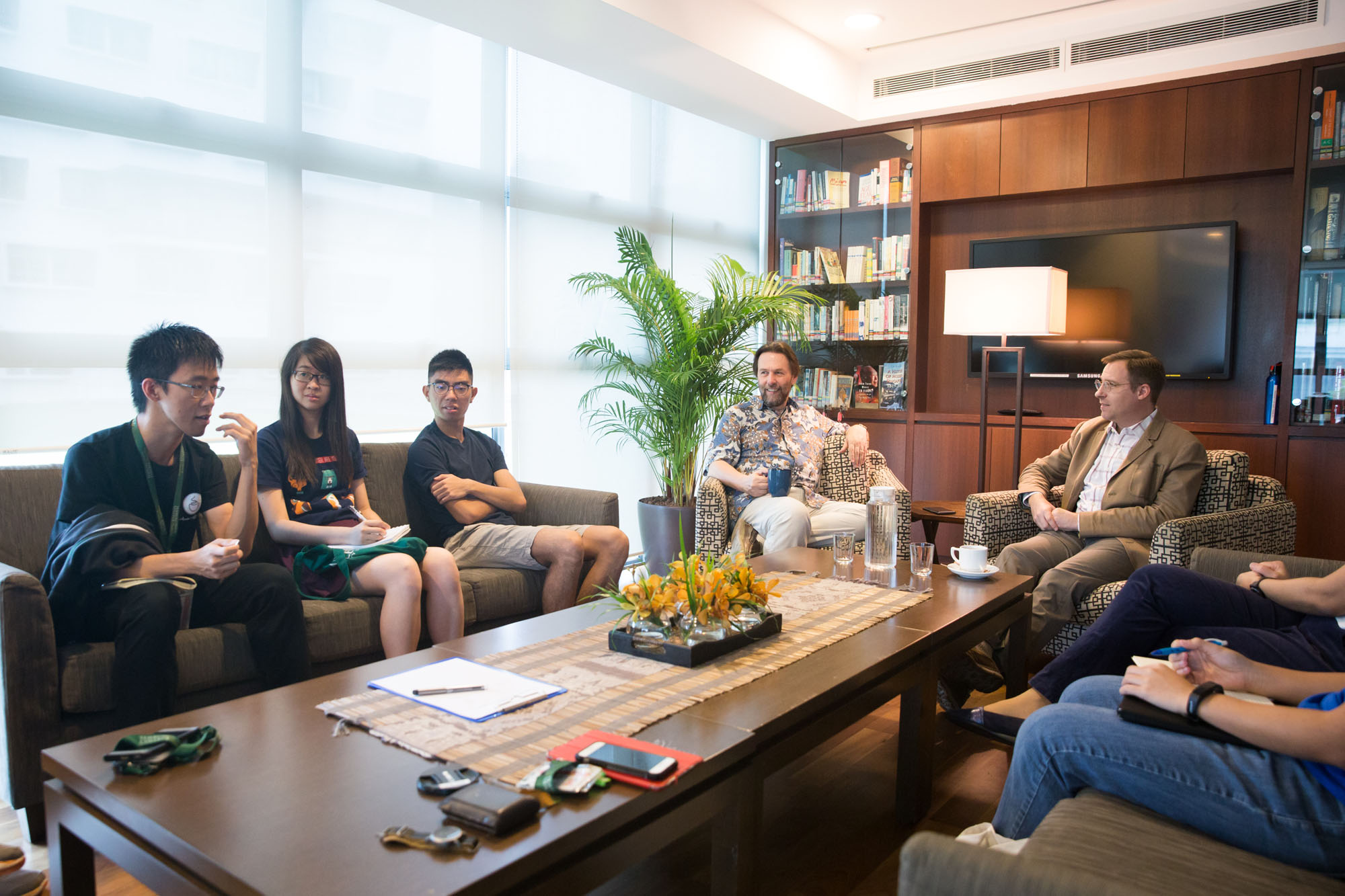
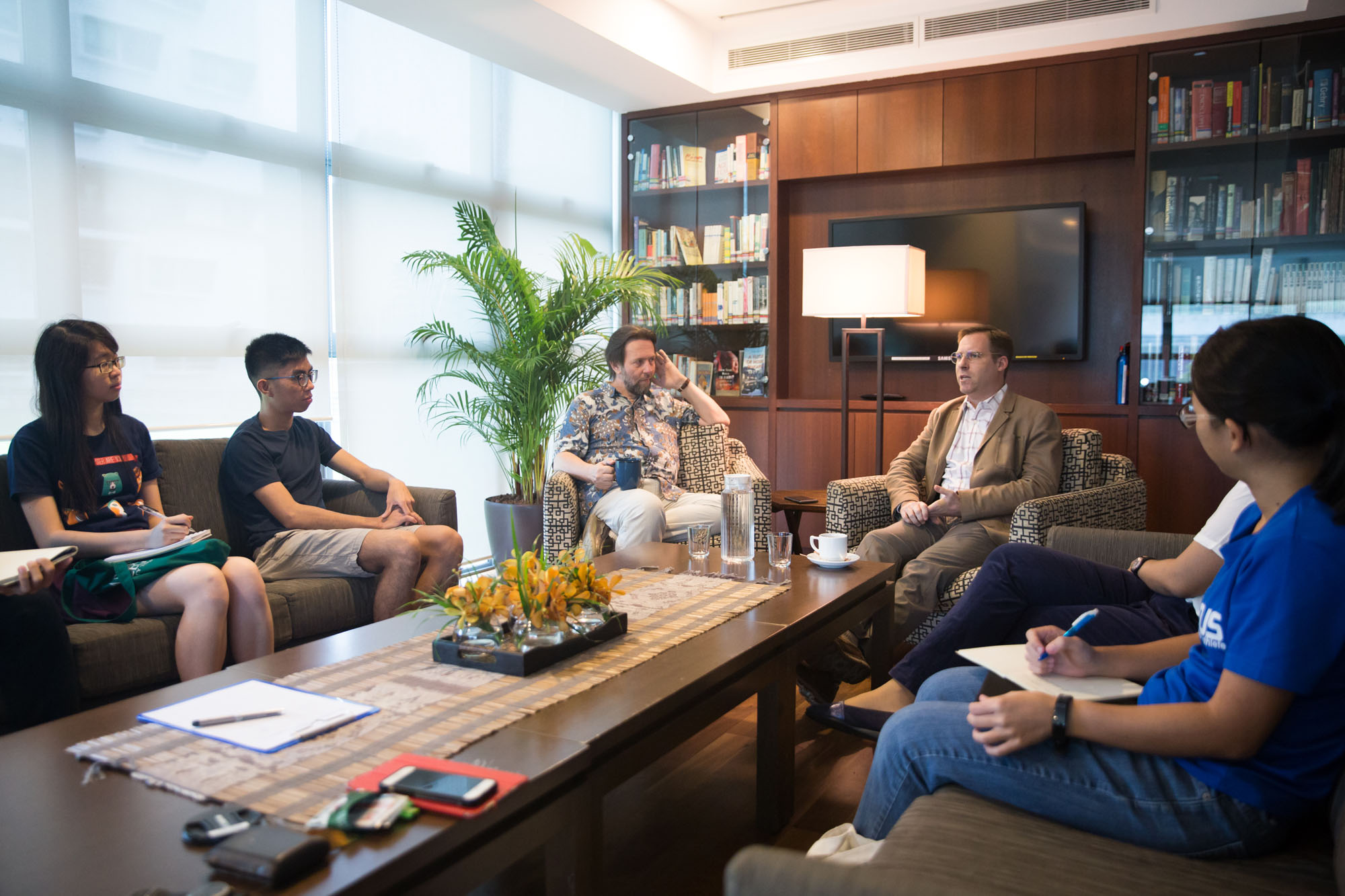
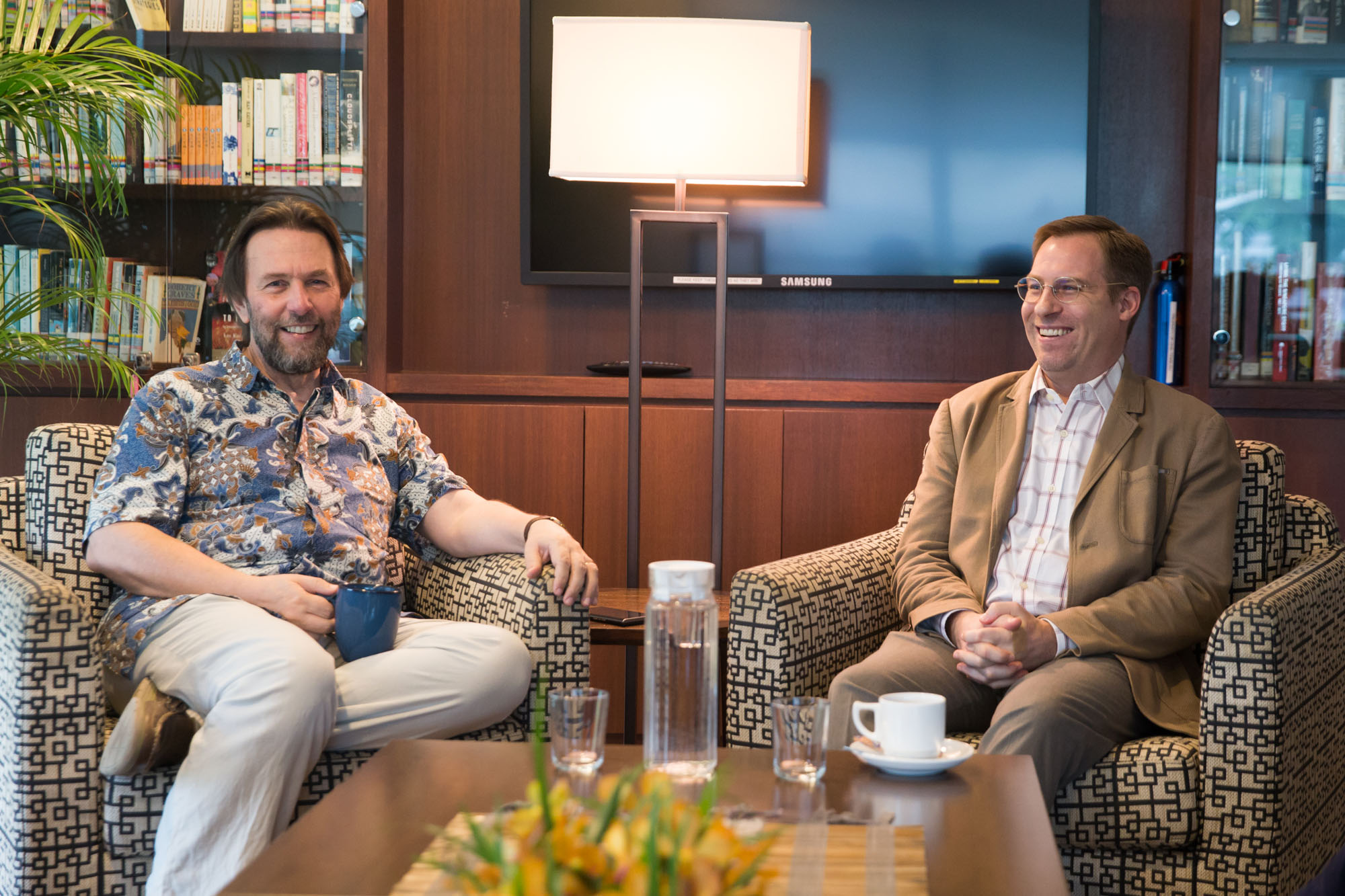
By Professor Tommy Koh: ASEAN and New Zealand
In Praise of New Zealand
New Zealand is a small country. It has a population of only 4.6 million. It is, however, a country which punches above its weight in many respects. It has been ranked by Transparency International as the least corrupt country in the world. It is also ranked first by the World Bank for ease of doing business.
It is a highly creative society. Sir Peter Jackson has won several Oscars for his directing work on the Lord of the Rings and the Hobbit. Other famous directors include Jane Campion and Taika Waititi. Authors Keri Hulme and Eleanor Catton are both Man Booker prize winners. Singer song-writer Lorde hails from Auckland.
New Zealand also excels in as a world-class sporting nation. The national rugby team, the All Blacks, has won the World Cup three times. Its Haka chant, performed before each match, strikes fear in the hearts of the opponents. At the 2016 Summer Olympics, New Zealand won 18 medals (including 4 gold). That would have placed it 3rd on the medal table on a per capita basis. By comparison, the 10 ASEAN countries won 15 medals, with 3 gold.
I can also say from my experience at the United Nations, that New Zealand has a world class foreign service. The New Zealand diplomats I worked with were intelligent, knowledgeable and honourable.
ASEAN-NEW ZEALAND
New Zealand made an early commitment to ASEAN, becoming a Dialogue Partner in 1975, second only to Australia. Over the past 43 years, the relationship has matured, growing in breadth and in depth. The relationship is trouble-free, with leaders on both sides enjoying a high comfort level. Let me briefly review the different areas in which they cooperate.
Economic Cooperation
In 2009, ASEAN’s first free trade agreement outside of Asia was concluded with Australia and New Zealand. The ASEAN-Australia-New Zealand Free Trade Agreement entered into force in 2010.
Two-way trade between ASEAN and New Zealand reached US$12 billion in 2017. New Zealand’s cumulative investment in ASEAN was NZ$4.6 billion in 2017. ASEAN’s investment in New Zealand, in the same year, amounted to NZ$8.1 billion.
New Zealand is participating actively and constructively in the ongoing negotiations on the Regional Comprehensive Economic Partnership (RCEP). The RCEP involves the 10 ASEAN countries and 6 others (Australia, China, India, Japan, New Zealand and South Korea). When concluded, it will be the world’s largest free trade area. The collective ambition is to conclude substantively the negotiations before the end of this year.
Political and Security Cooperation
In the political-security sector, New Zealand cooperates with ASEAN, bilaterally, as well as through the East Asia Summit, the ASEAN Regional Forum and the ASEAN Defence Ministers Meeting Plus (ADMM-Plus).
Areas of cooperation include counter-terrorism, transnational crime, preventive diplomacy, cyber security and maritime security.
New Zealand shares ASEAN’s objective in promoting peace and security in the region, through dialogue and cooperation. New Zealand is a strong supporter of ASEAN’s vision to build a rules-based, inclusive regional order, with ASEAN at the centre.
New Zealand has appointed a dedicated ambassador to ASEAN, based in Jakarta.
Social, Cultural and Development Cooperation
New Zealand has excellent universities. Education and training are very important areas in which New Zealand has helped and continues to help ASEAN.
New Zealand’s development assistance programme to ASEAN is its second largest in the world, after the Pacific. This year, the government announced a 12% increase in funding, totalling NZ$224 million over three years.
This funding includes more than 500 scholarships each year to ASEAN students and officials, including 225 places for Master’s and Doctoral degrees at NZ universities. There are scholarships focused on advanced English language training for officials from Cambodia, Indonesia, Laos, Myanmar and Vietnam. Short-term training scholarships for officials cover public sector leadership, agriculture, renewable energy and disaster risk management.
New Zealand is no stranger to major earthquakes. It therefore has experience in dealing with natural disasters and risk management. That expertise is shared with the ASEAN Committee on Disaster Management and the ASEAN Coordinating Centre for Humanitarian Assistance on Disaster Management.
In the field of Human Rights, New Zealand has focused its efforts on helping the ASEAN Committee on Women and Children.
New Zealand is helping ASEAN to achieve the UN’s Sustainable Development Goals. It has allocated the sum of $200 million for this purpose for the period, 2016 to 2018.
A particular priority is supporting ASEAN’s efforts to narrow the gap between the newer and older members. Singapore had taken the lead to initiate a programme to assist Cambodia, Laos, Myanmar and Vietnam to catch up with the rest. The programme is called the ASEAN Integration Initiative. New Zealand provides NZ$100 million to assist those four countries in capacity building.
As a champion of renewable energy, New Zealand provides technical assistance to Indonesia, Laos and Myanmar in this sector.
New Zealand has a world class agricultural industry. It is famous for its high quality and safe food. It is assisting rural communities in several ASEAN states in animal husbandry and food safety. There are specific support programme involving the 5 Mekong riverine countries in horticulture and safe food.
Focusing on the Young
New Zealand has launched two programmes targeted at the young leaders of ASEAN. One brings promising young ASEAN diplomats to visit and learn about New Zealand’s governance and other systems. The other involves young business leaders from ASEAN visiting New Zealand and reciprocating with young Kiwi entrepreneurs visiting ASEAN states.
Conclusion
We live in a dangerous moment in the history of the world. The liberal world order which we have enjoyed for the past 70 years is under assault. Free trade, globalisation and multilateralism are being undermined. The US and China appear to be heading towards a confrontation.
In such uncertain times, ASEAN needs reliable friends. New Zealand is such a friend. Its long history with ASEAN and willingness to work closely with ASEAN in practical ways demonstrates its commitment to our region. Together, we will continue to support free trade and oppose protectionism. We will defend open economies and regional economic integration and oppose economic autarchy. We will defend multilateralism and multilateral institutions, such as, the WTO and oppose unilateralism. We will defend the rule of law and oppose the rule that might is right. We will work for a transparent, inclusive and rules-based regional order with ASEAN at the Centre.
Internship Opportunity with Future Cities Laboratory (FCL)

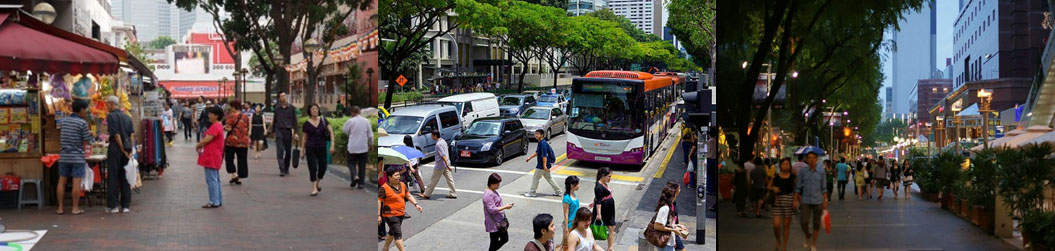
Project Title: Understanding Walking Behaviours in Tropical Cities
FCL Project Team
1. Prof Christoph Hölscher, Panos Mavros
Cognition Perception and Behaviour in Urban Environments, Future Cities; Laboratory, Singapore ETH Centre
Chair of Cognitive Science, ETH Zurich
2. Prof John Zacharias, Wang Bin
School of Architecture, Peking University
Tembusu College Coordinator
1. Dr Margaret Tan
Fellow & Director of Programmes, Tembusu College, National University of Singapore
1. Project summary
This research project will investigate the environmental factors which influence pedestrian mobility patterns in tropical cities, taking Singapore as a case-study. The project aims to inform our understanding of walking habits of commuters in Singapore, the role of different urban design features in increasing pedestrian trips and encouraging active mobility, and has implications for the design of urban environments in Singapore as well as tropical cities at large.
The study will involve observing the walking behaviour of volunteer participants in different areas of Singapore, and evaluating how the design of the pedestrian environment, climate and other parameters influence people’s experience and motivation to walk.
2. Number of positions
The project is looking for up to ten (10) research assistants, with each intern working 2 weeks (10 working days) for 16 hours per week (5 days X 3.2 hours). Please note that the number of working hours per week may increase or decrease based on the total number of interns and their schedules.
3. Remuneration
Student interns will be paid an hourly remuneration of S$12.00, and will be reimbursed their transport cost for the field work.
4. Project Timeline
The project involves data collection for two consecutive weeks (10 days) any time between 16 Nov 2018 and 13 Jan 2019.
The final timeline will be decided based on consultation between the Coordinator and all student interns.
5. Requirements
Student interns are expected to work closely with the study coordinators to conduct a large-scale behavioural experiment study.
The research will involve on-site fieldwork in a major pedestrian precinct in Singapore for 3 hours per day (between 9AM – 8PM), repeated for 10 working days (two consecutive weeks).
Student interns will conduct an ‘intercept survey’, that is, asking people to voluntarily participate in a brief walking experiment and filling in surveys about their experience.
Prior to the beginning of the study, student interns will have to attend a mandatory half-day paid research seminar, where they will be briefed on the following:
1. Motivation and aims of the research
2. Training on the research methods and tools used for the data collection
Post internship, students will have to write a short report of their experience working with FCL on the project, including their learning journey. This report should be submitted to Dr Margaret at a time convenient for students, but before the end of the academic year.
6. Learning outcomes
Through their participation in this study as research assistants, students will gain valuable experience in the following:
Comprehension of how scientists conduct large-scale studies on walkability and human behaviour in cities;
Involvement in an interdisciplinary research drawing from Behavioural Geography, Psychology and Planning;
Understanding of spatial and environmental factors that influence pedestrian experience and movement patterns in cities, in the context of making cities more liveable and sustainable;
Insights on the importance of human behaviour and preferences in the design of different systems;
Data-collection methods through field-surveys with members of the public, and the gathering and coding of behavioural data using a mobile application (tablet computer);
Contributing to a novel research on how to improve walkability in Singapore and tropical cities, and through which students’ contributions will be acknowledged in the main report of this research study.
Interested students, please contact Dr Margaret Tan @ marge@nus.edu.sg by 5th November 2018.
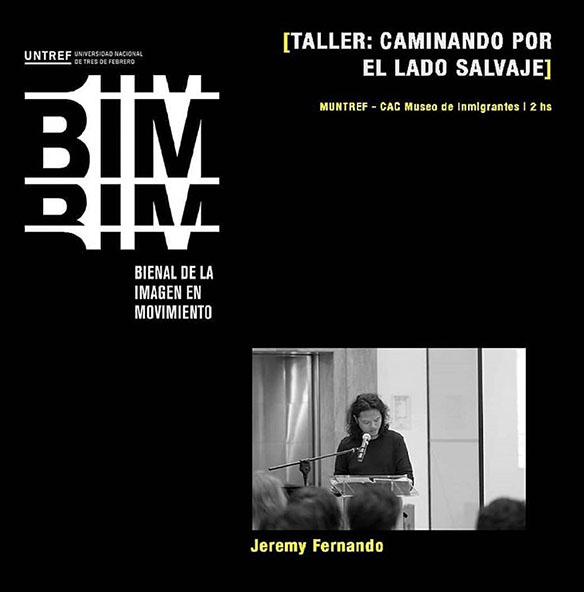
Jeremy Fernando at the Bienal de la Imagen en Movimiento in Buenos Aires
In November 2018 — at the invitation of Gabriela Golder, director of the Bienal de la Imagen en Movimiento, and Mariela Yeregui, founder and director of the Masters in Technology and Aesthetics of Electronic Arts programme at the Universidad Nacional de Tres de Febrero — Jeremy Fernando will be presenting his works as part of the BIM (Biennial of Moving Image) in Buenos Aires, Argentina.
In his first piece — resisting art — he will attempt to respond to the question of the relationship between art and resistance, to the possibility of art as resistance — that is, it is an attempt to meditate on the possible relationship between resisting and art. In short, the possibility of art as an encounter.
His second piece — take a walk on the wild(e) side, which will take place at L’Alliance Française de Buenos Aires in conjuction with the UNTREF — is an attempt to respond to the question of writing, is an endeavour to open the relationship between walking and thinking, movement and thought. It will be followed, the next day, by a walk through the San Telmo district, in which the question of the relationship between the body and thought will be foregrounded; where the materiality of words, of bodies — in writing — will be explored alongside participants whilst strolling through the city.
In both performance-talks, he will be showing works of, and from, Singaporean artists including Yanyun Chen, Sara Chong, SKLO, Margaret Tan, PANYK, Charles Lim, Ng Joon Kiat, Eugene Soh, and Ruben Pang, amongst others.
***
The Bienal de la Imagen en Movimiento is a singular activity: a combination between a film festival and a contemporary art exhibition. Alongside exhibitions and screenings in museums and cinemas, there is a wide offer of other activities such as workshops, conferences, seminars, and lectures with artists — all in the hopes of broadening the conversation. In short, the BIM is a meeting space for thought brought forth, and through, a multiplicity of media.
The BIM is a CONTINENTE project produced by the Universidad Nacional de Tres de Febrero (National University of Tres de Febrero) that takes place every two years in the city of Buenos Aires.
To read more about the BIM, please go to : http://bim.com.ar/#