By Professor Tommy Koh: The UN Convention On The Law Of The Sea: A revolutionary treaty

At a conference in Beijing, in 2018, several Chinese scholars, including one from Singapore, made the surprising statement that the UN Convention on the Law of the Sea (UNCLOS) was a product of the West; China was therefore not bound to comply with the Convention, in their view. The truth is that UNCLOS was negotiated by more than 150 countries, the majority being developing countries. China participated actively in the negotiations and voted for the Convention.

IMPORTANCE OF THE OCEANS AND THE NEED FOR RULES

We often forget that 70 per cent of the Earth’s surface is covered by the oceans. Humankind derives many benefits from the oceans. International trade depends on shipping. The oceans serve as the highways of the world. The oceans provide us with fish, one of our principal sources of protein. The oceans provide us with hydrocarbon and other mineral resources. The oceans also act as a carbon sink, absorbing carbon dioxide from the atmosphere. Finally, countries with navies, depend on the oceans for their mobility and power projection.  Given the importance of the oceans to humankind, we obviously need rules to determine what coastal states can claim as their territories, jurisdictions and resources. We also need rules on what are the rights of the international community, for example, to freedom of navigation and overflight. We need rules on fishing, shipping, marine scientific research, protection of the marine environment, etc. We also need clear rules for the settlement of disputes. In short, we need the law of the sea.

HISTORY OF THE LAW OF THE SEA

In 1609, a young Dutch legal scholar, Hugo Grotius, propounded the thesis that the freedom of the seas was part of international law. In his view, coastal states could assert their sovereignty only over a narrow belt of the sea, adjacent to their coasts, called the Territorial Sea.  As a result of state practice, it was generally recognised that the maximum permissible breadth of the Territorial Sea was three nautical miles. It is quite extraordinary that this rule of international law survived for 300 years.

The old legal order of the oceans survived for so long because it served the interests of the maritime powers for freedom of navigation, the interest in trade and the interests of the colonial empires.

BREAKDOWN OF THE OLD ORDER

The old legal order for the oceans began to break down after the Second World War. It was due to three causes: the emergence of the developing countries, the progress of technology and the failure of the traditional law to respond adequately to the concerns of coastal states regarding fishing.

After the Second World War, the British, French and Dutch empires were dissolved. Most of the former colonies attained their independence in the 1950s and 1960s. They felt, quite rightly, that they had no part in the making of the old legal order, which did not serve their interests. They therefore demanded that the traditional law of the sea be reformed to take their views and interests into account.

The combination of a narrow Territorial Sea and the freedom to fish in the high seas, served the interests of the world community as long as there was plenty of fish for all. Technology changed the situation. New factory fishing vessels, equipped with advanced electronic tracking radar, led to over-fishing and the depletion of fish stocks. Developing coastal states, which depended on coastal fisheries, for their survival, revolted against the injustice of the situation.

In protest against the status quo, many coastal states began to make unilateral claims. They extended their Territorial Seas beyond three nautical miles. They claimed a special fishing zone next to their coasts. Following the lead of the United States, they extended their jurisdiction over their continental shelves.

The result was that, instead of legal order, we had legal chaos. There was even a brief war between Iceland and UK over cod. In 1958, the UN convened the First UN Conference on the Law of the Sea. The conference tried but could not agree on the limit of the Territorial Sea. The conference also could not agree on the limit of a coastal state’s exclusive fishing rights. In 1960, the UN convened the Second UN Conference on the Law of the Sea, to try to fix the two problems. That conference also ended in failure.

A NEW CONSTITUTION FOR THE OCEANS

The UN convened the Third UN Conference on the Law of the Sea in December 1973. After nine arduous years of negotiations, the conference adopted UNCLOS. I served as the President of the Conference in the final year.

UNCLOS is not a treaty which simply codified existing law. It is certainly not a product of the West. It is, in fact, a revolutionary treaty. It replaced the old legal order with a new, modern and more equitable order. It invented new concepts of international law. It has been described as a constitution for the oceans.

Some of its key features:

Breadth of the Territorial Sea: The long dispute over the breadth of the Territorial Seas was settled. The Convention specifies that its maximum breadth is 12 nautical miles. In addition to the Territorial Sea, coastal states are also entitled to claim a Contiguous Zone of 12 nautical miles.

Straits Used For International Navigation: There are 116 straits whose width is less than 24 nautical miles. When the Territorial Sea is expanded from 3 to 12 nautical miles, the high seas corridors in those straits disappear. The maritime powers could not accept the regime of innocent passage for ships going through such important straits. They demanded, as a quid pro quo, that there should be a special regime for ships using such straits. The special regime is called Transit Passage, a new concept in international law. Transit passage, which is applicable to the Straits of Singapore and Malacca, is a stronger regime for ships than innocent passage which is the regime applicable to ships in the Territorial Sea. Unlike the regime of innocent passage, the regime of transit passage permits both overflight by aircraft and submerged transit by submarines.

Archipelagic States: Two of our neighbours, Indonesia and the Philippines are archipelagos meaning that their territories consist entirely of groups of islands. At the 1958 and 1960 conferences, they sought but failed to gain recognition as Archipelagic States. They succeeded at the third UN Conference, which accepted the new concept of Archipelagic States. Under UNCLOS, an Archipelagic State can draw its baseline by connecting the outer most points of the outer most islands. The waters inside the baseline are considered Archipelagic waters subject to the sovereignty of the Archipelagic State.  The Convention contains a special regime for passage through archipelagic waters. It is similar to the Transit Passage and is called Archipelagic Sealane Passage. 

Exclusive Economic Zone: The biggest victory for the coastal states, both developing and developed, is the new concept of the Exclusive Economic Zone (EEZ) in the Convention. The fight over fishing rights was resolved in favour of the coastal states. They are entitled to claim an EEZ of 200 nautical miles, in which they enjoy sovereign rights to the fish and other resources there. They do not, however, have sovereignty over the waters in the EEZ. The legal status of the waters is that of the high seas.

Common Heritage of Mankind: Another revolutionary concept in UNCLOS is the common heritage of mankind. The mineral resources of the deep seabed and ocean floor, beyond national jurisdiction, are considered the common heritage of mankind. The Convention established a new international organisation, the International Seabed Authority (ISA), to govern activities in this area. The Convention also prescribes that the benefits of seabed mining should be shared among the developing countries. A Singapore company, OMS, has secured a mine site and is currently conducting exploration activities to have a more accurate picture of its terrain and biodiversity and to determine the density of the manganese nodules and the commercial feasibility of recovering them for processing.  Singapore is playing an active and constructive role in the work of the ISA. Ms Rena Lee, a Singapore lawyer and diplomat, is a member of its Legal and Technical Commission.

The Protection of the Marine Environment: UNCLOS strengthens the international legal system in protecting and preserving the marine environment. The Convention not only imposes an obligation on all states to protect and preserve the marine environment, it also imposes on states the duty to cooperate, regionally and globally, towards that objective. The Convention deals with different sources of marine pollution, such as, dumping and pollution from ships. It is one of the most robust environmental treaties currently in force. 

CONCLUSION

UNCLOS was adopted on 30 April 1982 in New York. Today is the 37th anniversary of its adoption.  It came into force in 1994, making this year the 25th anniversary of the coming into force of the Convention. UNCLOS is universally accepted as the modern law of the sea. It has restored order from chaos. It has kept the peace at sea. It has served the world well. It is in our individual and collective interests to uphold and comply with its provisions. It is not in our interests to undermine it. Finally, UNCLOS is able to respond to new challenges and opportunities. For example, the UN has convened a conference, chaired by Ms Lee, on the biodiversity of the high seas, beyond national jurisdiction. Any agreement adopted by the conference would be under UNCLOS.
By Professor Tommy Koh: The UK and the EU: It’s complicated

In June 2016, 51.9 percent of the British electorate voted in a referendum in favour of leaving the European Union (EU). On 28 March 2017, the British government officially informed the European Union of its wish to leave the union. Under EU law, the UK would leave the EU, two years later, on 29 March 2019.

However, on 14 March 2019, the British House of Commons voted to extend the deadline to 30 June 2019. Let me try explain this complicated story.

History

To understand this story, it is necessary to recall its history.

The British have always been ambivalent about its place in Europe. As early as 1930, Winston Churchill had envisaged the formation of a European Union. However, he said: “We are with Europe but not of it”. This ambivalence exists to this day.

Europe is a divisive issue in both the Conservative Party and the Labour Party. Some leaders of both parties, such as Conservative Edward Heath and Labour’s Roy Jenkins were pro-Europe. Other leaders, such as Margaret Thatcher were anti-Europe.

After the Second World War, some visionary leaders of Europe had a plan. They wanted to prevent the recurrence of war by integrating their economies. Six countries, namely, France, Germany, Italy, Netherlands, Belgium and Luxembourg, met in Rome, in 1957, to negotiate a treaty to establish the European Economic Community (EEC). They invited the UK to join them.

The British rejected the invitation, calling the Treaty of Rome, “irrelevant”.

British Applications

After losing its empire, the British economy declined rapidly.

For example, in 1950, the UK’s GDP per capita was 30 percent higher than that of the EEC. By 1973, it was 10 percent lower.

The British government therefore decided, for economic reasons, to join the EEC.

The UK applied in 1961 and, again, in 1963. On each occasion, France vetoed the applications. Why did the French President, Charles de Gaulle, oppose the British applications? He did so because he did not think the British shared the political objectives of the European integration project. He felt that the UK would be an obstructive partner or, worse, act as a US agent inside the EEC.

The British applied, for the third time in 1973, successfully this time. The then British Prime Minister Edward Heath, was a Europeanist. The new French President, Georges Pompidou, was his good friend and supported the application.

Two Referendums

Two years after the UK joined the EEC, the Conservative government was replaced by a Labour government. The new Prime Minister, Harold Wilson, decided to hold a referendum, in 1975, to let the British electorate decide, whether to remain in the EEC. At that time, 67.2 percent voted to remain and only 32 percent voted to leave.

In 2016, 41 years after the first referendum, the then-British Prime Minister, David Cameron decided to hold another referendum on the EU. The campaign was vicious. The leaders of the Remain camp waged their campaign based on the economic benefits of membership. They appealed to the heads of the electorate. The leaders of the Leave camp, waged their campaign on the emotional issues of sovereignty and immigration. They had the support of the tabloid newspapers.

They appealed to the hearts of the electorate. The British voted with their hearts. The result couldn’t be more different than the result of the first referendum. This time, 51.9 percent voted to leave and 48.1 percent voted to remain.

Divorce Proceedings

On 29 March 2017, the UK served the EU with the notice of withdrawal under Article 50 of the EU Treaty. The period for negotiations is two years. The negotiations began on 19 June 2017. The two sides have agreed on the text of the Withdrawal Agreement. The EU’s 27 members (which consists of all EU members except the UK) have accepted the agreement.

The withdrawal agreement has to be approved by the House of Commons. On 15 January 2019, the House rejected the agreement by 202 in favour and 432 against. On 12 March 2019, the House rejected a modified version of the agreement by 242 in favour and 391 against.

The “Backstop”

What is the reason for the double rejections of the agreement by the House of Commons? The sticking point is the border between the Republic of Ireland, which is a sovereign state, and Northern Ireland, a territory within Britain. The Republic of Ireland is a member of the EU.

When the UK leaves the EU, the border between the Republic of Ireland and Northern Ireland would become the border between the UK and the EU. Neither side wants a return to a hard border, with check points, custom posts, surveillance cameras at that border. They want goods and people to continue to flow freely across the border. However, the two sides have been unable to agree on how to do it.

As a temporary measure, the two sides have agreed on a “backstop”. Under the backstop, Northern Ireland would continue to adhere to EU rules on food safety and standards.

The backstop would also create a temporary single customs territory. In other words, the UK will be in the EU customs union until they have agreed on a new post-Brexit, trade agreement.

Why did so many Members of Parliament vote against the agreement? The reason is that they feared that the UK would be tied to the EU indefinitely since there is no guarantee that the UK and EU will be able to agree on a post-Brexit trade agreement soon or ever.

The Timeline

On the 13th of March 2019, the House of Commons voted against leaving the EU without a withdrawal agreement. On the 14th of March 2019, the House decided to ask for a delay of three months. The new deadline is 30 June 2019. The EU’s 27 other members will have to agree, unanimously, to this request.

On 21 March 2019, the EU Council of Ministers agreed to delay Brexit until 22 May if the House of Commons would vote in favour of the withdrawal agreement before the 29 of March. However, if the House rejects the agreement again then the UK will be out of the EU on 12 April 2019.

Options

Prime Minister Theresa May is faced with a few options.

First, she asked the House of Commons to vote on the Withdrawal Agreement, for the third time.  Last night, MPs rejected her withdrawal agreement for the third time, by 344 votes to 286 – a majority of 58.

Second, she can give in to the popular demand for a second referendum. But she may not have the backing of the House of Commons to do so.

Third, she can ask the EU to stop the clock on her application to leave the EU. I suspect that this option would not be acceptable to the House of Commons. We are therefore faced with the grim prospect that the UK, will leave the EU on 12 April 2019, without any agreement.

The Future

What does it mean for the UK to leave the EU without any agreement?

It means that the UK will no longer have duty-free access to the EU’s single market. It means that the UK will not benefit from all the free trade agreements which the EU has concluded with other countries, such as, the EU-Singapore Free Trade Agreement. It means uncertainty about the border between the Republic of Ireland and Northern Ireland.

The Brexiters are optimistic about the UK’s future. They believe that it will thrive and prosper. Some of them even think that the UK could be Singapore writ large, or be Singapore-on-the-Thames as it is called.

The Remainers are pessimistic. They recall that the UK was declining economically until it joined the EEC in 1973. By joining the EU, the UK became part of a market of 500 million consumers.

We do not know what the future of UK will be post-Brexit. At this critical moment, I want to assure our British friends of our goodwill and support. We wish them well as they embark on a journey into unchartered waters.

By Professor Tommy Koh: Women’s Quest For Justice And Equality: A Short History

Women’s rights are human rights. The struggle by women for justice and equality is one of the longest in the history of human rights. Although much progress has been made, the struggle is not over in some parts of the world.

Boys and girls are born equal. Inequality sets in as they grow up. The causes are many, with history, religion and culture all playing a part.

In the ancient world, women were treated as chattel. They could be bought or sold. Women had to marry the men chosen for them. They had no legal personality. They could not own property. They had no freedom of movement. Men’s oppression of women is therefore an evil which has ancient roots.

Religion has generally reinforced gender inequality with precepts and doctrines that subordinate women to men. Some Christian denominations bar women from the priesthood or leadership positions. In Islam, women face restrictions on public prayer. According to some Buddhist text, women can attain Buddhahood only by first being reborn as men. In Hindu literature, women are depicted in a negative light, as being weak, sinful and irresponsible. The two religions which treat men and women equally are Sikhism and Bahaism.

Confucius taught that a daughter should obey her father, a wife her husband and a widow her son. Confucianism has had a pernicious influence on the status of women in Asia as it continues to influence the behaviour of men towards women in Northeast and Southeast Asia. The male chauvinist teachings of Confucius may be the reason why societies in these parts of Asia have such low fertility rates.

COLONIAL SINGAPORE

What was the situation in colonial Singapore? The British rulers of Singapore were all men. Reflecting the attitude back home, their attitude towards women was unenlightened.

Professor Aline Wong, in her book, Women In Modern Singapore, described the situation in colonial Singapore in the following way: “… the cultural traditions of the major ethnic communities in Singapore place a greater premium on the male compared to the female. Whether born as a Chinese, an Indian or a Malay, a woman is subjected to socio-cultural and religious pressures to conform to the roles of wife and mother and to lead a secluded life.”

Although several women’s leaders such as Shirin Fozdar, Seow Peck Leng and May Wong, had petitioned the British Governor and the British Parliament, to abolish polygamy, their petition was rejected. Chinese men were free to have as many wives and concubines as they wished. Women occupied an inferior status during British rule.

In 1877, the British Government established the Chinese Protectorate. Its objective was to look after the needs of the Chinese community. To its credit, the protectorate did try to tackle the problem of the trafficking of women and girls for prostitution. They also tried to ensure that the sale of young girls to rich families as “mui tsai” was not a form of slavery.

WOMEN’S CHARTER OF 1961

In its early days, the People’s Action Party (PAP) was a revolutionary party. In 1959, it campaigned for the policy of one man, one wife. In 1961, the Singapore government enacted the Women’s Charter. It was nothing less than the Magna Carta for women in Singapore.

What are the most important provisions of the Women’s Charter?

First, it abolished polygamy for all non-Muslim men and required that all future marriages be registered.

Second, a married woman could continue to use her own name.

Third, husband and wife were treated as equal partners in a marriage.

Fourth, women had the right to own, buy and sell property.

Fifth, the Charter safeguards the rights of women in matters relating to marriage and divorce.

Sixth, the Charter also protects the right of the wife to matrimonial assets, maintenance and the custody of children.

THE PAP AND WOMEN

In the 1950s and 1960s, the PAP had several women leaders such as Chan Choy Siong. It was a pro-woman party.

However, by the 1970s and 1980s, the PAP no longer had any women in its leadership. The party drifted away from its origin and became an anti-women party. Let me cite three examples to support my point.

  • Quota For Women In Medical School
    In 1979, the Minister for Health, Dr Toh Chin Chye, announced that women would be restricted to one-third of the intake for medical school. This unreasonable discrimination against women was abolished onlyin 2003.

  • Lower Admission Requirements For Male Students
    In 1983, the National University of Singapore modified its entry requirements for male students. Why? In order to prevent any imbalance in the sex ratio in favour of women. Speaking in justification of this discrimination, the NUS President, Professor Lim Pin, said that a gender imbalance in the university would only aggravate the “problem of having unmarried graduate women”.

  • Home Economics Not For Boys
    In 1984, the Ministry of Education stopped all Secondary I and Secondary II girls from taking technical studies. Henceforth, all girls had to study Home Economics and the boys had to take technical studies.

THE UNITED NATIONS’ POSITIVE INFLUENCE

Some foolish people think the world would be better off without the United Nations.

Without the UN, we would not have the Universal Declaration of Human Rights, the Covenant on Civil and Political Rights, the Convenant on Social, Economic or Cultural Rights and, most importantly, the Convention on the Elimination of All Forms of Discrimination Against Women (CEDAW).

CEDAW was adopted in 1979 and came into force in 1981. Singapore became a party to the Convention in 1995.

Article 16 of CEDAW requires all State Parties to eliminate discrimination against women in all matters relating to marriage and family matters.

What are the rights of women protected by CEDAW? First, the right to freely and consensually choose her spouse. Second, to have personal rights to her children even in the event of divorce. Third, the right of a married woman to choose a profession or occupation. Fourth, to have property rights within marriage.

Before leaving the subject of the UN, I would like to acknowledge the important contributions which a Singaporean, Noeleen Heyzer, the former Head of UN Women has made.

In 2000, Dr Heyzer succeeded in persuading the UN Security Council to adopt resolution 1325. The resolution calls on states to safeguard the rights of women and girls in armed conflict. Judge Navanethem Pillay of the International Criminal Tribunes for Rwanda said:

“From time immemorial, rape has been regarded as one of the spoils of war. Now it is a war crime. We want to send out a strong message that rape is no longer a trophy of war.”

STATUS OF WOMEN IN SINGAPORE

Has Singapore women succeeded in achieving justice and equality with men? I think it would be fair to say that in most important respects, women have achieved equality with men.

Our women have achieved parity with men in education at all levels. Women’s participation in our workforce is at 42 per cent but there is still a wage gap between men and women.

Women outlive men. Most glass ceilings impeding the rise of women in Singapore have been broken. We have a woman as our President. We have several very capable woman ministers, permanent secretaries, judges of the Supreme Court, CEOs of statutory boards and leading corporations.

The only two areas which need improvement are the number of women in Parliament and the under-representation of women on corporate boards and in senior decision-making positions.

The world has recognised the tremendous progress which women in Singapore have achieved in the past 50 years. In 2016, the UN Human Development Report, ranked Singapore No. 11 out of 159 countries on its Gender Inequality Index.

In 2017, the US News and World Report, published a list of the 23 best countries in the world for a woman to live in. Singapore was ranked No. 22.

Women’s quest for justice and equality has made tremendous progress in the past few decades. In Singapore women have largely achieved parity with men. The Singapore Council of Women’s Organisations and the Association of Women For Action and Research should be acknowledged for their pivotal role in fighting for equal rights.

Singapore has become one of the world’s most women-friendly countries. However, women in some other parts of the world are not so fortunate. They are still treated as second class citizens and continue to live under the oppression of men. The struggle is not over.

By Professor Tommy Koh: Singapore and the United Kingdom: 1819 to 2019

On Jan 29 1819, Stamford Raffles, accompanied by William Farquhar and a small entourage arrived in Singapore. His objective was to establish a port and trading station for the East India Company. This is the beginning of the story of modern Singapore. Our founding Prime Minister, Mr Lee Kuan Yew, held this view. Speaking to the Singapore International Chamber of Commerce on Feb 6 1969, Mr Lee said:”But for the wisdom and foresight of the Englishman with whose name the history of modern Singapore will always be associated, your Chamber, you and I, all of us would not be here today.” Singapore’s founding fathers were famous for many things. One them was their disdain for political correctness. They preferred the truth to fashion and never shied away from defying convention. On Aug 8, 1969, a state banquet was held to celebrate both National Day and the 150th anniversary of the founding of modern Singapore. Princess Alexandra was among the invited guests, representing the British royal family. Speaking at the banquet, Mr Lee said: “… we deem ourselves amongst the fortunate few who can afford to be proud of their past, with no desire to rewrite or touch up the truth. It is a short history, 150 years, but long enough for us to value our association with the British people.”

BICENTENNIAL BOOK

Singapore and the United Kingdom have a 200-year-old relationship. To commemorate the bicentennial, my friend, Scott Wightman, the British High Commissioner, and I have co-edited a book, entitled 200 Years of Singapore and the United Kingdom. It will be launched today (29 Jan), by Grace Fu, the Minister for Culture, Community and Youth. The purpose of this book is to undertake a balanced and objective review of the past 200 years, to draw some lessons from history and to think about the future. The book is not an attempt to glorify British imperialism and colonialism or the British rule of Singapore. I am not an admirer of Professor Niall Ferguson. He argued in his 2002 book, Empire: The Rise and Demise of the British World Order and the Lessons for Global Power, that the British empire was the cradle of modernity. In 2017, the Indian politician and intellectual, Shashi Tharoor, published a book, Inglorious Empire. The book is about the British rule of India. Tharoor accuses the British of having destroyed India, economically, culturally and psychologically. I regard Tharoor’s book as a good counter to Ferguson’s book. It is also not the purpose of our book to deny that Singapore had a history before 1819. We acknowledge that Singapore had been settled, not continuously, but intermittently, since the 14th century. We have therefore included essays, by the historian, Kwa Chong Guan and the archaeologist, John Miksic, on Singapore’s pre-1819 history. In his speech to the Singapore International Chamber of Commerce on Feb 6 1969, Mr Lee said: “When Stamford Raffles came here 150 years ago, there was no organised human society in Singapore, unless a fishing village can be called a society.”

TIME TO HONOUR FARQUHAR

Mr Wightman and I both feel that Raffles has been given too much credit and William Faquhar, the First Resident, too little for his contributions to the success of Singapore. Raffles was the visionary. Farquhar was the pragmatist who turned the vision into reality. No one did more for the success of Singapore, in the first four years, than Farquhar. Graham Berry has written an excellent essay to set the record straight. We hope that, in this Bicentennial Year, the Singapore Government will acknowledge our debt to Farquhar in an appropriate way.

MILESTONES OF A 200-YEAR JOURNEY

Two hundred years is a long time. We are only able to select a number of key milestones and requested some experts to write on them. For example, we have an essay by Peter Borschberg on the two treaties of 1824: the Anglo-Dutch Treaty and the Crawfurd Treaty. It was under the Crawfurd Treaty that the British obtained sovereignty to Singapore. We have an essay by Kennie Ting on Singapore’s port city heritage. He is an expert on port cities and is the author of a new book, Singapore 1819: A Living Legacy. Farish Noor has written an important essay on migration and multiculturalism in colonial Singapore. When Raffles founded Singapore, he appealed to Chinese, Indian, Arab, Jewish, Armenian and Western traders and entrepreneurs to come to Singapore. Many answered his appeal. Farquhar was able to use his reputation and network to persuade Malays, Bugis, Javanese, Acehnese, Boyanese and Minans to join the settlement. Farish Noor concludes that due to the fact that the settlers came from so many parts of Asia, “they gave to the land that they would adopt as their home a multi-perspective worldview that would ensure that Singapore remain a hub in the globalised post-colonial world to come.” Other milestones covered in our book include the Indian Mutiny of 1915, World War Two, the Japanese occupation, Subash Chandra Bose and the Indian National Army, the rise of nationalism and anti-colonialism, the political developments between 1945 and 1963 and from 1965 to the present. On the topics of merger and separation, we decided not to request two Singaporeans to write on them as we are all familiar with the Singapore narrative. To add value, we decided to invite two British historians, A J Stockwell and Nicholas J White, to do so. There is also a noteworthy essay by J Y Pillay on the decision by the British Government to withdraw from its military bases in Singapore by 1971. This was a big blow to the newly independent government, which was faced with high unemployment and the lack of job opportunities. It was estimated at the time that the withdrawal would mean the loss of about 10 per cent of our Gross Domestic Product. Miraculously, Singapore survived this early setback. The story is worth telling.

THE BRITISH LEGACY

The biggest chapter of the book is on the British legacy in Singapore. We have many good essays on the English language, the rule of law, the free port, free trade, open economy, the civil service, health, education, welfare, town planning, low-cost housing, anti-corruption, business, sports, culture, the commonwealth, etc. The British left a rich legacy in Singapore. However, it is fair to say that, in many instances, the British had laid the foundation but, it was the government of independent Singapore which got the job done. This is true in the fight against corruption, in town planning, in the building of low-cost housing, in diversifying the economy, in cleaning and greening the city, etc. Irene Ng and Alan Hunt have written about the transformation of the relationship between Singapore and Britain, from 1965 to 2019. Foo Chi Hsia and Scott Wightman have written about the future of our relationship, post-2019.

A PERSONAL REFLECTION

I was born and grew up in colonial Singapore. Colonial society was both racist and hierarchical. The whites were first class citizens. The Eurasians were second class citizens. The rest of us were third class citizens. The British colonial administration in Singapore did not observe the democratic norms and freedoms which the British citizens enjoyed at home. Any one deemed to be critical of or disloyal to the British could be banished to the land of his or her birth. I personally experienced censorship, for the first time in my life, when I was a student at Raffles Institution (RI). I had submitted two articles to the school magazines, one against apartheid in South Africa and the other criticising the way in which our hawkers were being hounded by the police. The school submitted my essays to the Ministry of Education, which decided that they could not be published. To be fair, I must also say that there were many good people from Britain who were working in Singapore, as doctors, lawyers, engineers, architects, teachers, etc. In RI, I had several expatriate teachers. I remember three of my teachers, Mr T J Evans, Mr J T Lippit and Mr W T Andrews, with respect and gratitude. To sum up, I would say that the British rule of Singapore was 60 per cent good and 40 per cent bad. However, compared to the other colonial rulers in Southeast Asia, the British were the least bad. The British left us with a rich legacy. We were able to build on that legacy and to catch up with and even surpass Britain in some respects. Over the past 200 years, the relationship between us has been transformed from that between the ruler and the ruled, between a rich and a poor country, between a developed and a developing country, into a relationship between two equals. When Britain leaves the European Union on March 29 this year, it will be in uncharted waters. I want to say to our British friends that they have our goodwill and support in their new journey. I have a final thought. I think we should remember the hardwork and sacrifice of generations of Singaporeans. It is the collective efforts of these people, over the past 200 years, which have produced the success story called Singapore.

An interview with Jeremy Fernando in Clarín

In November 2018,  whilst at the 4th Bienal de la Imagen en Movimiento (Moving Images Biennale) in Buenos Aires, Jeremy Fernando was interviewed by Carolina Keve of Clarín about his relationship to art, to writing, and to thought. In it, he attempts to “disarm the role of the author in order to place it on a more democratic plane.” 

To read the interview, please go to https://www.clarin.com/revista-enie/ideas/escritura-hora-duelo_0_xqBGrfbCb.html

Clarín is the largest newspaper in Argentina. 

2 talks by Jeremy Fernando at the Central Public Library

1. reading | art | resistance

Wednesday, 20 February
7pm

In this performance-talk, Jeremy Fernando will attempt to respond the possibility of art as resistance — that is, meditate on the possible relationship between resistance and art. And he will do so whilst foregrounding the fact that if art is the openness to possibilities, nothing can be known until it happens; after which it still quite possibility remains beyond cognition. Thus, the only thing one can do, is to resist what one thinks art itself is; and to read the work, attempt to encounter the work. As part of his performance, he will be showing works — from Singapore and beyond — that he thinks demonstrate possibilities, stage resistances.

To register: https://www.nlb.gov.sg/golibrary2/e/alt-txt-reading-art-resistance-71357805

2. writing | walking | blindness

Wednesday, 27 February
7pm

In this performance-talk, Jeremy Fernando will attempt to attend to the relationship between walking and thinking — movement and thought — through the all-too-familiar situation, scenario, of writer’s block. It opens with a meditation on the very moment he was unable to write — alongside the irony of writing about it. Which suggests that this writing — perhaps all writing — is an act of memory: one that is unable to account for the possibility of forgetting — and, thus, also fictionality. And in that spirit, he will offer the possibility that a painting — ‘Squid Love’ by Yanyun Chen — is the site through which this piece has been inked.

To register: https://www.nlb.gov.sg/golibrary2/e/alt-txt-writing-walking-blindness-58370953

Tembusu Reading Pods AY2018/19 Sem 2

Register by 20 Jan 2019

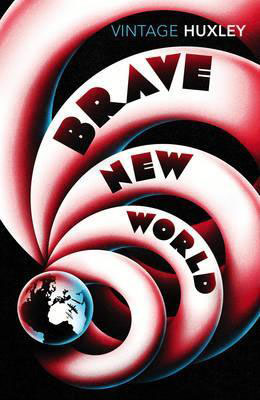
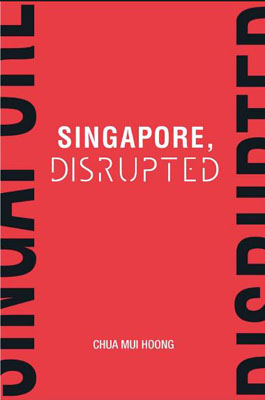
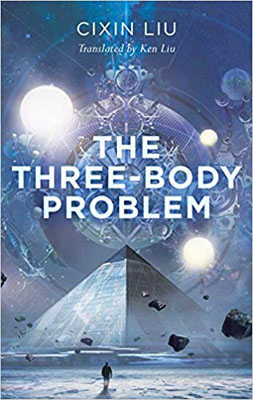
Care to read and discuss a book outside your curriculum this semester? Simply choose one of the six titles offered by students and faculty of Tembusu College and register via Eventbrite (click on the link) by 20th January 2019, Sunday.

An email will be sent to all participants after 20th January to confirm their registration. The reading pod facilitator will contact participants via email to provide more details (starting date and venue).

Participants will be responsible to purchase their own book; eBook is accepted. The first 5 sign-ups are eligible for the subsidy (You need only pay S$10 for the book of your choice); participant should submit a RFP form with receipt attached to the college office for reimbursement of their purchase (e.g. book purchased at $15, college will reimburse $5). Subsequent sign-ups are welcome.

Click on the images for more information.

1. Aldous Huxley’s Brave New World (Student Facilitator: Gurprit Singh)
2. Chua Mui Hoong’s Singapore, Disrupted (Student Facilitator: Ng Chia Wee)
3. Kate Summerscale’s The Suspicions of Mr Whicher: or the Murder at Road Hill House (Faculty Facilitator: Dr John van Wyhe)
4. Liu Cixin’s The Three-body Problem (Student Facilitator: Ryan Cheng)
5. Stefano Harney’s The Undercommons (Student Facilitator: Lua Jiong How)
6. Natasha Stagg’s Surveys (Faculty Facilitator: Dr Connor Graham) **6 copies available; participants are liable to purchase the physical copy from the office. Please make $10 payment and collect your book from the Tembusu College Office from 15 Jan 2019 onwards. 

By Professor Tommy Koh: Asean and the UN: Natural partners

The United Nations (UN) and the Association of South-East Asian Nations (ASEAN) are natural partners. This is reflected in the charters of both organisations. In the case of the United Nations, Article 52 of its charter makes references to the role of regional arrangements or agencies in the maintenance of international peace and security. As for Asean, Article 2 (2) (j) of its charter commits Asean and its members to uphold the UN charter.

HISTORY

Asean’s relations with the UN began in the early 1970s through the UN Development Programme (UNDP), the development arm of the world body. The UNDP sponsored a two-year study to assist Asean in conceptualising its economic cooperation activities. As Asean began to make enormous progress in its economic development and rose to become a significant player in the international system, the relationship was transformed. The UN was no longer represented by the UNDP but by its Secretary-General.

SUMMITS AND  MINISTERIAL MEETINGS

The first ASEAN-UN Summit was held in 2000 in Bangkok, laying the foundaton for a growing network of stronger linkages and diverse areas of cooperation in the years to come. The second summit was held in 2005 at the UN’s headquarters, in New York. It was attended by the UN Secretary-General and the heads of the various UN bodies. In 2007, a Memorandum of Understanding (MOU) between Asean and the UN was signed in New York, establishing a partnership for cooperation in many fields. The third ASEAN-UN Summit held in Hanoi, Vietnam, in 2010. At the meeting the leaders reaffirmed their commitments to working more closely in addressing issues of common concern such as the global financial crisis, climate change and disaster management. Asean-UN cooperation was reinforced at their fourth summit in 2011 in Bali, during which the leaders adopted the Joint Declaration of the Comprehensive Partnership between ASEAN and the UN. Areas of cooperation include maintaining and promoting regional peace, security, and prosperity. Subsequent years saw summits being held in Brunei (2013), Naypyitaw in Myanmar (2014) and Kuala Lumpur, Malaysia in 2015. The eighth summit was held in 2016 in Vientiane, Laos. At that meeting the Leaders approved a Plan of Action for the period 2016 to 2020 to implement the comprehensive partnership. Implementation of the plan is well underway, especially following the institutionalisation of the Secretariat-to-Secretariat mechanism in 2017. In addition to the summits, there is an annual meeting between the ASEAN Foreign Ministers, the President of the UN General Assembly and the UN Secretary-General during the High-Level Week in New York. This annual meeting is both substantive and symbolic. It reflects the close partnership between ASEAN and the UN as well as the high comfort level among their leaders.

OBSERVER STATUS AT THE UN

In 2006, the UN granted Observer Status to ASEAN. In keeping with Asean’s frugal and pragmatic culture, the regional grouping has chosen not to have a permanent observer mission to the UN. However, the ASEAN New York Committee (ANYC), which comprises the 10 ASEAN missions to the UN, plays an active role in New York. It meets regularly to discuss issues of common concern, deliver joint statements and engage with its external partners. Under Singapore’s ANYC Chairmanship in 2018, Asean engaged with the leadership of the UN as well as with external partners such as the United States and Russia.

A HELPING HAND IN ADVERSITY

A friendship is tested in times of adversity. In 2004, the Indian Ocean Tsunami brought death and destruction to Indonesia, Thailand and, to a lesser extent, Malaysia and Myanmar. The UN Secretary-General sprang into action and mobilised the resources of the UN system and the international community to help the affected countries. It was a shining example of cooperation between ASEAN and the UN. In 2008, Myanmar was hit by a killer cyclone called Nargis. It killed 140,000 people, destroyed 700,000 homes and devastated the padi fields of the productive Irrawaddy Delta. Myanmar faced a major humanitarian crisis. At first, the Myanmar Government was unwilling to open its doors to foreign assistance, fearing that certain Western governments would take advantage of the crisis to interfere and change its regime. ASEAN assured Myanmar that this would not happen. In the end, Myanmar agreed to accept international assistance, under the framework of the ASEAN-Myanmar-UN Tripartite Core Group. The cooperation between ASEAN and the UN in helping Myanmar to recover from the destruction of Cyclone Nargis, is a success story.

UN PEACEKEEPING

One of the UN’s most important contributions to international peace is the role of UN Observers and Peacekeepers. The blue beret worn by soldiers and police officers serving under the UN flag, is a symbol of peace. Over the years, ASEAN members have contributed 4,500 personnel to various UN peacekeeping and observer missions. The UN has established peacekeeping training centres in six ASEAN countries. All 10 ASEAN countries have supported Secretary-General Antonio Guterres’ new Action for Peacekeeping initiative.

SUSTAINABLE DEVELOPMENT

The UN’S 2030 Agenda consists of 17 goals to promote sustainable development. These goals acknowledge that plans to promote economic growth must also address social needs such as education and health as well as the need to protect the environment for future generations. ASEAN supports the UN’s 2030 Agenda which complements the ASEAN Vision 2025. The commonality is the imperative to embrace sustainable development and to save the world from a looming environmental crisis. Thailand, as the next ASEAN Chair, has chosen “Advancing Partnership for Sustainability” as the theme of its Chairmanship in 2019.

PREAH VIHEAR TEMPLE

I want to refer to a case of a threat to international peace and the cooperation between ASEAN and the Security Council in defusing it. Fighting between Cambodia and Thailand, along their border in the vicinity of the Preah Vihear Temple, had occurred between 2008 and 2011. When negotiations failed and the fighting continued, Cambodia brought the case to the attention of the UN Security Council. The then Chairman of ASEAN, Indonesia, spoke to the council on what ASEAN, in general, and Indonesia, in particular, had been doing to stop the fighting and to bring the two parties back to the negotiating table. In the end, the Security Council decided to outsource the problem to ASEAN. Peace was finally restored when Cambodia asked the International Court of Justice (ICJ) to interpret its 1962 judgement, awarding sovereignty over the temple, to Cambodia. The ICJ is incidentally, the judicial arm of the UN system.

ASEAN-UN RESOLUTION

Since 2003, the UN membership adopts by consensus a biennial resolution welcoming cooperation between the UN and ASEAN. In addition, a one-off resolution commemorating the fiftieth anniversary of ASEAN was adopted by the General Assembly in 2017, the first of its type. These resolutions have been co-sponsored by a large number of countries, which show the wide support that ASEAN enjoys at the UN. On 11 April 2018, an important meeting was held in Jakarta, between the 10 ASEAN Permanent Representatives, called the Committee of Permanent Representatives to ASEAN or CPR, and the United Nations. The UN was represented by Assistant Secretary-General, Miroslav Jenca.

MUTUALLY REINFORCING TIES

The Chairman of CPR, Ambassador Tan Hung Seng of Singapore, said that ASEAN and the UN are both committed to upholding the fundamental principles of sovereign equality, respect for international law and a rules-based international and regional order. Ambassador Jenca agreed and emphasized the importance of multilateral institutions like the UN to ASEAN. Singapore’s Permanent Representative to the UN and the current Chair of the ASEAN New York Committee, Ambassdor Burhan Gafoor, noted that the relationship between ASEAN and the UN is a mutually reinforcing one. The UN provides the multilateral rules-based framework that allows regional organisations like ASEAN to function effectively. At the same time, ASEAN contributes to global peace and security by strengthening habits of cooperation and respect for international law at the regional level. In conclusion, I wish to quote the words of the Foreign Minister of Singapore, Dr Vivian Balakrishnan. Speaking to the UN General Assembly this year, Dr Balakrishnan said: “Our work in ASEAN is rooted in our belief that regional organisations can demonstrate how multilateralism continues to be relevant and beneficial for people all over the world”.